Our community

Our Community

Our vision for alumni engagement

Adelaide University alumni embody our past and propel our future. As founding partners in our institution, they collaborate with us to strengthen knowledge, opportunity and progress – across South Australia and around the world.

Our alumni community

Who are the Adelaide University alumni?

You are considered a member of the Adelaide University alumni community if one or more of the following applies to you (noting The Adelaide University Act 2023 outlines a graduate as a person who has been awarded a degree, diploma, certificate, or other award): 

• You graduated from Adelaide University by completing an award-level program. 
• You were recognised as an alum by a founding institution. 
• You have been awarded an honorary degree by a founding institution or by Adelaide University.

Alumni language evolution

Inclusion and equity are at the core of what we do at Adelaide University. Alongside many of Australia’s top universities and other tertiary institutions around the world, we use the inclusive and gender-neutral term “alum” for individual graduates, and “alumni” in the collective. While many institutions have chosen gendered terms in the past, both the Oxford English and Meriam-Webster dictionaries note that “alum” has been a term used to describe a graduate since the 19th century. Adelaide University uses “alum” as opposed to the gendered “alumnus” or “alumna” when describing an individual member of our community.

Our proud shared history

Touchpoints through time

From shared alumni and collaborative research to a mutual dedication to supporting Indigenous education, the histories of Adelaide University’s founding institutions have been woven together since the late 1800s. Their paths have crossed in many ways over the years, ultimately leading to the creation of the new university we see today.

As we bed down the new institution and come together as a founding community, we continue to celebrate our many past achievements and recognise the bright future that lies ahead for Adelaide University.

The University of South Australia traced its beginnings back to 1856 with the establishment of the South Australian School of Art (SASA). Over time, SASA and several colleges joined together to form the South Australian College of Advanced Education (SACAE), which later merged with the South Australian Institute of Technology (SAIT) to become UniSA in 1991.

The University of Adelaide opened its doors in 1874 thanks to the support of a small number of benefactors whose generosity inspired others to contribute. Shortly afterwards, the University became the first in Australia to admit women on an equal basis to men.

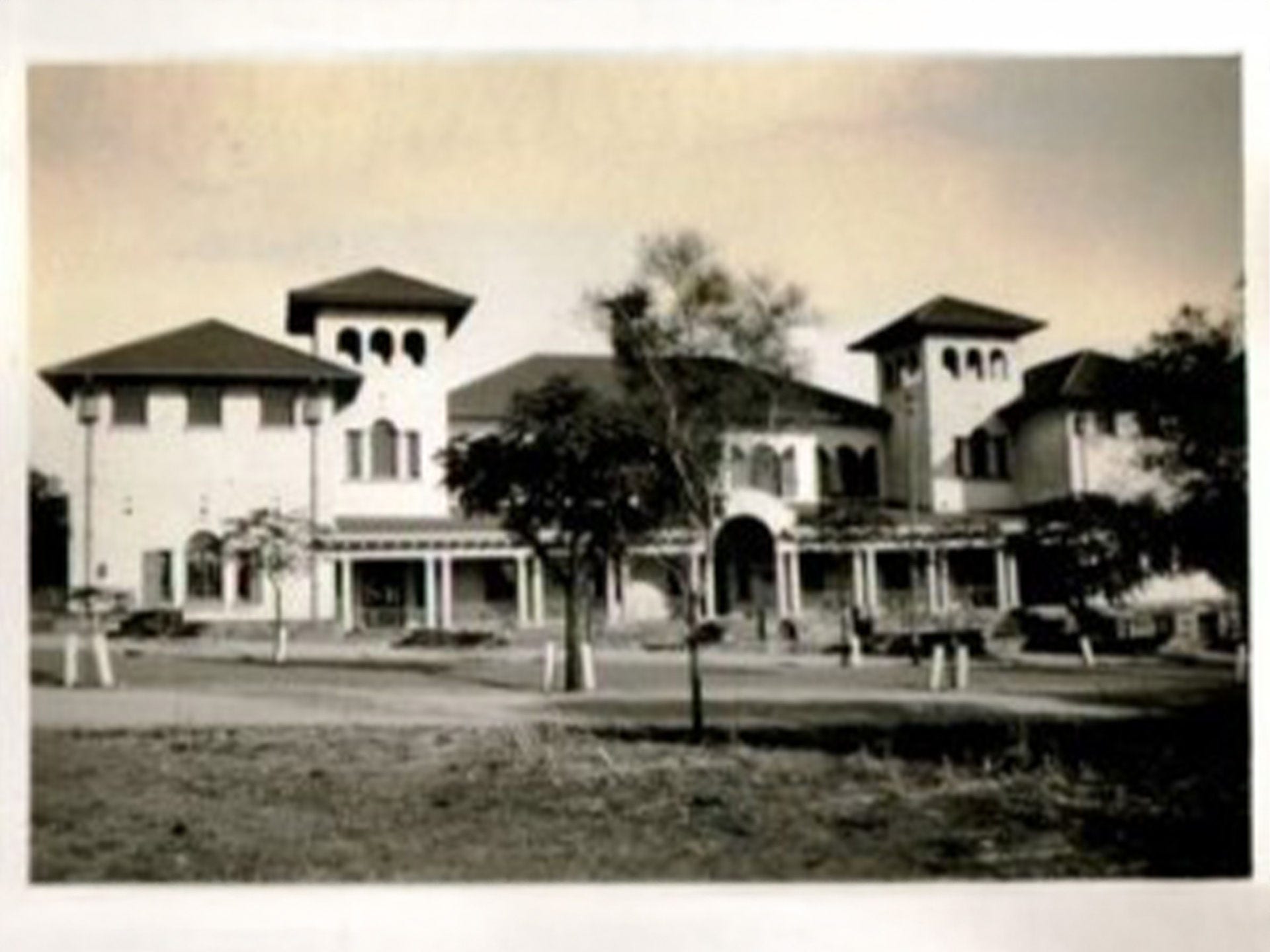
The Adelaide Teachers College is an interesting example of how our founding institutions evolved and reimagined education together through the years. It began life in 1876 as the Training School, originally aligned with the University of Adelaide and calling the Mitchell Building on North Terrace home for a period. As teaching qualifications grew in popularity, additional campuses were created across metropolitan Adelaide, including the Hartley Building on Kintore Avenue (pictured).

Eventually these colleges merged, becoming part of SACAE, and later UniSA – an interesting journey where something that began within one institution became part of the other, and now contributes to a united whole.

The histories of the two institutions can be found in the Timelines held in Adelaide University’s Special Collections.

The Hartley Building on Kintore Avenue, est. 1925 The Hartley Building on Kintore Avenue, est. 1925

A significant number of graduates are alumni of both the foundation universities. For example, for many years UniSA offered the Graduate Diploma in Legal Practice, meaning a generation of legal practitioners, including the Hon Penny Wong MP, Minister for Foreign Affairs, completed studies across both institutions on their path to admission. Some alumni, such as human rights lawyer Tirana Hassan, have had their incredible global impact recognised with Alumni Awards from both the University of Adelaide and UniSA.

And then there are the many staff and leaders deeply connected to both foundation universities. Australia’s Chief Defence Scientist Professor Tanya Monro AC contributed her considerable knowledge over many years as Deputy Vice Chancellor Research and Innovation at the University of South Australia (2014-2019) and as inaugural Director at the University of Adelaide’s Institute for Photonics and Advanced Sensing and the Australian Research Council Centre of Excellence for Nanoscale Bio Photonics (2005-2014).

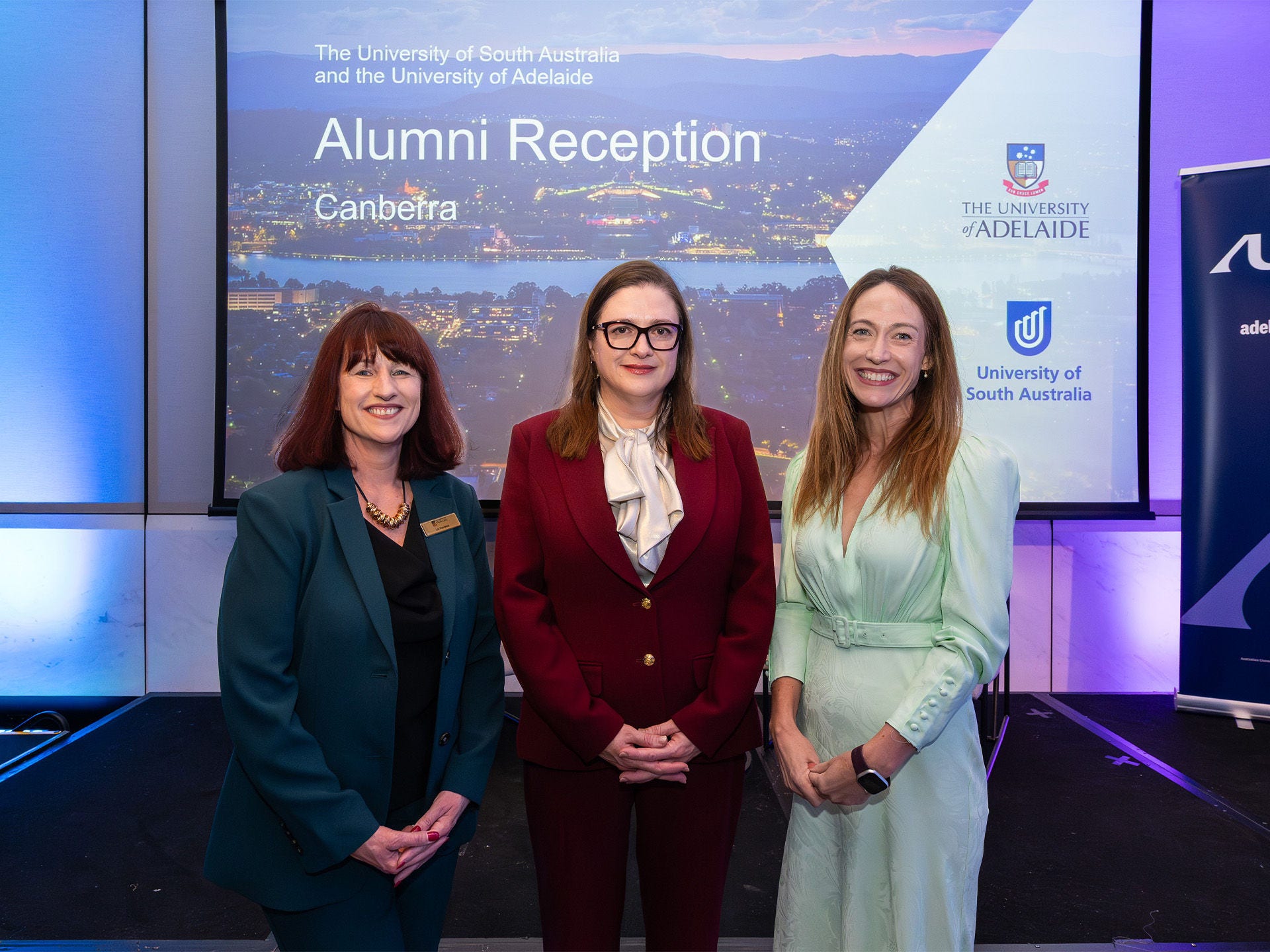
Another notable example is Professor Peter Høj AC (pictured), who served as UniSA’s Vice-Chancellor from 2007 to 2012, earning an Honorary Doctorate and the naming of Høj Plaza in his honour. He later became Vice-Chancellor of the University of Adelaide from 2020 to 2026, helping guide the transition to Adelaide University  alongside Professor David Lloyd, UniSA’s final VC.

Chief Defence Scientist Professor Tanya Monro AC (centre) with Liz Hawkins and Professor Jessica Gallagher in Canberra, 2025 Chief Defence Scientist Professor Tanya Monro AC (centre) with Liz Hawkins and Professor Jessica Gallagher in Canberra, 2025

Research partnerships have also been a long-standing shared strength, with collaborations spanning diverse fields, and researchers working together to perform cutting-edge research including:

  • how allied health professionals can help improve people’s access to and use of nature to benefit their health and wellbeing;
  • the latest advancements in dermal substitutes (replacement skin!) with a particular focus on combating infection and enhancing tissue regeneration following catastrophic burns;
  • software for a mixed-reality headset that will allow practitioners working in the city to “see through the eyes” of rural health workers in real time as they assess and treat patients.

Both founding universities are members of the Digital Disruption in Defence Research Consortium which supports the AUKUS alliance and collaborates on research in areas including cyber operations, supply chain, and other data developments crucial to the future of military success.

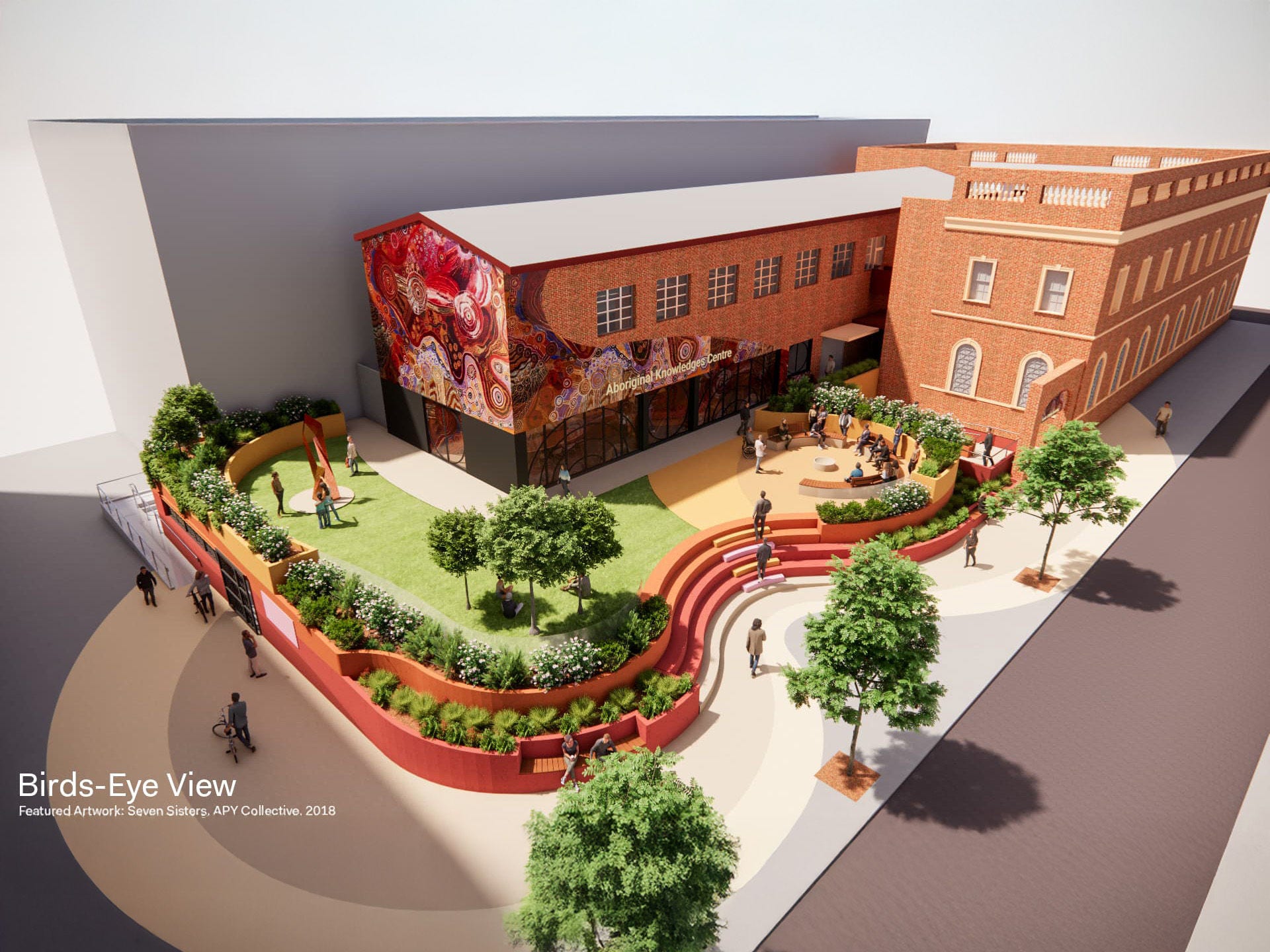
Dr Lewis O’Brien AO, a respected Kaurna Elder, has played an important role across both of Tirkankaku’s founding institutions. A member of UniSA’s Purkarninthi in Residence, he is honoured through the Lewis O’Brien Building, which is currently being redeveloped into the Aboriginal Knowledges Centre (AKC) (pictured), a project conceived by UniSA which is expected to open to be enjoyed by the Adelaide University community from late 2026.

Dr O’Brien also formally acknowledged the University of Adelaide’s 2014 Statement to Indigenous Peoples. His contributions have been recognised through an Honorary Doctorate from the University of Adelaide and his position as a Fellow of UniSA.

In 2025 the founding universities came together to celebrate the second annual Kaurna Day, also known as Tirkanthi | Ngutu | Taikurrinthi (Learning | Knowledge | Be united together). It was marked by the launch of a songbook. Titled Yurikurringa Ngadluku Paltirna: Listen to Our Songs, this is a contemporary reworking of the original Kaurna Paltinna, created in the 1990s. It will be a valuable resource for preserving and revitalising the language of the Kaurna people.

Tirkangkaku celebrated its first Kaurna Day on 7 March 2026.

Aboriginal Knowledges Centre at City West Campus Aboriginal Knowledges Centre at City West Campus, due for completion 2026

Connect with us

Get in touch with the Alumni Relations team via alumni@adelaide.edu.au