

- About the conference About the conference
- Registration Registration
- Call for papers Call for papers
The Australasian Modernist Studies Network and Modernist Studies in Asia present their first ever joint conference, showcasing regional and hemispheric research into cultural modernism.
Attracting scholars from around the world, the conference is organised into three principal strands and standalone sidebar sessions:
- A themed strand of presentations on the conference topic (see below)
- Confirmed Keynotes: Prof Aaron Jaffe (Florida State); Prof Sara Crangle (Sussex)
- An un-themed, open strand of presentations on general topics in modernist studies
- Special sidebar sessions, including one on ‘Good Enough Art’ from Anna Kornbluh (Illinois at Chicago)
The conference is catered. Adelaide is a conveniently walkable city, with all major hotels, CBD, bars, and restaurants within easy walking distance from the University campus.
Toxic Modernism/Modernist Intoxication
In 1916, interviewed for the New York Times, the poet-diplomat Robert Underwood Johnson took up the “new movement” in poetry: “There is an intoxication about the way our contemporary poets fling themselves into a dauntless quest for self-expression.” “Alas!,” he went on, “this is just the trouble! For intoxication is no more desirable in poetry than in the household. Intoxication is not the state of mind in which, as Matthew Arnold says, one may ‘see life clearly and see it whole’.”
Emerging from the opium-laced visions of the Romantics, and Emerson’s image of the poet as “intoxicated by imagination,” Nietzsche’s Dionysiac reading of the origins of tragedy in cultic intoxication established a grand interpretive schema with which to herald the New. Bacchanalian excess cleansed the doors of perception: wine-soaked abandon, liberation from subjectivity, cultic collectives, the anti-bourgeois carnivalesque, hashish-fuelled reverie, drug-stimulated dream states. Baudelaire, Apollinaire, and Strindberg concurred. The improprieties of modernism, those tendencies to lapse into apparent formlessness, have their springboard in the pharmakon: a chemical tarrying with the indeterminate.
As Johnson’s virulent rejection makes clear, however, this was always taken by the other side as a kind of illness, a poison in the bloodstream of the culture. To be intoxicated by ‘the quest for expression’ is to intoxicate one’s reader and so to render the culture itself toxic. Modernism intoxicates through its hypnotising affective textures, its chromatic ripples and pure aesthetic plunges; it works, as Eliot notoriously put it, by bypassing the consciousness and getting to work directly on the nerve-ends of the body. But the toxins it disseminates undermine traditional beliefs, tastes, and values. Even the Communist Left tended to see modernism as suspiciously like a tipsy petit-bourgeois salesman gazing into his own navel.
The temperance movement and modernism evolved cheek-by-jowl, in an instructive double-helix of mutual dependency and determination: the moral direction away from narcotics and the homeopathic treatment of capitalist modernity’s narcosis are joined at the hip. Not for nothing were many of the best analysts of the great malaise themselves notorious drunkards: Hemingway, Faulkner, Flann O’Brien, Scott Fitzgerald, Dylan Thomas, Dorothy Parker, Joyce, Ray Chandler, Patricia Highsmith, and Elizabeth Bishop, to name a bare few. The remarkable final act of the movement, Lowry’s Under the Volcano, remains one of the most harrowing tellings of this tale of the tribe. Meanwhile, Jameson was not alone in heralding the ‘new dominant feeling tone’ of the postmodern: “the high, the intensity, exhilaration, euphoria, a final form of the Nietzschean Dionysiac intoxication which has become as banal and institutionalized as your local disco or the thrill with which you buy a new-model car.”
For our central theme, a collection of essays on which we will be looking to publish, we invite presentations and panels on any aspect of the toxicity and/or intoxication of modernism, including the following (other topics, equally welcome, will be streamed separately):
- Nietzsche’s Dionysiac intoxication
- The Harlem Renaissance’s chemical inductions
- Political intoxication and the ‘passion for the Real’
- Wagnerian intoxication
- Spiritualism: manias of belief
- Sexual jouissance
- Narco-cultures of modernity
- The modernist toxification of the world
- Needles and the damage done
- Modernist toxic masculinity
- Reefer madness!
- Bataille, Evil, and the vertigo of drunkenness
- Virginia Woolf’s wavelike “intensity & intoxication”
- Dada Carnivalesque
- Wyndham Lewis’ ‘wild body’; Mina Loy’s ‘silver Lucifer’ and ‘Insel’
- Futurist ‘intoxication of danger’
- Baudelaire
- Surrealism, Benjamin, and hashish
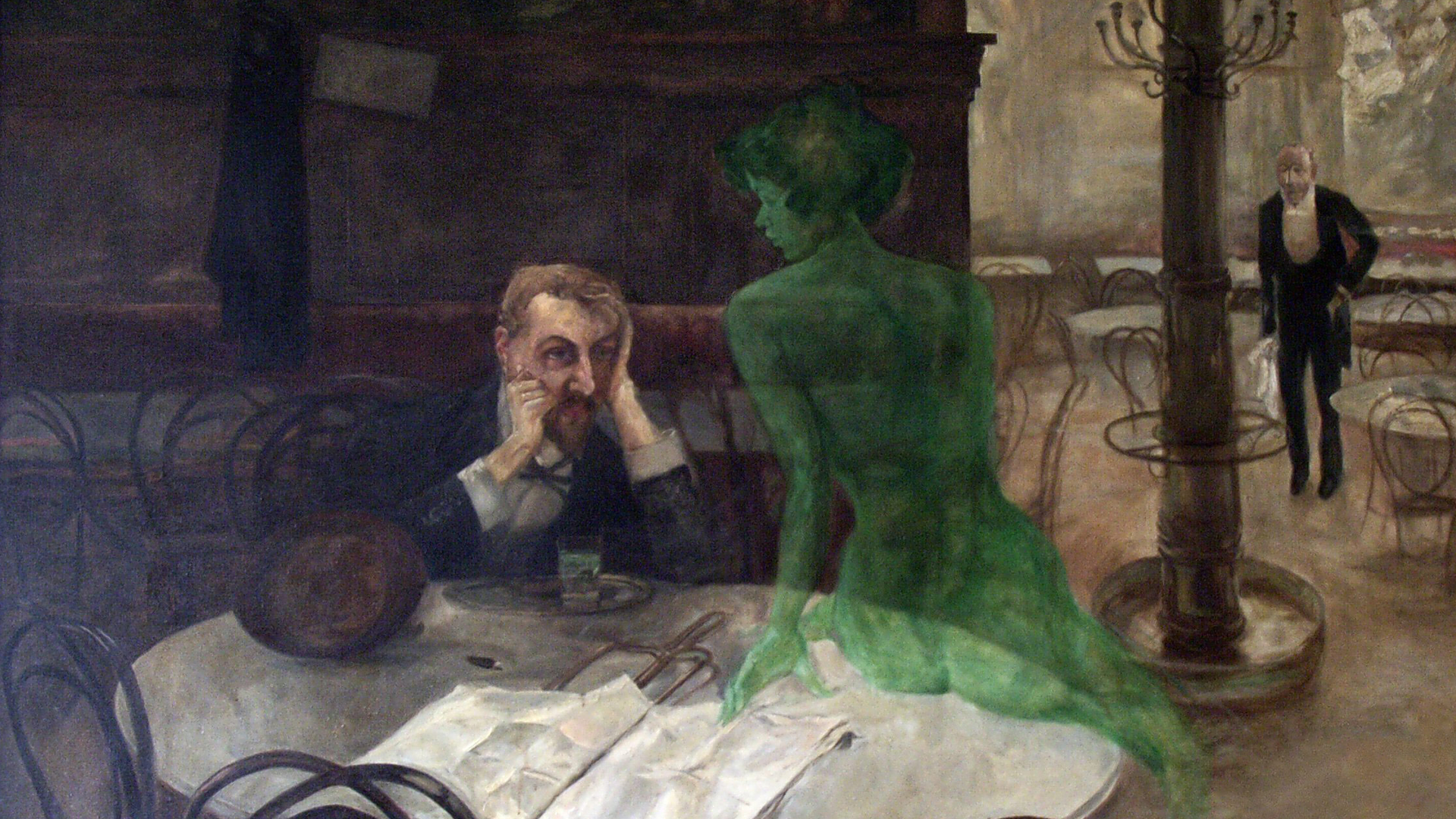
- Rimbaud’s bateau ivre; Strindberg’s absinthe-fuelled ‘inferno’
- Environmental costs of modernist architecture
- Barthesian bliss and intoxication
- Adorno and the lure of the Sirens
Send suggested paper titles and proposals to julian.murphet@adelaide.edu.au by 24 July 2026