Our research

Our research

Reimagined research 

A national and international talent hub, Adelaide University is home to more than 5,000 researchers pioneering some of the most important and powerful innovations and breakthroughs. Our research priorities advance human knowledge, grow future jobs, strengthen the economy and create practical improvements across society.  

In all fields, collaboration drives us. We work across disciplines and engage with industry, government and research institutions around the world. A reimagined research engine fit for the 21st century, our interconnected approach enables us to dream big and deliver meaningful change.   

Our researchers generate new knowledge – and new opportunities. We make sure our innovations cross the bridge from discovery to direct impact, with real benefits for people and communities. We pursue novel solutions, searching for breakthroughs not just critical to Australia, but relevant around the globe. 
Signature Research Themes 

Adelaide University delivers transformative research across five Signature Research Themes. These have been chosen to address the complex challenges of our time, aligned to local, national and global priorities. 

Of equal importance is the Aboriginal and Torres Strait Islander Research Strategy, along with strategic initiatives such as ReAL Innovation. 

Creative & Cultural Strategy 

Our creative and cultural research is innovative and equitable, promoting cutting-edge creative practices and thriving communities. Building on Adelaide as the home of creative arts festivals, we work to strengthen cultural institutions and support the longevity of the creative industries. We aim to be global leaders in First Nations’ creative and cultural research.

Food, Agriculture & Wine Strategy

Adelaide University leverages South Australia’s food and wine advantage to deliver research that drives innovation, tourism and growth across the state. Our picturesque Waite Campus, complete with its own fully functioning vineyard, is home to the Southern Hemisphere’s largest concentration of agriculture and wine research expertise. We’re tackling global demand for food, fuel and fibre using high-tech advances, and directly building Australia’s climate resilience through our research. 

Defence & National Security Strategy

Adelaide University is a hub for research and innovation in sovereign capability. We research real-world solutions for defence and national security, bolstering South Australia’s leadership on the global stage. Established ethical frameworks and human-centred design underpin all our defence research, including our work to upskill the next generation of researchers in the field.

Sustainable Green Transition Strategy

Our research works to protect and restore the environment, while also contributing to improving social and economic prosperity. Anchored by South Australia’s strategic advantage in world-leading renewable energy, our research capitalises on the state’s unique environment as a “natural laboratory”. Our research tackles global sustainability challenges, including climate adaptation, biodiversity conservation, ecosystem restoration, water management and industrial transformation for a net zero future.

Personal & Societal Health Strategy

Adelaide University is committed to creating a healthier and more equitable society. Armed with cutting-edge digital technology, we’re building the health systems of the future. Our preventive research keeps people healthy and out of hospital, easing burdens on healthcare systems. Our breakthroughs aim to reduce social inequities, develop better treatments and improve outcomes for First Nations Peoples.

Aboriginal and Torres Strait Islander Research Strategy 

This research strategy sits across the five Signature Research Themes, connecting and enabling opportunities and outcomes in all research areas for Aboriginal and Torres Strait Islander researchers and communities.  

We are in the process of establishing a First Nations Academy that will support First Nations individuals in their higher education and research pathways. The Academy will attract, steward and mentor participants, including through scholarships, culturally safe support and leadership development.

ReAL Innovation

Our new concept of ReAL (Research-engaged Action Laboratories) Innovation connects researchers, industry and the community.  The model prioritises partnered collaboration and research with practical impact. It’s nuanced across our research areas, but all are unified by a common purpose: advancing locally-embedded, globally relevant research. 

ReAL Innovation is anchored by physical locations. Dedicated hubs, labs and service enablers support collaboration between researchers and industry partners. These reach across the state, including regional campuses like Whyalla and Mount Gambier. 

This is an emerging model that will continue to grow and take shape from 2026.

Our history and impact 

Adelaide University builds on centuries of world-class research excellence. Our foundation institutions led research alliances and groundbreaking discoveries across disciplines for over 150 years. Our history reflects a long tradition of trailblazing and achievement.

Research impact stories

Explore articles about future-making research with impact.

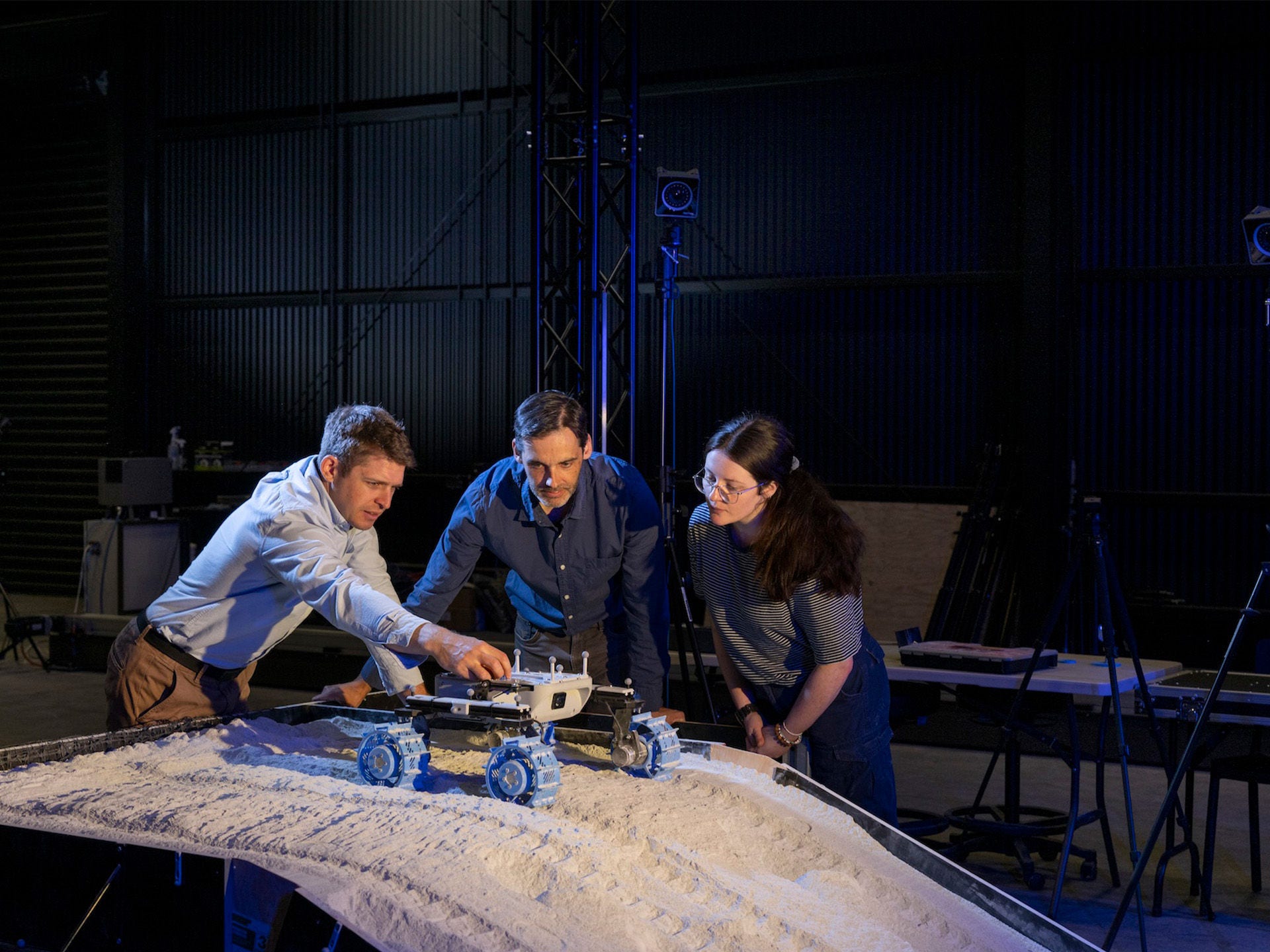
Adelaide University researchers in a lab with rovers

Nobel laureates

Adelaide University builds on the achievements of its foundation universities that extends back to 1874. For many years, our researchers have had an impact all over the world – making vital contributions to breakthroughs and discoveries including the invention of x-ray crystallography, insulin, penicillin and the Olympic torch. 

The Nobel Prize is an international award given annually since 1901 for achievements in physics, chemistry, medicine, literature and peace. Only 15 have been awarded in Australia, and five of these were recipients with strong ties to the University’s history. Among these is the second youngest ever laureate and the only father-son duo to have won the prize in the same year. 


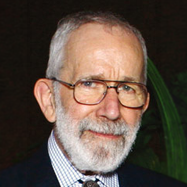
Dr John Robin Warren AC (1937–2024) was an Australian pathologist and researcher who was credited with the 1979 re-discovery of the bacterium Helicobacter pylori. He received his MBBS from the University. In 1967 he was admitted into the Royal College of Pathologists of Australia and became a senior pathologist at the Royal Perth Hospital, where he spent the majority of his career. 

At the University of Western Australia with his colleague Barry J. Marshall, Dr Warren proved that the bacterium is the cause of stomach ulcers. Dr Warren helped develop a convenient diagnostic test (C-urea breath-test) for detecting H. pylori in ulcer patients. He was appointed a Companion of the Order of Australia in 2007.

J Rob Warren

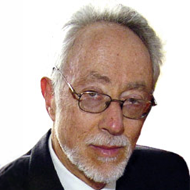
The South African-born multi-award winning author and academic had travelled the world and lived in the UK and US before choosing to settle in Adelaide in 2002, where he holds a visiting professorship at the University.

Born in 1940 in Cape Town, Coetzee is noted for his novels about the effects of colonisation and has also been active as a translator of Dutch and Afrikaans literature.

JM Coetzee

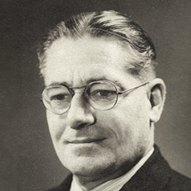
Howard Walter Florey (1898–1968) was an Australian pharmacologist who shared the Nobel Prize in Physiology or Medicine in 1945 with Ernst Boris Chain and Sir Alexander Fleming for his role in the extraction of penicillin. Florey's discoveries are estimated to have saved over 80 million lives worldwide. 

Florey was born in Adelaide and attended the University 1916-1921. Florey's legacy is widely celebrated: his portrait appeared on the Australian $50 note for many years; and a research institute at the University of Melbourne is named after him, as is a suburb in Canberra. In 2006, the Australian Federal Government renamed the Australian Student Prize given to outstanding high school leavers, the Lord Florey Student Prize, in recognition of Florey.

Sir Howard Florey

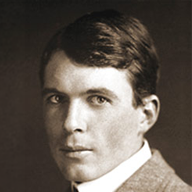
William Lawrence Bragg (1890–1971) was the son of William Henry Bragg. Born in Adelaide, he was educated at the University and at Cambridge University, where he became a fellow and lecturer. In 1919, he was appointed a professor of physics at Manchester University. 

Success came very early to Bragg, who shared the Nobel Prize for physics with his father in 1915. Following Max von Laue's discovery of x-ray diffraction by crystals in 1912, Lawrence Bragg in the same year formulated what is now known as the Bragg law. Lawrence Bragg later worked on silicates and on metallurgy. He was knighted in 1941.

Sir William Lawrence Bragg

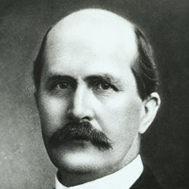
Sir William Henry Bragg (1862–1942), was a British physicist who was educated at King William's College, Trinity College and the University of Cambridge. Bragg was appointed Elder Professor of Pure and Applied Mathematics at the University in 1885 and later went on to become Cavendish Professor of Physics at the University of Leeds. 

Bragg and his son, Sir William Lawrence Bragg, share the 1915 Nobel Prize for Physics – the only father-son team to win the Nobel Prize. Later Bragg, who was knighted in 1920, held the Chair of Physics at the University of London, and headed a research group that invented the hydrophone, an instrument used for the detection of submarines.

Shir William Henry Bragg