Bioengineering Imaging Group

Bioengineering Imaging Group

World leading miniaturised optical imaging technology

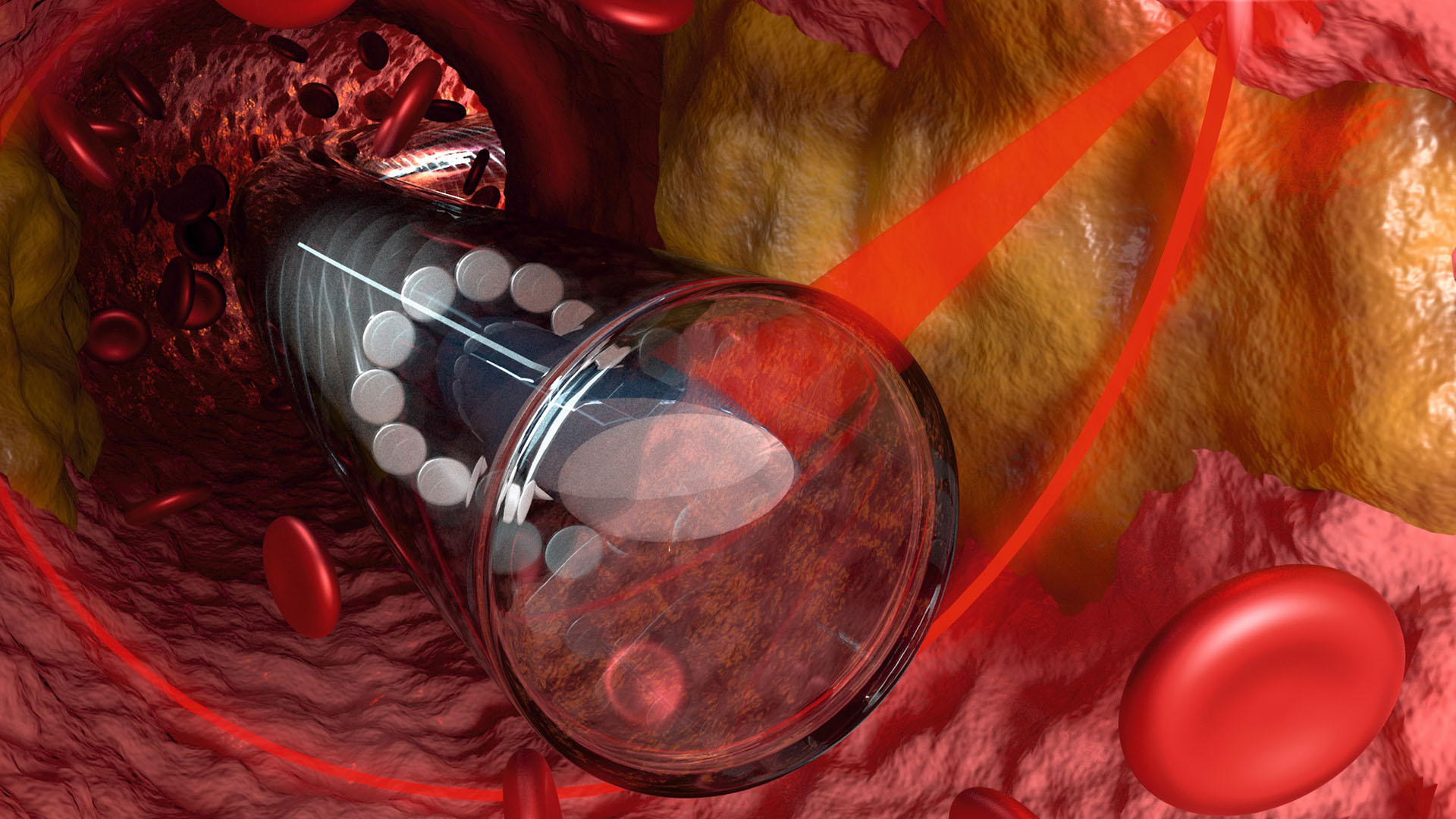
Our team design and build highly miniaturised imaging probes for medical applications to help diagnose disease and enable safer surgery. In parallel, our discoveries are also being used to support the Australian Agriculture Industry. Our imaging devices consist of a tiny fibre-optic probe encased in either a transparent catheter or a hypodermic needle. These devices are able to provide guidance deep within the body with fluorescence imaging and optical coherence tomography. 

Based in the Institute for Photonics and Advanced Sensing (IPAS), the Bioengineering Imaging Group has strong research programs in the development of new optical imaging technologies and clinical translation. 

Our research team is a multi-disciplinary group of engineers, physicists and computer scientists who work together with clinicians. Our skills complement the expertise already within the Institute for Photonics and Advanced Sensing.  Together, we are exploring novel applications and deployment of optical fibre sensing and imaging across medicine and physiology. 

Eye vision icon

Optical coherence tomography

Gauge measure icon

Fibre-optic devices

MRI scanner icon

Multimodal imaging

Stethoscope icon

Speckle decorrelation

Microscope icon

Fluorescence imaging

Eye icon

Micro-optics

Explore Bioengineering Imaging Group

Research impact


Lead: Jiawen Li

Cardiovascular disease is responsible for over 7 million deaths globally each year, many of which could be avoided through earlier and more precise diagnosis. However, current imaging methods identify high-risk plaques with less than 40% accuracy, limiting their ability to predict heart attacks. We are developing advanced intravascular imaging technologies to improve the detection of at-risk patients and enable more informed clinical decisions. In parallel, we are leveraging state-of-the-art 3D printing to fabricate a new generation of ultra-small, highly flexible imaging devices, while also establishing a world-class 3D printing facility. Together, these efforts aim to deliver life-saving diagnostic tools and strengthen Australia’s biomedical innovation and advanced manufacturing capabilities. 

Lead: Jiawen Li

Major biological discoveries have relied on either structural imaging or functional sensing, but not both simultaneously. A key limitation is the inability to capture high-resolution images together with real-time functional information from individual cells within living organisms. Current modalities such as CT and PET lack sufficient resolution, while histology is restricted to destructive ex vivo analysis. To address this gap, we have pioneered single-fibre-based probes that integrate high-resolution imaging and functional sensing within hair-thin devices. These enable, for the first time, co-localised structural and functional measurements deep inside living organisms, with applications in neuroscience and assisted reproduction, improving multimodal assessment and reducing procedural invasiveness. 

Lead: Robert McLaughlin

Diabetic foot ulcers result in over 10,000 hospital admissions in Australia each year. Tissue healing in diabetic foot ulcers is driven by the tiny blood vessels just under the surface, providing oxygen and nutrients to the skin. Diabetes causes these vessels to deteriorate and the skin becomes unable to heal itself. Our team are developing a new type of non-invasive imaging scanner to assess the health of these blood vessels and measure the damage that diabetes causes. This project will provide GPs, podiatrists and endocrinologists with a tool enabling them to rapidly select the best treatment, personalised for the patient.

Lead: Robert McLaughlin

This project extends our optics research to support Australian agriculture. Australian red meat is a $75bil industry. Each year, we produce 72mil tonnes of beef and 10mil tonnes of sheepmeat. But the cost of production in Australia is twice the costs in Brazil; 75% greater than Argentina; and 24% higher than the USA. Australia cannot win in a commodity market where the lowest price wins. Australia’s most profitable opportunity lies in supplying premium meat at higher prices, building on our brand as a provider of premium agricultural products. Meat quality varies between individual sheep and cattle. In a meat processing plant, meat needs to be tested to identify premium meat. Quality testing creates a virtuous cycle where processors provide feedback to farmers on genetics and husbandry to further improve quality. Our team has developed an optical scanner to rapidly measure meat quality in sheep and beef in a meat processing plant, allowing processors to identify premium grade meat for the international market. 

Contact Bioengineering Imaging Group 

Location

Location
Bioengineering Imaging Group
Level 1, The Braggs Building, City Campus East
Adelaide University, Adelaide SA 5005

Email

Email
robert.mclaughlin@adelaide.edu.au
jiawen.li01@adelaide.edu.au

Contact us

Institute for Photonics and Advanced Sensing

Location

Location
Institute for Photonics and Advanced Sensing
Adelaide University
Level 1, The Braggs Building, City Campus East, Adelaide SA 5000

Telephone

Phone: +61 8 8313 9211

Email

Email: ipasadelaide@adelaide.edu.au