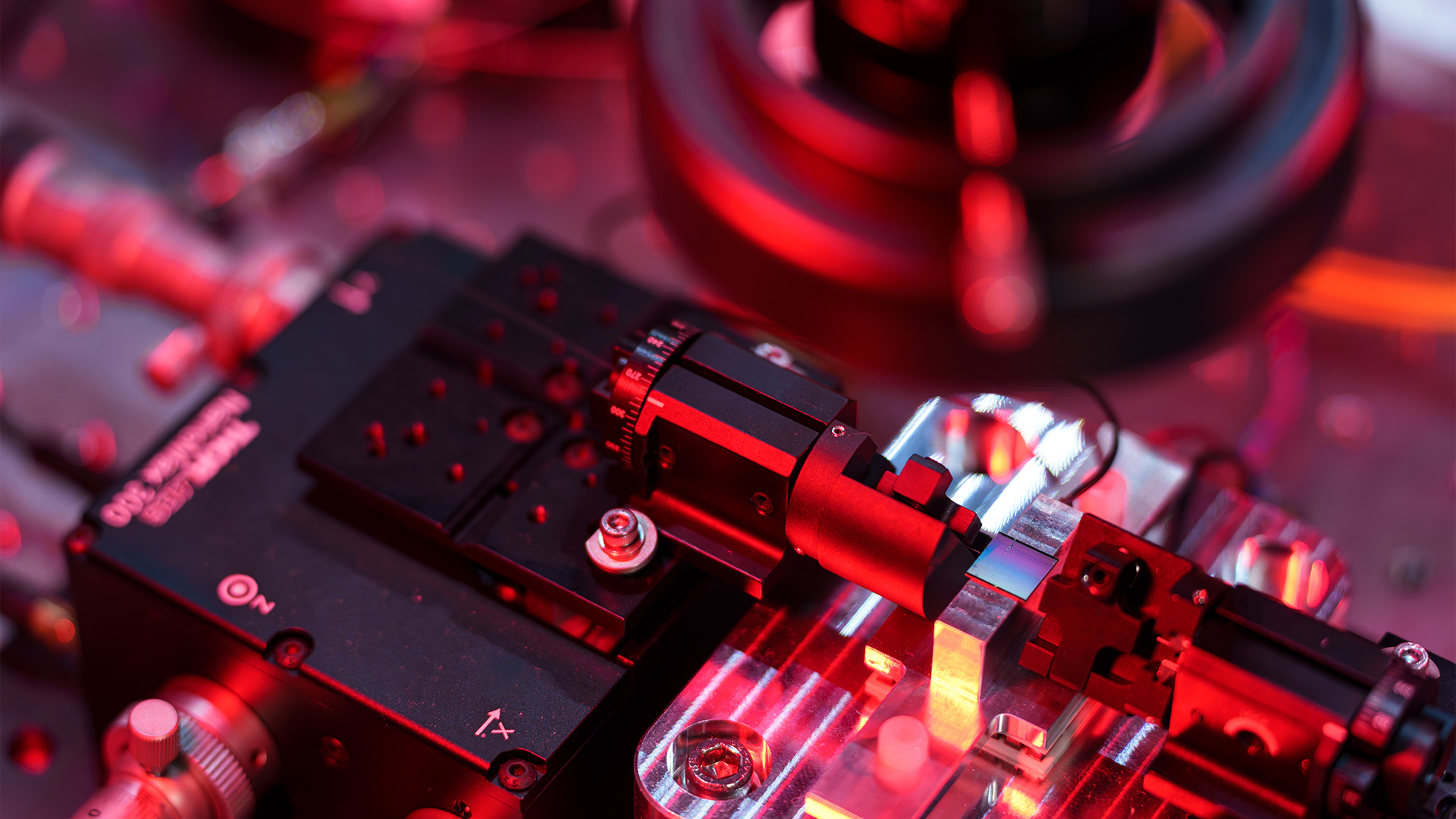
Building instruments that can make measurements with world-class precision and accuracy
We are interested in measurements that are of high value and interest to fundamental physics as well as in industrial, biological and defence contexts.
We are interested in measurements that are of high value and interest to fundamental physics as well as in industrial, biological and defence contexts.
Most of these systems depend on satellite-based timing networks (such as GPS) to achieve timing accuracy and synchronisation. There is, however, a growing concern regarding the fragility of GPS - both through its vulnerability to intentional jamming or spoofing, as well as loss of signal due to environmental conditions. These circumstances require the development of alternative secure and independent sources of time to allow Australia to mitigate the vulnerability associated with our current reliance on GPS.
The Portable Atomic Clocks team at the University of Adelaide is a diverse team of early-career researchers who have been working to solve this problem. Since 2019 the team has been developing clock technologies that are not only capable of providing independent and assured timing signals in GPS-denied environments, but also to deliver signals that out-perform timing derived from GPS by many orders of magnitude.
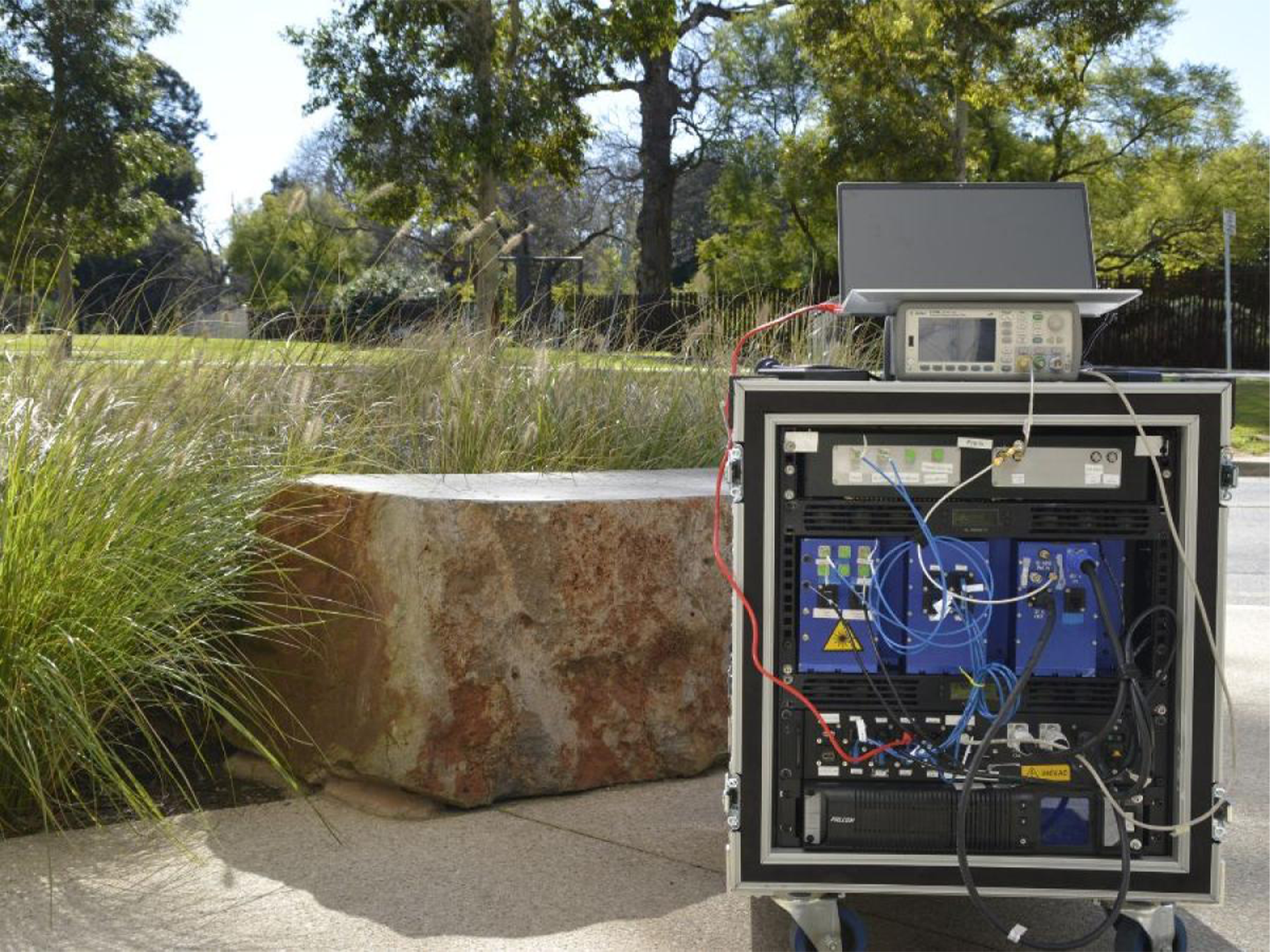
The clocks – an ytterbium atomic clock and a rubidium 2-photon atomic clock – are robust and field-capable with turn-key operation while achieving frequency stabilities better than 1 part in 10^14. This is an improvement over the best-in-class commercially available devices by up to 100-fold over short time scales. Our group has developed these systems so that they can fully cold-start, detect internal errors and restart, and monitor internal systems to keep all within operational range. To our knowledge, no one else has done this previously on such a complex piece of time and frequency technology.
This plot is to be used as a resource for those interested or involved in precision timing. The plot shows where each clock sits in terms of its performance (instability) vs its Size, Weight, and Power (SWaP). The lower the instability, the better the performance. The lower the SWaP, the more portable/deployable the device.
Recommended for viewing on a desktop device.
Measuring the ultra-low concentrations of radioactive noble gases allows researchers to understand the age, origin, and interconnectivity of the groundwater and how it has moved underground through space and time.
Atom Trap Trace Analysis (ATTA) is an exceptional example of how quantum technology can be utilised to help overcome challenges facing our modern society. The lab measures the radioactive noble gases using laser cooling and trapping techniques. These isotopes have extremely low natural concentrations, less than one part per trillion in the environment, making measurement an incredible challenge.
However, because noble gases don’t easily react chemically, they are the gold standard for environmental tracers to track groundwater movements. Measurements of their concentration provide dating information to address the greatest environmental challenges facing Australia and the globe, such as adaption to climate change and sustainable management of our finite water resources. This analytic capability will also allow researchers to look further into the past of Antarctica’s climate, building an understanding of global environmental change.
Measurement using the ATTA technique is state-of-the-art and only in recent years becoming available for routine analysis. Before this new facility, researchers wanting to measure these ultra-low concentrations of noble gases had to rely on a very small number of overseas laboratories that don’t meet demands for their services.
Energy, mining and resources are key industry engagement priorities for IPAS, the University of Adelaide and environmental sustainability is a research focus.

The new ATTA facility, developed in partnership with CSIRO, allows us to understand the sources of water, where it comes from and what the recharge rates are, which then allows us to make decisions about sustainable extraction. This is critical where development of any kind might use or impact groundwater systems – from urban development where groundwater systems are used to supply communities, to agricultural and mining development.
Download the below PDF to learn more about ATTA applications:
Look at the below video to learn about the new facility:
Partners websites:
Adelaide University
University of Heidelberg
CSIRO

The ARC Centre of Excellence in Optical Microcombs for Breakthrough Science (COMBS ) brings together a team of multi-disciplinary researchers spanning optical physics, photonic chip technology, materials science, and sophisticated digital and microwave electronics from eight universities.
The team COMBS is using technology, called the optical frequency comb, to drive society-wide transformations in the fields of biomedical imaging, communications, precision measurement and astronomy.
Professor Andre Luiten is Co-leader for Precision Measurement and Sensing theme – Optical Atomic Clocks. In this theme, the team is developing next-generation portable atomic clock technologies to improve the precision and reliability of navigation and sensing systems.
Existing systems often depend on bulky and delicate instruments. Andre leads research focused on creating compact, highly stable timing systems that reduce reliance on GPS and bulky conventional instruments. The technology aims to deliver real-time, high-precision positioning and sensing for applications ranging from autonomous vehicles and drones to earthquake detection, resource mapping, flood monitoring and navigation in GPS-denied environments such as indoors or underground.