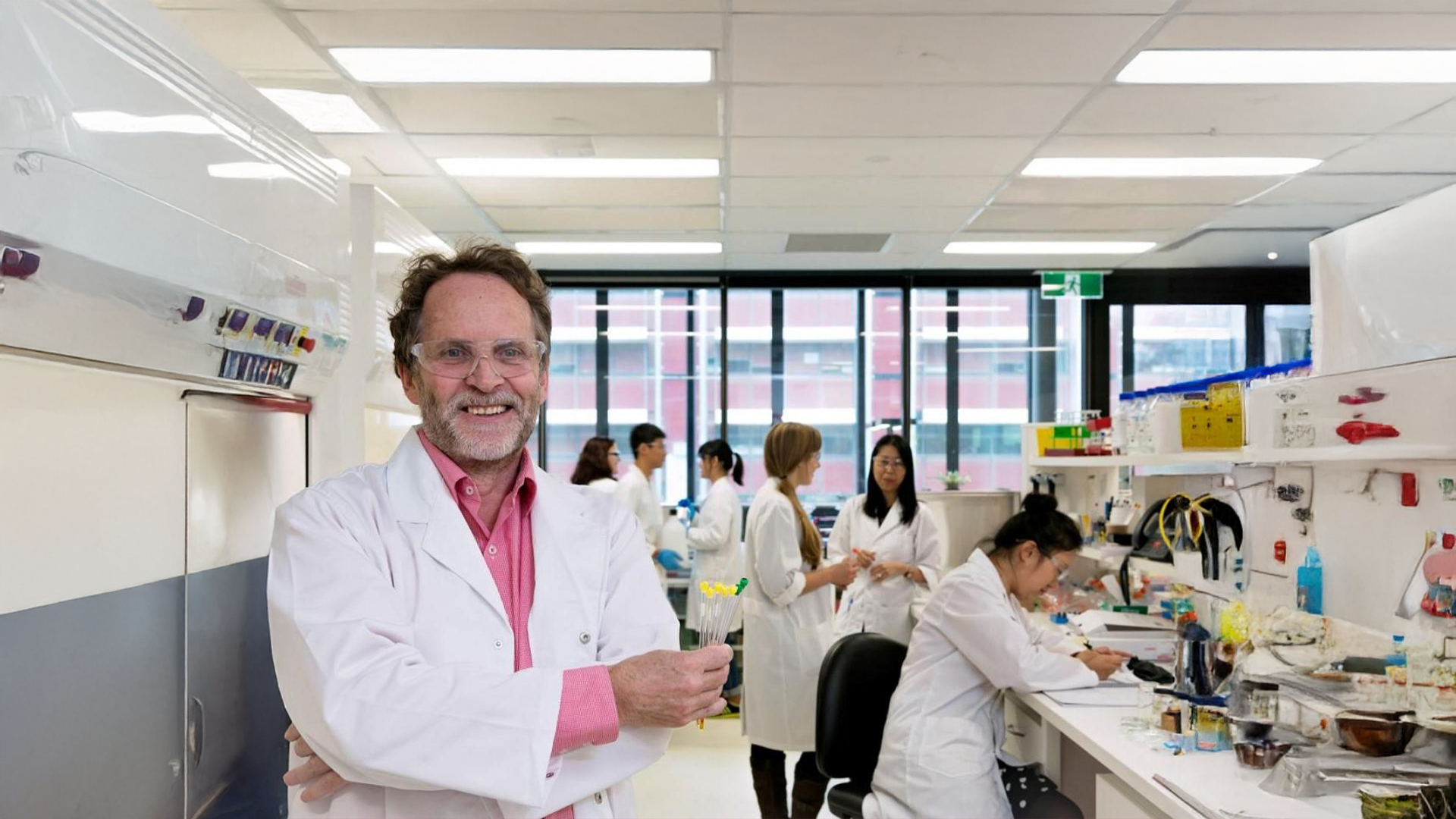
Sophisticated chemical and biological approaches to medicinal chemistry research
The Abell Group uses the tools of chemistry and biology to design and develop new drugs with novel mechanisms of action or to gain a detailed molecular understanding of the function of peptides and proteins.
The activity of drugs can be limited to the sites of disease by exploiting aspects of disease pathology such as disease microenvironments and changes to gene expression. Incorporation of disease biomarker molecular sensors into small molecule drugs allows for the creation of pathology-activated prodrugs that means the drug is only activate when and where it is needed. Diseases and microbial infections can also be effectively treated with drugs acting upon unique or upregulated biological targets. External stimuli such as irradiation with light can also be used with photoswitchable drugs to “switch on” drug activity with spatiotemporal selectivity.
The function of peptides and proteins is defined by their linear sequence of amino acids and how this folds into a biologically active 3D shape or conformation. A detailed molecular understanding of these processes allows the rational design and synthesis of small molecules that can bind to a peptide or protein of interest. Such molecules provide important biological probes for studying key metabolic events and also potential therapies for human disease. These ideas extend to other biomolecules to allow the generation of fluorescent and redox active probes and therapeutic agents.
All projects involve organic synthesis and product characterisation by Nuclear Magnetic Resonance (NMR) and other spectroscopic techniques, with an opportunity to integrate biology, computational chemistry, biophysics and bioengineering.


