Visual Physiology & Neurobotics Lab

Dragonfly

About Visual Physiology and Neurobotics Laboratory (VPNL)

We address fundamental questions in neuroscience, using behavioural, electrophysiological and neuroanatomical techniques.
Dragonfly

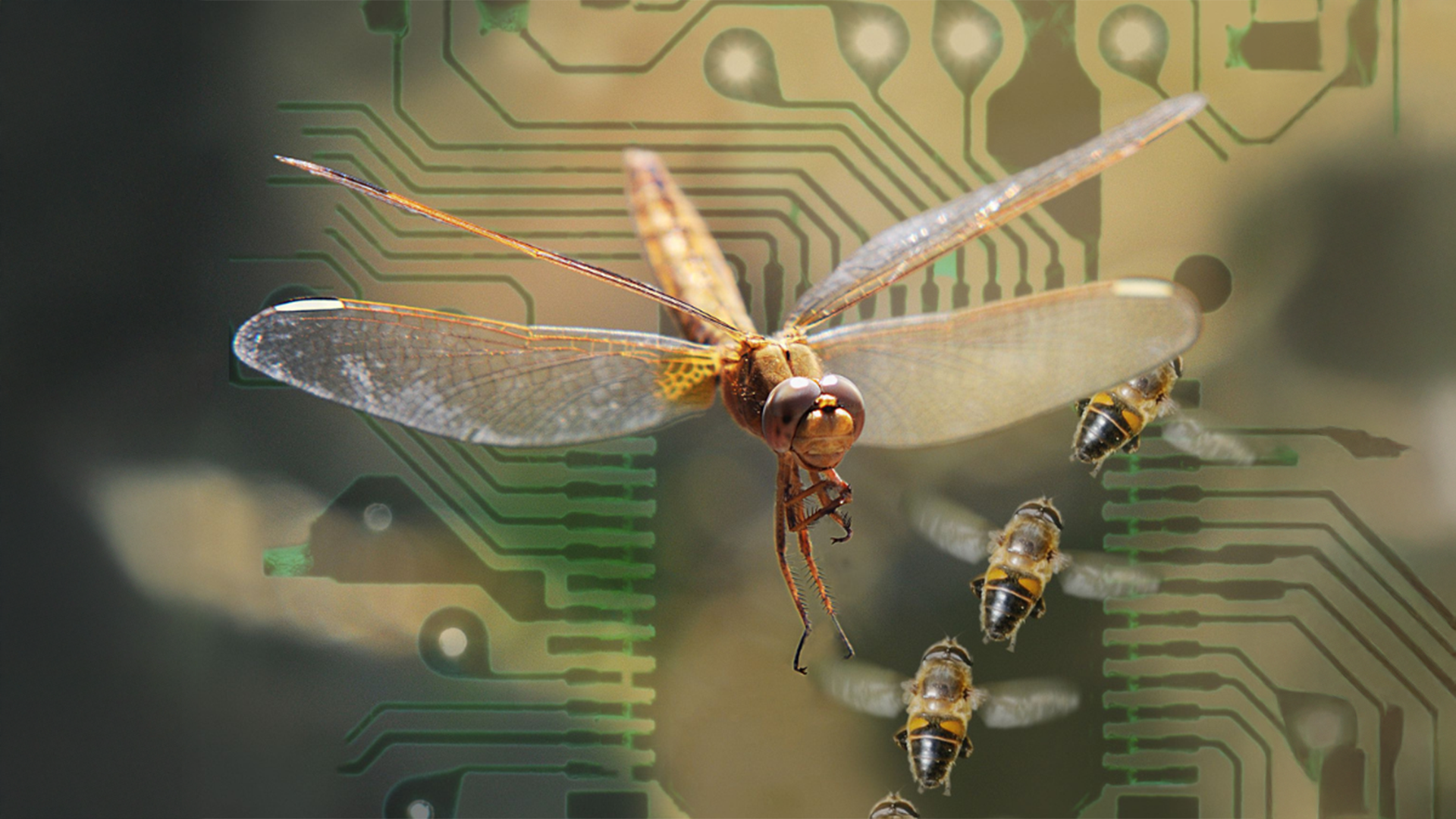
Our model system is the dragonfly, the apex predator of the insect world. Their aerobatic capabilities are so exquisite, they have dominated the skies, mostly unchanged, for 300 million years. In rapid pursuits, the dragonfly detects targets in clutter, predicts their future location and selectively attends to one target amidst a swarm. They also have robust velocity estimation, hovering near stationary, yet can chase targets at ~60km/hr.

Bio-inspired from this research, we develop advanced signal processing and novel, deep learning architectures. We translate these models to our autonomous systems and test them in real-world environments.

Our work has been supported by:

  • Australian Research Council Discovery Project - Dim Light Vision in Dragonflies, 2024-2027
  • Australian Research Council Discovery Project - Flapping wing robotics, 2024 – 2027
  • Defence Trailblazer Bio-Inspired Counter-Uncrewed Aerial Systems (CUAS), 2024-2025
  • Australian Research Council Future Fellowship, 2018-2022
  • Next Generation Technologies Fund, Counter Improvised Threats Grand Challenge, 2018-2020
  • Australian Research Council Discovery Early Career Researcher Award, 2015-2017
Mosquito insect icon

Field recordings of insect behaviours

Brain icon

Electrical recordings of brain activity

Structure icon

Imaging of neuronal architectures

Eye test icon

Optical measures of visual resolution

Thinking mind icon

Computational neuroscience

Network globe icon

Design of autonomous systems

  • Neuroethology: capture video of insect behaviours using super slow-motion camera systems.
  • Electrophysiology: conduct intracellular and extracellular recordings of neuronal activity.
  • Neuroanatomy: use imaging techniques to investigate underlying brain structure.
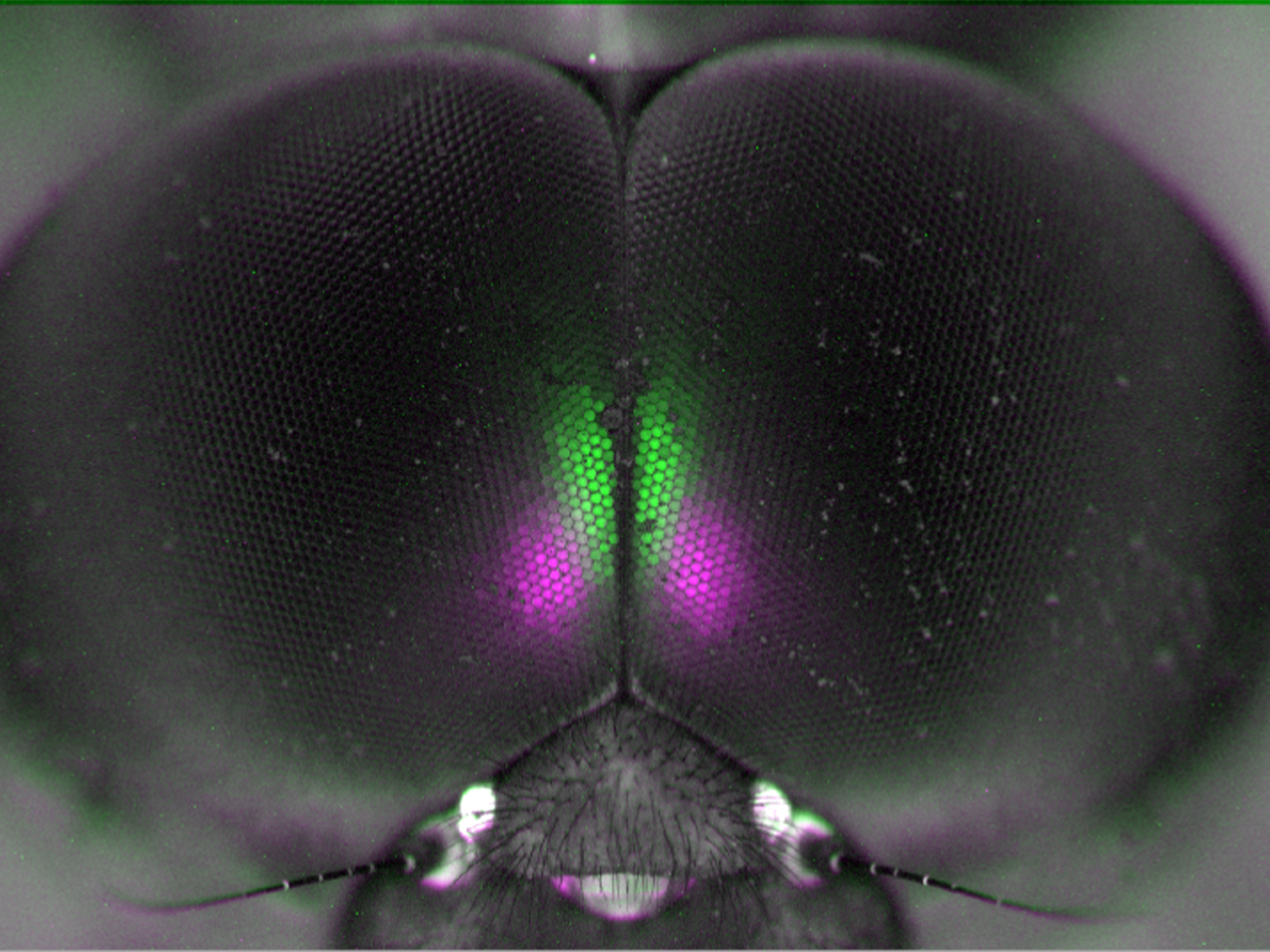
  • Mapping of the eye: quantify resolution across the visual field with a portable, fluorescent microscope.
  • Computational modelling: develop models of advanced sensing and information processing.
  • Engineered solutions: translate models into hardware for use on autonomous air and ground systems.

The VPNL is composed of scientists and engineers across multiple disciplines. We collaborate with researchers in Mechanical and Electrical Engineering, Computer Science, Psychology and the Medical School. Additionally, we have both national and international collaborators from both Europe and the USA.

We work with industry and government partners, testing our neuro-inspired algorithms for real-world applications.

We have established technical capabilities, including several electrophysiology rigs. Our neuroanatomical work is assisted by the nearby Adelaide Microscopy. We have several computational modelling workstations and access to Phoenix High Performance Computing. We use our commercial and in-house built drones, as well as develop our robotic ground platform.

Contact us

Location

Location
Visual Physiology & Neurobotics Laboratory
Adelaide University
Level 4, Helen Mayo South, City Campus East, Adelaide SA 5000

Telephone

Phone: +61 403 079 575

Email

Email: steven.wiederman@adelaide.edu.au

Contact us

Institute of Photonics, Advanced Sensing and Quantum Technologies

Location

Location
Institute of Photonics, Advanced Sensing and Quantum Technologies
Adelaide University
Level 1, The Braggs Building, City Campus East, Adelaide SA 5000

Telephone

Phone: +61 8 8313 9211

Email

Email: ipasadelaide@adelaide.edu.au