Currently, astronauts in the International Space Station (ISS) rely on prepackaged food and fresh produce delivered from resupply vehicles. However, the ISS is only 400 kilometres away from Earth – close compared to Mars, which is 100 million kilometres away. This distance makes resupplies difficult, and any food brought from Earth would go bad or lose nutrition over time, so astronauts need fortifying food they can grow in space.
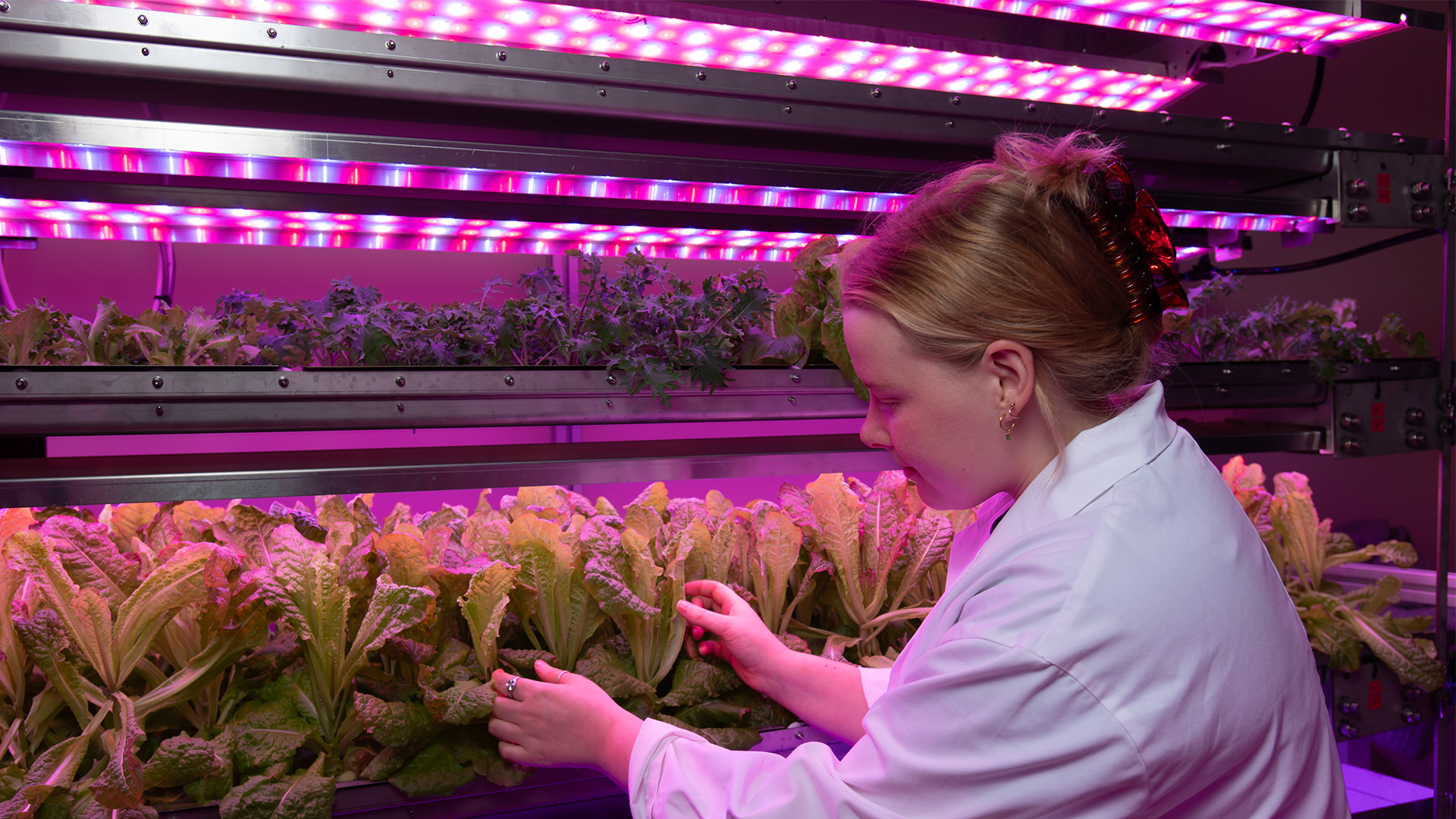
PS4 is developing new plant-growing technology in laboratory conditions to overcome the challenges and constraints involved in growing crops in space. The Centre is also developing novel food crops such as duckweed; a plant that’s nutritious, quick to grow, and minimal in waste – making it perfect for cosmic conditions. The eventual goal for space exploration is to establish permanent plant-growing platforms which will allow astronauts to nourish themselves over the long-term with revolutionary space plants.
“The plants grown in the experimental space platforms will be ‘complete nutrition’ varieties that humans can survive on for the duration of longer space exploration missions,” Professor Gilliham said.
In addition to making breakthroughs in Moon-based agriculture, the Centre will continue the long tradition in which space research leads to earthly innovations. Previous cosmically focused discoveries have included unexpected inventions that benefit our everyday lives, from air and water filters, LED lights for plant growth, to solar panels. Professor Gilliham sees great potential for P4S’ work to prompt advancements in controlled-environment agriculture, which is important in the climate change fight because it’s less resource-intensive than other crop-growing methods.
“Living in space intensifies the complex sustainability challenges we already face in producing food and biomaterials on Earth,” he said. “Our controlled-environment agriculture work will help us find solutions to Earth’s common challenges such as drought, heat, flood, and saline soils.”
“P4S breakthroughs will not only deliver crucial improvements in plant efficiency, productivity, and processing technologies in space – but also here on Earth.”
P4S is a global collaboration that brings together 38 entities from across academic, private, government and technology spheres. Member organisations include NASA, the Australian Space Agency, the German Space Agency, the Universities of California, Cambridge, Wisconsin and Nottingham, and four Australian university partners.
On the horizon
Adelaide University is a partner in NASA’s upcoming Artemis missions, contributing breakthrough scientific capabilities that enable us to explore more of the Moon than ever before. These missions will also teach us how to live and work away from home and prepare us for future human exploration of Mars. As previous space-related innovations like Velcro, solar panels, and camera phones have proven, these great leaps across the universe are also likely to foster untold great leaps forward for those of us still living Earth-bound lives.
In the near future, technologies evolved for space environments – such as advances in closed-loop farming, recycling, and resource efficiency – can be expected to transform how we grow food here on Earth. Applied in inner cities, remote regions and off seasons, they can support resilient, future-proofed food systems across the globe.