Restoring lost oyster reefs

Restoring lost oyster reefs

With ‘ocean music’ and a multi-species approach, Adelaide University research is helping bring ecosystems back from the brink of extinction.

Oyster reefs are considered among the most degraded marine habitats in the world. They once followed Australia’s coastline for almost half its length and provided a thriving environment for many kinds of organism. But within a hundred years of colonial settlement, they were dredged to near extinction. To the colonists, this meant fewer oysters to harvest. To the fish, crabs and amphipods living in the reefs, it meant nowhere to call home.

“These ecosystems provided the foundation for communities that spread far beyond the reef,” says Dr Dominic McAfee, a researcher from Adelaide University’s Environment Institute. "There are very few of these reefs left in the world.”

Professor Sean Connell and Dr McAfee are conducting research to support a nationwide effort to recover the lost reefs. Already, the University has helped the South Australian Government and The Nature Conservancy to achieve the largest oyster reef restoration in the Southern Hemisphere, the Windara Reef. And now, they’re adding to the success of their restoration work with a novel and award-winning technique: underwater music.

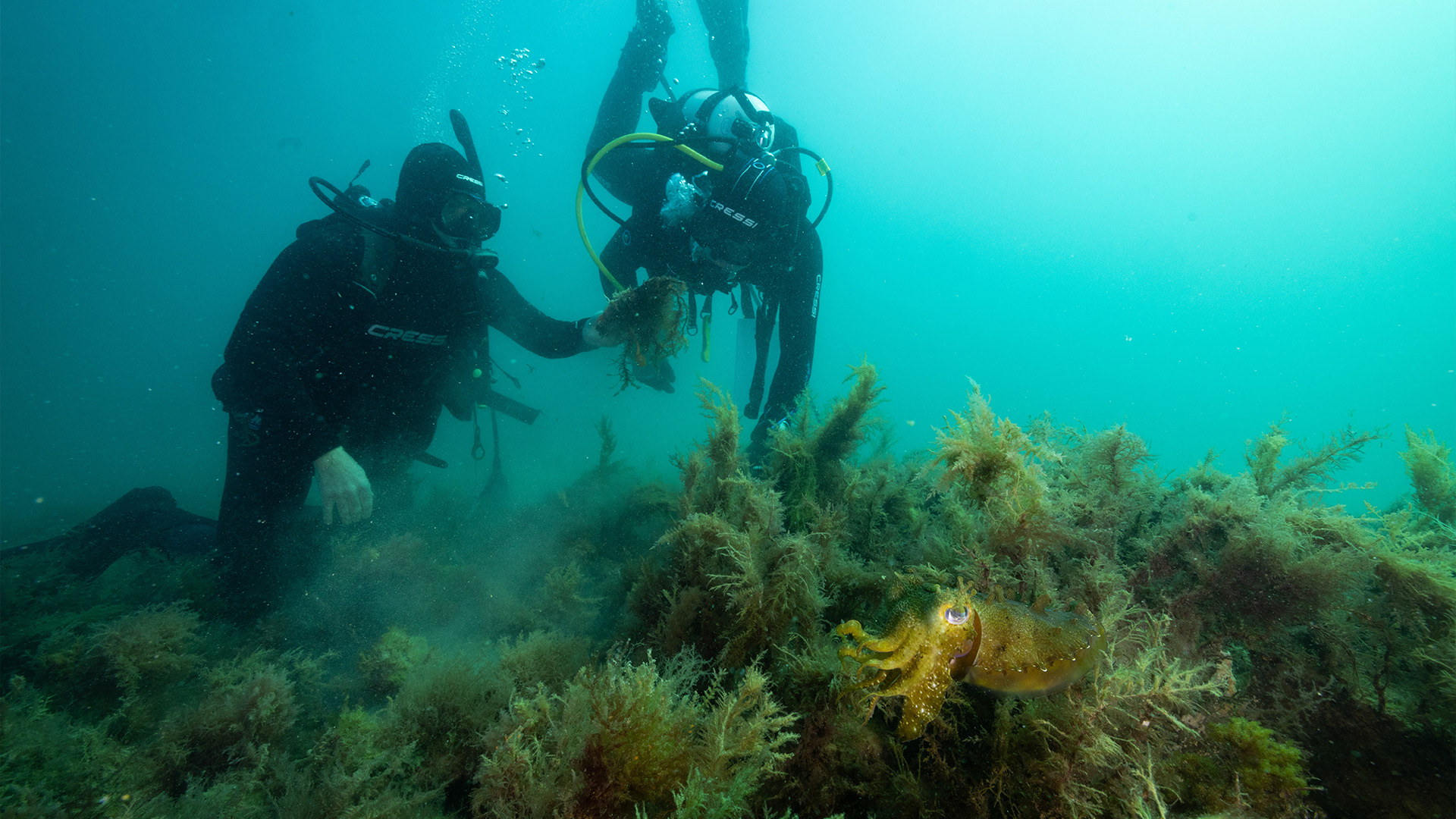
When the Windara Reef foundations were laid, a layer of fast-growing turf algae covered the new surfaces, preventing the settlement of baby oysters. In response, the researchers installed kelp, whose canopies formed a barrier against the algae. This multi-species approach freed a space for the oysters to settle.  

But how do they find the reef? This is where the music comes in. 

Oysters – brainless invertebrates – are not as passive as we might think. They can see, smell and hear, and these senses guide them to suitable homes. Sound travels better underwater than sight or scent, so that is what University researchers used to entice the oysters. But the music isn’t Mozart: it’s the sound of a heathy reef, attracting the molluscs with the sounds of bustling marine life. 

“The more intense the soundscape, the more oysters you get settling down,” Dr McAfee said, “and it’s working better than we expected.”

The team played their soundscapes near two reef restoration sites. These sites attracted up to 17,000 more oysters per square metre than other sites. And those oysters grew larger more quickly too, accelerating the reef’s development.

“This innovative approach not only enhances the ecological restoration process but also demonstrates the remarkable potential of sound in marine conservation.”

Professor Sean Connell  
Environment Institute

“This innovative approach not only enhances the ecological restoration process but also demonstrates the remarkable potential of sound in marine conservation,” Professor Connell said. 

Once settled, the oysters provide complex habitats for diverse sea life. They clean the water with their filter feeding, serve as a vital food source for other species, and provide habitat for fish with their shell piles. 

“We consider them ecological superheroes,” says Dr McAfee. 

On the horizon

The team’s success shows that underwater soundscapes can be a cost-effective and efficient acceleration tactic in oyster habitat restoration, especially in the early stages of reef recovery.

Beyond Australia, the innovative approach is making waves. Nations around the globe are pursuing their own reef restoration projects, some even exploring how Adelaide University’s songs of science can be recreated.

In an era of climate anxiety, stories of habitat restoration like this provide hope and direction for future generations. The success of Professor Connell and Dr McAfee progresses the team’s dream of a broader ‘restoration culture’ encouraging Australians to make habitat care and regeneration a part of their daily lives.