Neonatal medicine

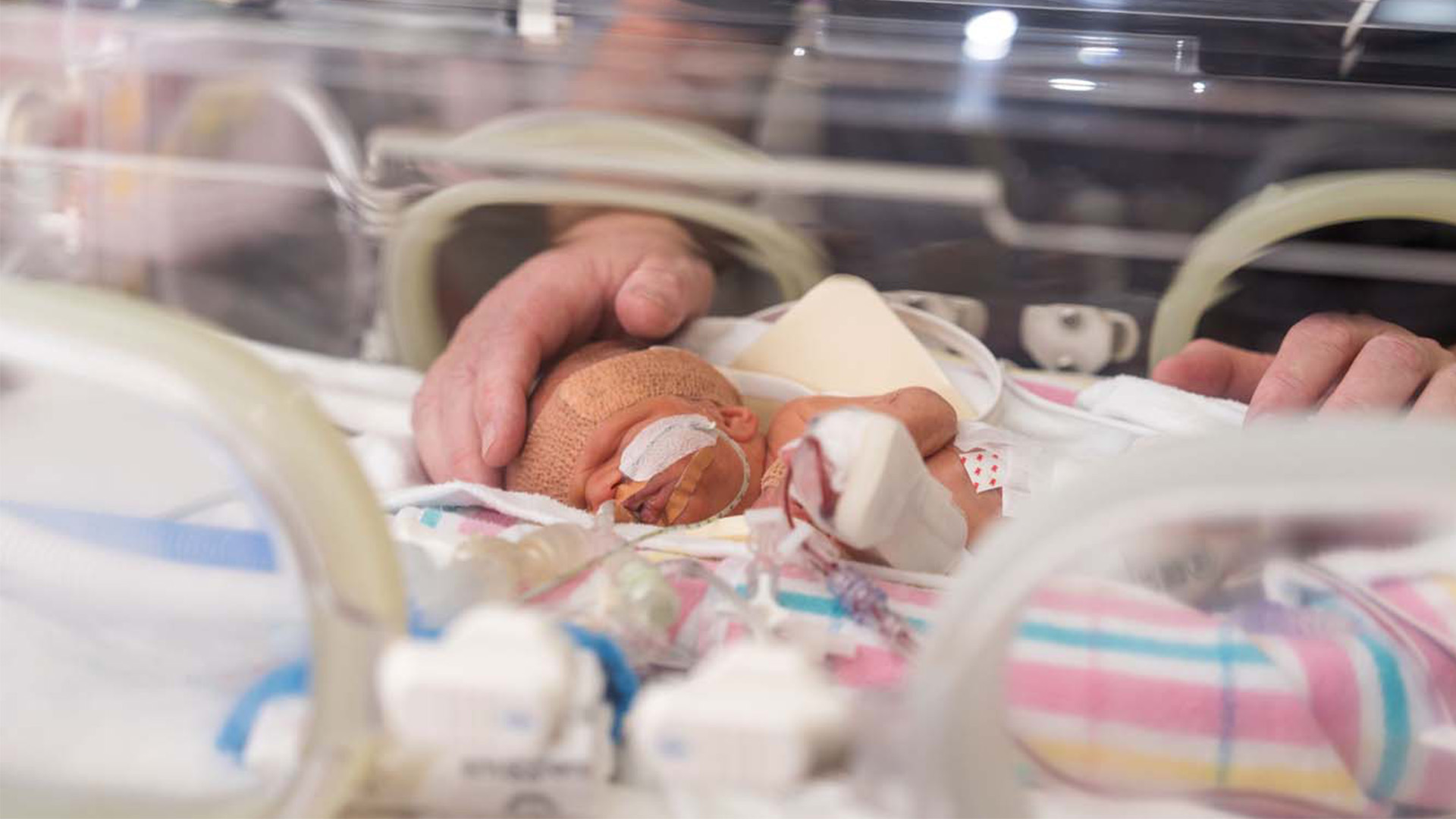
Neonatal baby in the hospital

About the Neonatal Medicine research group

The Neonatal Medicine research group at the Robinson Research Institute is dedicated to improving outcomes for the most vulnerable newborns, particularly those born very preterm or critically ill. The group focuses on understanding and optimising the key biological and neurological processes that shape survival and long-term health in early life.

Our research combines clinical insight with translational science to address major challenges in neonatal care, including brain injury, blood transfusion practices, and nutrition. By developing patient-specific and evidence-based approaches, we aim to reduce complications, improve recovery, and support healthier developmental trajectories, free from neurodevelopmental impairment.

Working in close partnership with clinicians and national organisations, our research is designed to directly inform practice and improve care for newborns in intensive care settings.

Baby sleeping icon

Neonatal oxygen physiology and brain injury prevention

Persona database icon

Precision transfusion strategies in preterm infants

Baby food nutrition icon

Personalised nutrition for critically ill newborns

Books icon

Translational research in neonatal intensive care

Medical book icon

Clinical trials, partnerships and care guideline development

Medical health icon

Improving survival and long-term health outcomes in preterm infants

Explore the Neonatal Medicine research group

Our research drives international health care policies and guidelines in our field, including:

  • Neonatal transfusion content of NHMRC Endorsed National Blood Authority Module 6 Clinical Guidelines for Maternal, Fetal, Neonatal and Paediatric Transfusion
  • Executive leadership contribution to The Australian and New Zealand Living Neonatal Respiratory Distress Guidelines
  • Establishment of formal collaborative relationship for international perinatal randomised controlled trials between Robinson Research Institute and the International Perinatal Research (INPRES) Partnership, National Perinatal Epidemiology Unit, University of Oxford
  • Executive leadership and research priority setting for the Australasian Perinatal Adaptive Trial Platform (PLATIPUS)
  • Executive leadership and research priority setting for the Interdisciplinary Perinatal and Maternal Clinical Trials (IMPACT) Network
Professor Michael Stark

Group lead Neonatal Medicine research group, Deputy Director Clinical Research, Robinson Research Institute

Dr Tara Crawford

Post-doctoral Researcher and Clinical Trials Manager, Robinson Research Institute

Dr Chad Andersen

Senior Staff Specialist Neonatal Medicine, Robinson Research Institute and The Women’s and Children’s Hospital Adelaide


Many extremely preterm newborns develop anaemia requiring a transfusion. While transfusions save lives, the potential for transfusion-related adverse outcomes is an area of growing concern. The underlying mechanisms are thought to include adverse pro-inflammatory and immunosuppressive responses. Epidemiological and observational evidence supports an association between transfusion of washed RBCs and fewer post-transfusion complications. The WashT trial is a randomised controlled, blinded, multicentre international clinical trial, investigating the effectiveness of washed RBCs versus unwashed RBCs (current standard practice) in infants born less than 28 weeks’ gestation. Funded by the NHMRC and NIHR, 1124 extremely preterm newborns will be recruited with a primary composite outcome of mortality and/or major neonatal morbidities associated with organ dysfunction or failure diagnosed prior to first discharge home.

Preterm babies are highly vulnerable to brain injury, with both low and high oxygen levels contributing to damage through different biological mechanisms. Despite advances in care, oxygen management remains challenging and current monitoring does not adequately capture overall oxygen status. This study aims to develop a simple, non-invasive method to better measure oxygen levels and improve outcomes for very preterm infants.

Congenital anomalies requiring major neonatal surgery are rare but account for a significant proportion of NICU admissions, where feeding challenges necessitate early parenteral nutrition. Emerging evidence suggests delaying amino acid provision during critical illness may improve outcomes, including shorter ICU stays and reduced ventilation time. This multicentre randomised controlled trial will test whether delayed amino acid delivery improves recovery in surgical newborns.

High-grade germinal matrix haemorrhage-intraventricular haemorrhage (GMH-IVH) is a major cause of death and long-term disability in preterm infants, with no effective treatments to prevent progression to complications such as posthaemorrhagic ventricular dilatation (PHVD). Emerging evidence suggests that intranasal maternal breast milk - rich in stem cells with neuroprotective properties – may offer a novel therapeutic approach. This multicentre randomised controlled trial will test whether adding intranasal maternal breast milk to standard care reduces PHVD and improves brain and developmental outcomes in preterm infants with GMH-IVH.

Infants born preterm are at high risk of developing cognitive, behavioural and emotional deficits later in life. One in three infants born before 32 weeks of pregnancy exhibits a language delay, with communication difficulties persisting into adulthood. While advances in neonatal medicine have resulted in decreased mortality for preterm infants, neurodevelopmental problems in survivors have remained unchanged. The study will evaluate the impact of listening to recorded maternal and paternal or other parent’s voice on later speech development in very preterm newborns.

Contact the Neonatal Medicine research group

Location

Location
Robinson Research Institute
Adelaide University
55 King William Road, North Adelaide, SA 5006

Email

Email: michael.stark@adelaide.edu.au

Contact us

Robinson Research Institute

Location

Location
Robinson Research Institute
Adelaide University
Ground Floor, Norwich House
55 King William Road
North Adelaide, SA 5006

Email

Email: robinsonresearch@adelaide.edu.au