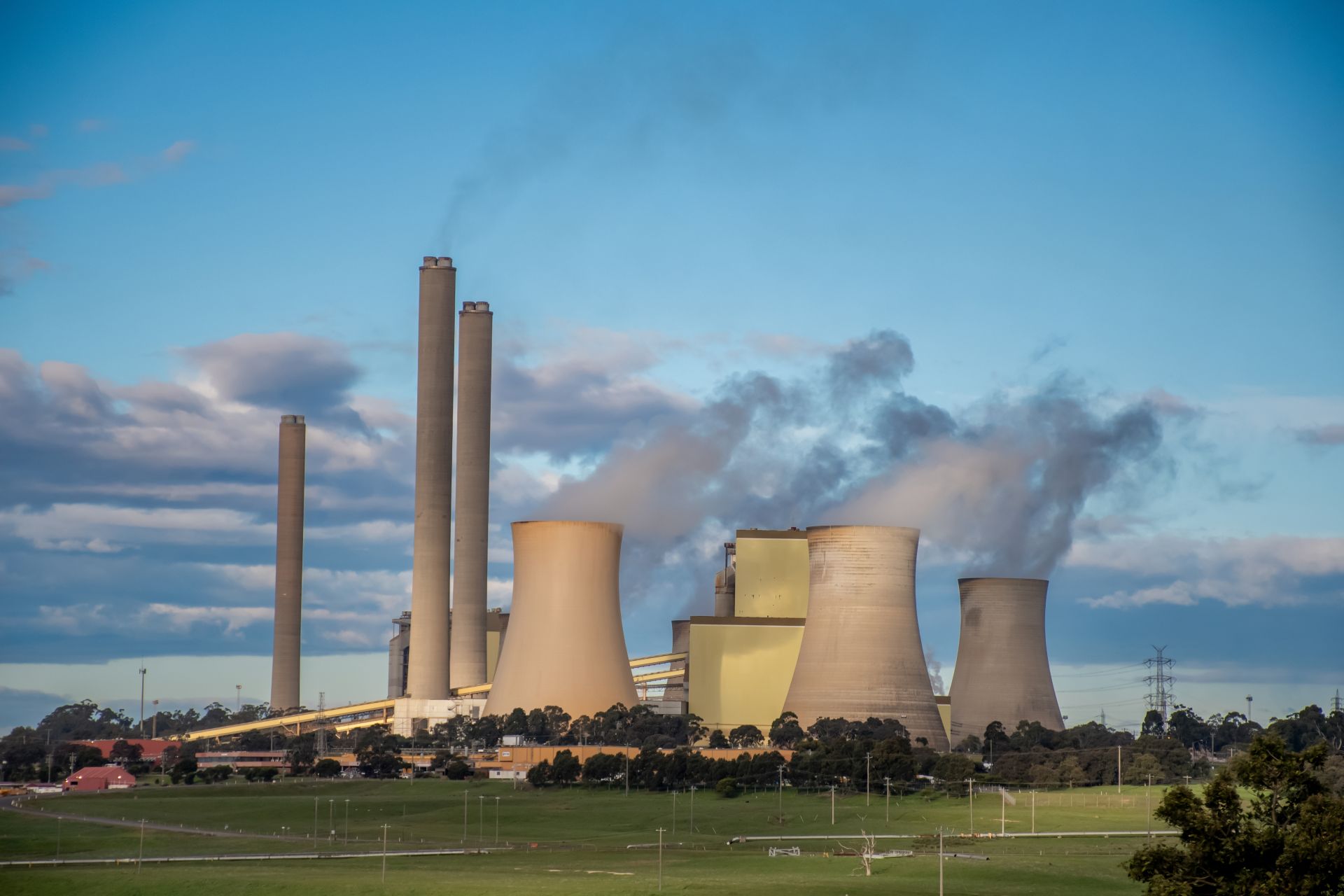
South Australia has demonstrated a very high penetration of renewable electricity in a relatively short timeframe but that’s only one part of the puzzle. Electricity makes up about a quarter of global energy demands. Transport, including heavy vehicles, airplanes and ships, still rely on burning fuel. The world uses more than 100 million barrels of oil a day.
Many heavy industries, including smelting, glass-making and cement production, burn fuels to achieve high temperatures. Most of these industries are harder to electrify. Carbon neutral fuels, such as hydrogen, use huge amounts of energy to produce and have long development timeframes and massive capital requirements. And there’s still a long way to go nationally and internationally to decarbonise electricity generation.
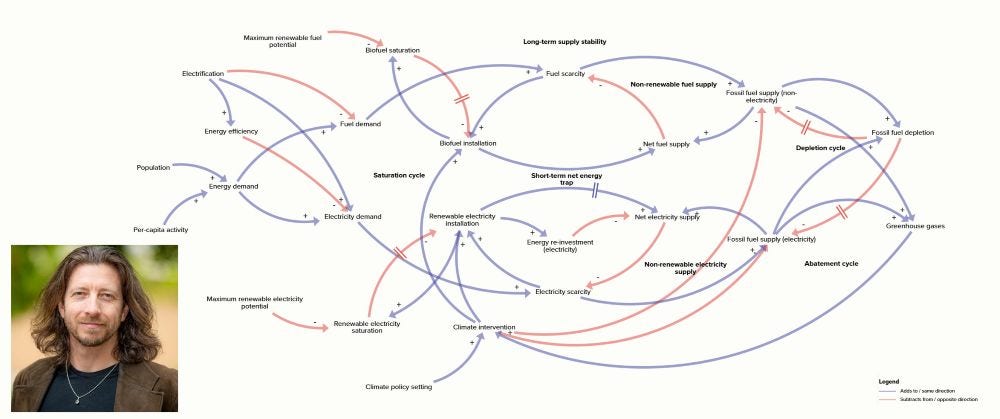
“If we're trying to respond to scarcity by throwing renewables at it, which is 100% the right thing to do in terms of climate change, then we actually have a real conundrum because we have to take energy out of the system to invest in building that stuff,” Associate Professor Hopeward says.
To make this transition rapidly, energy needs to be sacrificed in the short term to build renewable infrastructure for the long term, according to modelling undertaken by Professor Hopeward and his former students.
“The majority of the world signed up to the Paris Agreement,” Associate Professor Hopeward says. “We've got commitment, we understand the problem, the science is largely settled … enough to have major international cooperation in the form of agreements to reduce emissions.
“We've got a choice. We either continue with fossil fuels, in which case we'll blow our emissions budget and end up in a probably 2.5 to 3 degree warming scenario while we make that transition and we'll eventually start to exhaust the fossil fuels anyway.
“Or if we are serious about sticking to that 1.5 to 2 degree warming target, we have to actively reduce our demand so that we can free up the energy to build the green systems, which are both the renewable electricity supplies and the electrification technology that we need.”
However, trying to argue that economic activity should be curtailed for a sustainable future is “a very hard sell”.
Associate Professor Hopeward (formerly Ward) has been a long-term critic of the ‘green growth’ movement .
“We have done ourselves a disservice by allowing a view to perpetuate and persist that we don't need to make those trade-offs,” he says.
“For a long time, climate change scenarios have been put forward as a range from we either grow our economy and fuel it with fossil fuel, in which case we cook the planet and we get these horrific scenarios, or we grow our economy with renewable energy and/or some sort of carbon capture and storage technology that means we can continue to fuel it with whatever we like, we just won't emit the carbon into the atmosphere.
“That technology is non-viable at scale but the damage has been done in terms of releasing a whole lot of scenarios for people to plan to, all of which are about different forms of growth.
“There has never been a challenge at high levels – in terms of government planning, public policy and public awareness – to the idea of growth.”
The pending collision between the energetic extraction of fossil fuels and the rollout of renewables requires a public discussion.
“People have been sold a version of the future that is one or another version of growth. So either way you're going to be richer, your kids are going to be better off, we're going to have more stuff, we're going to have more travel, we're going to have more, more, more, more. And the only question is whether that more is going to be with a hotter planet or a stable planet.”
What would a future without economic growth look like? And how do you convince people of the benefits of austerity and constraint … that less is good?
Associate Professor Hopeward is involved in a research project that helps South Australians turn sustainable intentions into everyday habits. Living Lightly Locally for Regenerative Regions (led by Dr Keri Hopeward with co-investigators Professors Delene Weber, Anne Souvertjis and John Boland), is a participatory education program that brings together researchers, councils and community members and aims to do just that.
“It’s a long-term study of interconnecting issues (energy, waste, transport, wellbeing, etc.) to help identify barriers and enablers of change,” Associate Professor Hopeward says.
The program focuses on what drives – or gets in the way of – reducing energy consumption and will attempt to address the issue that “people are too busy to slow down”. Hosted by Adelaide University and funded by the Reliable, Affordable, Clean Energy (RACE) for 2030 Cooperative Research Centre, the free program is available to people who live or work in the Alexandrina, Mount Gambier, Mitcham or Mount Barker council areas.
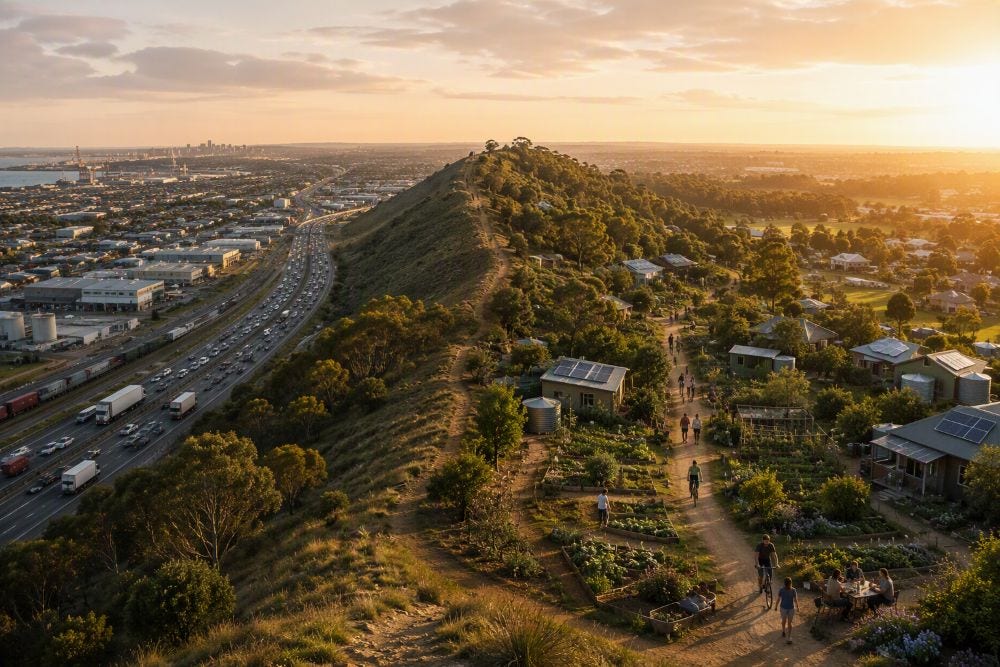
A low-energy future would likely give people more leisure time, but to actually reduce energy – and emissions – this would time need to be dedicated to things that don’t require a lot of energy. For example, air travel may need to be curtailed.
“It's actually doing less with less, but thriving in that scenario. It might be more time spent locally with friends and family, gardening, walking, exercising. Basically things that will soak up the time without consuming much energy, or things that will soak up the time and save energy.”
A medium is needed to paint this future so that people can see the appeal.
“There’s a gap in the zeitgeist. We’re good at crafting dystopian futures – we either end up in the stars (like Star Trek) or we end up killing each other for a bowl of food … there needs to be something else in people’s minds when they think about the future. The sorts of things that can bring people joy don't have to correlate with large amounts of energy … the ability to enjoy each other's company, doesn't require very large amounts of energy.”
The alternative is catastrophic collapse.
“We're already at a point where enormous chunks of the population can't afford to buy a house – it’s not a good pathway that we're on.
“I don't think that either side of politics are about to start toying with delivering this sort of message, which is why I think it has to be a conversation that we're having outside of politics and then voters can demand that of their leaders.”
Energy transition: This is the first in a series of articles looking at the challenges of moving away from fossil fuels and towards a greener, cleaner future.