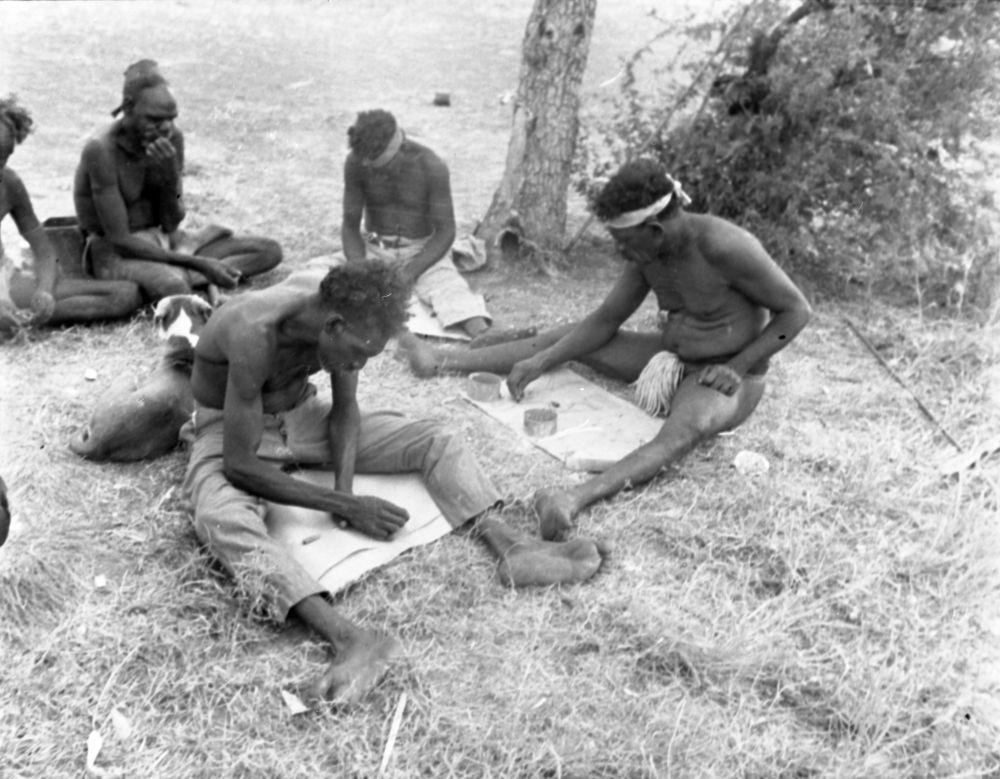
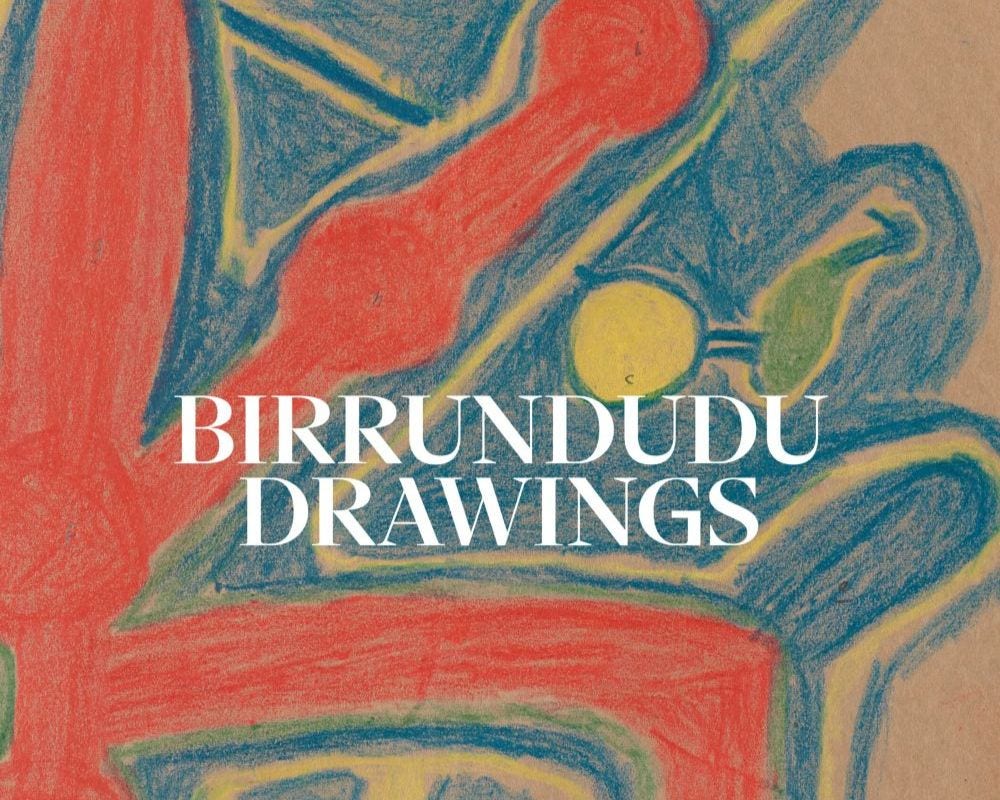
In 1945 as World War II was nearing its end in Europe and the Pacific, husband and wife anthropological team Ronald and Catherine Berndt travelled to the Birrundudu cattle station on the borders of Western Australia and the Northern Territory.
There they aimed to explore and document the lives, history and cultural practices of Aboriginal Peoples of that region at a transition point from the traditional lifestyle their ancestors had pursued for tens of thousands of years, to life working on a cattle station.
In practical terms, Ronald Berndt was documenting the religious and cultural knowledge of the men. He was particularly focused on the rituals that went on privately, away from the gaze of the station managers.
He used photography to do this but was also partial to sketching ceremonies, as he felt something of the dynamism of performance was flattened out in photos. This practice intensified as he ran out of film.
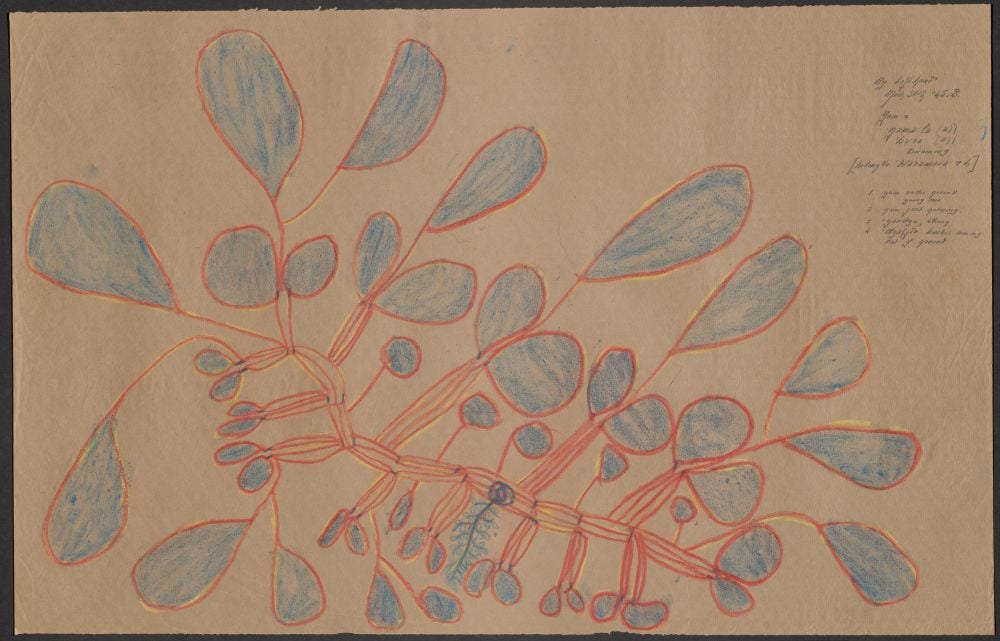
At the same time, men at Birrundudu expressed concern that the ceremonies Berndt had been documenting with his camera were no longer being recorded. Berndt later explained that the momentum around the drawings was born of this moment and driven by the men themselves.
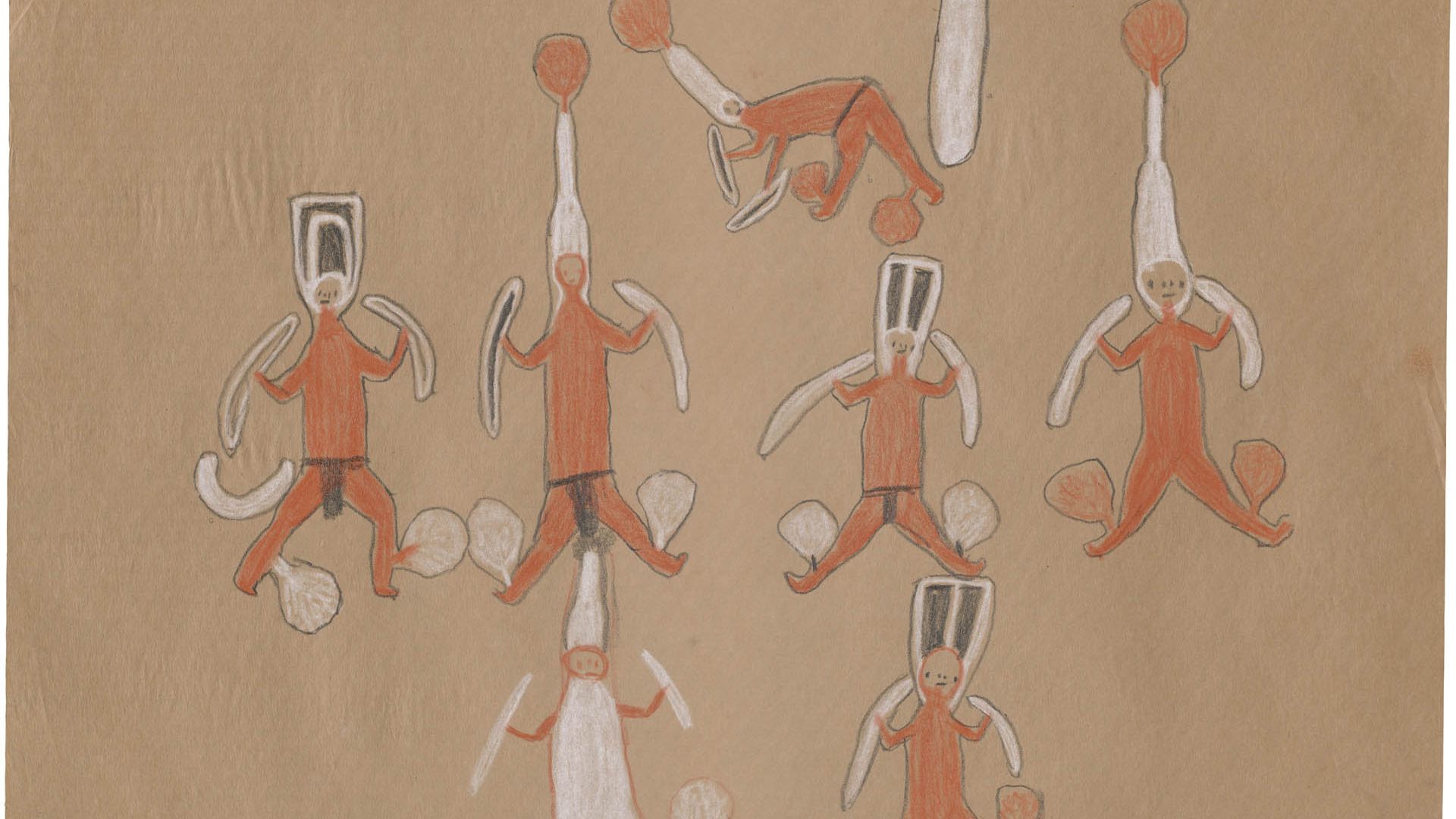
“They appreciated that I was recording in writing and also making rough sketches," he wrote. "However, they suggested that they themselves should draw their rituals, ceremonies, Dreaming sites and so on. And that is what they did.”
Soon the group of men, from different cultural and linguistic groups, began to record these images themselves, removing the filter of the European hand as they documented their own world. The result, over a period of three months, was 810 drawings by 16 men created at their camp after work.
Over the ensuing decades, these drawings were preserved but largely forgotten on the shelves of the Berndt Museum in Western Australia.
Now, for the first time since they were created, they are broadly available thanks to a new book, Birrundudu Drawings.
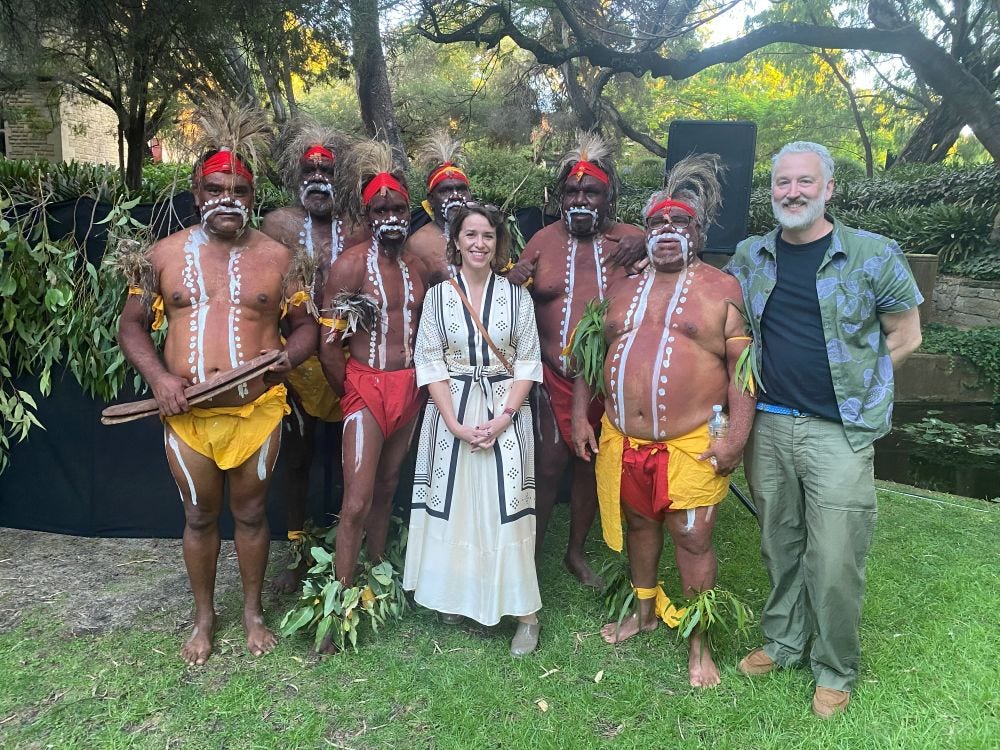
One of the primary investigators of this ARC-funded research project was Aboriginal art expert John Carty, Adelaide University's Professor of Museum and Curatorial Studies.
"We started this project about five or six years ago to see if we could unlock drawings that no one's ever seen," Professor Carty says.
"The men who did the drawings have all long since died. In many cases, the next generation has passed away too. There was a reluctance to engage with the drawings, and a concern that these drawings were maybe not viewable anymore, that they were secret/sacred.
"And so, they just fell into silence. The great concern for us was if we didn't do something now, with the current generation of Aboriginal leaders, it may not be possible to ask these questions in the future. It became a really urgent project for us, and even more so for the men in these desert communities.
"These drawings were created at a horrendous cattle station in the middle of the desert in 1945 with people being treated terribly. The human rights abuses were shocking. Their lives were completely invisible to the rest of Australia, and these men set out to educate the one white guy who paid any interest in their world. That’s the context the drawings come out of.
"It's important to remember that. They were an act of communication. And they're really important today because that whole history of Western Desert art has all been written without any real awareness of these drawings, without any real understanding that contemporary art isn't something that just happened like a genie out of a bottle. There's this huge tradition of translating things visually across cultures that Aboriginal people have been involved in forever."