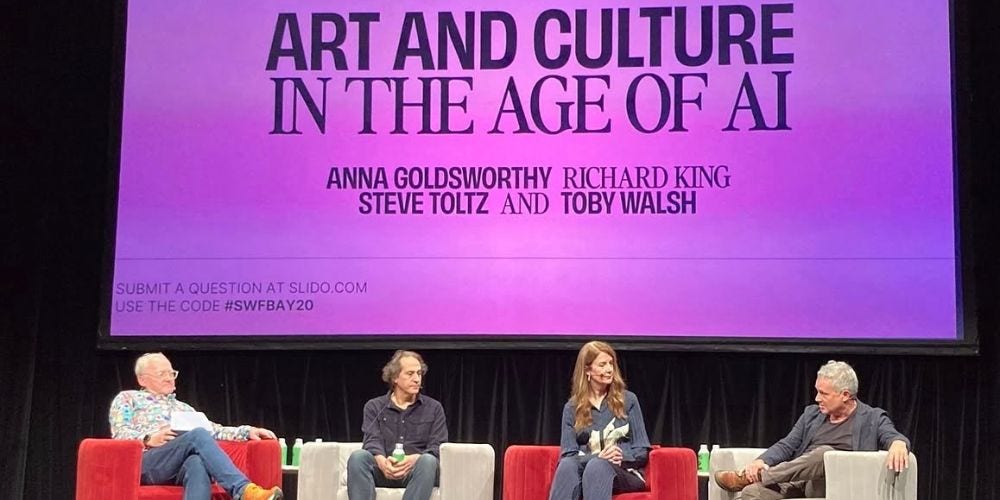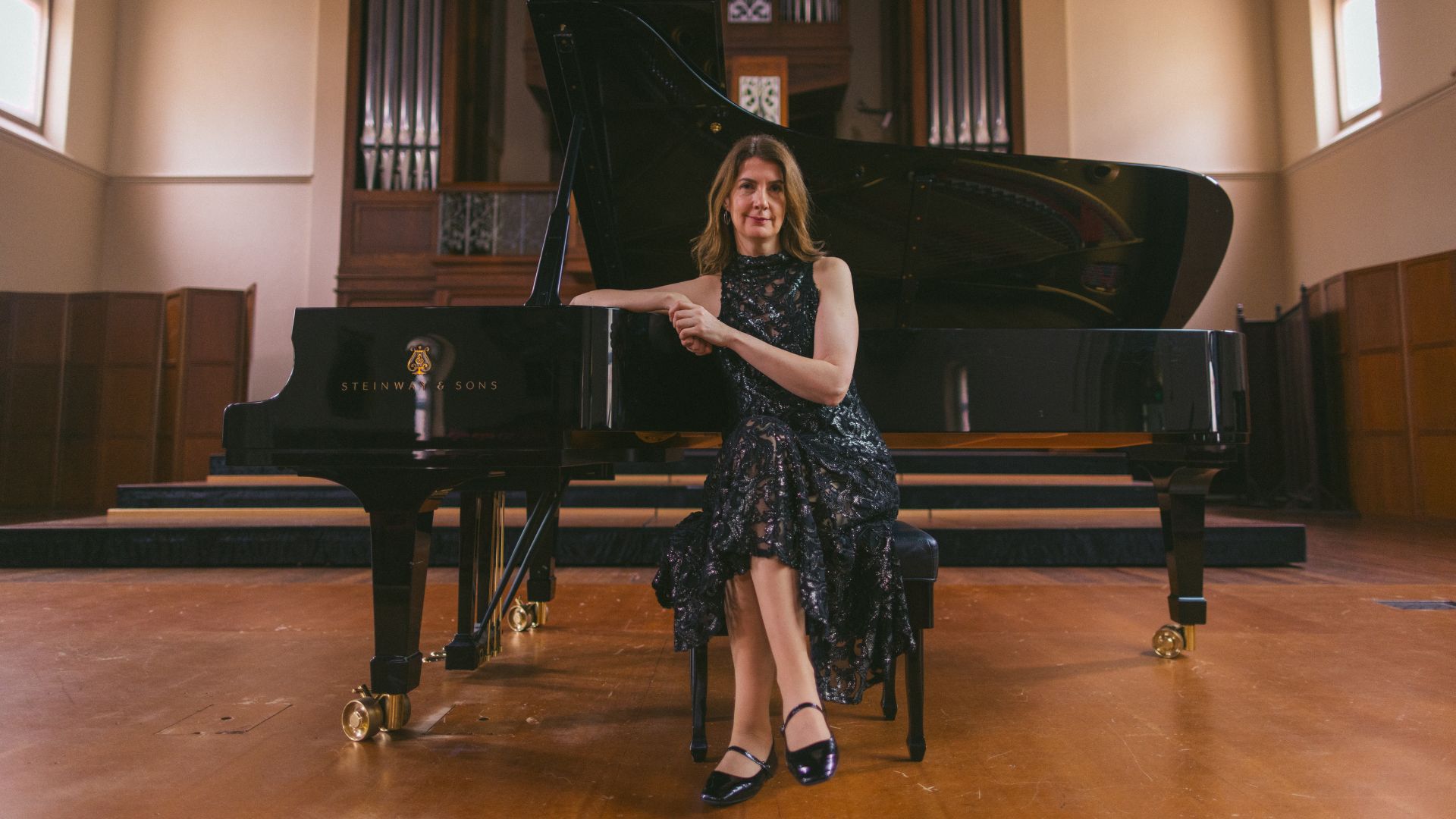
The benefits of having an AI husband. Robot table tennis players. The future of universities. Human existence itself. All form part of the recent Quarterly Essay on AI and its implications by musician, author and University leader Professor Anna Goldsworthy, exploring how widely and rapidly the tendrils of AI are spreading.
When we use the term artificial intelligence, it sometimes seems like we are talking about a single entity, one emerging being.
Yet if we talk about music, we know it has a myriad of personalities and a breadth limited only by imagination.
The question being posed by AI as it gallops along is whose imagination? When will the human scope for creative expansion on a subject be made obsolete.
Not yet, thankfully, as Professor Anna Goldsworthy displays in her personal and scholarly reflection on AI and its implications in her recent Quarterly Essay: The God We Made - the threat and promise of artificial intelligence.
Professor Goldsworthy is the keeper of a mind capable of creating music, literature, plays, and exploring her own inner world. A true polymath, her thoughts and content aggregation on the topic of AI in this essay are extraordinary in their beauty, depth and reasoning.
Could AI have written such a piece? Not yet. But watch this space. Will AI be the end of humanity? Or will it “continue the arc of the moral universe as it bends toward justice”? Nobody knows. Everybody has a view.
These are the complex chords Goldsworthy explores, and she also reminds us that the “father of AI”, Nobel Prize winner Geoffrey Hinton, said: “If you want to know what life’s like when you’re not the apex species, ask a chicken.”
Hinton puts the risk of human extinction courtesy of AI within the next three decades at 10 to 20 per cent. Cheery stuff. Goldrush capitalism currently appears to be winning rather than altruism and a desire for human advancement.
“Maybe we were tired of being the cleverest kids on the block, all those yearning glances at the night sky, hoping the aliens were on their way,” Goldsworthy suggests. “But nobody picked up the phone, and so we had to invent the aliens ourselves.”
Goldsworthy explores the future of labour – will AI “take all our jobs”, or will it create a utopian paradise of leisure and plenty?
She, as a university professor, is also, naturally, curious about the future of her own job, and the role of universities generally beyond being “a safe-ish space to park our young for a few years while they grow a pre-frontal cortex”.
“What does employability actually look like in this brave new world?”
She also turns her gaze to robot table tennis supremacy, deep fakery, chatbot romances, voice forgery, and, of course, the future of music and writing, revealing that her creative work begins with the solitary scratching of a fountain pen on paper.