Light’s mixed heritage sparks author’s own journey of discovery
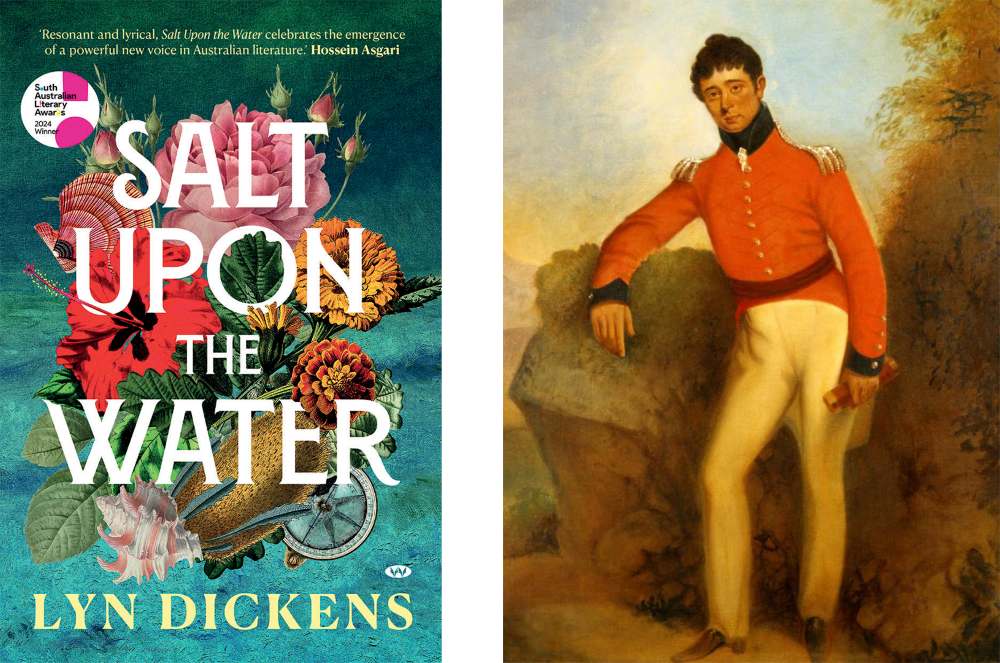
His mother, Martina Rozells who called herself Tonh Di, was not married – at least in a European sense – to his father and was Eurasian with parentage variously described as either Portuguese or French with either Siamese or Malay heritage. Some historians – and indeed Light himself in some of his writing – suggest she may have been a close relative of the Malaysian Sultan of Kedah, perhaps even a daughter.
Lyn's heritage is less complicated, as the daughter of an Anglo Celtic Australian father and a Peranakan Chinese Singaporean mother.
The dawning understanding that the place she lived in was created by someone like her was revelatory and sparked a journey of discovery.
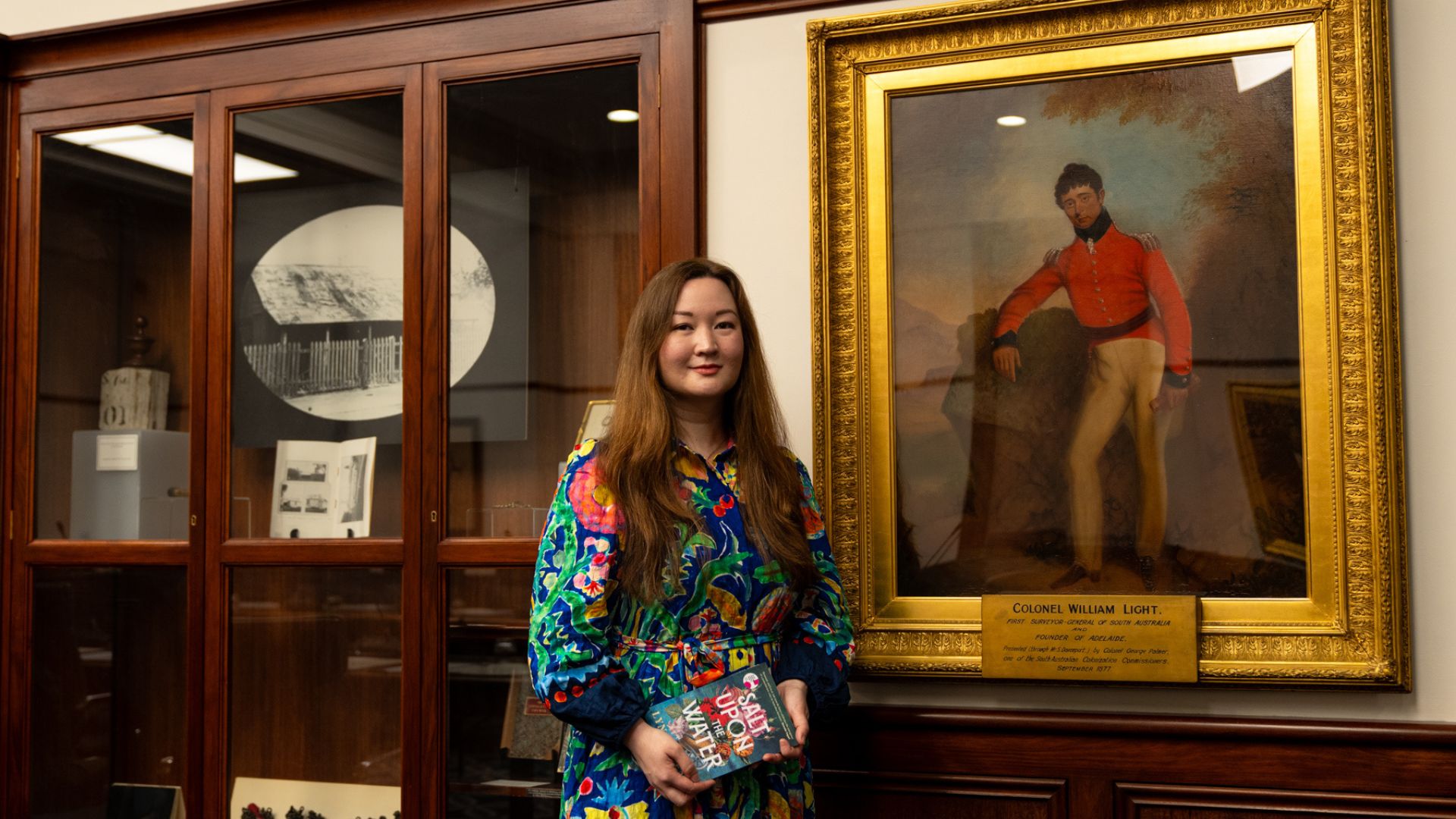
"I'd always known who Colonel Light was because he's South Australia's favourite historical figure – and I had no idea he was of mixed race," she says.
"Having seen his self-portrait, I sort of went into a little rabbit hole of reading about him, and I was really surprised to discover his mixed race was not a secret at the time."
This led Lyn to dig deeper, researching Light's life further. The result is her debut novel, Salt Upon the Water, which was formed during work for her PhD in creative writing supported by the University's J.M. Coetzee Centre for Creative Practice.
Very much a work of fiction, it nonetheless explores the times in which Light lived, and the attitudes he faced.
The book sweeps broadly through various parts of Asia and Europe, to the beaches of Kangaroo Island, and early Adelaide, with the arrival of our State's version of the first fleet of colonists.
It was longlisted this year for the 2026 Miles Franklin Literary Award – Australia's most significant literary award for novels of the "highest literary merit presenting Australian life in any of its phases".
This was the third year in succession that a novelist associated with the J.M. Coetzee Centre was in the running for this award, with Dr Hossein Asgari's Only Sound Remains shortlisted in 2024 and Professor Brian Castro's Chinese Postman shortlisted last year.
Australia’s history of racial discrimination complex and nuanced
At a moment in history where race, migration and displacement of First Nations people are huge and contentious topics around the world, and at home, Lyn's novel is a timely reminder that notions of racial discrimination and tolerance have varied over the centuries.
As a young woman with Asian heritage in the 1990s, when Pauline Hanson first rose to prominence, she was the subject of anti-Asian discrimination.
"My father is a sixth generation Australian, but even though I had that ancestry, I felt quite alienated from it," she says.
"People would always assume I was a new migrant growing up, and so I think when I learned this about William Light, it kind of changed everything I thought about the country that I'd grown up in.
"I wasn't thinking about writing a novel at that time, but it just stuck with me, and I kept thinking there's a story here. Eventually when I began my research, I came across stories of other mixed-race people and how many of them had grown up in the UK.
"We were often told that in the past, people of different backgrounds were completely separate and that multiculturalism is a modern, unnatural or unusual thing. But really, when you look at the past, this stuff was happening to various degrees all the time."
At its heart, Salt Upon the Water is a love story between Light and a Eurasian character (Clarissa FitzRoy) Lyn created to enable her to explore other aspects of race, discrimination, colonialism and displacement in his era.
"To get into what I imagined his family circumstances might have been, his emotional experience of his cultural background, I felt like I needed to give him a character to spark against," she says.
"This second character was inspired by a range of historical figures I increasingly found who were mixed-race children of British men who worked for the British East India Company and Asian mothers.
"I suppose when I went into writing this, I was really interested in exploring or maybe challenging the sort of monolithic idea of Australian history or Australian national identity.
"It wasn't about reinventing identity so much as rethinking it and drawing out what was already there.
"There were times in the past where in some ways things were much more tolerant than we realise in the present, and then things became more repressive.
"That cycle is something that I think we live through now as well. I came away with the sense that if you want to live in a more open society you have to work for it. We have a choice whether we want to keep perpetuating racial division or not.
"Realising that Light was like me made me more comfortable to be an Australian. I've always felt connected to being Australian, but I haven't necessarily known how to talk about it. I now know how to talk about it a bit more."
Salt Upon the Water is published by Wakefield Press.