Adelaide University projects have been recognised in the 2026 Australian Good Design Awards for improving accessibility in education, rethinking how consumer products are repaired and reused, and encouraging more sustainable choices.
Dr Darren Taljaard was awarded in the Design Research category for developing a more accessible way of presenting complex academic texts, while Associate Professor Guy Keulemans was awarded in the Communication Design Print and Packaging category for Transformative Repair, a book spanning a decade of research into exploring creative approaches to repair and reuse. Both academics are from the University’s School of Art and Design.
The University’s future-focused museum MOD. also received an award in the Built Environment
Installation Design category for The Convenient Store, an interactive exhibition encouraging young people to consider the impacts of everyday purchasing decisions.
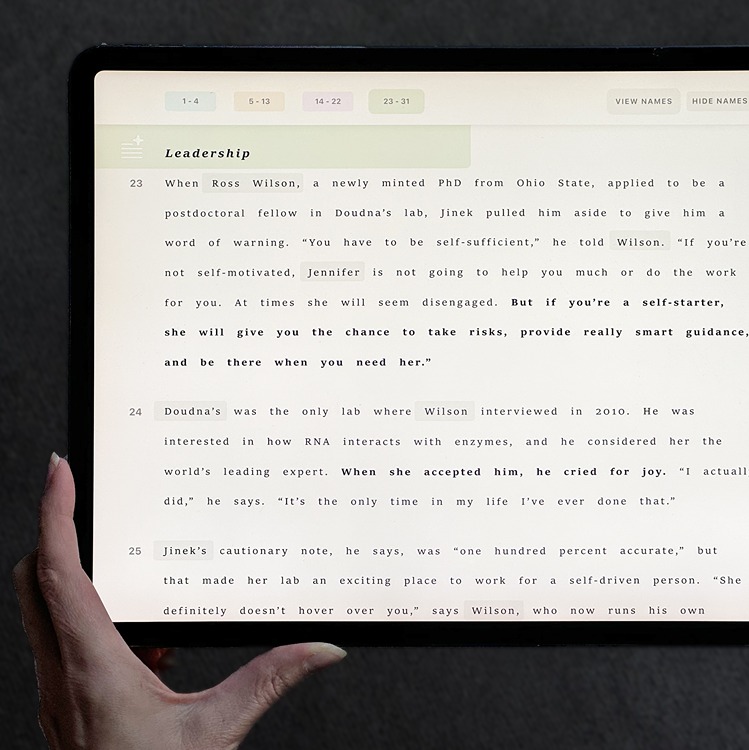
As part of Dr Taljaard’s PhD research, Designing Inclusive, Augmented Typography for University Students with Dyslexia, he explored how academic texts could be adapted to better support students with dyslexia.
The research focused on digital academic materials, which are often adapted from books originally designed for print and are not always suited to computer screens.
“Publishers still design books using the same ideas developed by Gutenberg more than 500 years ago. Because we read digitally now, we can change this and design materials that adapt to suit the needs of a wider reading audience,” Dr Taljaard said.
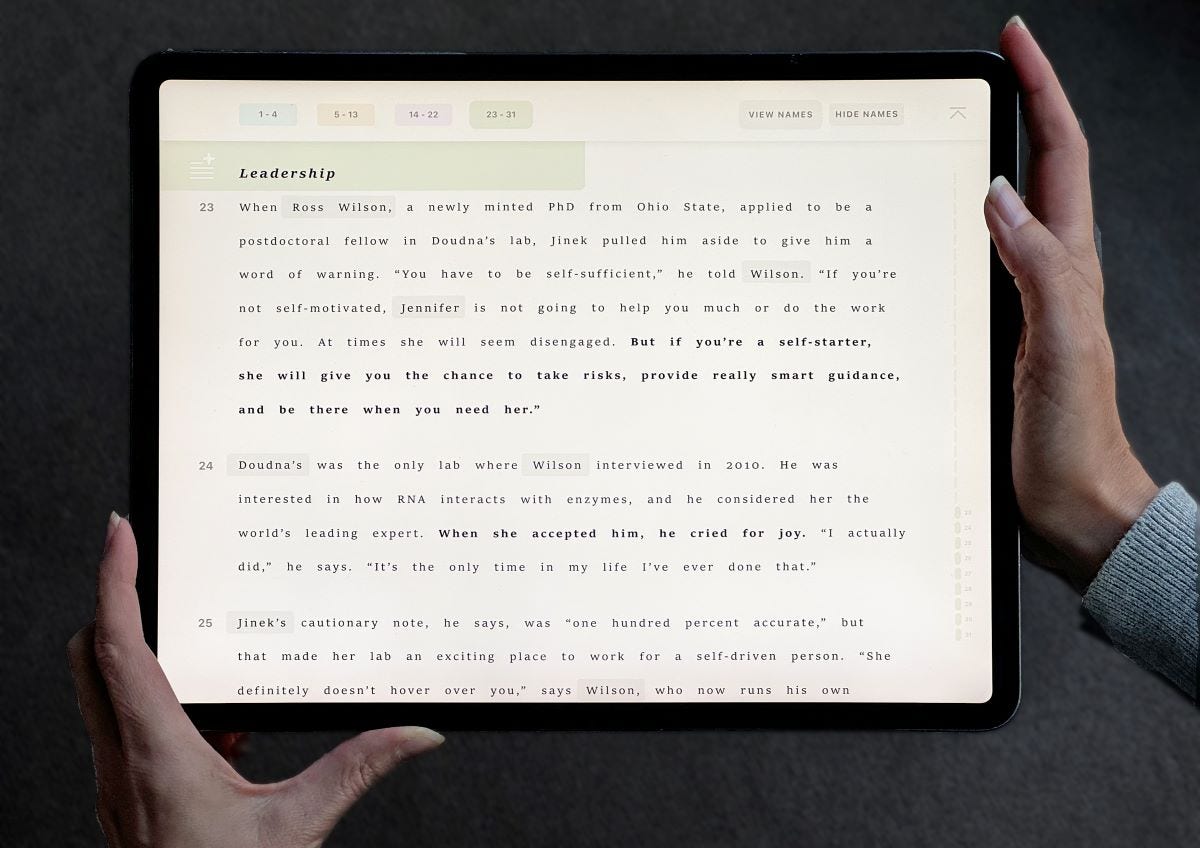 Designing Inclusive, Augmented Typography for University Students with Dyslexia
His research involved three phases testing typographic size, spacing, layout and visual modifications in long-form academic texts. The final prototype includes increased spacing, automatic section breaks, paragraph numbering, highlighted key sentences, progress indicators, colour accents and optional section summaries. The prototype can be accessed here.
“Readers described these materials as more visually appealing, less stressful and more engaging. Instead of ‘a wall of words’, readers saw manageable sections and visually calm texts,” Dr Taljaard said.
In the final trial, students rated the augmented version more positively than existing text for comprehension, ease of use, perceived reading speed and visual appeal. They also found it less tiring and easier to navigate.
“Readers described enjoying the reading experience, often for the first time ever,” he said.
Dr Taljaard hopes to work with technology partners to integrate augmented typography into reading and document software.
“I am proud to receive this award, and I hope it can help support the next stage of the development of augmented typography,” he said.
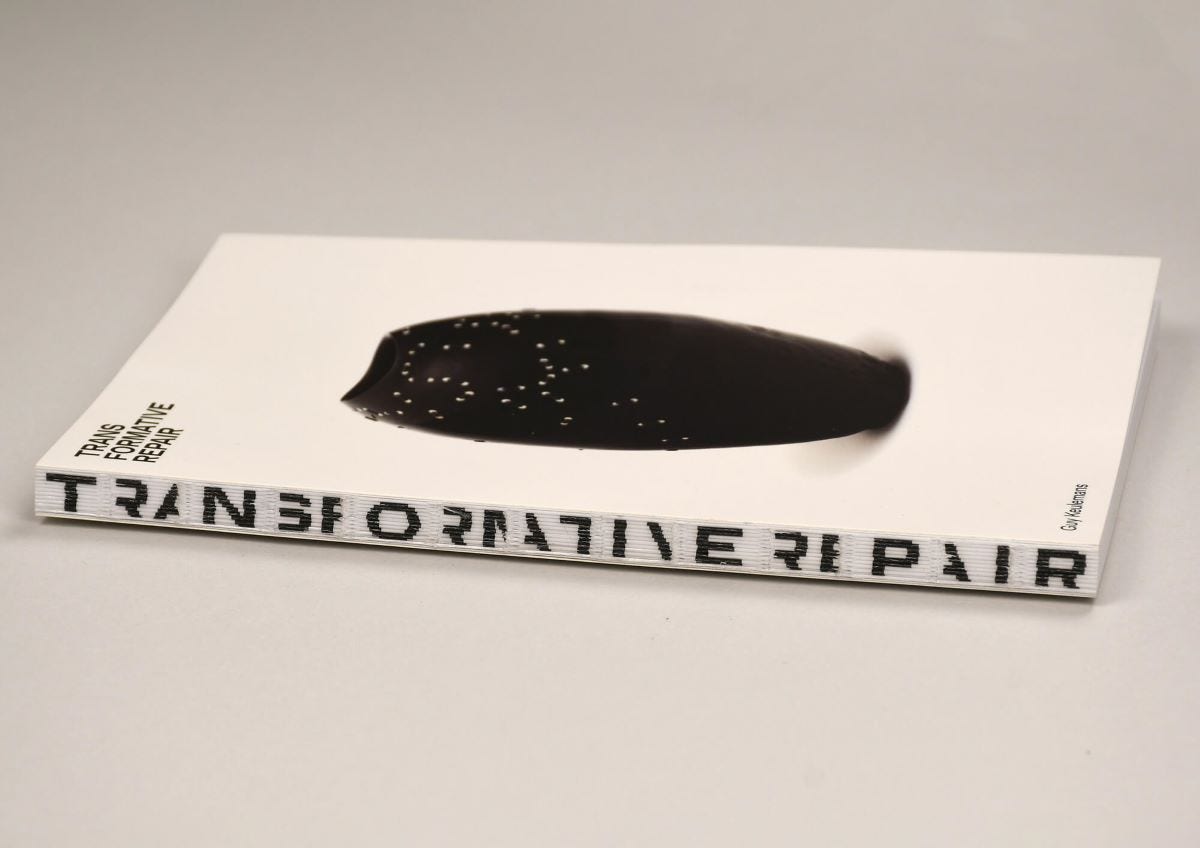 Transformative Repair book
Associate Professor Keulemans was recognised for Transformative Repair, a book co-designed with Baron Chau exploring how creative repair and reuse can extend the life of consumer products and reduce waste.
“The book is the culmination of 25 years of studio practice and 10 years of research, most recently an Australian Research Council Linkage funded partnership with JamFactory and the Australian Design Centre, investigating ‘design-led’ creative practices of repair and reuse,” Associate Professor Keulemans said.
He said Australia’s high levels of consumer waste highlighted the need for alternatives to recycling.
“Up to now, most circular economy practices have focussed on recycling, but, due to the complexity of our products, recycling is largely a failed system," Associate Professor Keulemans said.
"Designers need to focus on more granular approaches to successfully respond to the waste crisis.”
His research also explores how creative repair can strengthen people’s emotional connections to their belongings, encouraging them to keep products for longer.
The book’s design reflects this approach, using an exposed binding technique known as ‘open sewn stitch’ to demonstrate how the publication could be repaired.
“My co-designer Baron Chau and I wanted to draw attention to the structure of the book to convey its future ability to be repaired,” he said.
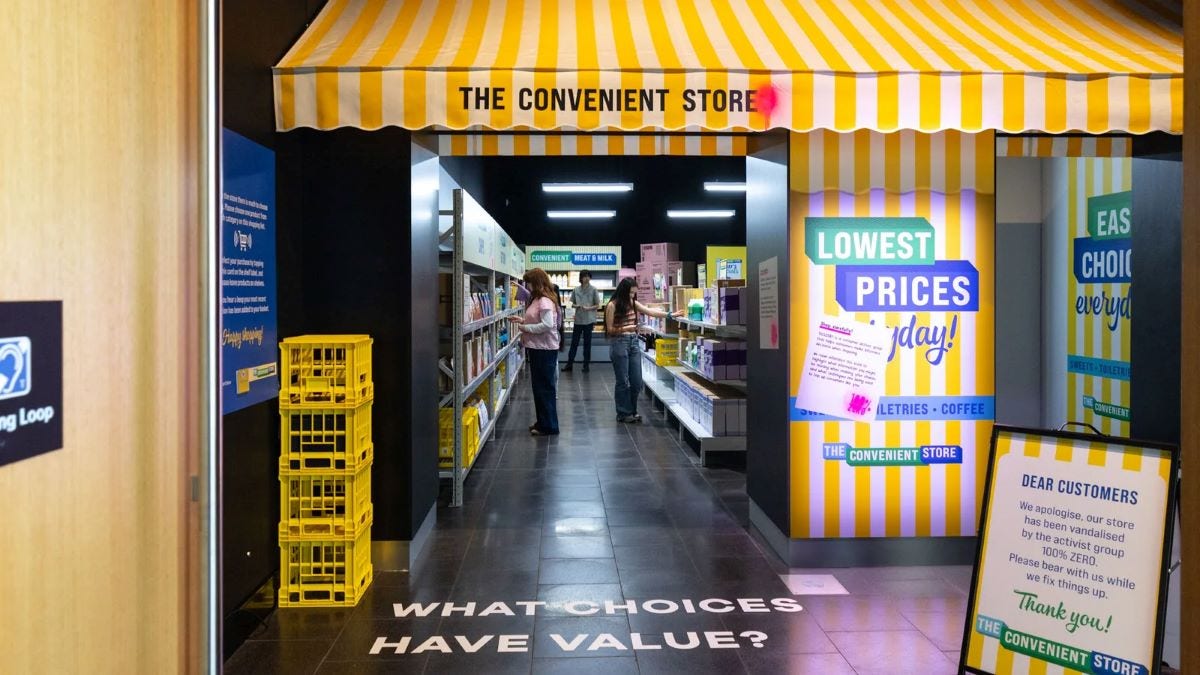 The Convenient Store. Credit: Sia Duff
“It’s a great honour to be recognised by my peers in the design industry. I’m really proud of both the book’s design and its contents, so it’s great to share that with a wider audience through the publicity around the prize.”
Adelaide University’s future-focused museum MOD. was also recognised for The Convenient Store, an interactive exhibition designed in collaboration with Featherweight.
The exhibition transforms a gallery into a mock supermarket, complete with products, advertisements and self-checkouts, to explore the environmental and social consequences of everyday purchasing decisions.
Designed for young people aged 15 to 25, it draws on research into sustainability, supply chains, marketing and consumer behaviour, encouraging visitors to consider the wider impacts of their consumption.
"MOD. is proud to receive this award. Every day we see the impact The Convenient Store has with our visitors, creating space for conversation and reflection on how individual choices connect to much larger systems,” said Dr Lisa Bailey, Director of MOD.
Media contacts:
Dr Darren Taljaard, School of Art and Design, Adelaide University. Email: darren.taljaard@adelaide.edu.au
Associate Professor Guy Keulemans, School of Art and Design, Adelaide University. Email: guy.keulemans@adelaide.edu.au
Dr Lisa Bailey, Director of MOD., Adelaide University. Email: lisa.bailey@adelaide.edu.au
Lara Pacillo, Media Officer, Adelaide University. Mobile: +61 403 659 154. Email: lara.pacillo@adelaide.edu.au