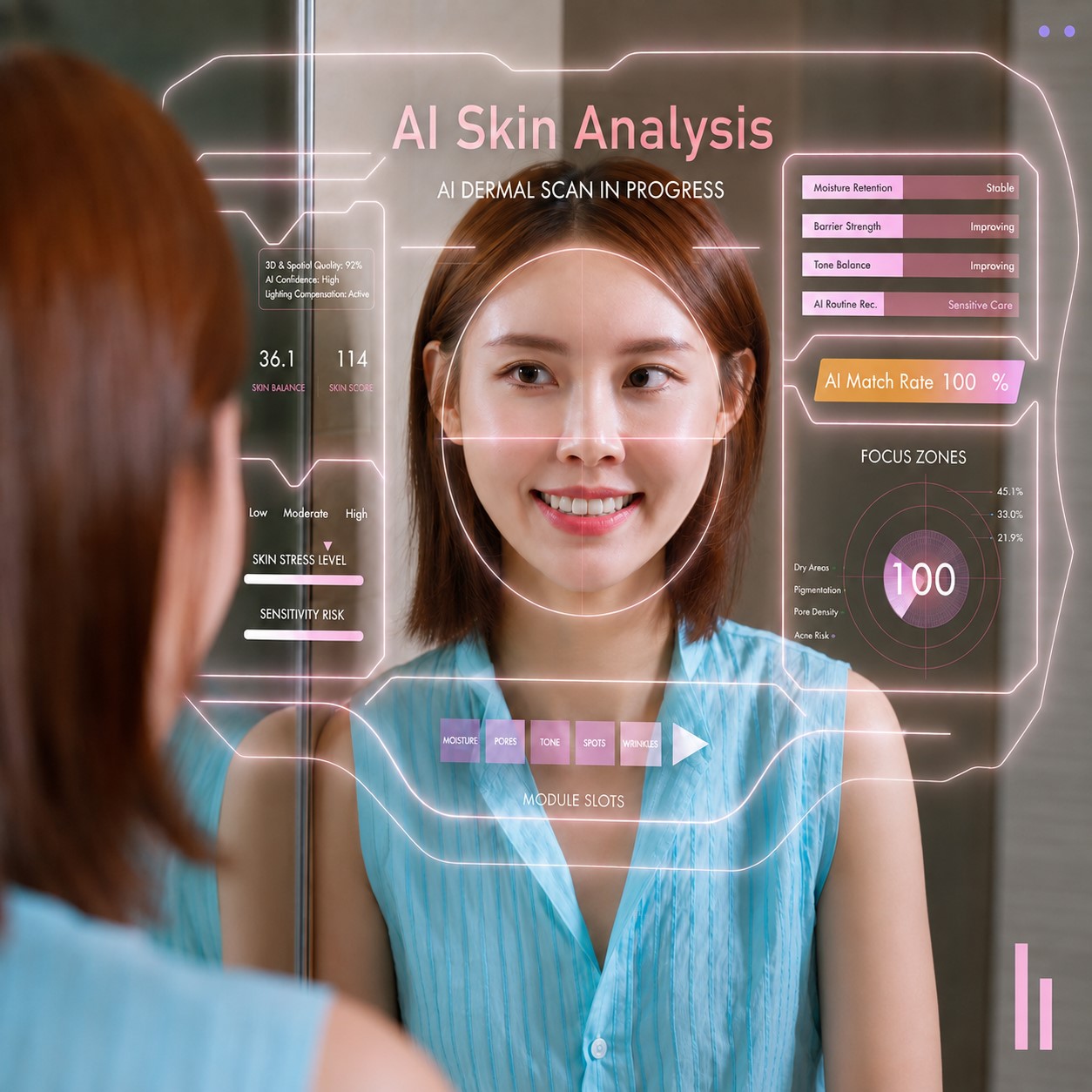
Researchers in Australia and Bangladesh have joined forced to develop a new artificial intelligence (AI) system to improve the speed, accuracy and transparency of skin disease diagnosis, particularly for rare and underrepresented conditions that are often difficult to identify.
The advanced model, named DermaViGNet, is an innovative AI framework that combines two powerful machine learning approaches to analyse skin conditions and justify its decision-making.
Adelaide University co-researcher, Dr Sabbir Ahmed, from the School of Computer Science and Information Technology, said the model’s combination of a large diverse dataset and explainable AI is a breakthrough innovation in this space.
“Explainable AI plays a crucial role in clinical adoption to ensure model interpretability,” Dr Ahmed said.
“Many AI systems will share a recommendation or decision but cannot share the reasoning behind it, which can be an unacceptable risk in high-stakes fields such as health.
“Our technology incorporates explainable AI techniques by highlighting the specific regions of an image that influenced a diagnosis. This transparency can help clinicians better understand, verify and trust AI-generated results before incorporating them into patient care.”
The model was trained and validated using a large dataset of just under 10,000 dermascopic images, including both common and underrepresented conditions.
It was assessed against eight baseline deep learning models and outperformed all of them to achieve an impressive 98% accuracy when classifying five skin diseases: vitiligo, acne, nail psoriasis, hyperpigmentation and the rare but potentially life-threatening disease Stevens-Johnson Syndrome-Toxic Epidermal Necrolysis.
“Our technology has the potential to support healthcare professionals by providing a fast and reliable diagnostic aid, particularly in settings where specialist dermatology expertise may not be readily available.
“It may also help reduce diagnostic errors and improve outcomes through earlier detection and treatment of serious skin diseases.”
The pioneering study addresses a longstanding challenge in medical AI: the underrepresentation of rare conditions in training datasets.
“By incorporating a broader range of skin diseases, the model demonstrated strong performance across diverse conditions while maintaining high levels of accuracy and interpretability.
“This is an important step towards more equitable and clinically useful AI-powered healthcare tools.”
Future research will focus on expanding the dataset, integrating additional clinical information and further refining the technology for real-world clinical deployment.