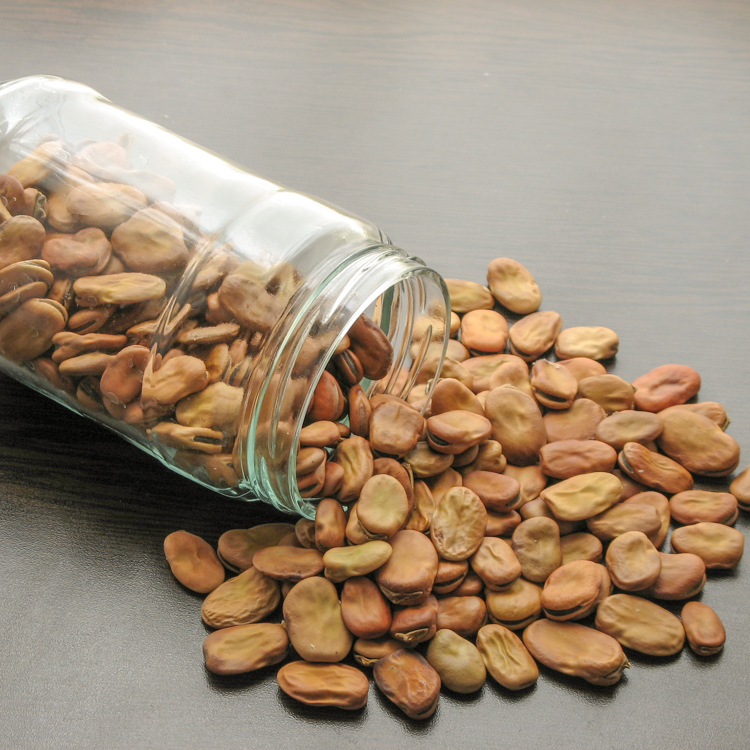
Researchers at Adelaide University have developed a calcium-fortified faba bean milk prototype with improved texture, highlighting promising potential for future use in cafés and breakfast bowls.
While the product is undergoing further refinement, the study, published in Food Chemistry, demonstrates that calcium fortification can be achieved without compromising sensory quality.
This advancement brings faba bean milk closer to the nutritional profile of other commercially available fortified plant-based milks.
“Faba beans show great promise as a sustainable plant-based milk alternative source,” said lead author Olaide Akintayo, a PhD student from Adelaide University’s School of Agriculture, Food and Wine.
“We evaluated faba bean milk using a panel of 30 regular consumers of plant-based milk alternatives. The results show that the starch breakdown technique we applied in prior studies addresses key processing challenges.”
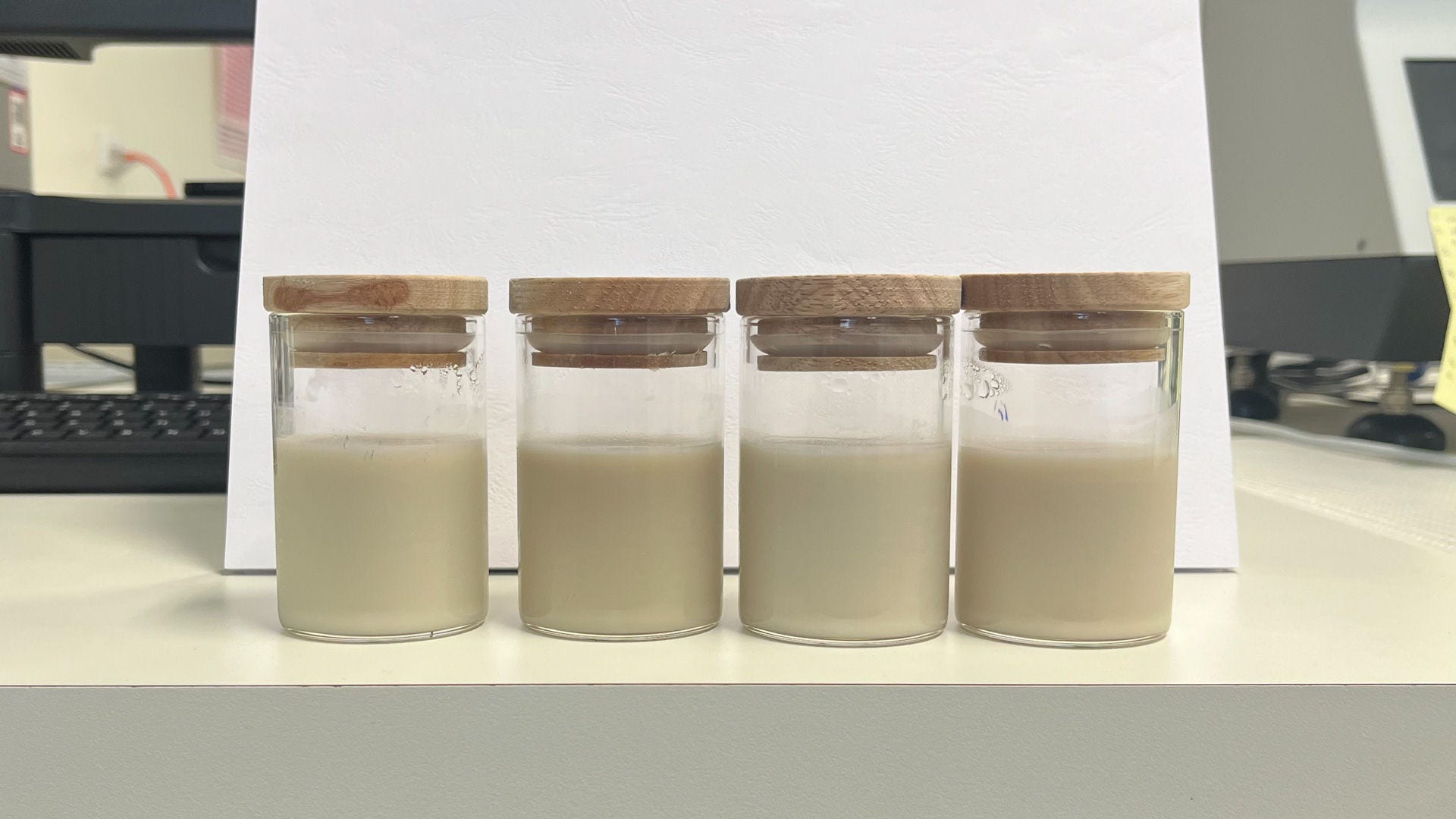 Different faba bean milk formulations.
Starch-related issues are a major barrier to the wider use of pulses in plant-based milks.
“By optimising a technique known as enzymatic starch hydrolysis, we were able to significantly improve the texture and stability of faba bean milk,” Akintayo said.
“This approach may also be applicable to other pulse crops, such as chickpea and lentil.”
The research, conducted by Akintayo under the supervision of Adelaide University’s Dr Hayriye Bozkurt, could broaden the number of plants considered suitable for use as milk alternatives.
“While soy, almond, and oat currently dominate the plant-based milk alternative market, each comes with environmental trade-offs,” said Akintayo, whose work was supported by the Adelaide University’s Research Training Program and GRDC scholarships.
“Faba beans offer several advantages as an alternative crop. They are naturally high in protein and have the ability to fix atmospheric nitrogen, reducing the need for synthetic fertilisers.
“Their tolerance to cooler climates and shorter growing seasons makes them particularly well suited to Australian farming systems where soy cultivation is less viable.
“In addition to its agronomic benefits, faba bean contains a range of bioactive compounds with potential health benefits, further supporting its role in next-generation food products.”
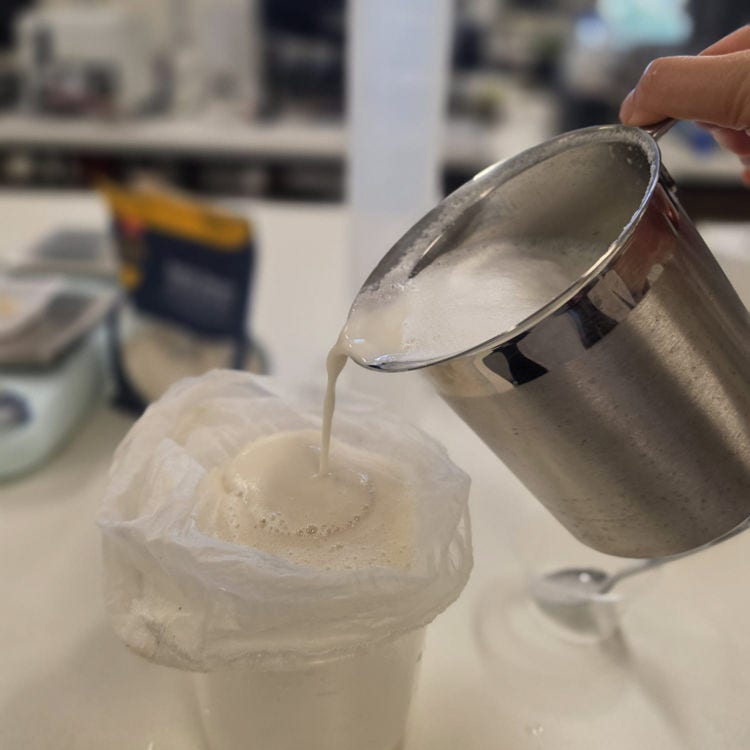 Filtration of faba bean slurry.
Akintayo’s new publication builds on his earlier PhD work published in the International Journal of Biological Macromolecules, which established the enzymatic processing approach used to overcome key formulation challenges in faba bean milk.
With further optimisation, shelf-life validation and industry collaboration, Akintayo suggests faba bean milk has strong potential for commercial development.
The technology may also create new value streams for pulse crops that are commonly used in crop rotations to support soil health.
“While the results so far are very encouraging, translating this research into commercial products will require close collaboration with industry partners to scale up processing, optimise formulations and ensure consumer acceptance,” Akintayo said.