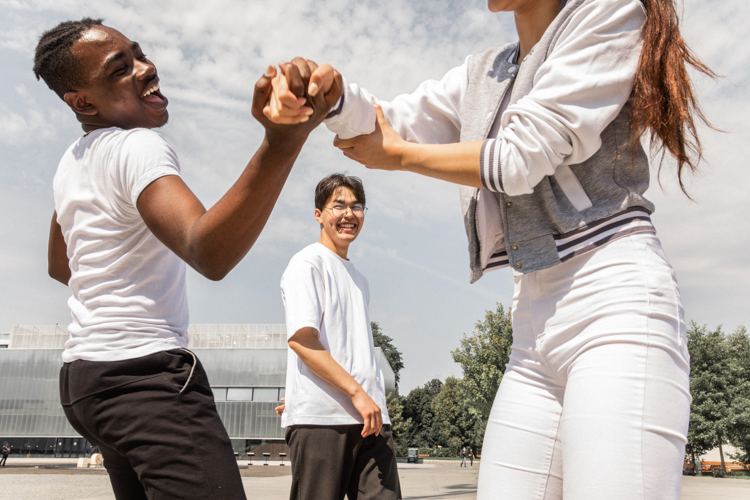
Everybody needs a friend, especially in adolescence, and new research from Adelaide University has highlighted the important role peer groups can play.
The study, led by Dr Sarah Halliday, a Lecturer and Researcher in the School of Psychology, explored how between being part of a large friendship group and the quality of support of a close friend impacts the development of resilience in 15 to 18 year olds.
Dr Halliday and Bastian Miliotis (a previous Psychology Honours student) analysed more than 21,000 responses from South Australian public-school students in years 9 to 12, who had completed the Wellbeing and Engagement Collection in 2025.
Students were asked questions about resilience, belonging in a peer group (peer belonging), and perceived level of support from a single, close friend (friendship intimacy).
"Establishing resilience in adolescence is a crucial part of healthy growth and identity development," Dr Halliday said.
"It's estimated 50% of mental disorders develop before age 18, so it's critical to determine and understand any protective factors which can be fostered to facilitate wellbeing.
"Resilience in adolescence is also valuable for the transition to well-adjusted adulthood and helping to avoid longer-term mental distress."
The findings were published in the journal Youth & Society.
"The results showed peer belonging was a stronger predictor of resilience than friendship intimacy for students across all ages, even when we accounted for personal differences that may also influence resilience and friendship, " Dr Halliday said.
"This could be because in a group you have more people role modelling behaviours and skills, so you're exposed to more resilient behaviours than you would be with one close friend.
"Within this age group too, students have likely been part of established friendship groups for at least a couple of years.
"Having a support network with a shared history and deeper trust can foster a sense of belonging, helping to bounce back from adversity with greater resilience."
Dr Halliday said students may be better supported to develop their resilience by encouraging larger, more inclusive peer networks, that include intimate friendships like best friends.
"School environments should prioritise fostering diverse peer group opportunities that provide multiple sources of support, connection, and skill development opportunities," she said.