
Sam Cranstoun (QLD), Kirtika Kain (NSW) and Jennifer Mathews (SA) have been announced as the 2027 Samstag International Visual Arts Scholarship recipients.
Each artist will receive a scholarship that provides institutional fees for one academic year, a tax-free allowance of $75,000, and travel expenses to a leading international art program of their choice.
Administered by Adelaide University’s Samstag Museum of Art, the annual scholarship program supports Australian-based artists to undertake study at an international destination of their choice, deepening their practice and building global creative connections.
Each of the 2027 Scholars is at a pivotal point of transition in their practice, undergoing conceptual and technical evolutions that will now be supported by the vast opportunities offered by a Samstag Scholarship.
Samstag Director Erica Green congratulated each of the Scholars on their achievement.
“The depth of the artists’ practices, together with their strong commitment to professional development, places this group of Scholars in an excellent position to take advantage of the international opportunities and experiences offered by a Samstag Scholarship,” Green said.
This year’s selection panel featured Green, along with contemporary artist and past Samstag Scholar, Jemima Wyman (Class of 2005), and Michael Kutschbach, Program Director: Fine Arts at Adelaide University.
While at varying stages of their careers, the 2027 Samstag Scholars demonstrated a determination and commitment that stood out to the panel.
Kutschbach particularly noted the Scholars’ “compelling propositions for furthering their artistic practice via specific institutional education or exchanges abroad.”
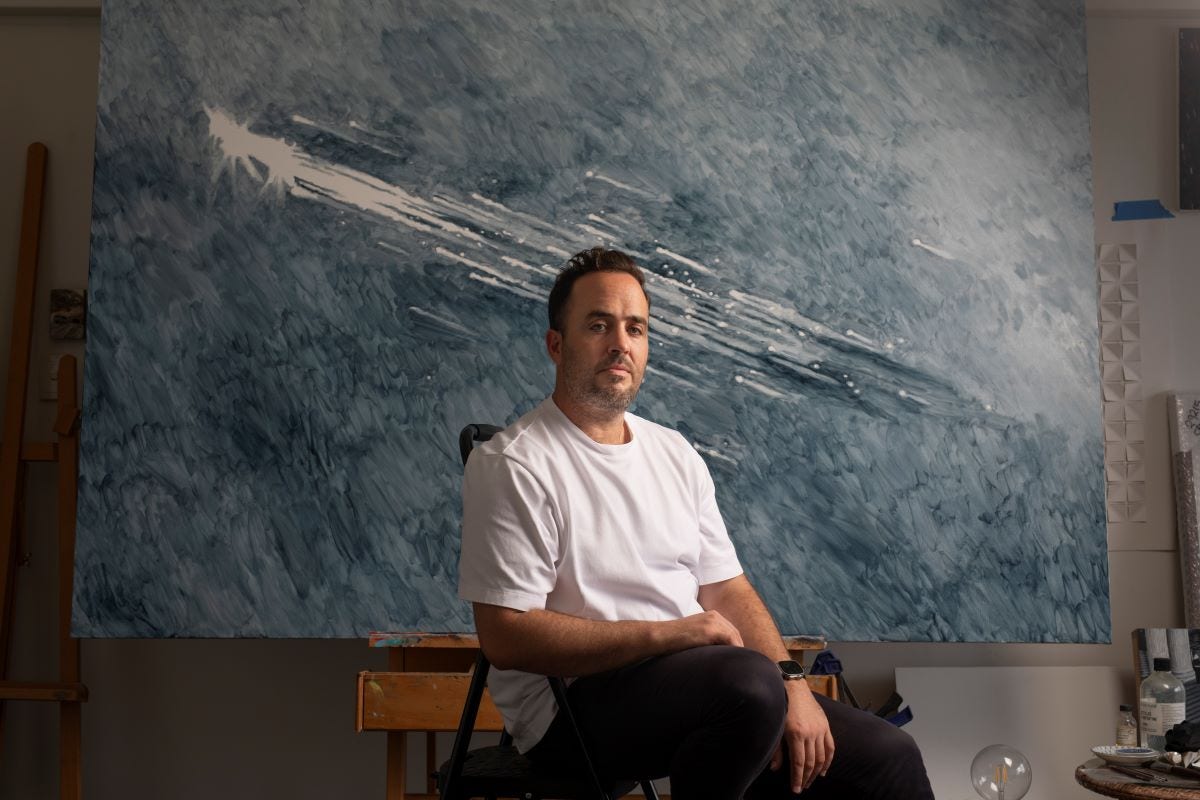 Portrait of Sam Cranstoun. Photo by Russell Shakespeare for Art Collector.
Cranstoun’s investigation into the legacy of modernist visual language continues to evolve, moving from the canvas to take three-dimensional form. Seeking to expand his understanding of the ways in which traditions of modern art are reframed through the lens of diverse contemporary contexts, Cranstoun’s research-based practice has diversified to engage more directly with the materiality of modernist object-making.
Cranstoun plans to use his scholarship to deepen drawing as an analytical tool for translating sculptural form and modernist spatial logic. He plans to choose an institution located within close proximity to a vast number of significant European art collections and cultural sites which will provide him with crucial access to modernist histories that are central to his practice.
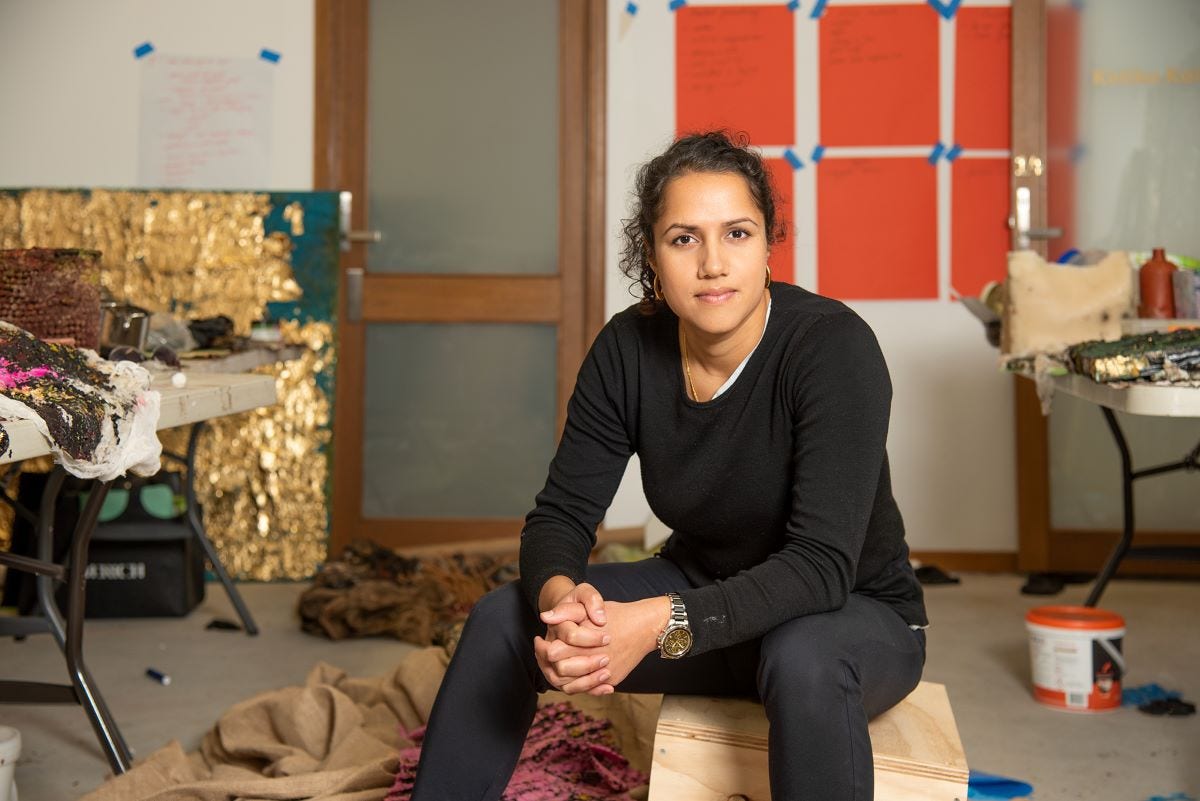 Portrait of Kirtika Kain, 2024. Photo by Garry Trinh
Kain’s poetic exploration of the materiality connected to her Dalit family history continues to become increasingly textural and tactile. Exposing the complex cultural symbolism embedded in materials such as gold, vermillion, tar and hessian, her works act as archaeological sites for the investigation of caste, identity and ancestral memory.
As her practice moves further toward sculpture and installation, Kain hopes to develop her technical skills in this field while furthering her research into how histories of migration, colonialism and resistance shape contemporary discourse. Intending to study in London, Kain will also look for opportunities to engage with anti-caste movements and community organisations within the city’s expansive South Asian diasporic community.
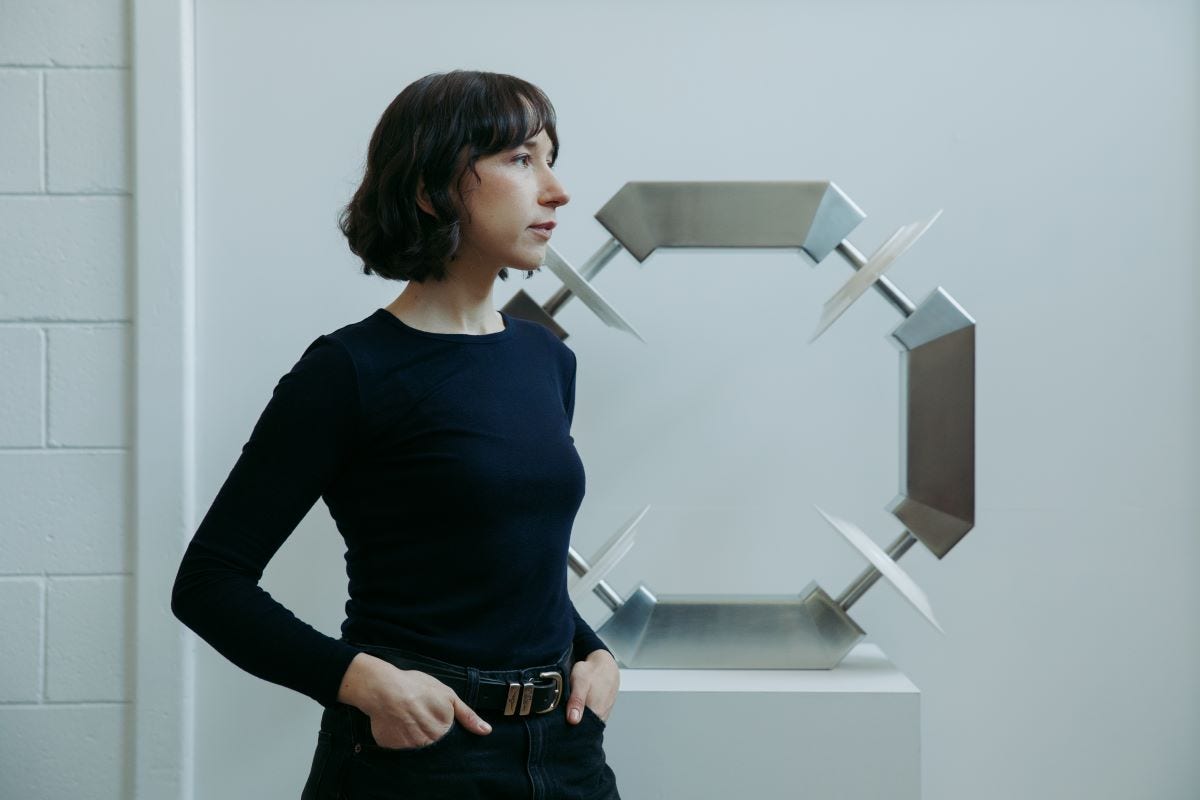 Portrait of Jennifer Mathews. Photo by Jonathan van der Knaap. All images courtesy the artists
Mathews’ practice interrogates the ways in which built environments shape our perception, movement and behaviour. Working across sculpture and installation, her strong technical skills in metal fabrication blend seamlessly with her interest in architectural and industrial forms.
Intrigued by the way order and efficiency often lead to improvisation and absurd, unintended outcomes, Mathews has been slowly growing the scale of her practice from discreet sculptural forms to large-scale public works that physically engage the audience in scenarios that encourage spatial awareness.
International study will provide an ideal next step for Mathews to develop her interest in public practice through collaborative and site-responsive research and experimentation with new contexts.
Sharing words of wisdom as a past Scholar, Wyman encouraged the Class of 2027 to “power on and embrace this international study opportunity wholeheartedly. It is precious and offers incredible future potential for you and the broader Australian art community.”
In response to the announcement, Samstag has commissioned Michael Newell to introduce the artists in texts that distil their practices. The essays are available on the Samstag website.
The competitive national scholarship program, established in 1992, is open to art school students and graduates and has awarded 155 scholarships to date.
Previous Scholars have gone on to show at prestigious exhibitions such as the Venice Biennale, Biennale of Sydney, Adelaide Biennial of Australian Art, and The National, including Archie Moore, Deborah Paauwe, Nicholas Folland, Julie Gough, Nike Savvas, Claire Healy and Sean Cordeiro, Shaun Gladwell, Madison Bycroft, James Nguyen, Mikala Dwyer, Yasmin Smith and Linda Marrinon.
For the full list, see the Samstag website.
The Samstag Scholarships are awarded by Adelaide University and administered by the Samstag Museum of Art on behalf of the Trustee of the estate of Gordon Samstag, the celebrated American artist who taught at the South Australian School of Art in the 1960s.
Media contacts:
Erica Green, Director Samstag Museum of Art, Adelaide University. Mobile: +61 438 821 239. Email: erica.green@adelaide.edu.au
Lara Pacillo, Media Officer, Adelaide University. Mobile: +61 403 659 154. Email: lara.pacillo@adelaide.edu.au