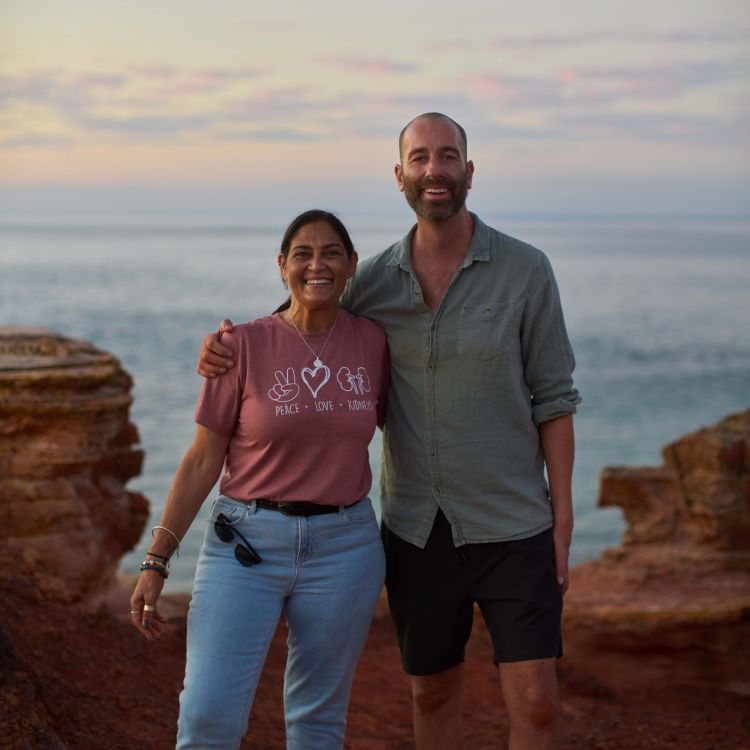
An Adelaide University researcher features in a powerful, new documentary exploring why Aboriginal and Torres Strait Islander People experience significantly higher rates of organ failure but are less likely to receive a kidney transplant.
Kelli Karrikarringka Owen, a proud Kaurna, Narungga and Ngarrindjeri woman and public health researcher, was just 19 when she was diagnosed with Alport syndrome, a genetic kidney disease. Kelli found herself on dialysis at the age of 41 and received a kidney transplant three years later in 2016.
Using her lived experience as a transplant recipient, Kelli travelled to remote Aboriginal and Torres Strait Islander communities in Australia to shine a light on the stark differences in healthcare access for the Transplant Network’s documentary, In Contrast.
“In Contrast is a powerful and at times confronting documentary about the real stories of Aboriginal and Torres Strait Islander People and their families who have endured the excruciatingly long wait for a kidney transplant,” said Kelli, a chief investigator of Adelaide University’s Aboriginal Kidney Care Together Improving Outcomes Now (AKction) Research Project.
“Research tells us that Aboriginal and Torres Strait Islander People are five times more likely to reach kidney failure, and a third as likely to receive a kidney transplant.
“During the filming, I met people who had spent eight years waiting for a kidney transplant – not knowing if they would ever get that second chance at life.
“We urgently need a more equitable system where everyone is able to receive timely access to medical treatment and procedures.”
In Contrast was directed and produced by heart transplant recipient Peter Crumpton, a non-indigenous man who is the founder of the Transplant Network.
“This film highlights organ transplantation through the voices, experiences and perspectives of Aboriginal and Torres Strait Islander People experiencing kidney disease,” Peter said.
“It explores access to care, communication and culture, in a bid to better understand the disparities they face and what needs to change to improve outcomes.”
AKction, part of the University’s School of Nursing and Midwifery, is co-leading and co-hosting the launch of In Contrast this month.
The research program focuses on improving the way kidney care is provided for Aboriginal and Torres Strait Islander People.
“I know firsthand the challenges that rural and remote patients experience when it comes to accessing essential health services,” Kelli said.
“We don’t want our babies following our footsteps onto dialysis machines. This is not culturally appropriate for us. We are strong people and we need to remove the barriers to accessing treatment.”
In Contrast premiered on Gadigal Country in Sydney and on Kaurna Country in Adelaide in October, with plans for open access to the film in coming months.
Link to Trailer for In Contrast.