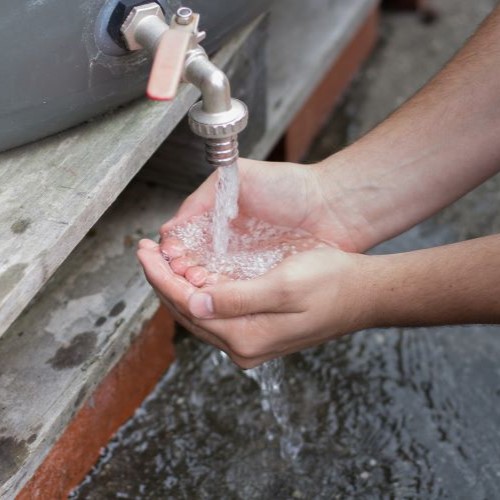
Rainwater tanks are a popular way for Australians to save water, but new research has found they can also harbour potentially harmful bacteria and metals that could pose health concerns.
Researchers from Adelaide University and Flinders University tested rainwater from 100 household tanks across Adelaide and the Adelaide Hills, finding bacteria linked to gastroenteritis and other infections in a number of tanks.
The study found Campylobacter bacteria in 13% of tanks, Salmonella in 10%, Shigella in 3% (all linked to gastroenteritis) and Pseudomonas aeruginosa (which causes other infections) in 12%.
Bacteria were also detected in tanks used for drinking water.
Two-thirds of the households surveyed (67%) said they used their tank water for drinking and cooking, highlighting the importance of understanding what is in the water people are consuming.
Lead researcher Dr Mira Cooper, from Adelaide University’s School of Physics, Chemistry and Earth Sciences, said the findings were a reminder that rainwater collected from a roof does not necessarily remain as clean as it appears.
“Rainwater might look clean, but once it lands on a roof and flows through gutters and into a tank, it can pick up bacteria, metals and other contaminants along the way,” Dr Cooper said.
“We found potentially harmful bacteria in a number of household tanks, including tanks supplying drinking water.
“That doesn’t mean people drinking tank water will become sick, but it does show that there are potential hazards that deserve greater attention.”
The researchers also found small numbers of tanks contained levels of metals including cadmium, lead, arsenic, and manganese above Australian health-based drinking water guidelines.
Metal tanks (as opposed to tanks made from plastic) were more likely to have elevated metal levels, while tanks that had not been maintained well were also associated with higher metal concentrations.
Senior author Professor Craig Williams, from Adelaide University’s College of Health, said the research highlighted the importance of looking at the entire journey of rainwater – from the roof to the tap.
“Water quality isn’t just about what falls from the sky – it is also about what happens to that water once it reaches your roof, gutters, tank and plumbing,” Professor Williams said.
“Regular maintenance of rainwater systems is important because leaves, dirt, animal droppings and other material can build up and affect water quality.
“Rainwater systems are going to be really important for ensuring water supply for homes and gardens in Australia as our climate continues to change. So, for households that rely on rainwater for drinking, we need to make sure we understand any health risks and how best to manage them.”
The study also examined whether the growing use of rooftop solar panels could affect rainwater quality.
While an initial analysis found a link between solar panels and elevated metal levels, that relationship disappeared when the researchers accounted for the type of tank.
The researchers found no clear link between solar panels, bird activity and the presence of harmful bacteria.
The researchers say further work is needed to determine whether the bacteria detected in the tanks were alive and capable of causing infection, as the testing identified bacterial DNA rather than proving that the bacteria were viable.
The study, published in the Journal of Environmental Management, is the first comprehensive assessment of the microbiological and chemical quality of roof-harvested domestic rainwater in South Australia. DOI: 10.1016/j.jenvman.2026.130884
About the Study
The collaborative project brought together researchers from Adelaide University, Flinders University, CSIRO and UNSW, combining expertise in environmental health, microbiology, engineering, water quality and public health. The study was supported by the HEAL (Healthy Environments And Lives) National Research Network, Australia's national research network investigating the health impacts of environmental change.
The study, From Roof to Tap: Emerging Public Health Risks in Harvested Rainwater, analysed samples collected from 100 household rainwater tanks across Adelaide and the Adelaide Hills between May 2024 and January 2026. Researchers assessed water quality through microbiological testing, metal analysis, nutrient analysis and household surveys examining rainwater use and system characteristics.