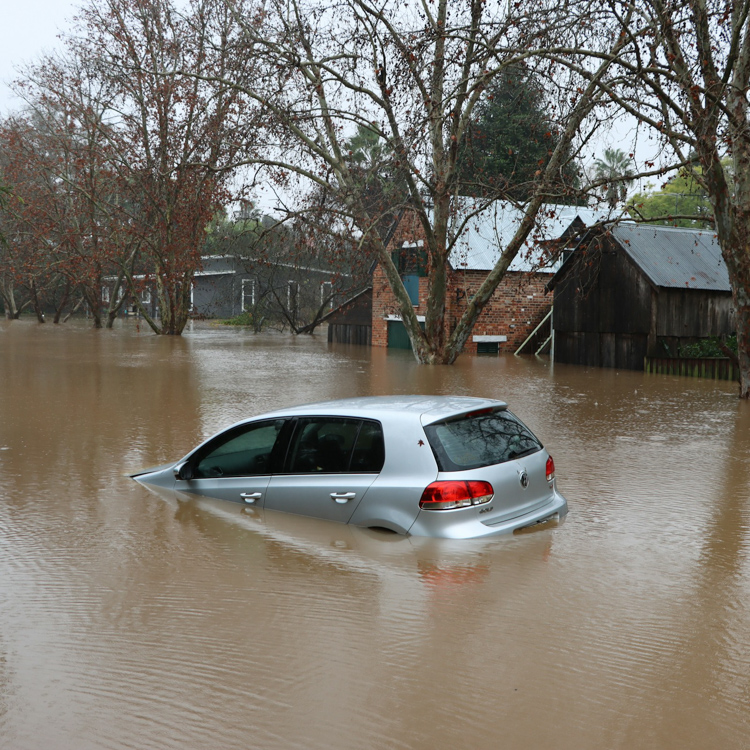
An Adelaide University research project will develop a toolkit for community-scale mental health interventions to minimise psychological distress associated with climate change-related loss.
“As climate breakdown intensifies, communities are increasingly experiencing psychological distress,” said project co-lead Associate Professor Toby Freeman from Adelaide University’s School of Public Health.
“In particular, the loss, or anticipated loss, of natural and cultural heritage – including cherished landscapes, ecosystems, and culturally significant places – can lead to grief, distress and anxiety.
“Working closely with communities, organisations, and mental health sector representatives, our project will deliver a community-informed practical toolkit for the mental health sector, alongside policy, planning, and funding recommendations designed to mitigate these mental health impacts.”
While major changes to land and physical heritage due to climate change might seem like problems of a distant future, some of Australia’s closest neighbours are already experiencing loss.
“In Pacific Island nations like Tuvalu and Kiribati, rising seas, land loss and cultural erosion have already triggered widespread ecological grief, distress, and depression,” said co-lead Associate Professor Ania Kotarba-Morley, from Adelaide University’s School of Humanities and Environment Institute.
“When land, identity and sites of natural and cultural heritage are threatened and, eventually, lost, mental health deteriorates at scale.
“If we don’t address and mitigate these impacts, climate change losses have the potential to greatly diminish daily functioning on a mass scale and profoundly disrupt identity and community cohesion.”
Associate Professor Freeman, who is also Director of Research at Adelaide University’s Stretton Health Equity, highlighted that our neighbours’ experience should be a warning bell.
“We have a critical window in which to take deliberate, anticipatory action to equip individuals and communities with the skills to navigate these emotional experiences so that endemic distress does not escalate into a population-wide mental health epidemic,” he said.
“Australia must heed this warning and urgently develop culturally grounded, place-based mental health strategies, alongside policy reforms that recognise heritage loss – both natural and cultural – as a driver of climate-related mental distress.”
Developing interventions to be delivered at the community scale, rather than at the level of the individual, is an important distinction for the project.
“People experiencing climate change-related distress must be able to access services, but health service provision alone is unlikely to be sufficient to address the escalating community and population mental health impacts of climate change and heritage loss,” Associate Professor Freeman said.
“A much broader, whole-of-government response is required to avoid defaulting to individualised, medicalised approaches to mental health care, which would contribute to mental health services becoming increasingly overwhelmed by demand.
“Prevention and health promotion approaches are crucial to the long-term availability of mental health services to those who need them.”
Associate Professors Freeman and Kotarba-Morley’s project began in August 2026 and is expected to continue into 2031.