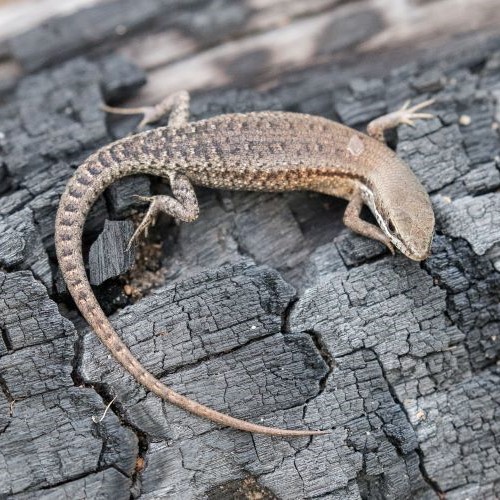
Scientists are calling for wildlife surveys to be conducted within hours of prescribed burns after new research revealed that evidence of animal deaths can disappear in less than two weeks, significantly underestimating the true toll of fire on Australia's wildlife.
Adelaide University researchers monitored prescribed burns in the Mount Lofty Ranges and found that more than half of all lizard carcasses detected during the study were found just 28 hours after fire. Within 12 days, every carcass had disappeared, most likely removed by scavengers.
The findings, published today in the Australian Journal of Zoology, suggest current post-fire monitoring practices may be missing much of the immediate impact that prescribed burning has on wildlife.
Lead author Dr Shawn Scott, from Adelaide University’s School of Biological Sciences, said timing was critical.
"Conducting surveys immediately after fire is essential if we want an accurate picture of how many small animals are being killed by prescribed burns," Dr Scott said.
"If people allow days or weeks to pass before surveying, they risk dramatically underestimating the number of animals killed. That can bias our understanding of how fire affects biodiversity and animal welfare."
The research examined 10 prescribed burns across southern Australian eucalypt forests between 2022 and 2024. Researchers recorded 27 dead lizards from four species, with 52% discovered during surveys undertaken just over a day after the fires were extinguished. No dead reptiles were found before burning or more than 12 days afterwards.
The team believes scavengers – including birds, foxes, cats and invertebrates – rapidly remove carcasses from recently burnt landscapes, making later surveys an unreliable indication of small animal deaths.
Although the study focused on lizards, the researchers say the findings are likely to apply to many other small animals.
"Our recommendation to do wildlife surveys immediately after prescribed burns will likely improve our understanding of other animals being killed, including small mammals, frogs and invertebrates," Dr Scott said.
Co-author Associate Professor Sophie (Topa) Petit said the research challenges common assumptions about the impacts of prescribed burning.
"Prescribed burns kill animals, just like any other fire," Associate Professor Petit said.
"It's a fantasy to think that all animals escape and live happily ever after. No matter how 'cool' a fire is, it's still fire."
Prescribed burning is widely used across south-eastern Australia to reduce fuel loads and lower bushfire risk. However, the researchers say surprisingly little is known about how many animals die during these operations because mortality surveys are rarely undertaken immediately after burns.
Dr Scott said better monitoring was needed to ensure fire management balanced bushfire mitigation with biodiversity conservation.
"Post-fire monitoring is rarely undertaken and robust data on how prescribed burning affects wildlife are unavailable for most regions of Australia," he said.
The researchers also note that while prescribed burning is intended to reduce wildfire risk, scientific evidence about its effectiveness remains contested, reinforcing the need for more comprehensive data on both its benefits and ecological costs.
The team hopes the findings will encourage land managers to make rapid wildlife surveys a routine part of prescribed burning programs, helping build a more accurate understanding of fire's impact on Australia's unique fauna.
‘Prompt surveys optimise detection of lizard mortality during prescribed fire in southern Australian eucalypt forests’ is published in the Australian Journal of Zoology. DOI: doi:10.1071/ZO26014