Our research

Our research - School of Civil Engineering and Construction Management

Innovative Research in Civil, Construction, and Water and Environmental Engineering

Our research advances structural, geotechnical, and water engineering, focusing on sustainable materials, smart construction, and infrastructure resilience. We lead global innovation in specialised structures, flood control, soil and foundation design, and circular economy practices, collaborating with industry and government to develop solutions that improve safety, efficiency, and environmental sustainability across the built environment. 


Our researchers are dedicated to pioneering transformative solutions for civil infrastructure by bridging advanced material engineering with fundamental structural mechanics. Through the integration of computational modelling, experimental research, and advanced structural condition assessment, our research is reshaping the safety, durability, resilience, and decarbonisation of the built environment and civil infrastructure. From maximising the circular economy via high-performance recycled concrete to engineering materials resilient enough for extraterrestrial construction, our research addresses multi-scale structural challenges of today and the sustainable infrastructure needs of tomorrow. Our expertise spans the full lifecycle of infrastructure, from material innovation and structural design to monitoring, assessment, and rehabilitation, supporting both terrestrial and future off-Earth applications. It is organised into three complementary research streams:

Advanced Materials and Sustainable Construction Technologies

Focuses on advanced construction materials and structural technologies that improve sustainability, durability, resilience, and performance for infrastructure on Earth and beyond. It integrates low-carbon materials, advanced cementitious composites, digital manufacturing, recycled resources, and hybrid structural systems to address climate change, resource efficiency, infrastructure longevity, and future construction challenges, including;

  • 3D Printed Cementitious Materials & Applications
  • Data-Driven Concrete Mix Design Optimization
  • Durability and Service-Life Behaviour of Materials 
  • Fibre-Reinforced Polymer (FRP) Structural Composites
  • Geopolymer Concrete & Alternative Binders
  • Hybrid Structural Systems & Interface Connectors
  • Low-Carbon & Carbon-Negative Materials
  • Multi-Generation Recycled Aggregate Concrete Structures
  • Regolith-Resin-Composite (RRC) Materials for Lunar Construction
  • Self-Healing Concrete Materials
  • Ultra-High-Performance Fibre-Reinforced Concrete (UHPFRC / UHPC)
  • Innovative and sustainable timber products research
  • Pre-fabricated innovative lightweight timber fames and structures

Advanced Computational Modelling and Structural Design

Focuses on advanced computational, numerical, and analytical methods to predict and optimise the behaviour of structures and materials under complex loading and environmental conditions. It covers computational mechanics, structural failure and fracture analysis, and advanced structural systems for both terrestrial and space infrastructure. By integrating modelling, simulation, and engineering applications, it enables safer, more efficient, resilient, and sustainable structures, including;

  • Advanced Constitutive Modelling
  • Advanced Finite Element Methods & Mesh-Free Modelling
  • Computational Fluid Dynamics for Wind and Infrastructure Applications
  • Computational Fracture Mechanics
  • Computational Solid Mechanics
  • Dynamic Stress, Fatigue, and Cyclic Loading Analysis
  • Micro-Mechanisms of Structural Material Failure
  • Prestressed Concrete Structures and Systems
  • Space Base Structural Design
  • Thin-Walled, Cold-Formed & Tubular Steel Design

Smart, Resilient and Sustainable Infrastructure Systems

Focuses on improving the safety, resilience, sustainability, and long-term performance of civil infrastructure through advanced monitoring, assessment, protection, and rehabilitation. It integrates AI, structural health monitoring, structural dynamics, and life-cycle assessment to address natural hazards, extreme loading, ageing assets, and off-Earth construction. Using digital and data-driven approaches, it enables intelligent, adaptive, next-generation infrastructure systems, including;

  • Artificial Intelligence for Structural Engineering & Infrastructure Systems
  • Non-destructive Evaluation (NDE)
  • Off-Earth Civil Infrastructures
  • Seismic Rehabilitation & Structural Retrofitting
  • Structural Dynamics & Vibration Testing
  • Structural Health Monitoring (SHM)
  • Structural Life-Cycle Assessment (LCA)
  • Structure Protection Against Extreme Dynamic and Blast Loads
  • Transmission Line Structures, Utility Poles & Asset Resilience
  • Wind Engineering, Thunderstorms & Infrastructure Resilience
Advancing sustainable geotechnical engineering through cutting-edge research

Geotechnical engineering is a leading research cluster at Adelaide University focused on addressing critical challenges in soil behaviour, infrastructure resilience, and sustainable ground engineering. The team integrates experimental testing, advanced numerical modelling, and field-scale investigations to develop innovative solutions for geotechnical systems across civil, environmental, and resource engineering.

Our research spans space geotechnics, soft soils, expansive soils, liquefaction, ground improvement, and bio-mediated soil stabilisation, with strong emphasis on sustainability and climate resilience. We collaborate extensively with industry, government agencies, and international partners, delivering impactful research that informs engineering design standards and practice.

With expertise covering constitutive modelling, granular mechanics, and sustainable materials, the team contributes to major funded projects and produces high-impact publications. We also provide excellent supervision for higher degree research students working on cutting-edge geotechnical problems.

Our research expertise:

  • Soil behaviour, liquefaction modelling, and mechanics

We conduct advanced research into soil mechanics, including constitutive modelling and critical state theory, to better understand the behaviour of granular and fine-grained soils under complex loading conditions. Work led by Professor Rahman has significantly advanced the understanding of static liquefaction and soil instability mechanisms, influencing global design practices.

  • Ground improvement and bio-cementation

Research focuses on both traditional and emerging ground improvement methods, including rolling dynamic compaction, prefabricated vertical drains, and bio-mediated techniques such as microbial and enzyme-induced calcite precipitation. These approaches aim to enhance soil strength and durability while reducing environmental impacts.

  • Climate resilience and sustainable geotechnics

The team investigates the impact of climate change on geotechnical systems, including soil–atmosphere interaction, expansive soils, and long-term infrastructure performance. Sustainable solutions such as permeable pavements, green materials, and landfill capping systems are also key focus areas.

  • Space Geotechnics

Adelaide University is developing research in space and lunar geotechnics to support future exploration, in-situ resource utilisation (ISRU), and the design of resilient infrastructure on the Moon and other planetary bodies. Research opportunities include regolith characterisation, extraterrestrial foundation and pavement engineering, excavation and construction technologies, and advanced numerical modelling under reduced-gravity conditions. These activities leverage the University's strengths in geotechnical engineering, space technologies, robotics, and interdisciplinary collaboration with national and international partners.

We are an international leader in water and environmental engineering multidisciplinary. Our research is at the intersection of hydrology, digital water infrastructure, ocean engineering, climate resilience, transitions to sustainable and renewable futures, and engineering education.

Our major strengths and areas of expertise:

Climate Risk and Disaster Mitigation

We are renowned for the development of methods to navigate the "deep uncertainty" of future climate and socio-economic development, helping communities in Australia and worldwide anticipate and prepare for potential impacts, including;

  • Climate Stress Testing: Rigorous quantification of the impacts of climate change on water resources and developing context-relevant climate impact assessments.
  • Compound Extremes: We lead research into multi-causal or compound events, such as the interaction between catchment flooding and coastal storm surges.
  • Disaster Support Systems: Development of advanced decision support tools for long-term disaster risk reduction and integrated urban planning.
  • Transition Scenario Modelling: Understanding and communicating both risks and opportunities in the future transition to renewable energy and circular economies.
  • Decision-Making under Deep Uncertainty: Development of novel decision support methods and tools when dealing with future uncertainties such as climate change, including the development of robust and adaptive solutions, the consideration of human uncertainty in decision-making process and the use of many-objective optimisation.

Hydrologic Modelling and Predictive Uncertainty

We are at the forefront of research and applications of robust predictions of water resource behaviour under uncertainty, thus targeting another key contemporary challenge of Australian society, including;

  • Stochastic Rainfall and Flow Modelling: Stochastic modelling of rainfall fields at sub-daily timescales and the simulation of streamflow to assess flood and drought risk.
  • Rainfall-Runoff Modelling and Forecasting: Robust mathematical and statistical modelling approaches to quantify predictive uncertainty in environmental models, with applications in forecasting fields from daily to seasonal, and projecting impacts on rainfall-runoff relationships under future climate change.
  • Prediction in Ungauged Catchments: Achieving reliable hydrological predictions in catchments where data is limited or unavailable, which is a common practical challenge in Australia and worldwide.
  • Responsible Modelling: Fit-for-purpose modelling, responsible AI model development, evaluation and use, good model development and evaluation practice.

Smart Water Networks and Infrastructure Management

We are an international leader in the digital transformation of water utilities through IoT, AI, and sensor technology, including;

  • Intelligent Monitoring: Use of AI and machine learning for real-time online monitoring, diagnosis of water/wastewater networks, and acoustic leak detection.
  • Asset Condition Assessment: Commercialised industry-leading techniques for hydraulic-transient-based pipe condition assessment and are developing next-generation hydro-acoustic methods for anomaly detection.
  • Network Dynamics: Specialised knowledge in fluid line network dynamics, partial differential equation solvers, and cyber-physical risk management for water distribution.
  • Green Infrastructure & Water-Sensitive Urban Design: Simulation and testing of source control methods to improve urban catchment performance while restoring ecological and hydrological benefits.
  • Commercial Testing and Physical Hydraulic Modelling: NATA-accredited laboratory testing of flow measurement devices and modelling hydraulic structures such as fishways / fish ladders, stormwater infrastructure and pipe/pump systems.

Water and Wastewater Treatment, Water Reuse, and Public Health

We provide sophisticated expertise and technical solutions for optimising water quality and treatment processes, including;

  • Treatment Optimisation: Real-time optimisation of treatment processes, including disinfection control and the management of natural organic matter (NOM).
  • Public Health Risks: Microbial risk assessment in urban water systems and managing emerging contaminants such as antimicrobial resistance (AMR) in environmental hotspots like wastewater.
  • Sustainable Stormwater: Infrastructure-compliant stormwater management and Water Sensitive Urban Design (WSUD) for both developed and developing regions.
  • Sustainable wastewater treatment: Novel biological treatment processes, resource recovery from wastewater, and practical, low-technology solutions for regional areas.

Fluid Dynamics and Ocean Engineering

Our broader technical expertise includes fundamental fluid physics, including;

  • Computational Fluid Dynamics (CFD): Use of CFD to study hydrodynamics, fluid-structure interactions, stability of subsea infrastructure including power cables in offshore wind energy, as well as hydraulic transient analysis of pumped hydro schemes.
  • Safe and cost-effective offshore structure design: Testing and optimising marine structures under wave and current conditions to deliver more reliable and cost-effective offshore and coastal infrastructure.

Societal Transformation and Engineering Education

We actively contribute towards fundamental societal developments and transformations, including navigating the energy-water nexus, and the key transitions to sustainable energy and a circular economy;

  • Energy Transitions: Modelling renewable energy demand and supply potential, environmental impacts of renewable energy, sustainability of the renewable energy transition, techno-economic viability of future fuels.
  • Sustainable Communities: Quantitative and qualitative assessment of biophysical aspects of societal transformations, e.g. carbon, energy, land, water and ecological footprints.
  • Circular Economy: Exploration of visions for a circular future, including urban agriculture and regenerative community development.
  • Engineering Education: Scholarship of teaching and learning, contemporary practice in environmental engineering including project-based learning and innovative approaches to learning and assessment in the context of Generative AI.

Our construction management research shapes the future of the built environment by identifying critical challenges and driving transformative solutions across the construction sector. By bridging academic innovation with real-world application, the researchers advance high-impact research aimed at creating resilient, efficient, and forward-thinking infrastructure.

Our core focus spans across key research areas including sustainability, green building, and renewable energy, driving the industry toward decarbonisation and climate resilience. Through dedicated studies in waste reduction, circular economy, and lifecycle assessment, we develop frameworks to minimize environmental impacts throughout a project's lifespan.

Simultaneously, we lead technological frontiers in smart construction and technological innovation, harnessing data and automation to enhance productivity. By integrating robust risk management strategies with inclusive stakeholder engagement, we ensure complex projects are delivered safely, predictably, and collaboratively to empower communities and shape the future of construction.

Laboratories and facilities

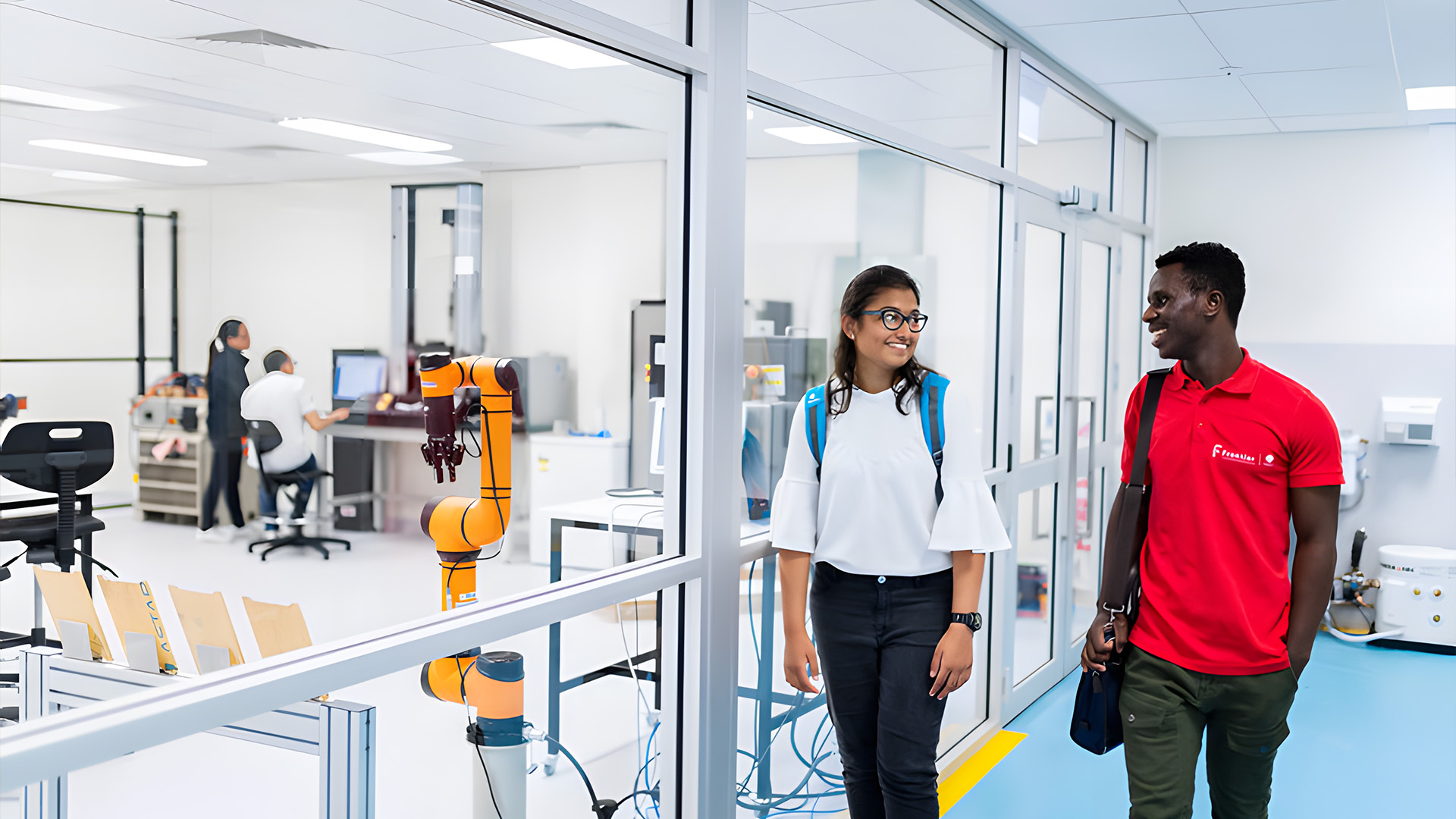
Our students and researchers have access to a comprehensive suite of state-of-the-art laboratories and experimental facilities supporting teaching, research, industry collaboration and innovation across civil engineering, structural engineering, construction materials and construction management.

Our facilities include the largest strong floor in Australia, providing exceptional capability for large-scale and full-scale structural testing. Together with advanced laboratories and specialised equipment, these facilities enable research and practical learning across material characterisation, specimen fabrication, structural testing, sensing and monitoring, non-destructive evaluation, and infrastructure assessment, from material and component scales through to full-scale structural systems.

The facilities also provide students with valuable hands-on and experiential learning opportunities, complementing teaching in modern learning environments such as the Experiential Learning Suite — a multifunctional space designed to support interaction, collaboration and the use of emerging technologies including Building Information Modelling (BIM) and Immersive Virtual Reality (IVR).

  •  Advanced 3D image-based instrumentation, including Digital Image Correlation (DIC)
  • Advanced material characterisation and testing laboratories
  • Advanced sensing systems for online and offline structural condition monitoring
  • Chamber and tube furnaces for calcining and thermal processing
  • Concrete 3D printing system
  • Dynamic, impact and vibration testing facilities
  • Facilities for large-scale testing of utility poles, transmission tower, insulators and structural systems, including full-scale pole testing capabilities.
  • Hydraulic actuators and servo-controlled loading systems
  • Large strong floor and reaction frame systems capable of testing large-scale structural members and large structural systems
  • Multi-axial loading facilities for different structural elements and systems
  • Non-destructive evaluation facilities for structural inspection and assessment
  • Six degree-of-freedom Stewart platform shake table
  • Specimen fabrication and preparation workshop facilities
  • Static, cyclic, fatigue loading test facilities
  • Thermal vacuum chambers for materials testing
  • Timber, FRP, concrete, and composite material testing equipment

These facilities support cutting-edge research, industry collaboration and practical engineering education, enabling students and researchers to investigate the performance, behaviour, durability and condition of materials, components and structures under a wide range of loading and environmental conditions.

Engage with us

With industry standard and internationally accredited laboratories and testing facilities with highly specialised capabilities - such as in water management – we support and produce high quality research outputs to the water industry, local councils and state governments.

Contact us

School of Civil Engineering and Construction Management

Location

Location
College of Engineering and IT
Adelaide University
Helen Mayo North and Engineering North Building
Adelaide City Campus East

Email

Email: cecm@adelaide.edu.au