Copyright for teaching

Copyright for teaching

Following copyright rules in teaching helps you stay compliant with copyright laws and policies, keeps academic standards high, and shows students how to do things the right way. 

The course materials section includes descriptions of how some materials can be used in class. 

Third party materials used in teaching must be attributed properly, under the moral rights provisions in the Copyright Act 1968. Even if something is free to use (in the public domain), it's still good practice to give credit to the original creator. 

Copyright exceptions for teaching do not apply to staff training or professional development. Please contact the Copyright team if you have questions about the use of third-party copyright material in these circumstances.


Under the Intellectual Property Policy, the University generally asserts ownership over all Intellectual Property including copyright in teaching materials created by staff members, in the course of or incidental to their employment.

As such, releasing teaching materials created in the course of employment at the University under a Creative Commons or other licence, including through granting permission, requires authorisation from the University. Submit a permission request to licence University teaching materials. 

The Copyright Compliance Procedure requires that third party copyright material such as book chapters, journal articles, films and music must only be provided to students via Course Readings. This is to ensure that copying limits, notices, and reporting requirements are met. Contact Ask Library to assist with locating required materials.

Incorporating resources for use in teaching materials such as presentations, worksheets and handouts should rely on at least one of the following.

Library Subscribed Materials

The Library has licences in place with over 120 vendors to provide staff and students with resources such as journals, data, ebooks, news, guides, audio and video recordings.

While there are distinct licence terms for each resource, they typically permit staff to access (view) and possibly copy (download) or communicate (share) materials for educational purposes. Check the specific terms or contact Ask Library for assistance. 

Use University-created materials

Creating your own materials ensures the University attains ownership as your employer. You can generally also reuse material created by another University staff member, unless they created it under a previous employer or it’s been commercially published.

Open Education Resources (OERs)

OERs consist of materials that are in the public domain or have been released under a Creative Commons or other open licence that permits some degree of use without purchase or permission. OER materials include textbooks, journals, courseware, software, datasets, images, music and video, or any item freely distributed for teachers to copy and adapt.

The Copyright Compliance Procedure prioritises the use of OERs for University activities where possible.

See the Open Education Resource Guide for information on how to find OERs by discipline and format.

Copyright Expired

Copyright durations can be broadly summarised as below, however there are exceptions depending on the type of material and other factors, such as the publication date.

Copyright expires:

  • For works: life of the author + 70 years.
  • For subject matter other than works: date made + 70 years.
  • For government material: date made + 50 years.

Copyright in Australia has also expired for:

  • Most literary, dramatic, musical and artistic works if the author died before 1955.
  • Photographs and sound recordings made before 1955.

See the Attorney General’s Department Duration of Copyright table for specific durations by material type.

Linking or embedding

Linking or embedding online content means the source website is serving up the material rather than having to reproduce it locally. Embedding should only be employed if the third-party site expressly permits it. YouTube, for example, provides specific HTML embed code to enable videos to be viewed elsewhere. Only legitimate, non-infringing material should be linked or embedded.

Performing material in class

The Copyright Act 1968 provides an exception that permits the performance or communication of material during educational instruction, so long as it is not conducted for profit. The exception covers playing films or sound recordings, reading out literary works, and performing a play or musical work.

The exception does not extend to copying the work, so performances of copyright material should be excluded from lecture recordings by pausing the recording unless otherwise permitted under some other scheme, such as the Screenrights licence for broadcast material. 

Commercial streaming services such as Spotify or Netflix cannot be used in class as their terms of use generally prohibit public screenings and preclude other legislated rights. However, Netflix does offer a limited documentary collection for educational screenings.

Assessment materials

The examination exception in the Copyright Act 1968 permits unlimited copying and communication of any type of material if it is used as part of an exam or assessment question or answer. It excludes practice tests that are not formally assessed. 

Note that licence terms may override legislated rights and exceptions for some resources, such as library subscribed materials. 

Disability Access

The disability exceptions permit persons with a disability and organisations assisting persons with a disability to use material in certain circumstances. See the Australian Copyright Council Disability Access & Copyright Fact Sheet for more information.

Material reproduced under this exception must include the following attribution: Copied under the Copyright Act s.113E/F

Contact Access and Inclusion for further assistance.

Permissions 

If the intended use of a work doesn’t fall within one of the above schemes, consider obtaining permission. Copyright © notices should identify the rights holder, but if it’s unclear contact the publisher or author.

For texts, submit requests through CCC Marketplace if possible, or look for a ‘permission and clearances’ link or similar on online articles.

Consider the following wording for informal requests:

Can you kindly grant permission to Adelaide University for a worldwide, perpetual, non-exclusive licence to copy and communicate the following item for the purpose of including it in teaching and learning materials.

Use the following wording for material authored by a student:

Can you kindly grant permission to Adelaide University for a worldwide, perpetual, non-exclusive licence to copy and communicate the following/attached item for the purpose of including it in University teaching and learning materials for course [course code, course title]. It will be de-identified and will not be attributed to preserve anonymity.

Collecting Society Licences

The University has agreements in place with several copyright collecting societies covering the use of text, images, TV and radio material, and music. See the Further Resources page for details. 
Attribution helps to meet the moral rights relating to the use of content by communicating the author/creator, the source of the material, and the licence under which is it reproduced. Attribution is required by law if you are sharing or communicating third-party material - this includes long quotations, figures, images or otherwise directly including, or adapting, Creative Commons licensed source material. Adding an attribution ensures the source and usage terms of the resource can be traced.

Attributing is distinct from citing/referencing, as outlined below:

Attribution is: required by law if sharing or communicating third-party material; includes license, as well as title, author, and source (e.g. TASL format); demonstrates best practice for students. Citation: required for academic integrity; includes source information per a formal referencing style (eg APA); demonstrates best practice for students.

What Do I Need to Attribute?

Attribute everything, including resources in which you or the University own copyright (e.g., slides, recordings, and other content developed for the course). Even if you have altered material in a way that is not immediately recognisable, you must still acknowledge the original source and state that it has been adapted from an original source.

How to Attribute

Need to quickly check whether your use of third-party resources are copyright compliant? Consult our download-able Flowchart

Attribution generally consists of a statement that includes license, usage and copyright information. Attribution statements should be clear and legible, and the terms of use should be clearly indicated.

If an attribution style is not specified by a resource, attribute using the default style TASL: Title, Author, Source, License.

See below for advice on how to attribute resources depending on the license:

The copyright for content owned by the foundation universities (University of Adelaide and University of South Australia), including material produced by yourself or other staff as employees, is assigned to Adelaide University and can be attributed as: © Adelaide University.

Example: Text

The University of South Australia Policy regarding students with disabilities states:

"3.2 The University recognises that people with disabilities are best placed to understand their needs. Consequently, students share the responsibility for identifying and implementing appropriate solutions to support their participation in study."

 Students with disabilities © Adelaide University 

Open access resources may come with specific advice about how to format an attribution statement, which you must follow to meet the license conditions. 

For all other open resources, including Creative Commons and public domain materials, use the TASL method to attribute: Title, Author, Source, License.

If the resource has a Creative Commons license, link to the relevant license.

Example 1: Image

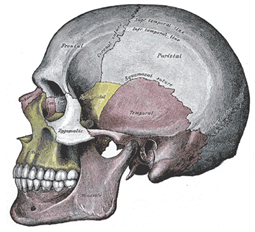
Lateral view of human skull

Figure 1: Betts et al, "Figure 7.1. Lateral View of the Human Skull", CC BY 4.0

Example 2: Text

Chapter 5.3 of Neuroscience, Psychology and Conflict Management states the following about effective interactions:

“Intentional attributions assume that a person intentionally acted in a particular way. For example, we may believe that our work colleague was deliberately late to a meeting with the intention to sabotage the discussion/ to punish us for having been late last time."

Neuroscience, psychology and conflict management. by Judith Rafferty is licensed under a Creative Commons Attribution NonCommercial 4.0 License by James Cook University.

Note: The front matter of this book provides the recommended attribution.

Materials that are copied from image or media collections available via the Library, and have explicit reuse permission, should include the attribution statement:

Copied under license from {licensor/database}.

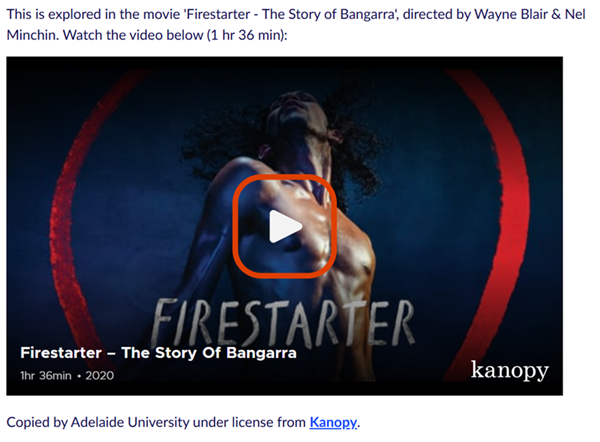
Example: Video

Screenshot of the video Firestarter

Note on the example: 

  • The embed code has been retrieved from the database (Kanopy) and the database has been linked in the attribution.

If necessary to use copyrighted material, you may rely on the educational provision (s.113P of the Copyright Act), which allows you to copy and communicate images for educational purposes without seeking permission from the copyright owners. The University has licences in place with the Copyright Agency and Screenrights that permit staff to use a large catalogue of materials for educational instruction without requesting permission (within limits).

As these licences restrict how content may be reused, this should only be used where an appropriate alternative is not available (for example, technical drawings). If the image is intended to be illustrative or decorative, we suggest you use openly licensed content instead.

If you are reproducing any copyrighted content under this provision, include the following statement:

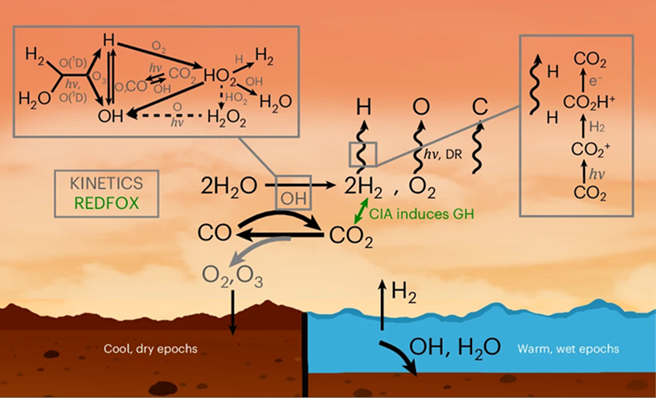
{Image title} from {source} copied under the Copyright Act s.113P.

Example: Image

Mars chemistry diagram

The University has licences in place with APRA-AMCOS that permit staff to use materials for educational instruction without requesting permission (within limits).

If you are reproducing content under this provision, include the following statement:

Copied under University Music License. 

A variation to the TASL style of attribution for this type of resource is that the Author = List composer, lyricist and arranger of the musical work. For ARIA sound recordings, include the artist/group name, and record company label.

This may include quiz banks or slides provided by an academic’s agreement with a publisher, commercially licensed images supplied for the course, or content you created under a different employer or with co-authors.

If you have sought and received special permission to use a particular resource, attribute as the permission advises. If none has been provided, include the default attribution:

Copied under permission from {insert name}.

Example: Attribution within slides

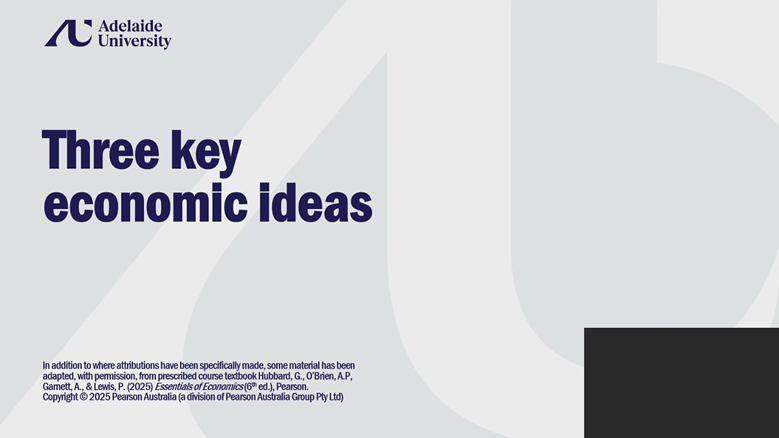
Slide with attribution written on the bottom left-hand side

 Screenshot © Adelaide University

Notes on the example: 

  • The attribution may differ from the default attribution, where specified by the rights holder. The screenshot shows a blanket attribution statement that includes the key elements:
    • In addition to where attributions have been specifically made, some material has been adapted, with permission, from prescribed course textbook, Hubbard, G., O'Brien, A. P., Garnett, A., & Lewis, P. (2025) Essentials of Economics (6th ed.), Pearson. Copyright © 2025 Pearson Australia (a division of Pearson Australia Group Pty Ltd).
  • If permission has been sought to adapt, as well as reproduce, material, this should be included in the attribution.   

For works which have been modified in some way (e.g., cropped, recoloured, etc.), precede the attribution with:

Adapted from {TASL attribution}.

Check the license first to confirm you are allowed to modify or adapt the material.

Look for the terms of use or terms of service (if any). If no attribution style is specified, refer to the default:

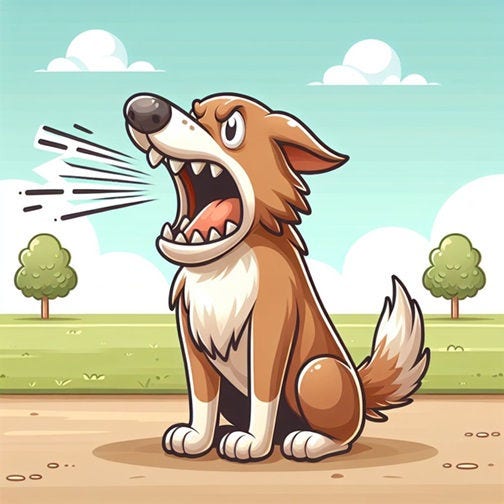
Created with {AI application}.

Example: Image

AI dog

The dog in the image is displaying aggressive body language (barking and bared teeth). Created with Microsoft Copilot.

FAQs

Find below a list of commonly asked questions:


Yes. This is both required under moral rights legislation and is good academic practice. This applies to all 3rd party materials, including videos from Youtube.

Include the wording “Reproduced with permission” in your attribution, unless you have been provided with specific instructions to comply with. Please also provide documented evidence of permission to the Library for record-keeping purposes. 

A blanket attribution statement at the beginning or the end of the slides is sufficient. For example, “unless otherwise stated, all images in this presentation have been copied from [attribution details]”. If this is not possible, and the work is essential to the teaching and learning activities of your course, include as much information as possible about where you sourced the work.

Yes, attributing clearly identifies that the University has permission to use the image and under which terms.


No. At a minimum, include both the URL of the site where the image is located and the URL of the license details, the image’s title (if known) and the creator.


You must obtain written permission from the student before using a student's work in your course site or course materials.  To comply with copyright governance, this approval should be filed in Content Manager once access is finalised. For now, please send student permissions to copyright_au@adelaide.edu.au. We will file these emails on behalf of the course coordinator.

When contacting the student, include the below wording:

Sharing previous student work can really help other students understand the topic better. Your work has been identified as being an exemplar that we would like to share with other students. For this to happen we need you to grant us with permission. Under the University Intellectual Property (IP) Policy students generally own the copyright to their assignments, theses and other work. This means we need approval from you before we can show your work as part of our teaching or include it in course materials. 

How do I grant permission? 
Read the statement and information below and if you’re comfortable giving your permission, please reply to this email with ‘yes, I confirm’ or optionally ‘yes, I confirm, but do not attribute’ if you do not wish to be identified as the author. 

Alternatively, please complete and return the student permission form [Download and attach this to your correspondence]

I grant Adelaide University (ABN 41 202 953 738) (‘AU’) a worldwide, perpetual, non-exclusive licence to copy and communicate the following/attached item (the “Work”) for the purpose of:

  • including it in University learning and teaching materials;
  • promoting the University.

I confirm that the Work is all my own work, except where otherwise indicated. Re-use of any third party material included in the work may infringe copyright.

Work: [insert citation or description]

What does the language mean? 
These are standard terms used in permissions and licensing documents.  The key terms are as follows: 
•    Attribute: you will be acknowledged as the creator of the work.
•    Worldwide: your work might be shared with students or staff outside Australia. 
•    Perpetual: the permission doesn’t expire, so we won’t need to ask again. 
•    Non-exclusive: you still own your work and can share or publish it elsewhere. 
•    Communicate: the University can share the work electronically. 

The license of a resource may be listed in various locations but will often be at the bottom of a webpage. If you cannot locate the license, it is likely copyrighted content. Contact the Library via Services Hub if you're unsure.

Tips:

  • If the resource is located online, link to where it is hosted.
  • If you cannot provide an attribution statement directly next to the resource, add your attributions to a list of resources at the end of the page or slide set on which they appear, making sure to clearly identify which citation accompanies which resource.
  • Contact the Library if you are unsure about appropriate usage of content, including images not openly licensed.