Activities and worksheets

AU

Most of our activities and worksheets have been designed for primary school students in Years 4-6. Some activities may be suitable for younger children.


Colour Urrbrae House - Year 1

A simple colouring sheet designed for junior primary students.

Copperplate handwriting

A simple exercise sheet designed for students to practice their traditional Copperplate cursive handwriting.

Copybook – Year 1

Miss Victoria’s copybook from our Urrbrae House Schoolroom. Copperplate handwriting exercise and colouring page for junior primary students.

Copybook – Years 4-6

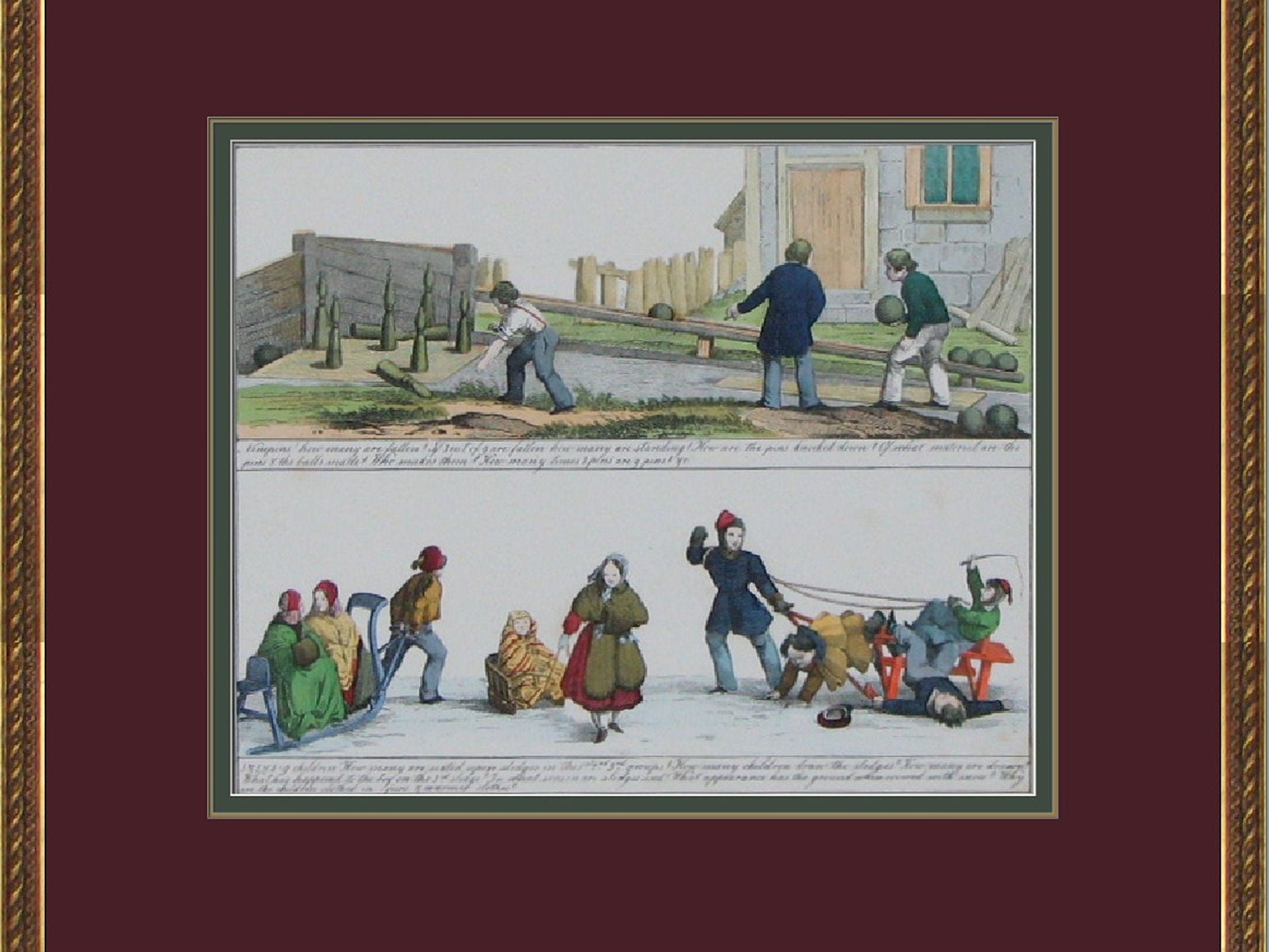
Miss Victoria’s Advanced copybook from our Urrbrae House Schoolroom. Copperplate handwriting exercise with Victorian era riddles for primary school students.

Make a Victorian Peg Doll

An art and craft project. Wooden peg dolls are easy to make and were very popular in the nineteenth century amongst both rich and poor people. Even Princess (later Queen) Victoria had her own collection of these types of dolls which she made and decorated herself.

Make your own Thaumatrope

An art and craft project. A thaumatrope was a popular toy in the nineteenth century. A disk or card with a different yet combining picture on each side is attached to two pieces of string. When the strings are twirled quickly between the fingers the two pictures appear to combine into a single image due to a phenomenon called “persistence of vision”.

Matilda arrives in Adelaide

A comprehension and creative writing exercise. A brief history of Matilda Waite (nee Methuen) is provided. Students are asked to write a diary as if they are Matilda coming to Adelaide, South Australia on the "City of Adelaide" clipper ship in 1864 and then journeying to Paratoo station.

Money in 1892

This worksheet introduces and asks questions about the Pound Sterling Standard form of currency which was adopted from Britain and used in the Australian colonies in the nineteenth century.

Paper bead making

A craft activity. In the nineteenth century many ladies created handmade paper beads from scraps of wallpaper rolled on knitting needles. Watch our short video to learn how to make these beads today.

Scientific copybook

Miss Victoria’s Scientific copybook from our Urrbrae House Schoolroom. Botanical drawing and copperplate handwriting exercise designed for primary school students. In the nineteenth century when photography was new and very expensive, scientists relied on detailed drawings to identify plants.

Shrimp through the maze

Students have to find a path for Peter Waite’s dog, Shrimp, through a maze puzzle.

Who are you?

A worksheet designed to encourage students to think about how living in the past might have been different to today.  Students answer questions about who they are in the present day and asked to imagine answers to the same questions if they were one of the Waite children.

Word Search 1892

Students are asked to find hidden words about the Waite family and their history in this puzzle.

Make your own Victorian Toy Theatre Toy

Theatres were a popular form of entertainment in the nineteenth century. In the United Kingdom, you could buy plays to put on in your toy theatres. This Pollock’s Toy Theatre, from the BBC UK, is a genuine Victorian theatre complete with stage, scenery and characters.

Make your own Victorian Paper Flowers

Victorians loved to use paper flowers as decorations. There are hundreds of articles from the magazines of the time showing how to make different types of flowers. Most were highly elaborate designs, but this site from BBC UK, provides a simple rose flower for a first attempt.

Make your own Victorian Keepsake Box

Making presents was a sign of love and care in the nineteenth century. Gifts could take a year to finish. This keepsake box, from the BBC UK, is made using a popular Victorian technique, papier mache, which was even used to create pieces of furniture.

Social history of the later Victorian era (1860 - 1901)

Websites with interactive activities for primary school children relating to the Victorian era and its social history.

National Museum Australia, Canberra

Gold Rush game
A good introduction to life on the Australian goldfields. Students need to think clearly and strategically, as well as gaining a hearty dose of good luck, to win at this decision-maker game set in 1850-1900.

BBC, United Kingdom

Dress a Victorian (and Tudor) game
Two games where students have to correctly dress a Victorian (and Tudor) lady and gentleman.

Muck and Brass
In this game a student imagines they are running a city at the height of the Industrial Revolution in Great Britain, and they make choices regarding the welfare of their workforce and the prosperity of their business. The game highlights the differences in conditions for rich and poor in the nineteenth century.
Domestic life and cooking in Victorian times.

English Heritage, United Kingdom

Watch The Victorian Way
Educational videos recreating servants’ work and lives at Audley End House and Gardens.

Our commitment to the safety of children and young people

All children and young people who come to the Urrbrae House Historic Precinct at Adelaide University have a right to feel and be safe.

Urrbrae House is committed to maintaining a respectful and protective environment where children can participate safe from harm in learning, teaching and research experiences. We want children and young people who participate in our programs and activities to feel safe and to have fun while learning.

In addition to following the Adelaide University’s Safe Environments for Children and Vulnerable People Policy, Urrbrae House has a local area Code of Conduct and Risk Management Plan in place to assist staff and volunteers in minimising risks to the safety of children and young people while at Urrbrae House.

Contact us

Waite Historic Precinct

Telephone

(08) 8313 7497

Email

urrbraehouse@adelaide.edu.au