Acoustic and Vibration Lab

Acoustic and Vibration Lab

About acoustic vibration and control

Our acoustics vibration and control research is focused on the management of sound and vibrations, including through automated control systems. 

Our acoustics vibration and control researchers specialise in: 

  • active noise and vibration control
  • structural health monitoring
  • dynamics and control
  • thermoacoustics
  • ultrasound
  • underwater acoustics
  • vibration isolation
  • vibro-acoustics
  • waves and oscillating systems. 

With sound surrounding us at all times, our work is of direct benefit in virtually all fields of endeavour. Some industries for which it is especially relevant include aerospace, automotive, maritime, rail, defence, construction, manufacturing, power generation and consumer electronics.
Cutting edge facilities

Explore our advanced equipment and world-class experimental facilities, complemented by our analytical and computational tools. 

Research excellence

Our team members engage in projects spanning basic to applied research. From active vibration control to new medical instruments, the latest diagnostics and novel materials development, we’re pushing the boundaries of knowledge. 

Industry collaboration

We collaborate with government agencies, private companies, and industrial sponsors to address real-world challenges. 

Explore acoustic vibration and control 

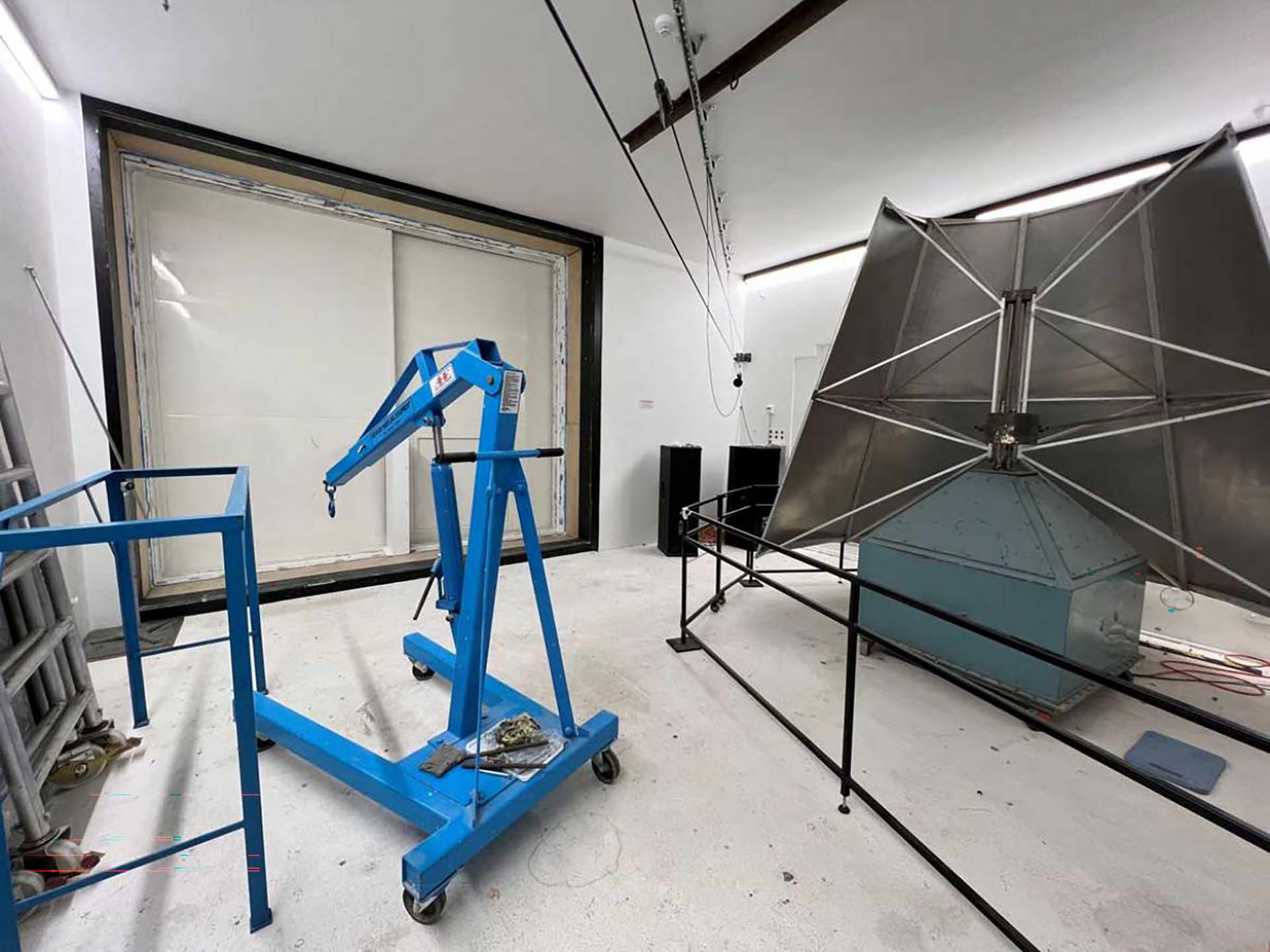
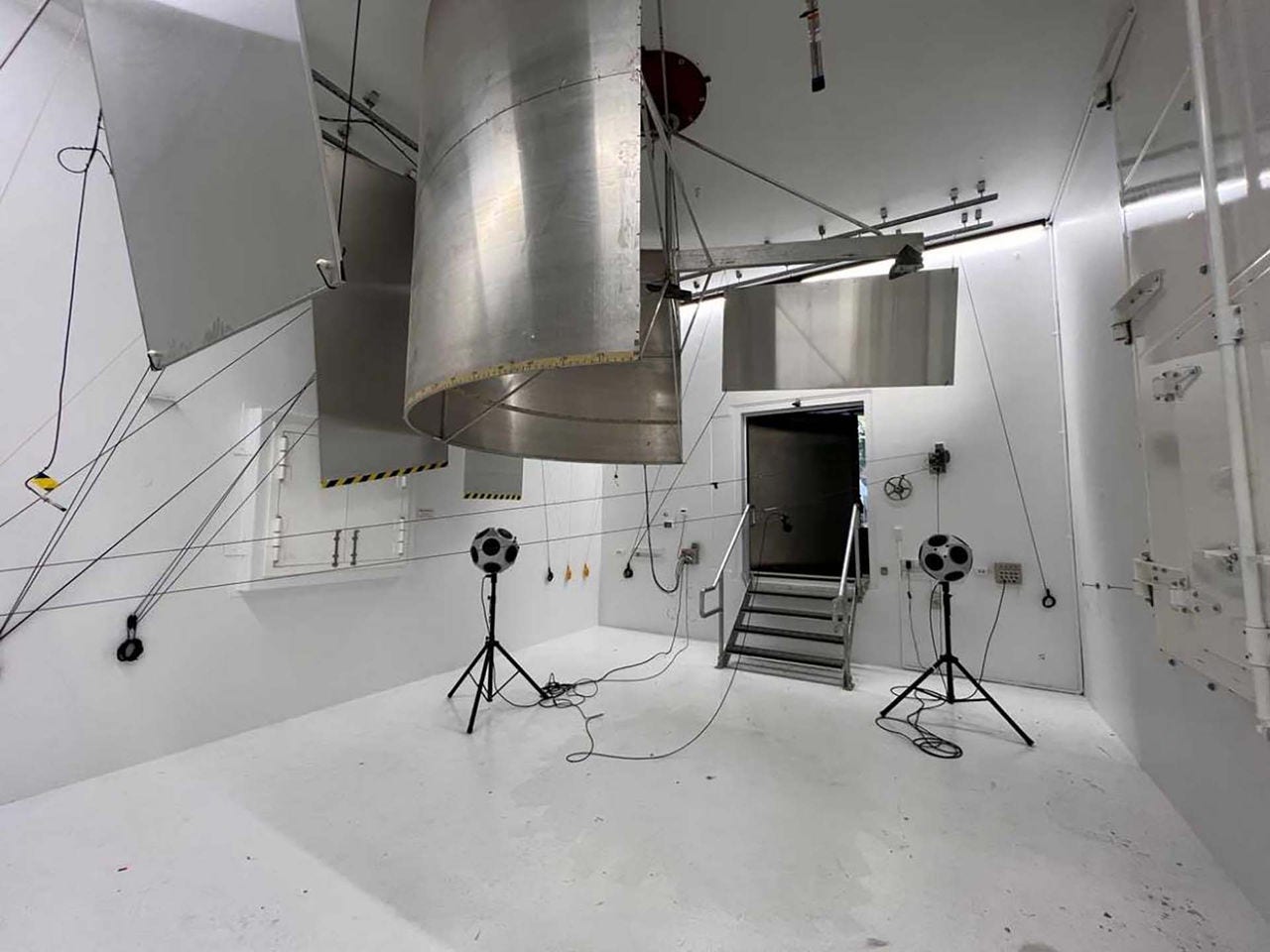
We have three high-quality acoustic chambers available for hire, including two reverberation chambers and one anechoic chamber for facilitating sound transmission loss, sound absorption, sound power and acoustic radiation measurements. If you are interested in using this facility, please contact via our email .  


The source and receiver rooms are used for testing transmission loss. The sample is installed in a hole in the wall between the two rooms. Sound in the source room then passes through the test sample into the receiver room, where the resultant sound pressure is measured by a traversing or fixed microphone(s). 

The source room’s specifications are:

Dimensions: 6.085 × 5.175 × 3.355 m 

Volume: 105.6 m³ 

Surface Area: 138.5 m² 

Opening Area: 3.607 × 3.194 m = 11.52 m² 

Small Test Panel Opening: 1.000 × 1.000 m = 1.00 m² 

Volume Between Chambers: 11.18 m³ 

Rotating Diffuser: 

  • Hemi conical shape 
  • 2.5 m height 
  • 1.5 m diameter (top) 
  • 3.0 m diameter (bottom) 
  • Swept volume: 10.31 m³ 
Acoustic chamber source room

The receiver room is used for acoustic transmission loss, noise reduction and insertion loss testing, and to measure sound power. The room has several static diffusers and a rotating diffuser, which is used to better disperse sound in the chamber to create a uniform sound field. 

The source room’s specifications are:

Dimensions: 6.840 × 5.565 × 4.720 m 

Volume: 179.7 m³ 

Surface Area: 193.2 m² (including opening area)

Opening Area: 11.52 m² 

Small Test Panel Opening: 1.000 × 1.000 m = 1.00 m² 

Volume Between Chambers: 11.18 m³ 

Rotating Diffuser: 

  • Hemi-cylindrical shape
  • 2.4 m height 
  • 3.5 m diameter 
  • Swept volume: 23.09 m³ 
Acoustic chamber receiver room

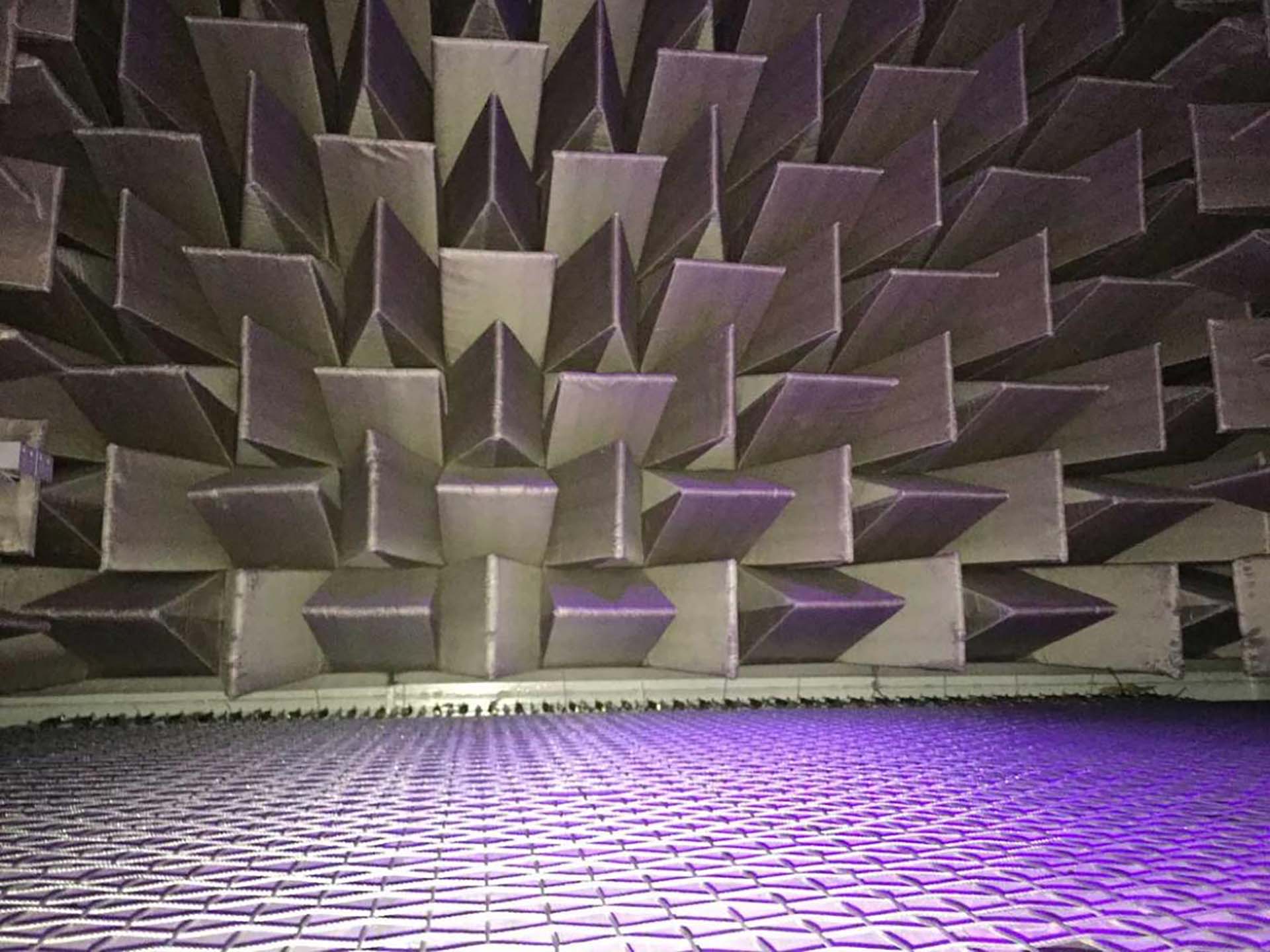
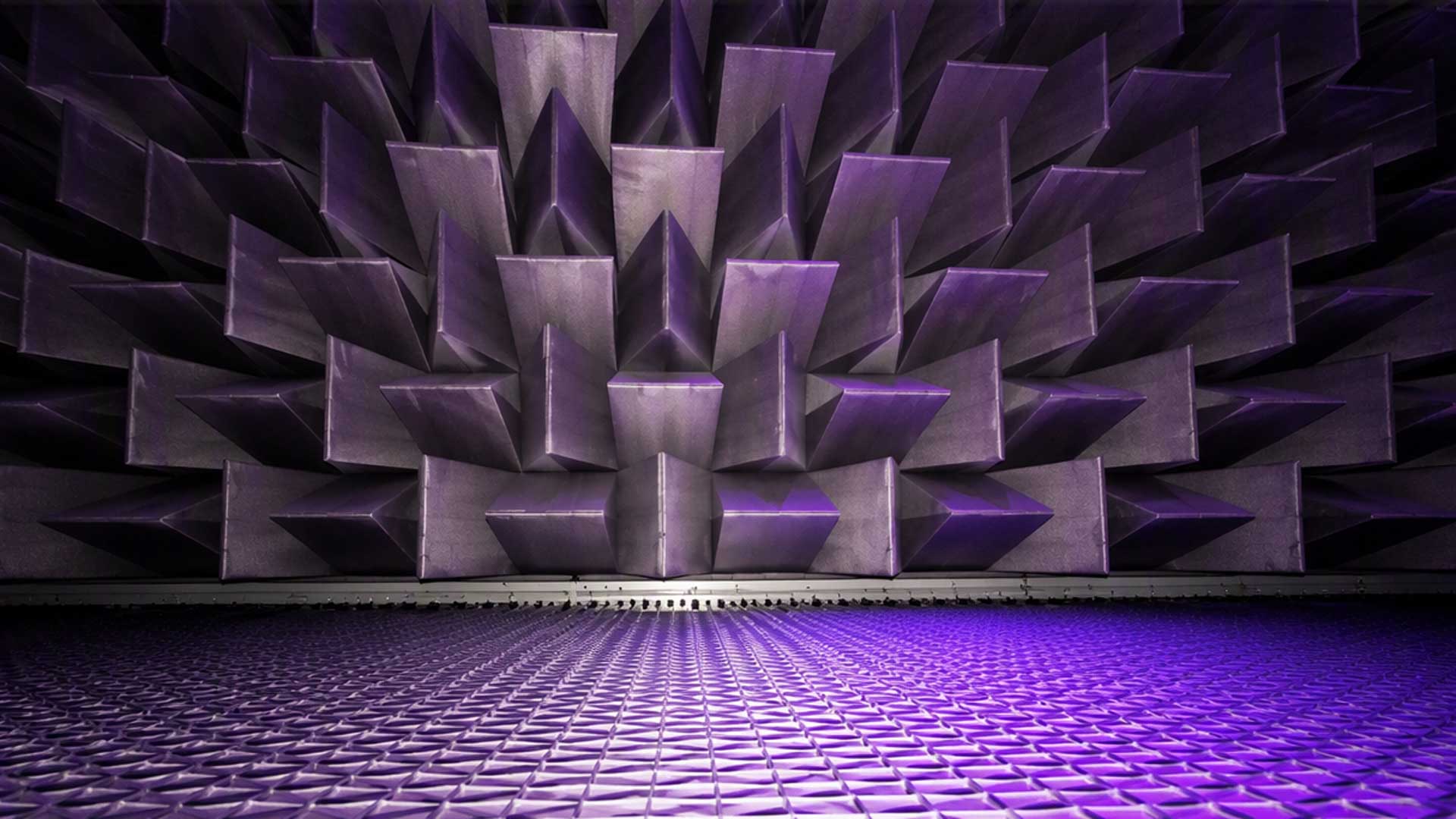
The anechoic room is used to measure objects’ acoustic radiation patterns, and when a quiet measurement environment is required. The room can be configured to be fully anechoic or have floor plates installed to create a hemi-anechoic space. 

The source room’s specifications are:

4.79 x 3.90 x 3.94 m 

73.6 m3. 

Acoustic chamber anechoic room

We have expertise across a wide range of areas. Many of our researchers are available to assist with research project supervision for Master of Philosophy and Doctor of Philosophy students. 

Research teamExpertise
Professor Benjamin CazzolatoAcoustics; Vibrations; Control and signal processing
Dr Mergen Ghayesh 
Professor Carl HowardAcoustics; Vibrations; Condition monitoring
Dr Will RobertsonMagnetic levitation; Vibration control; Biomechanics
Professor Anthony ZanderAcoustics; Vibrations
Emeritus Professor Colin HansenAcoustics; Vibrations

Consulting services

We offer a comprehensive range of services including testing to Australian, ISO, ASTM and MIL standards: 

  • Airborne sound insulation testing in reverberation rooms (random incidence sound transmission loss) to AS 1191/ ISO 140 / ISO 10140 
  • Normal incidence transmission loss testing (in an impedance tube) to ASTM E2611 
  • Random incidence sound absorption testing (in a reverberation room) to AS ISO 354 
  • Normal incidence sound absorption testing (in an impedance tube) to ASTM E1050 and ISO 10534-2 
  • Static airflow resistance testing for porous materials to ASTM C522-03 and ISO 9053 
  • Porosity and Density measurements of porous media (based on ISO 4590) 
  • Sound power testing in a laboratory reverberation room (both direct and comparison methods) to ISO 3741 
  • Sound power testing using sound pressure in anechoic and hemi-anechoic rooms to ISO 3745 
  • Sound power testing using sound intensity to ISO 9614 
  • Environmental laboratory testing to MIL-STD-810 
  • Hydrodynamic valve noise measurement based on IEC_60534-8-2 
  • Measurement of speed of sound in a fluid in a pipe to ISO_15086-2 
  • Vibration testing with an LDS 721shaker, using sinusoid, random vibration, and classical shock excitations against criteria such as NASA-STD-7001B 
  • Noise monitoring and control. 
  • Bespoke sound and vibration measurements and analysis to suit your needs. 

We have access to a range of specialist equipment and facilities, including acoustic chambers and wind tunnels. Please contact the Laboratory AVL@adelaide.edu.auProfessor Carl Howard or Professor Ben Cazzolato, for more information. 

To enquire about consulting or working with us on a research project, please contact Professor Carl Howard

Publications and software

We have produced the following textbooks and software to assist with solving acoustic problems. 

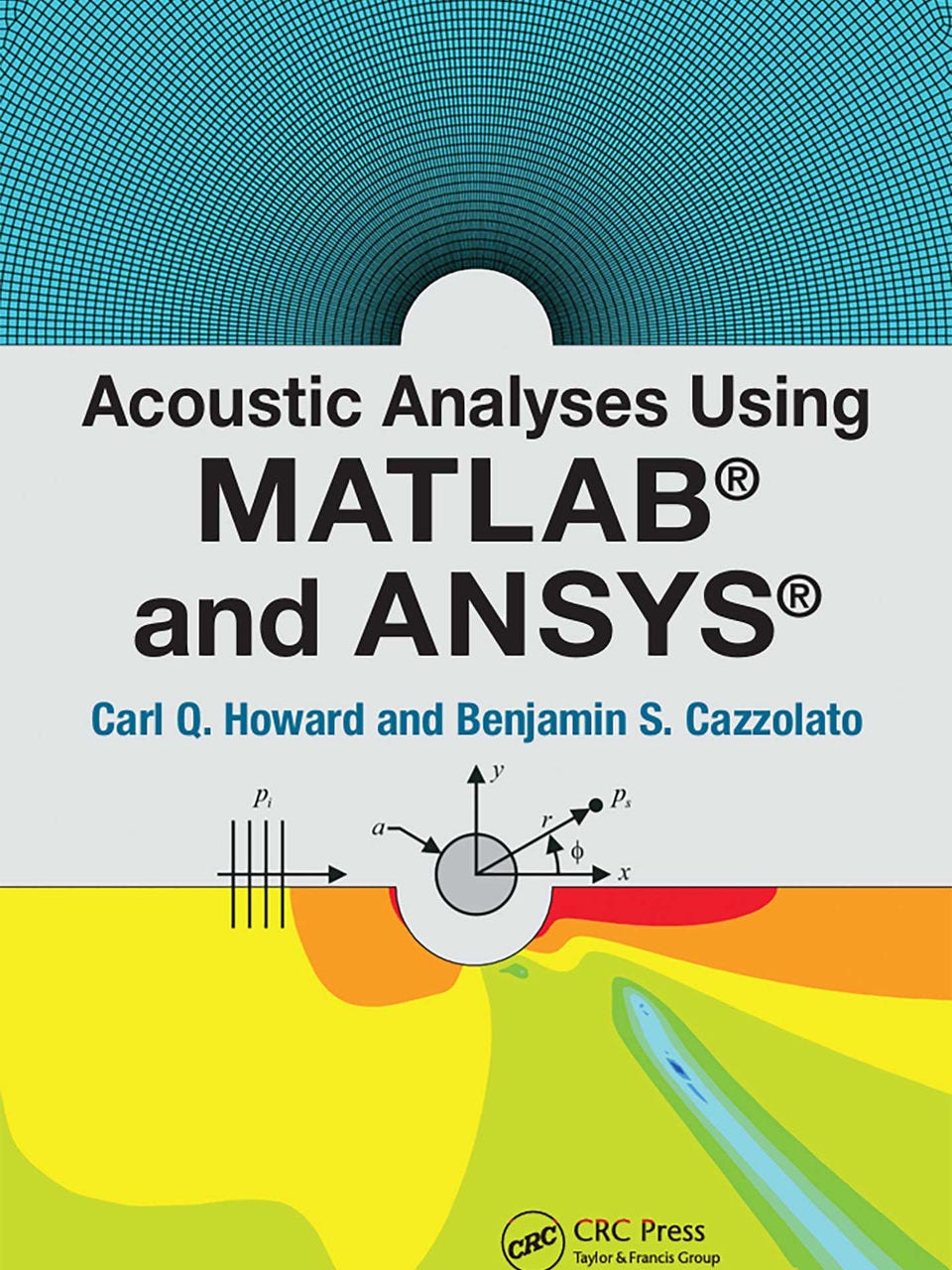
Acoustic Analyses Using MATLAB® and ANSYS® (2014) cover

Acoustic Analyses Using MATLAB® and ANSYS® (2014)

By Carl Q. Howard and Benjamin S. Cazzolato 
ISBN-10: 1482223252 / ISBN-13: 978-1482223255

This textbook can be purchased from: Google BooksAmazon or Routledge .

Software accompanying the book:

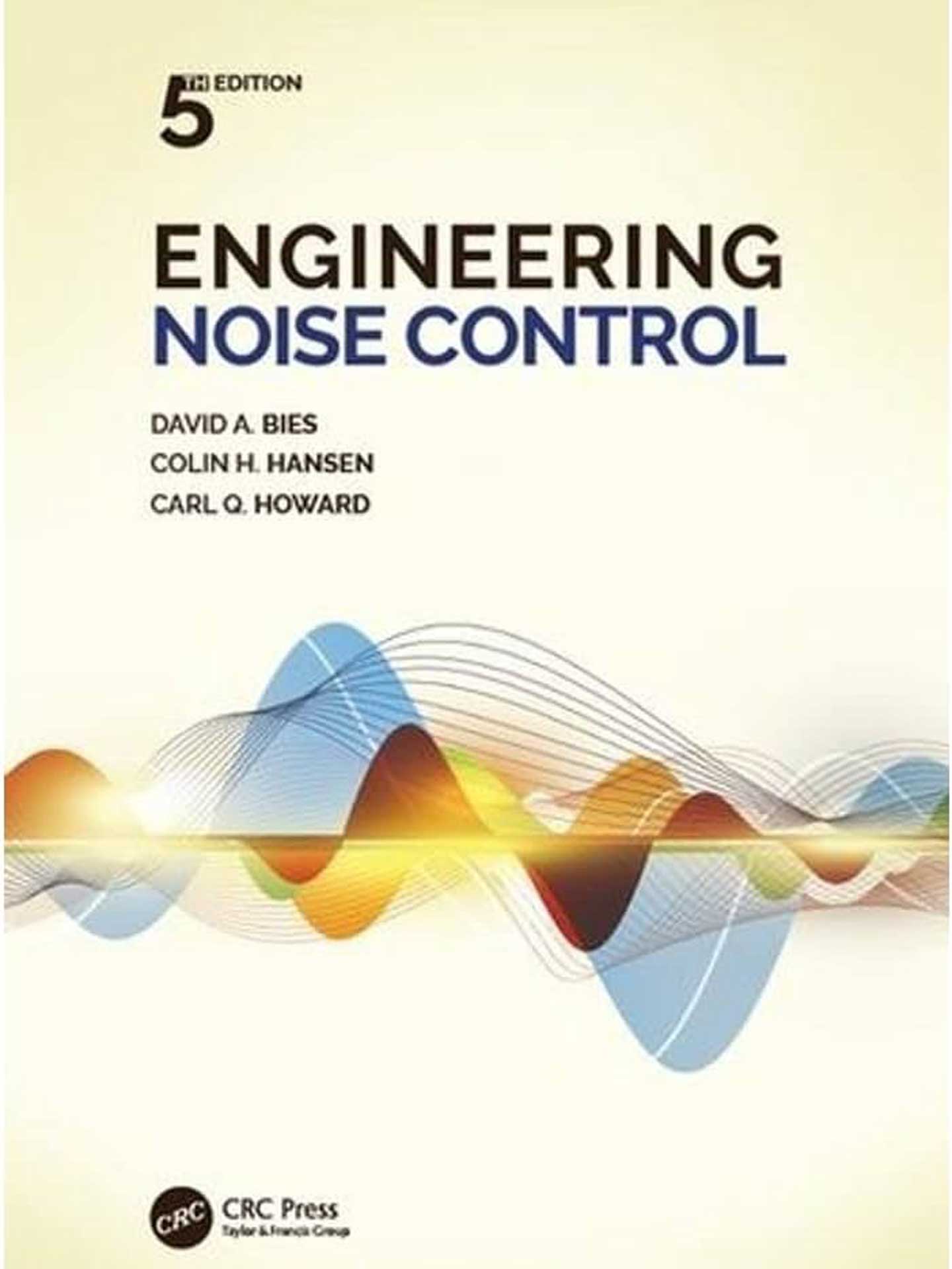
Engineering Noise Control, 5th Edition (2017) cover

Engineering Noise Control, 5th Edition (2017)

By David A. Bies, Colin H. Hansen and Carl Q. Howard

ISBN-10: 1498724051 / ISBN-13: 978-1498724050

This textbook can be purchased from: Amazon .

Software accompanying the book:

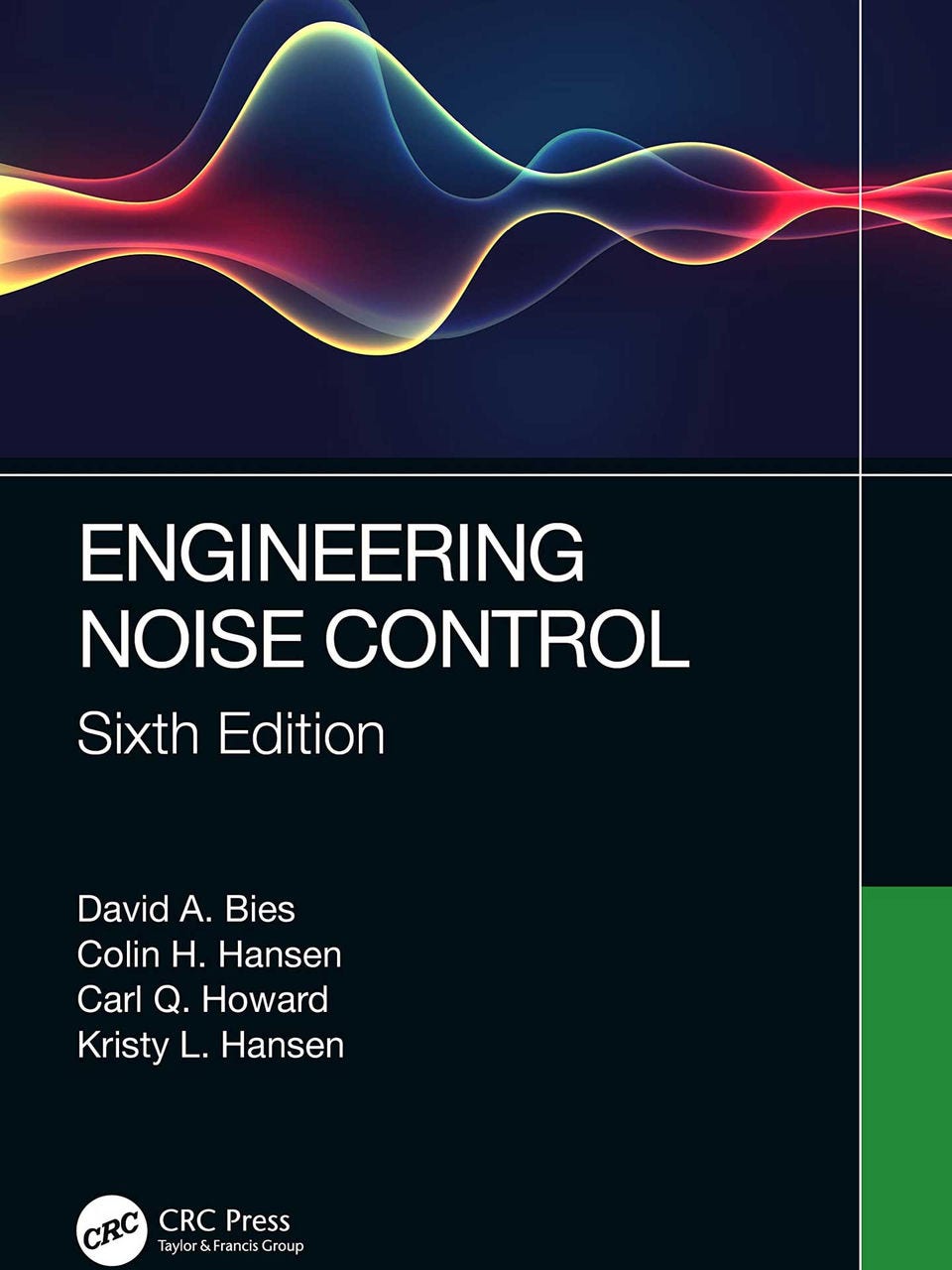
Engineering Noise Control, 6th Edition (2023) cover

Engineering Noise Control, 6th Edition (2023)

By David A. Bies, Colin H. HansenCarl Q. Howard, and Kristy L. Hansen 

ISBN-10: 0367414783 / ISBN-13: 978-0367414788

This textbook can be purchased from: Amazon or Routledge.

Software accompanying the book:

Contact us

Acoustic Vibration and Control

Location

Location
Adelaide University
Adelaide City East Campus
Adelaide 5005

Telephone

Phone
Professor Ben Cazzolato: +61 402 785 974
Professor Carl Howard: +61 8 8313 3469
Professor Anthony Zander: +61 415 758 636

Email

Email: AVL@adelaide.edu.au