1. Background and rationale
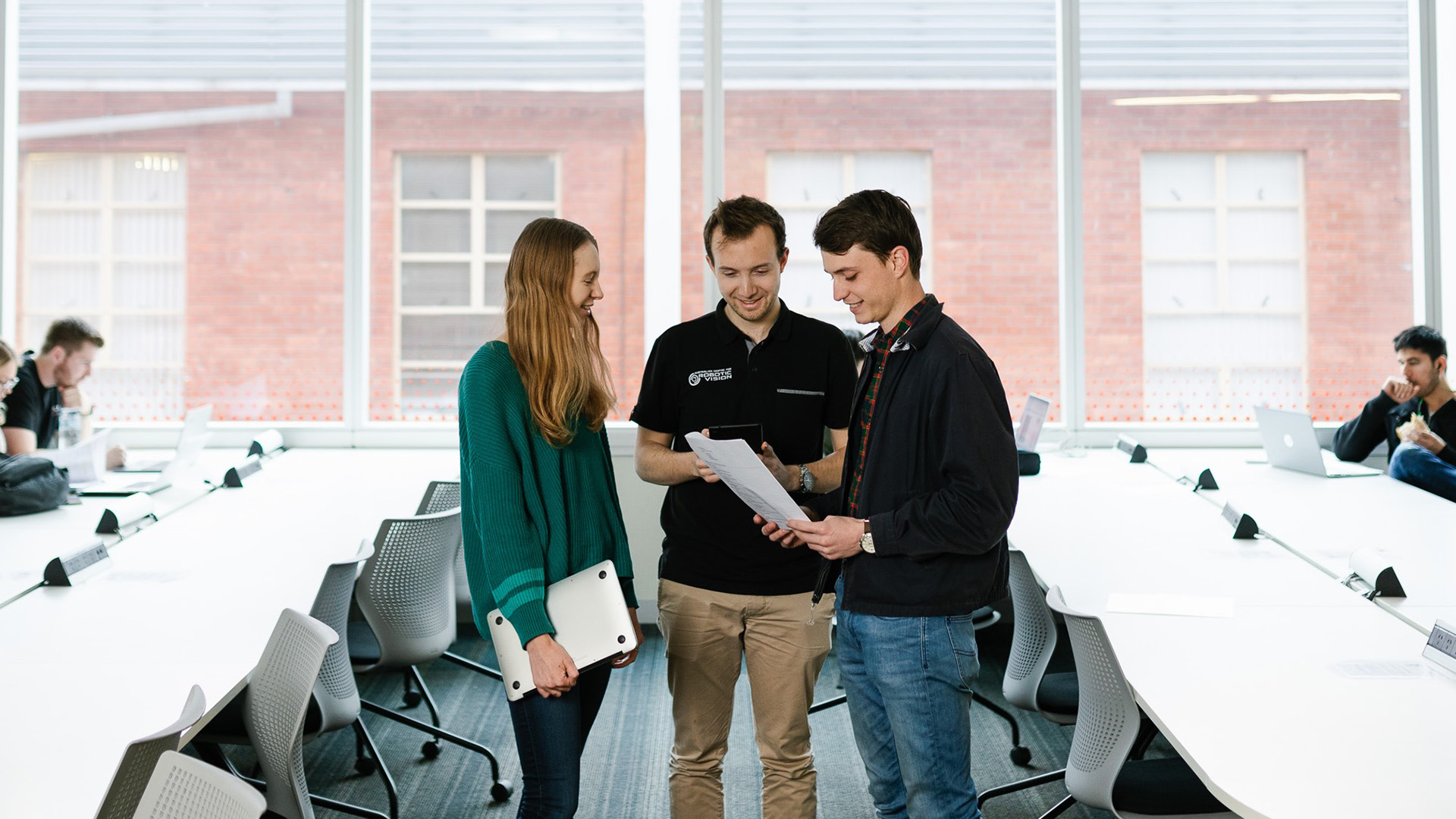
Artificial intelligence (AI) is rapidly transforming how societies learn, work, and solve global challenges, yet many students use AI tools without understanding how they work, the ethical risks involved, or the importance of human judgement. The Responsible AI Impact Challenge (RAIIC) addresses this gap by empowering students to critically, ethically, and creatively engage with AI through real-world problem solving, collaboration, and research-driven learning.
Students will develop:
- AI Understanding – how AI systems work
- Ethical Thinking – fairness, bias, responsibility
- Human–AI Collaboration – what humans should decide
- Innovation Skills – solving real-world problems
2. Target participants
The Challenge is made up of two challenges:
- Primary - targeting Year 6 students
- Secondary - targeting students in Years 7–9
Team structure - Teams from each participating school will consist of:
- 3–5 students
- One teacher to support the team
- An industry mentor for guidance provided by the Responsible AI Research (RAIR) Centre
3. Challenge structure
Primary submission format – Year 6
Topic: Explore AI in everyday life
Year 6
| Challenge statement
- How might we guide students to responsibly integrate AI into their everyday lives—such as for homework assistance, sports development, and social interaction—while preserving genuine human connection and preventing an over-reliance on technology?
Overview
- As AI assistants and digital companions become increasingly common in students' daily routines, the boundary between human and machine interaction is blurring. While AI offers highly tailored support for learning and personal development, there is a growing concern about over-reliance and the potential loss of authentic human empathy. Students must critically reflect on how to balance the convenience of AI with the irreplaceable value of real-world human connections and responsible use.
|
Teams are requested to create a visual presentation (with voiceover) OR a video of up to three (3) minutes to demonstrate a scenario.
At the conclusion of the presentation / role play video, students are asked to provide a reflective explanation / summary via video presentation. This conclusion is to form part of the three-minute presentation.
Secondary submission format – Years 7-9
The secondary competition is designed as a two-stage programme that combines digital submission with a live final event.
Stage 1 — Online submission (Preliminary round)
Topic: Tackling the use of Generative AI for creating Industry products and services
Years 7- 9
| Challenge statement
- How might we design an innovative product that uses AI to solve a real-world problem, while ensuring the technology is used responsibly, transparently, and in ways that recognise its limitations and potential impacts on individuals and society?
Overview
- Artificial Intelligence is increasingly embedded in products that shape how we learn, communicate, and make decisions. While it enables powerful features like personalisation and automation, it also raises challenges such as bias, over-reliance, and lack of transparency. In this challenge, students will design and pitch an AI-enabled product that solves a real-world problem, while critically evaluating how AI is used, where human judgement is needed, and what risks or limitations must be addressed. Examples might include an AI nutrition assistant, a mental health support app, a sports training tool, or an AI-powered study buddy.
Industry partners may provide specific real-world challenge prompts to guide final solutions.
|
Teams are requested to provide a product pitch and a responsible AI breakdown which may be done via a video submission or visual presentation no longer than five minutes.
For more information relating on the 7-9 challenge, including what the pitch should include and the final presentation format, please read additional information on the RAIIC 2026 Challenge.
Stage 2 — Secondary final event
The secondary competition will be judged by an expert panel and the top three (3) finalists will be invited to present at the final in-person event held in Adelaide.
4. Prizes
- Winners will receive a trophy (Primary and Secondary)
- Merchandise donated by our sponsors
- Secondary winners will receive a prize as arranged for their state with industry sponsor (i.e., Lockheed Martin excursion or CBA), consisting of a site visit with speakers/staff speaking about career path
- All entries will receive a participation certificate
5. Judging framework
Judging process and timeline
Submissions for both categories will close on 31 July.
The judging panel will comprise 4-5 members and be judged between 3-14 August.
The judging rubric is available in the RAIIC 2026 Challenge document.