
- Industrial AI SME Grant program Industrial AI SME Grant program
- Research × Industry collaborations Research × Industry collaborations
AI that understands every variation: creating an engine for standardised agricultural procurement data classification
Originally posted on 17 April 2026 by Dr Miguel Balbin.
AgProcure × AIML
Agricultural procurement, or the purchasing and managing of farming equipment, operations, and supply chains, generates an enormous volume of transactional data. Invoices, spreadsheets, and supplier records are generated constantly and are often inconsistently formatted and frequently describe the same products in entirely different ways.
For example, the same fertiliser might appear as "fert urea 46," "Urea Fertiliser 46%," and "UREA (46-0-0)" across three different supplier documents. Reconciling this data manually is slow and error-prone at any scale, and as procurement volumes grow, it becomes increasingly difficult to sustain.
To address this problem, Adelaide-based company AgProcure partnered with AIML through the Industrial AI SME Grant Program, an AIML initiative supported by the SA Government via the Department of State Development's Research and Innovation Fund. The program helps South Australian small and medium enterprises adopt AI by providing access to AIML's machine learning engineering expertise.
AgProcure participated in the SME Grant Program in 2025, connecting with AIML to explore how machine learning could transform the way agricultural procurement data is classified and analysed.
“At AgProcure, the core problem we were trying to solve was the lack of standardisation and structure in agricultural procurement data, particularly across invoices and transaction records from multiple sources,” said Grant Bailey, AgProcure General Manager. “Each supplier uses different naming conventions, product descriptions, units of measure, and pricing structures [which makes] it extremely difficult to consistently analyse expenditure data.”
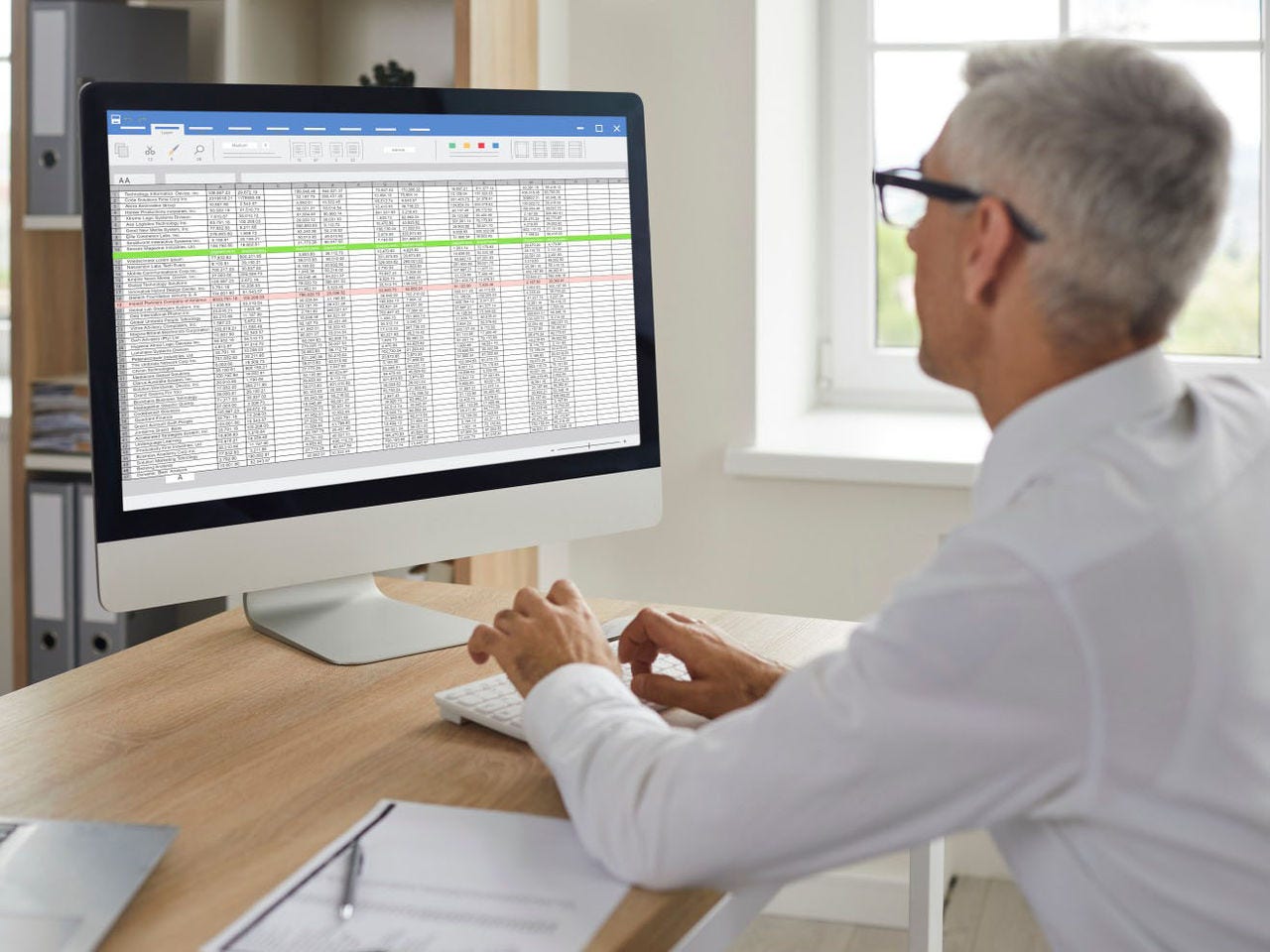 Agricultural procurement data management and categorisation have traditionally relied on manual tools. Image credit: Adobe Stock.
Previously, AgProcure’s approach relied on manual processes and techniques in Microsoft Excel such as ‘fuzzy matching,’ which identifies product names that are similar but not identical.
“While effective to a point, [these methods] were time-intensive, difficult to scale, and limited in [their] ability to handle increasing data volumes and complexity,” said Bailey.
It was at this point that AgProcure saw an opportunity to move beyond rules-based approaches and instead develop an automated machine learning-based system with AIML.
AIML and AgProcure co-develop a machine learning workhorse
To build a system capable of handling the variability inherent in agricultural supplier data, former AIML Machine Learning Engineer Alec Arthur focused on the technical challenge at the heart of the problem: matching inconsistent product names across suppliers to a central reference database.
“The task required modelling equivalence… rather than standard natural language,” Arthur explained. "Abbreviations, chemical formulations, pack sizes, and supplier-specific naming made manual matching slow and unreliable."
The system Arthur developed with AgProcure directly addressed each of these challenges with measurable results.
“In testing, the system reduced false positives by 10 to 20 per cent [and] created a pathway to processing thousands of transactions in minutes rather than hours,” Arthur revealed.
 Former AIML Machine Learning Engineer Alec Arthur.
For AgProcure, the outcomes extended across several areas of their operations. Bailey noted an estimated 60 to 80 per cent reduction in manual data cleaning and classification time, improved consistency across high-volume categories such as fertiliser and chemicals, and increased confidence in downstream analytics including price benchmarking and anomaly detection.
"Through our collaboration with AIML engineers, we developed a machine learning-driven classification engine capable of mapping raw transaction data to structured product classifications with a high degree of accuracy," said Bailey.
Practical engine deployment and future impact
The classification engine has been integrated directly into AgProcure's data processing workflows. As invoices, spreadsheets, and other transactional data come in, the engine standardises product descriptions and automatically assigns key attributes including category, active constituents, pack size, and supplier.
“The solution is intended to support automatic product matching at speed and at scale, which would allow AgProcure to onboard more customers," said Arthur.
For AgProcure, the implications reach well beyond their own operations. The classification engine underpins a broader goal aimed at creating a standardised system for agricultural procurement data inputs across the industry. This foundation, Bailey notes, “enables more advanced applications including anomaly detection with explainability and predictive pricing models.”
The project also highlighted the value of pairing machine learning expertise with deep domain knowledge.
“Our experience working with AIML's machine learning engineers has been highly positive,” said Bailey. “The engagement felt like a true partnership, with AIML contributing not only technical expertise but also strategic thinking around how AI can be applied to transform agricultural procurement and data standardisation.”
Faster, fairer, smarter: Cropify’s AI grain grading innovation
Originally posted on 19 May 2025 by Dr Miguel Balbin
In the heart of South Australia's burgeoning agricultural technology (AgTech) sector, Anna Falkiner and her husband, Andrew Hannon, are pioneering a transformation in grain quality assessment through their startup company, Cropify. Established in 2019, Cropify aims to eliminate subjective testing in pulse and grain crops by leveraging artificial intelligence (AI) and machine learning technologies.1
Traditional grain classification methods heavily rely on human visual inspection, introducing variability and potential inaccuracies in quality assessment. This subjectivity can lead to disputes between sellers and buyers, and impacts the efficiency of the grain supply chain. Recognising these challenges from their extensive backgrounds in agriculture and marketing, Falkiner and Hannon sought to develop a more objective and reliable solution.
“We spoke to a lot of people, and someone suggested that [computer] vision had come a long way,” said Falkiner. “We looked at horticulture and what was being done in [that field] and then approached the Australian Institute for Machine Learning (AIML) and had a proof of concept done.2
Leveraging an AIML grant from the Government of South Australia in 2020, Cropify worked with former AIML engineers Sam Bahrami and Aaron Lane to develop an AI-driven software prototype capable of analysing grain and pulse quality with high precision. Lane is now the Chief Technology Officer at Cropify.
The prototype’s initial focus was on small red lentils, a crop significant to South Australia's economy but notoriously difficult to classify given its small size.
“Sam and I put together the prototype over 6-8 weeks,” said Lane. “That prototype demonstrated that commercially viable results were possible. We handed over the working prototype and training pipeline for Cropify to develop further.”
“It was great to work with a client that listened closely to our advice and was willing to work on building the high-quality datasets that their use case needed. The SME Program let us really focus on getting the best result for our clients without being encumbered by research or IP (intellectual property) ownership concerns,” Lane continued.
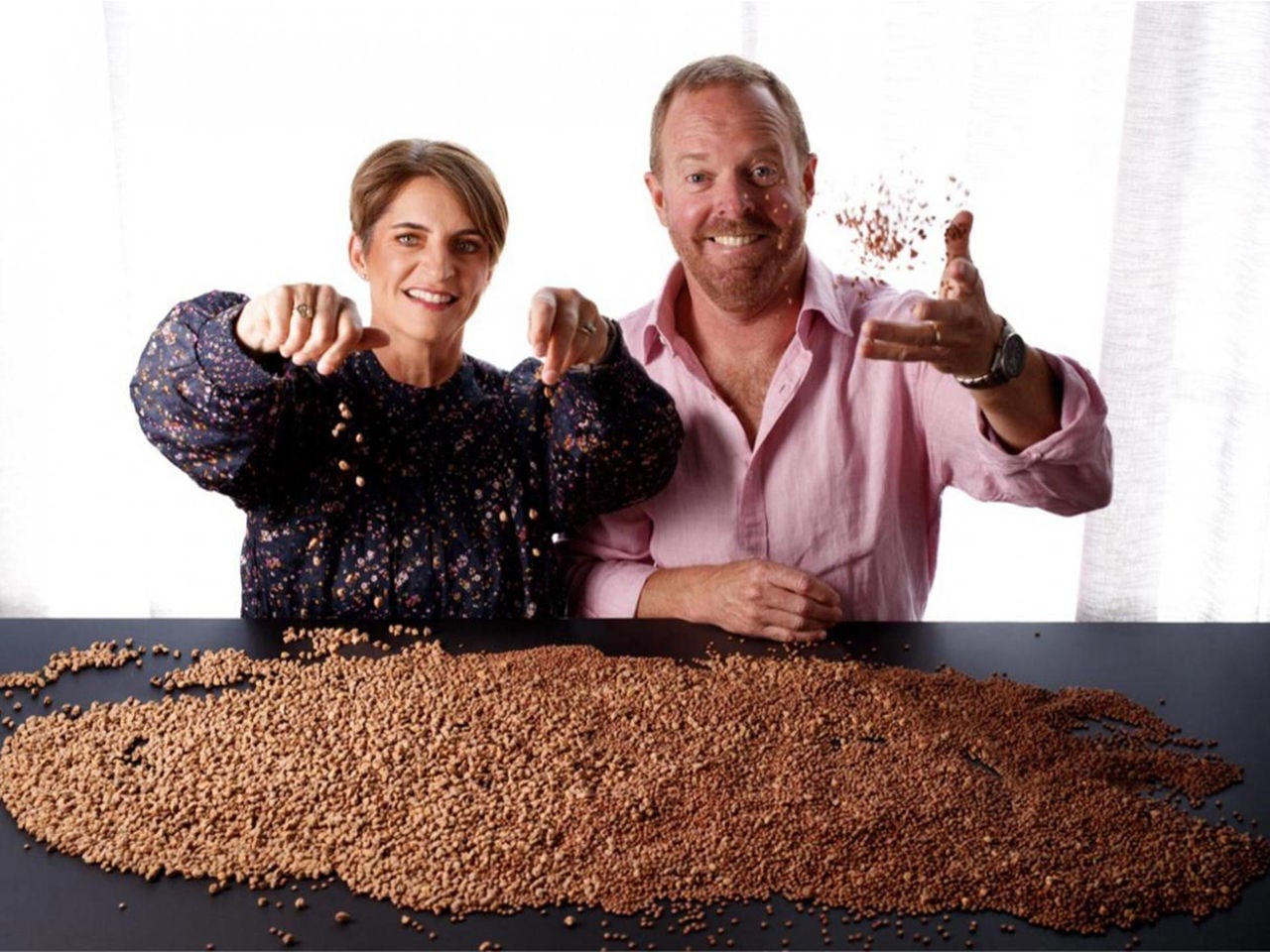 Cropify co-founder and CEO Anna Falkiner and co-founder and COO Andrew Hannon. Photo credit: Cropify.
“While the prototyping work was relatively fast, building the whole solution from scoping to delivery took time and perseverance. We were very pleased when Cropify was eventually able to leverage that prototype to gather support for their vision from the industry and raise their seed funding.”
By utilising high-resolution imaging and advanced algorithms, Cropify's technology can now assess an industry-standard sample of lentils in approximately 90-seconds—a substantial improvement over the traditional 24-minute manual process.3
Cropify's innovative approach has also garnered support from various industry stakeholders. The South Australian government's AgTech Growth Fund provided financial backing, facilitating the development of prototype hardware and software. This support enabled Cropify to conduct extensive performance assessments on their technology, achieving accuracy rates exceeding 98% in classifying lentil samples.4
In September 2024, Cropify secured $2 million AUD in funding from investors, including Australian venture capital firm Mandalay Venture Partners and Singapore's Hatcher+. This investment aims to accelerate the commercialisation of Cropify's technology within Australia, with plans to expand into international markets.5
Both Cropify’s Senior Machine Learning Engineer, Dr Antonios Perperidis, and Falkiner participated in a video of AIML collaborators as part of AIML’s Industrial AI Program launch event in June 2025. In the video, they both offer advice to small and medium enterprises (SMEs) on how to best adopt AI into their operations.
“The advice I’d give to industry looking at AI adoption is to actually look at what your problem is, and [ask if] AI is the solution,” said Falkiner. “Don’t look at AI for the sake of having AI. It has to be the right fit for your business.”2
“[My] advice would be to… understand [your problem] and try to keep an open mind on the solution. Avoid looking [for] faster horses. You’re looking for something new,” said Dr Perperidis.2
References
- ‘Anna Falkiner of Cropify: smart classification for objective testing of pulse & grain crops’, AgriDigital
- ‘Launching the Industrial AI Program’, Australian Institute for Machine Learning
- ‘Meet the AgTech innovators with the fingers on the pulse’, Lot Fourteen
- ‘Smart classification of small type red lentils’, Department of Primary Industries and Regions South Australia
- ‘Aussie AI-driven grain grading company Cropify reaps $2 million’, Forbes
Construction maintenance using AI-driven insights
Originally posted on 19 May 2025 by Dr Miguel Balbin
Andrew Hannell, founder of Digital Constructors in Adelaide, South Australia, has been a long-time advocate for integrating digital technologies into the construction industry. With over 25 years of experience in architecture, engineering, and construction, he aims to leverage digital tools to enhance infrastructure assessment, reduce risk, and improve on-site decision-making.
One of the greatest challenges in his industry is the difficulty of visually assessing and documenting damage and potential hazards on infrastructure projects. Hannell’s interest in this area was initially piqued by the SteamRanger Heritage Railway on South Australia’s Fleurieu Peninsula, which needs to be regularly monitored to assess the condition of deteriorating tracks and to determine whether nearby vegetation, such as dried weeds, poses any fire risk.
Relying solely on human inspection introduces subjectivity, which could lead to inconsistent evaluations, reporting inaccuracies, and unnecessary increases in maintenance costs.
“Construction is a very expensive, very conservative business,” said Hannell. “During both construction and operational phases, there are many, many inspections that are required. On many projects, that’s done entirely manually. [It’s often] someone walking around with a clipboard.”
“Something as simple as counting potholes… and recording where they are could save millions, or hundreds of millions of dollars,” he continued. “If that can be automated, it will save a huge amount of time [and] add other benefits.”1
Hannell recognised the potential for AI-driven defect detection to bring greater objectivity and consistency to infrastructure assessments, pinpointing not only the location of defects but also evaluating their severity based on measurable criteria.
To explore this potential, he collaborated with AIML engineers Sam Hodge and Aaron Peter Poruthoor in 2022 to develop a practical solution tailored to the realities of infrastructure monitoring.
The team committed to building a minimum viable product (MVP) within a 12-week sprint, resulting in ConstructAI, a camera-based machine learning platform that uses computer vision to automate critical infrastructure monitoring procedures when mounted on the front of a locomotive. Using data derived from SteamRanger footage provided by Hannell, the team trained the model to accurately detect and classify various issues.
“Based on testing during development of the MVP, the key benefits included rapid data collection that was many magnitudes faster than alternative methods,” said Hannell. “The tool also produced high-quality data that was non-subjective.”
Following this initial success, the MVP was refined over several phases of iterative testing to improve accuracy and reliability.
From the outset, AIML designed the system to keep Hannell and his team in the loop. The software was built to be accessible and easily maintained over the long term, and included thorough documentation to support future adaptation and development.
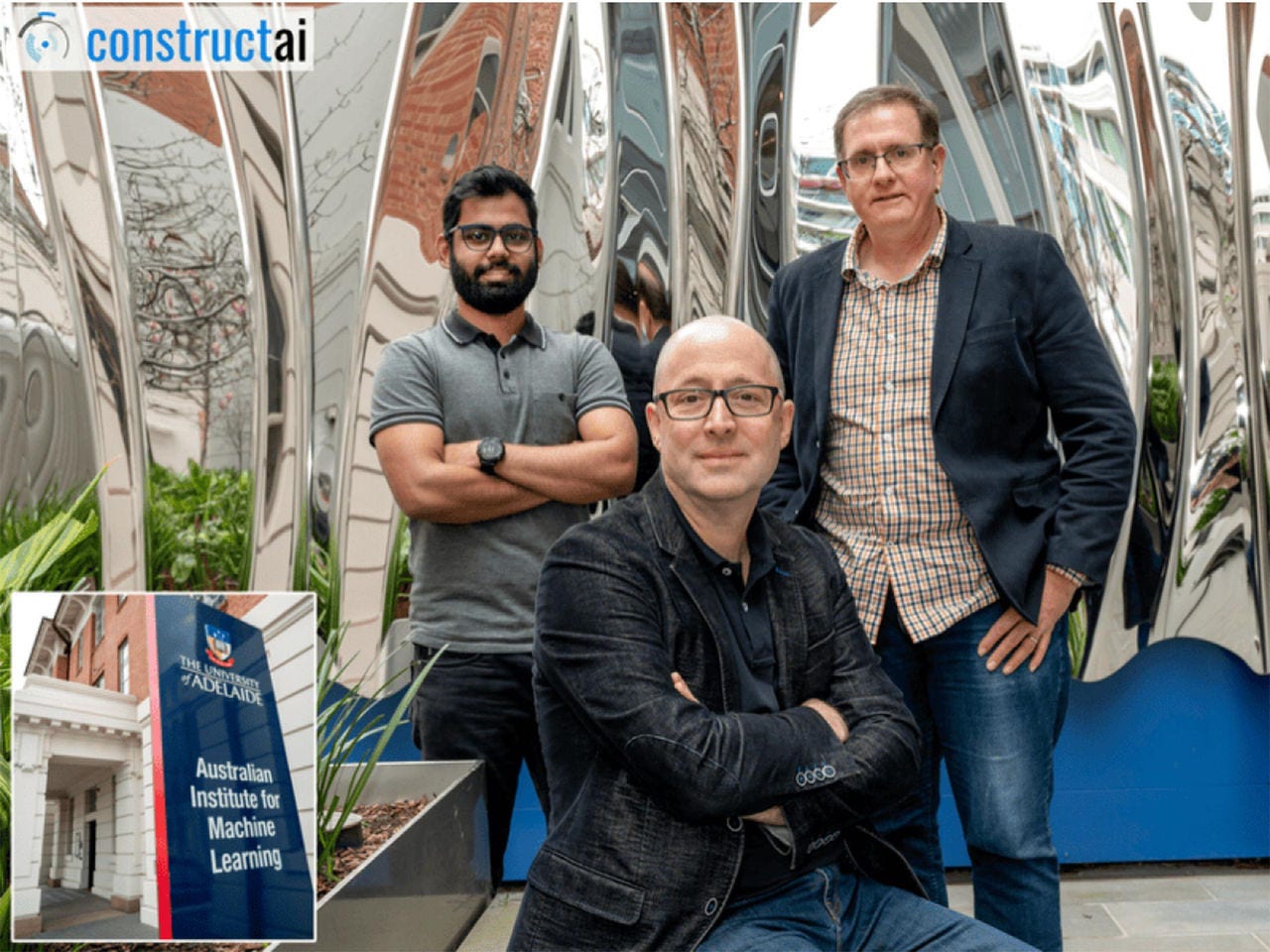 Andrew Hannell, Founder of Digital Constructors (front), together with AIML engineers Aaron Peter Poruthoor (left) and Sam Hodge (right). Photo credit: Digital Constructors.
While ConstructAI has not yet been deployed commercially, Hannell sees enormous potential for its application, especially given the growing interest in artificial intelligence (AI) and machine learning even in the conservative construction sector. His collaboration with AIML has also provided a valuable framework for future AI-driven innovation in the sector.
“Working with AIML was a great experience. The engineers were practical and flexible, and we worked collaboratively on the project,” he said. “Although both the initial concept and final developed solution were quite simple in technical terms, AIML introduced valuable ideas and innovations to the process,” said Hannell.
“On a personal level, I learnt a lot and enjoyed working with AIML.” He continues to advocate for AI’s ability to significantly improve safety and reduce costs in his industry.2
Sam Hodge, one of the engineers on the project, echoed the positive sentiment.
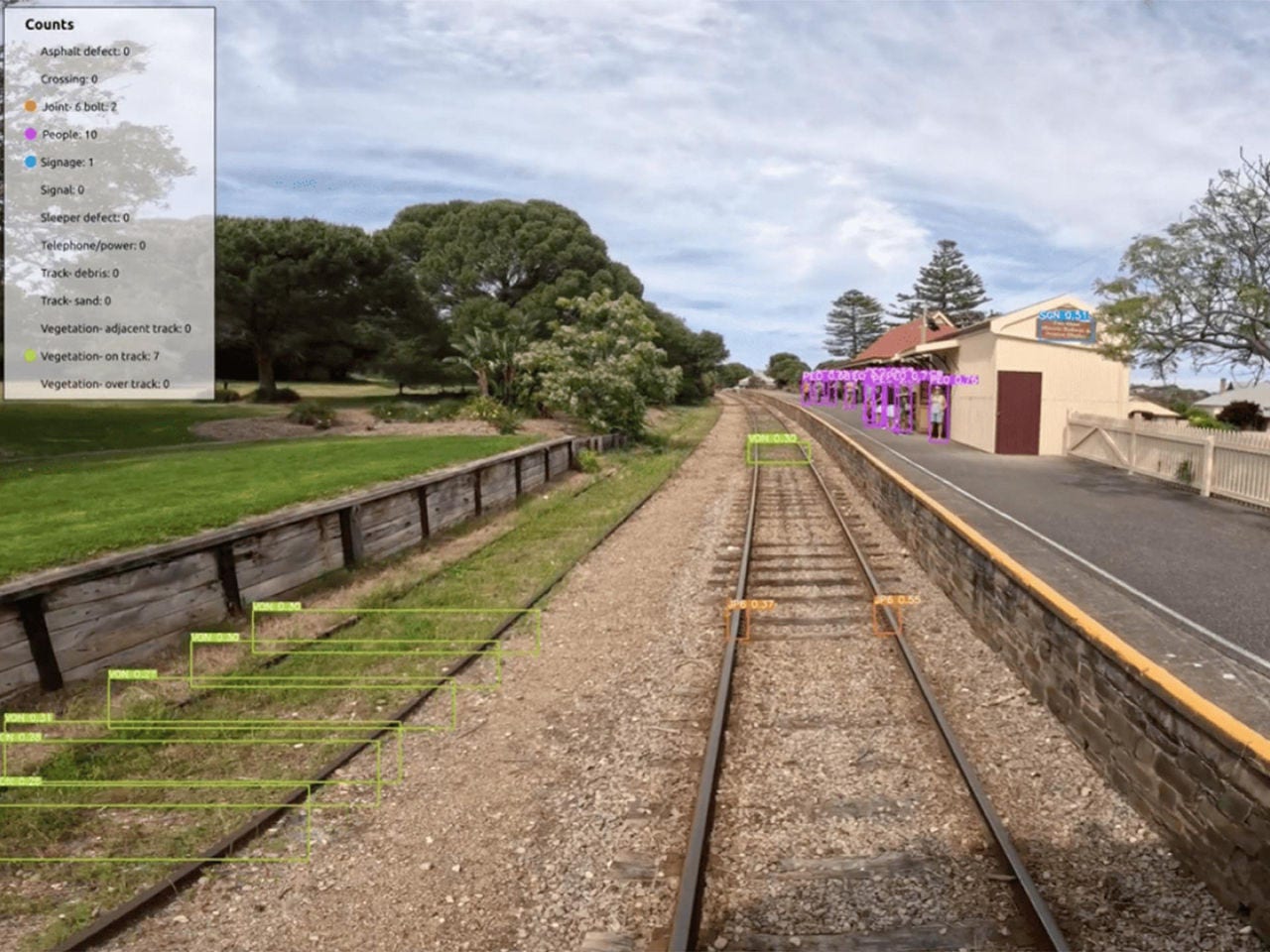 A prototype of ConstructAI equipped on the SteamRanger can identify people, infrastructure, and vegetation.
“Andrew [Hannell] was a dream customer,” said Hodge. “[He] understood the value of good data and that the simple things can often be the best value for the user story that needs to be solved.”
“He took an off-the-shelf computer vision model and applied it to a real-world problem of maintenance of infrastructure that would have been prohibitively expensive to do manually,” Hodge continued. “The automation means that maintenance of the heritage railway can continue far into the future.”
In June 2025, Hannell participated in a video of AIML collaborators as part of AIML’s Industrial AI Program launch event. In the video, he encourages small and medium enterprises (SMEs) to explore using AI in their operations.
“Start at a purely business level,” he said. “What costs [you] the most money? What takes the most time? Where are the biggest risks? Where are the biggest opportunities? [Then] work backwards from there. The answer or potential answers to those sorts of issues can certainly be found in AI.”1
Refrigeration reimagined with machine learning
Originally posted on 25 March 2026 by Dr Miguel Balbin
Cooling systems play a critical role in modern infrastructure, from supermarkets and data centres to industrial facilities. But they also account for a significant share of global electricity consumption. Even small improvements in efficiency can translate into meaningful reductions in energy use, operational costs, and environmental impact.
In 2025, Adelaide-based company Glaciem Cooling Technologies (GCT) partnered with AIML through the Industrial AI SME Grant Program, an AIML initiative supported by the SA Government via the Department of State Development ’s Research and Innovation Fund. The program helps South Australian small and medium enterprises (SMEs) adopt AI by providing them with access to AIML’s machine learning engineering expertise. Through this partnership, GCT was able to explore how machine learning could enhance the performance of supermarket refrigeration systems.

“At GCT, we were trying to solve… challenges that directly affect the energy efficiency and stability of commercial CO₂ refrigeration systems,” said Julian Hudson, GCT Founder and Managing Director.
Prior to approaching AIML, GCT had already modelled the efficiency of their refrigeration systems where they found several issues they sought to address.
“Our team had developed a highly accurate thermal model capable of predicting supermarket refrigeration power consumption… but running the model required extensive manual data handling and could not operate in real time. We [also] observed… oscillations that reduced system stability and overall efficiency,” said Hudson.
 Supermarket refrigeration uses large amounts of energy, accounting for a significant portion of a store's total electricity usage. Image credit: Adobe Stock.
While GCT’s model was scientifically robust, its reliance on manual operation and inability to respond instantly to changing conditions meant energy savings were not fully realised. It was at this point that Hudson and his team saw the potential for machine learning techniques to transform their existing engineering model and make its outputs more energy efficient.
“We were looking for a way to take our validated thermal model and turn it into an automated, real‑time optimisation tool that could eventually run on live supermarket refrigeration systems.”
“We had strong evidence that [our model] worked, [but] we needed AI to make it practical, scalable, and commercially deployable.”
AIML engineer uses industrial data to develop an AI-based solution
To move from a theoretical model to a deployable system, AIML Machine Learning Engineer Philip Roberts turned to the wealth of historical data collected from GCT’s refrigeration systems.
“[GCT’s] test deployment uses a simple control system for some fans which they believe can be improved to reduce the power consumption of the overall system,” Roberts explained.
“[We identified that] machine learning [could] leverage the telemetry data they've collected from a real-world test deployment over a period of years… to develop a model of the system.”
 AIML Machine Learning Engineer Philip Roberts.
The collaboration resulted in a prototype machine learning system capable of modelling a cooling system’s power consumption under a wide range of conditions.
“We developed a prototype that can model the power usage of the cooling system under prevailing environmental conditions – ambient temperature, humidity, and so on – and generate a corresponding estimated best signal for the fan control system to minimise overall power usage,” Roberts said.
“Importantly, it runs fast enough to update in real time.”
For GCT, the prototype represents a major step toward transforming a validated engineering model into a deployable, AI-driven control system. While it is not yet live in supermarkets, the prototype provides a crucial platform for testing, refining, and preparing the system for real-world implementation.
“At this stage, we are using the prototype as a development tool rather than a deployed solution,” Hudson explained. “The work with AIML has given us a strong technical foundation, particularly around system identification and the structure for model-predictive control, and we are now preparing for the next phase of development.”
Next steps
Looking ahead, both the GCT and AIML teams believe that machine learning tools could set a new benchmark for monitoring commercial refrigeration performance.
“Cooling systems represent a not-insignificant portion of power consumption and costs,” said Roberts. “Even a small improvement in efficiency would have [a] tangible real-world impact both for the environment and the bottom line.”
“Once fully developed and deployed, an AI-driven optimisation and control system has the potential to improve the efficiency, stability, and real-time responsiveness of CO₂ refrigeration systems across Australia,” said Hudson.
For GCT, the project highlighted the value of collaboration between machine learning researchers and domain specialists in engineering.
“Our experience working with AIML’s machine learning engineers has been extremely positive,” said Hudson. “They took the time to understand the underlying physics, asked the right questions, and adapted their modelling approach as the engineering requirements became clearer.”
“Overall, AIML’s engineers brought a level of professionalism and technical capability that has given us a solid foundation for the next phase of development, and we look forward to continuing the partnership.”
Written by Dr Juan Miguel Balbin, PhD, AIML Digital Content Officer
Why safer gaming needs more than a list of bad words
Originally posted on 16 June 2026 by Dr Miguel Balbin.
Paxmod × AIML
Online gaming has become one of the most significant social spaces for children and teenagers. Millions of messages flow through gaming chat platforms every day, and with that volume comes risk. According to eSafety Australia, gaming chat is one of the main vectors for grooming attempts,[1] and reports of online enticement and exploitation of children to the National Center for Missing and Exploited Children in the United States have grown sevenfold in the last decade.[2]
For Adelaide-based startup Paxmod, those numbers represent real children at risk, and the driving motivation behind their moderation platform that’s been designed to detect and block predatory online behaviours. But while blocking certain phrases or words is one way to address this issue, grooming rarely announces itself with obvious language.
"Grooming [online] is hard to detect because it does not look like the toxicity that keyword filters and standard moderation models are tuned for," said Paxmod Founder Alan Agon. "The danger sits in patterns like trust-building, isolation, secret-keeping, and gift-offers, none of which contain obvious bad words and most of which only become clear across many multiple messages."
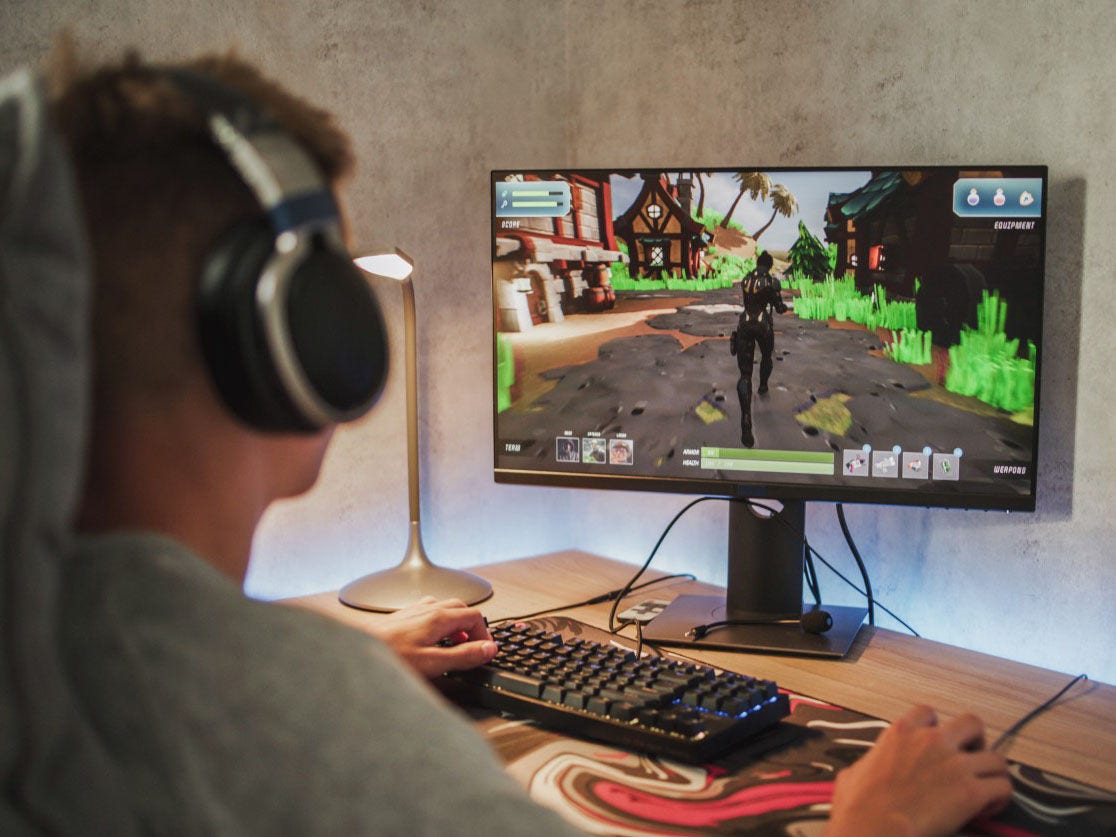 Online spaces can make it easier for strangers to contact children without the knowledge or supervision of parents and carers.
“Paxmod started after a local Adelaide gaming studio described exactly this gap,” he said.
Founded in 2024, Paxmod's moderation platform processes over one million gaming chat messages per day. At that volume, analysing each message individually is technically possible but economically unworkable. What they needed was a system capable of detecting grooming patterns across a conversation that worked quickly enough to prevent harm and was affordable enough that gaming studios would be willing to pay for it.
"The studios building these games, especially the small to mid-sized ones, have nowhere good to turn," said Agon. "Human moderation is too slow and too expensive to scale across millions of messages a day."
Seeking a solution, Agon approached AIML through the Industrial AI SME Grant Program in 2026, an AIML initiative supported by the SA Government via the Department of State Development's Research and Innovation Fund. The program connects small and medium enterprises in South Australia with AIML's machine learning engineering expertise to explore how AI can solve real business problems at scale.
"Solving this required real ML [machine learning], real engineering depth, and partners who understood applied research at scale," said Agon. "AIML was the obvious call."
Designing a system that understands context
Working with Agon, AIML Machine Learning Engineer Sam Thomas began by assessing which machine learning approaches could address grooming patterns and quickly.
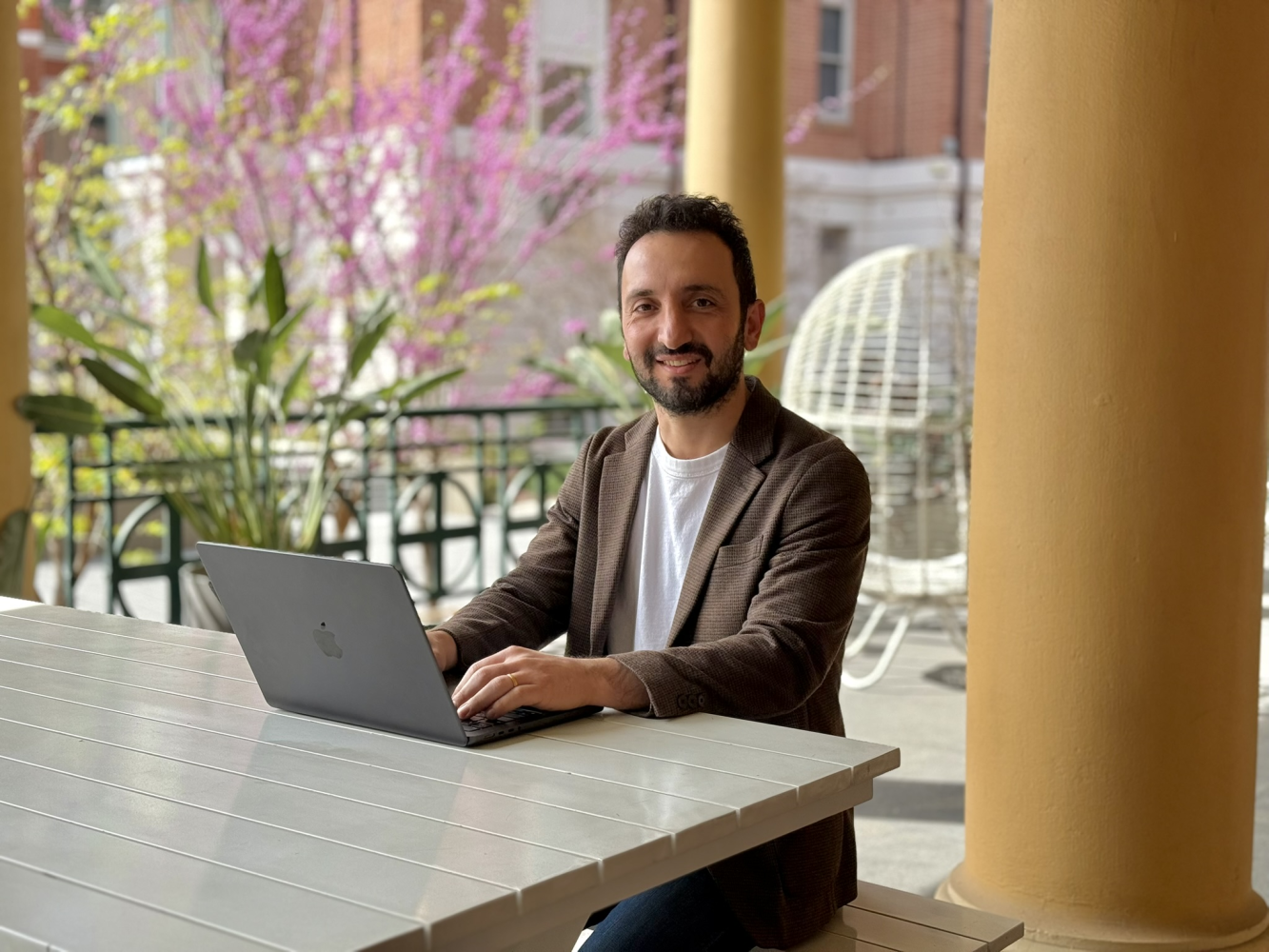 Paxmod Founder Alan Agon.
The most straightforward option was known as a ‘standard classifier,’ an algorithm trained to make a yes or no decision about whether a single message was malicious, but it quickly became clear this would fall short.
"A standard classifier was not sufficient because the risk pattern [had to] emerge across a conversation rather than in a single message," said Thomas. "This pushed us to design a more context-aware architecture while still keeping the system fast enough for real time moderation."
To address this gap, Thomas turned to a natural language processing approach called BERT (Bidirectional Encoder Representations from Transformers). Unlike language models that treat words as isolated units, BERT is designed to understand the meaning of words in the broader context of a sentence, capturing tone, intent, and content in a form that can be reasoned about mathematically.
On its own, however, BERT could only analyse each message individually. The system needed an additional layer to ensure it was precise and could detect and intercept harmful content in under 200 milliseconds, faster than the blink of an eye, from the moment a message is sent.
“We added a layer called a Graph Attention Network. The network is trained not just to look at a single message but also at the neighbouring messages, and the model learns to weigh how much attention to give to its neighbours given the message,” said Thomas. “This helps to segregate predatory messages from the benign messages and increase the signal to noise ratio.”
To keep costs manageable as conversations grow longer, the system only ever looks at a window of recent messages rather than the entire conversation history. The result is a system that meets the three hard constraints Paxmod had set from the outset: fast enough for real-time moderation, accurate enough to be trusted at scale, and affordable enough for even small studios to deploy.
"With this method we were able to bring the latency to under 50 milliseconds and a precision of 83%," said Thomas.
Agon also tested the system against an industry benchmark dataset for grooming detection.
“This approach reached approximately 92% precision and 81% recall [a measure of how many real grooming attempts the system successfully identified], a substantial lift from the BERT-only baseline that was sitting closer to 50 to 60% precision.”
Impact and what comes next
The AIML-developed system is now being integrated into Paxmod's current architecture and is being hailed as a state of the art tool in real time grooming detection.
 AIML Machine Learning Engineer Sam Koshy Thomas.
"Only a handful of organisations globally are working on this problem at all," said Agon. "No commercial moderation API [application programming interface] we are aware of combines graph-based contextual classification with the latency and cost profile needed to run at game-chat volumes."
"I expect chat moderation to become table stakes for any social game inside the next two years," said Agon. "Smaller studios cannot build this infrastructure themselves."
Starting with children's games, Paxmod intends to grow its reach across all games and eventually all user-generated content, with Agon making the case that this infrastructure should be Australian-built.
For AIML, the project reinforced the value of engaging with problems where the technical difficulty and the social stakes are equally high.
"The project was both technically challenging and socially important," said Thomas. "It required balancing machine learning performance with real-world product constraints: latency, precision, and deployment feasibility."
Agon was equally direct about what the collaboration had delivered.
"Sam especially had an immensely difficult problem to solve," he said. "Given all this, the team gave us a solution that will genuinely make a positive impact on the world."
Written by Dr Juan Miguel Balbin, PhD, AIML Digital Content Officer
References
[1] ‘eSafety asks gaming giants what they are doing to prevent grooming and radicalisation,’ (2026), eSafety Commissioner, Australian Government.
[2] ‘Rise in online enticement and other trends: NCMEC releases 2020 exploitation stats,’ (2020), National Center for Missing and Exploited Children.
AIML joins forces with local company to improve threat assessment and mitigation
Originally posted on 3 April 2025 by Dana Rawls.
The threat of real and emerging dangers are an unfortunate and all too real part of corporate life.
Corporate threats such as cyberattacks, natural disasters, economic downturns, or reputational damage can have long-lasting and potentially catastrophic impact on a business’ operations. Sention, an Adelaide-based technology and risk consulting firm, has teamed up with AIML to reduce the impact of these types of threats on businesses using cutting-edge machine learning (ML) technology.
“Our company has developed a platform that assists organisations [with identifying] and responding to emerging risks that could cause them harm,” said Dan Shields, Sention’s Managing Director. “This includes geo-political events, operational disruption, cyber-attacks, health events like the Covid pandemic, natural disasters, security incidents, economic and other issues.”
“Every business is affected by these threats; however, some industries and types of businesses are more vulnerable.”
 Cyber threats are an all-too-present reality in modern corporate systems.
Sention was the first recipient of AIML’s Industrial AI SME Grant Program. The program aims to support South Australian small and medium enterprises (SMEs) to adopt AI by providing them with access to AIML’s machine learning engineering expertise.
As part of its participation in the program, in January this year, Sention worked with AIML to improve the company’s efforts to anticipate and address corporate risks. Using multiple AI and machine learning (ML) techniques, the AIML team created a highly innovative solution that enables businesses to become more agile in their ability to respond to corporate threats.
“Using the tools developed by the AMIL team, we’re able to provide businesses with a dynamic, customised view of how the threat landscape will affect them, in real time,” said Shields. “This will empower leadership to take action to reduce harm to their people or [any] damages to their brand, which could result in operational disruption, potential financial losses, legal liability, and other issues.”
AIML Machine Learning Engineer Nandhini Subramanian details the steps that the AIML team took to enhance the Sention product.
“Throughout the project, we maintained transparent communication [allowing us to] rapidly adapt to feedback and provide continuous improvements,” she said. “This approach ensured that the final product aligned perfectly with the client's vision.”
“The end result is a client centric interpretation of the threats and risks with deep insights and tailored information that clients can directly act on.”
 AIML Machine Learning Engineer Nandhini Subramanian.
Both the Sention and AIML teams believe that their combined efforts provide another clear example of how AI and ML can significantly improve a company’s business operations and outcomes, no matter the industry.
“Through this close partnership, we've developed a deep understanding of the client's product and its potential community impact,” said Subramanian. “Our hope is that these AI enhancements will enable the client to forge stronger relationships with their customers by providing personalised insights uniquely calibrated to each end user.”
Training a pest control device to tell a Tasmanian devil from a cat
Originally posted on 23 September 2026 by Dr Miguel Balbin.
Thylation x AIML
Feral cats and foxes are two of the biggest drivers of native species decline in Australia, implicated in the extinction of over 30 species and threatening hundreds more [1]. Adelaide-based conservation technology company Thylation, has been building tools that can fight back against feral predators without harming the threatened wildlife living alongside them.
Thylation's flagship product, the Felixer, was built as an AI-enabled field device that automatically detects feral cats and foxes, dispensing a lethal dose of regulated 1080 poison gel onto the animal’s fur, which is then ingested as the target grooms itself. Site-specific photo-only testing and compliance with applicable regulatory controls must be met at test sites before the use of this toxic chemical in the field.
The Felixer’s AI model is designed to selectively target invasive predators while minimising exposure of native and other non-target animals. The device dispenses only when the classifier identifies an animal as a target above the configured decision threshold and additional verification checks are passed.
The Felixer was developed to help manage the invasive predators threatening native Australian wildlife. Image credit: Thylation.
But when used on mainland Tasmania, that selectivity runs into a uniquely local problem: Tasmanian devils.
Visually, a devil moving past a camera trap at night can look enough like a cat to fool a model that's unable to tell the two apart. The Felixer has never been deployed in lethal mode near wild devil populations, so this mistake has never occurred in practice. But it’s a mistake the device can't afford to make when Tasmanian devils are endangered with fewer than 25,000 left in the wild [2].
With this in mind, Thylation approached AIML through the Industrial AI SME Grant Program, an AIML initiative supported by the SA Government via the Department of State Development 's Research and Innovation Fund. Working with former AIML Machine Learning Engineer Alec Arthur, the team set out to build a model that could improve efforts to tell the two animals apart.
Upgrading from a model with zero devils in it
As Thylation CEO and Director Dr John Read explained, the Felixer’s existing AI model had never seen a Tasmanian devil.
"The target animal for the Felixer is a cat, and the Felixer was incorrectly labelling some devils as cats," said Read. "The problem to solve was to bring devil images into the dataset so [that] the Felixer is able to be used on mainland Tasmania."
 The Tasmanian devil, roughly the size of a small dog, is a carnivorous marsupial endemic to the Australian island state of Tasmania.
For Arthur, the challenge involved ensuring that the Felixer could distinguish pest species from protected ones with the low-quality images that camera traps produce in the field, and do so without relying on an internet connection. Because the Felixer units operate remotely in the bush, the AI model can't send images off to a cloud server or data centre for processing. Instead, it must run directly on the device itself, a setup known as edge AI, using only the onboard processing power built into the unit.
"The Felixer wildlife detection system… must avoid harmful false triggers on protected wildlife, especially rare species such as Tasmanian devils and quolls," said Arthur. "The problem requires fine grained visual classification under variable camera trap conditions while still fitting strict edge deployment limits on a Kendryte K210 device."
The Kendryte K210 is the small chip, known as a neural processing unit or NPU, that gives the Felixer its onboard computing power. The chip's limited memory and processing capacity made developing the Felixer an even bigger challenge.
Penalising the errors that matter most
At AIML, Arthur adapted an existing computer vision model called "You Only Look Once," a kind of AI that lets a device quickly recognise what's in a picture or video in real time and refine it to run within the tight memory and processing limits of the Kendryte K210. But the more consequential design decision was in how the model was trained to weigh its own mistakes.
"A key part of the work was refining the [model]… so that the most harmful errors, especially protected species being predicted as cats or foxes, were penalised more heavily during optimisation," said Arthur.
Rather than simply counting how often the model got something wrong, Arthur measured how much harm each type of error could cause in the field, such that a devil misidentified as a cat counted far more heavily than a less harmful mix-up elsewhere. This approach, known as scoring risk-weighted errors, meant that the most dangerous mistakes were penalised more heavily during training, making the model not just more accurate overall, but specifically safer for protected species.
"[This method] reduced risk-weighted errors from 1,074 to 772, a 28% improvement over baseline," said Arthur.
 Former AIML Machine Learning Engineer Alec Arthur.
To test the model under more complex conditions, Arthur ran it against a set of real, unseen camera trap events, which included footage the model had never encountered during training to more closely resemble what the Felixer will see in the field. All evaluation and performances reported is on test data using site-specific, photo-only testing.
The upgraded models beat the original across the board on two measures: how accurately they detected and located animals in an image, and how well they avoided the costliest mistakes.
He also tested whether AI-generated devil imagery could supplement the limited pool of real devil photos available for training.
“Adding roughly 500 synthetic devil images to the training set improved performance, reducing best cost from 792 to 648,” or an 18% improvement he said. ‘Cost’ here refers to a weighted error score, designed to strongly penalise misclassification of protected species.
Crucially, these improvements came without breaching the Kendryte K210's tight memory and processing limits, fulfilling Read's brief for "an AI model, small and fast, that can be deployed on our K210 NPU hardware."
Deployment and what comes next
The resulting model is now running in dedicated firmware built for Thylation's Tasmanian customers, improving identification of Tasmanian devils and reducing their misclassification as a target species.
"Thylation's original model had zero images or training data on Tassie Devils, and was not deployed near them in lethal mode," said Thylation Operations Manager Anthony Hill.
"The AIML model has made the Felixer safer to use with Tassie devils.”
For Arthur, the Felixer is one part of a bigger picture.
"The project produced deployable Felixer models… and provided clear recommendations for which model to use under different operating thresholds," Arthur said. "The expected impact is more targeted pest control with fewer harmful off-target firing events, which should improve customer confidence, support wider adoption of the Felixer system, and contribute to better long-term conservation outcomes for protected species."
In addition to the significant improvements in protection of devils, Read also pointed to project handover as one of the collaboration’s more significant wins.
"The Felixer project was handled very well," he said. "Great hand over documentation including pipelines of how the work was completed… and the reports detailed what didn't work. This is a big time saving as we continue to develop skills in-house."
For AIML, what made the project stand out was the combination of hard technical limits and a problem that genuinely mattered.
"Thylation was great to work with because the project combined real deployment constraints with a genuinely meaningful machine learning problem," Arthur said. "The work was not just about improving a benchmark; it was about making a safety critical edge model safer and more reliable in a real conservation setting."
Written by Dr Juan Miguel Balbin, PhD, AIML Digital Content Officer
References
[1] National Feral Cat and Fox Management Coordination, “Did you know foxes and cats are not native to Australia?” https://feralcatandfox.com.au/
[1] Bush Heritage Australia, “How many Tasmanian Devils are left?” https://www.bushheritage.org.au/species/tassie-devils
Teaching machines to hear what the ear already knows
Originally posted on 14 May 2026 by Dr Miguel Balbin
In aged care, disability support, and allied health settings, the ability to communicate clearly and be understood shapes the quality of care delivered and the experience of the people receiving it.
Yet while national averages show that 41 per cent of the workforce speak English as a second language [1], in major Australian metropolitan hubs, health providers report that a significantly greater proportion of their frontline staff come from primarily non-English speaking backgrounds. Until recently, there has been no tailored linguistic tool to help them develop the English language communication skills their work demands.
 Clear communication is central to the quality of care delivered in aged care and disability support settings.
Adelaide-based company Vocare exists to close that gap. Founded by linguist and speech specialist Seshnie Taylor, Vocare helps migrant healthcare workers identify and correct pronunciation errors that arise from the transfer of speech habits from their first language to English.
"Many English as a second language learners never get one-on-one feedback on their pronunciation, the actual phonemes [units of sound that distinguish one word from another in a language] they produce," said Taylor. "This leads to being misunderstood, written off, or often feeling frustrated or isolated."
 Vocare Founder Seshnie Taylor with her trusted pooch Alfie. Image credit: Vocare.
To address this issue, Taylor decided to upscale Vocare's operations. The company had primarily relied on manual annotation, listening by ear, to identify pronunciation differences from health support staff. Compounding the challenge was the absence of any automated tools trained on Australian accents.
Seeking a solution, Vocare partnered with AIML through the Industrial AI SME Grant Program, an AIML initiative supported by the SA Government via the Department of State Development 's Research and Innovation Fund. The program connects small and medium enterprises in South Australia with AIML's machine learning engineering expertise to explore how AI can solve real business problems at scale.
Taylor connected with the program in 2025 with a clear vision. She knew she did not want an off-the-shelf tool, but something built from the ground up to encode deep linguistic expertise into a scalable system.
"From the beginning, I wanted to build a defensible moat around Vocare," she said. "The opportunity was translating that expertise into something systematic, measurable, and ultimately defensible as proprietary technology."
"[The Industrial AI program] was a golden opportunity for us at the exact right time," said Taylor.
Building a phonologically aware machine learning engine
AIML Machine Learning Engineer Sam Koshy Thomas worked closely with Taylor to unpack the physical mechanics behind pronunciation errors that no existing automated system could detect.
"Seshnie was really keen on getting this product running and that made her really invested throughout the project," said Thomas. "She helped me understand speech by… pointing out what these errors [sounded] like."
AIML Machine Learning Engineer Sam Koshy Thomas.
"We used [machine learning] models trained across more than 50 diverse accents to produce phonemes," Thomas explained. "This helped to exactly map… generated phonemes to phonological features,” or the system of sounds that form a language.
“[These features] encapsulate what physical action every phoneme produces, [such as] where you place your tongue, whether your lips are rounded, whether your vocal cords vibrate, or whether air flows through your nose."
The result was a system that moves well beyond simply flagging that a sound was incorrect. The tool pinpoints precisely where a learner’s pronunciation diverged from a native speakers at the level of tongue position, voicing, or airflow. The system was then delivered as an accessible user interface in Vocare's existing app.
Deployment, impact, and what comes next
The classification system now serves as one of the core engines behind Vocare's voice error detection platform and is integrated directly into their production workflows. In practice, it processes voice data in real time, identifies errors with high reliability, and returns outputs that can be used immediately.
"This has allowed us to embed [the system] seamlessly into our existing infrastructure, rather than treating it as a separate or experimental component," said Taylor.
"The speed and accuracy of the system mean we can increasingly rely on it in high-volume environments, reducing manual intervention, and improving overall efficiency."
For Vocare, the implications reach well beyond operational efficiency.
"Our API [application programming interface] is now significantly more accurate and faster, enabling us to deliver more reliable outcomes for our users," she said. "Most importantly, this has translated into real-world impact. The people we serve are benefiting from quicker responses, improved precision, and a more seamless experience overall."
Looking ahead, Taylor sees the project as establishing something more strategically significant than a single product improvement.
"By building a sovereign, Australian-built and owned capability in voice error detection, we are establishing a locally governed alternative that prioritises performance, security, control, and scalability," she said. "Over time, we see this capability supporting wider adoption of reliable, real-time voice intelligence in sectors where accuracy and trust are critical."
For AIML, the project demonstrated the value of pairing machine learning expertise with deep domain knowledge and the kind of outcome that becomes possible when both sides of a partnership are equally invested.
"The clarity [Seshnie] had towards her problem helped me understand the problem better as well," said Thomas. "It was a real pleasure working with her."
Taylor, too, reflected on what the collaboration had meant for Vocare.
"This collaboration has been hugely beneficial — not just from a technical standpoint, but in helping us build sovereign capability and move closer to our mission with tangible, measurable results," she said. "There is no doubt that this partnership positively impacted Vocare, and we are very grateful for this opportunity.”
From blueprint to breakthrough: improving efficiency in architectural drawing interpretation
Originally posted on 26 February 2026 by Dr Miguel Balbin.
As the construction industry looks for smarter, more sustainable ways to build, Australian–New Zealand company XFrame is changing how buildings are designed, made and reused.
Their goal is simple: cut down construction waste and make it easier to take buildings apart and use the materials again. Already, around 95% of XFrame’s process, from design through to manufacturing, is automated.
One of the few remaining challenges lies in how architectural plans are reviewed and interpreted. Drawing sets are often spread across multiple files and formats. Important details are mixed in with irrelevant information. Before a project can move forward, skilled team members must manually pull out the relevant details and enter them into XFrame’s automated system, introducing a degree of variability or error.
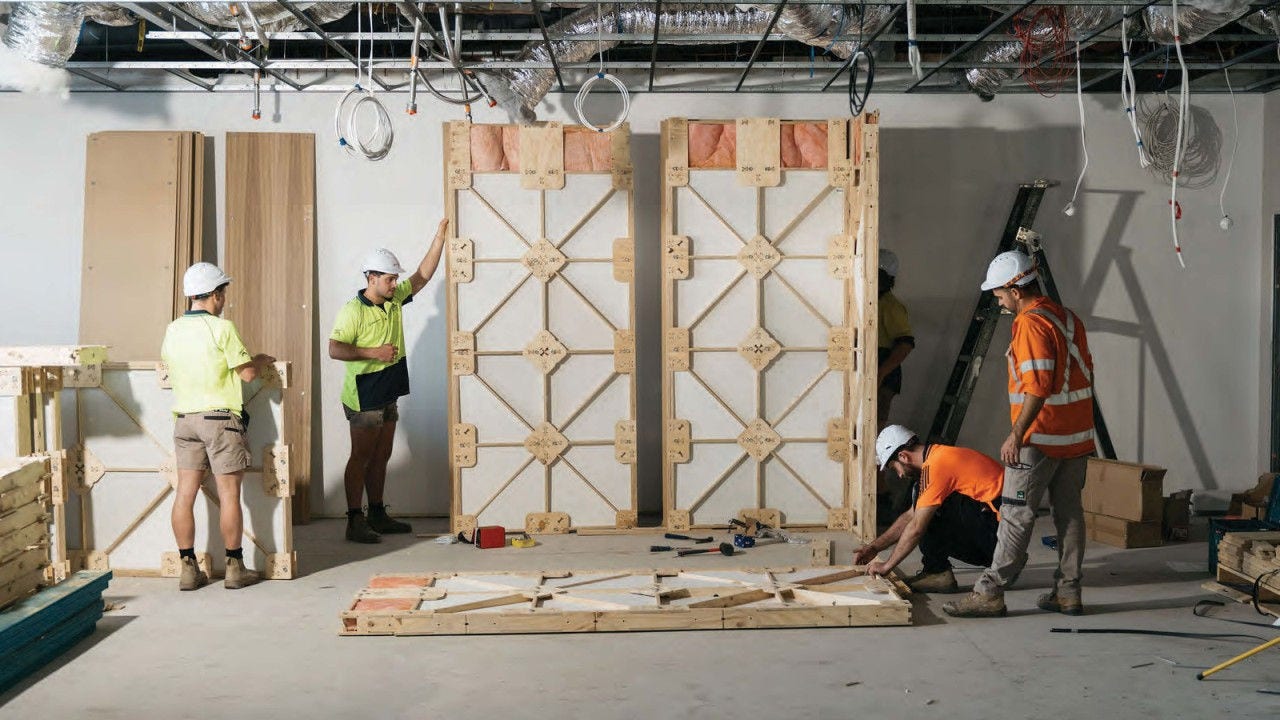
To tackle this problem, XFrame partnered with the Australian Institute for Machine Learning (AIML) in 2025 its Industrial AI SME Grant Program to explore whether machine learning could help in interpreting architectural drawing sets.
“We’re now trialling how machine learning could assist with plan interpretation, not replacing expertise, but augmenting it,” said Simon McKean, Chief Financial Officer at XFrame. “Through a phased approach with AIML, we’re exploring how AI could... create a meaningful speed and cost advantage.”
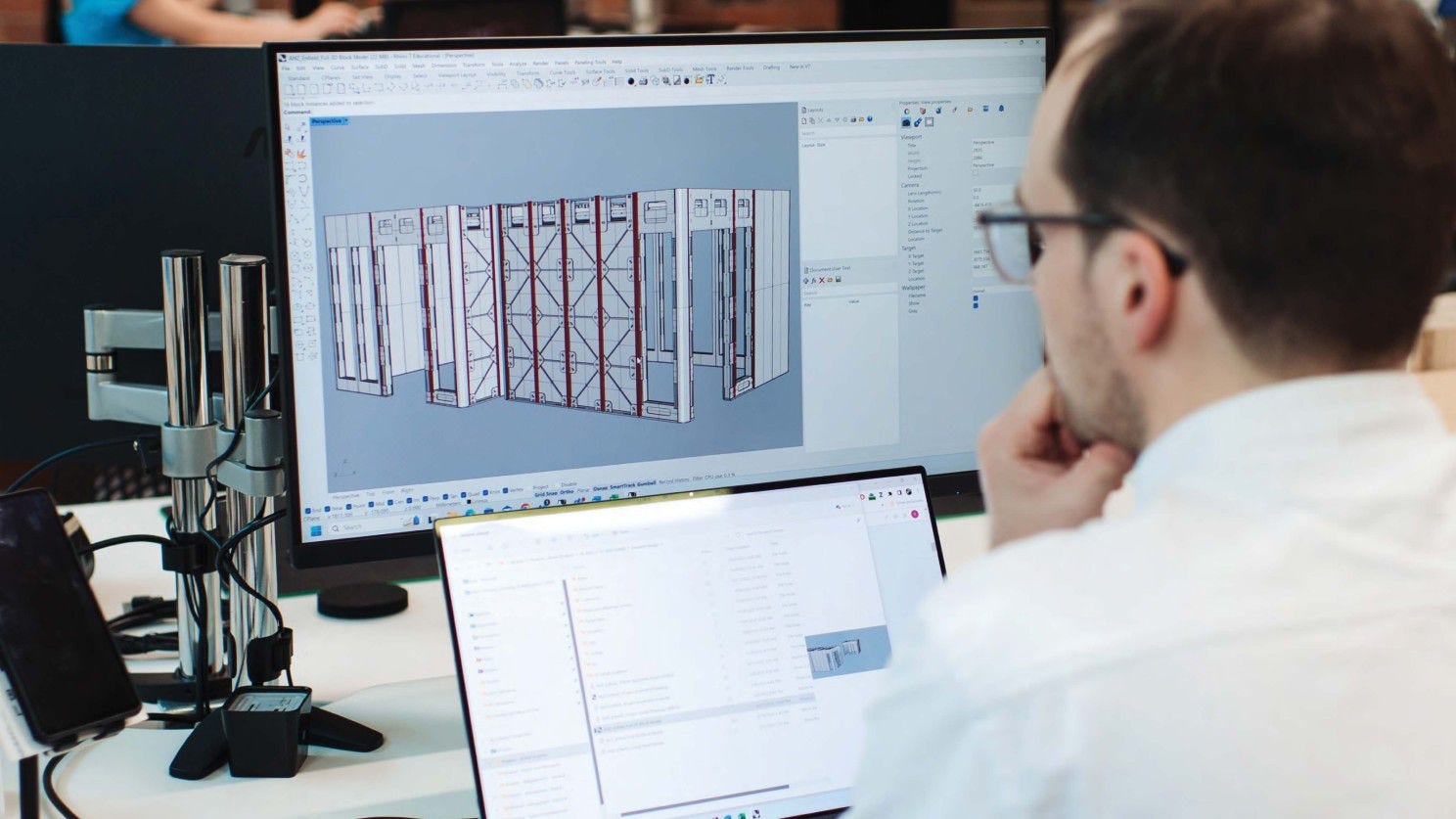 Architectural drawing sets require skilled manual review before being entered into automated systems. Image credit: XFrame.
After tendering more than 200 projects in the past 30 months, XFrame had built a large collection of previously interpreted drawings. This provided a strong data foundation for developing a machine learning-assisted approach.
“We chose to work with AIML because this challenge spans document intelligence and geometric reasoning. These areas require deep research capability.”
"AIML’s expertise is helping us take a disciplined, staged approach to unlocking this opportunity.”
The collaboration brought together AIML Machine Learning Engineers Philip Roberts and Nandhini Subramanian to take on the challenge. Roberts explains why the problem is well suited to machine learning.
“When quoting for a job or refining their design, XFrame technicians need to cross-reference codes in the architectural plans with specifications in tables elsewhere in [a given] document or even in another file,” said Roberts. “This can be time-consuming and error prone. Machine learning approaches can be used to extract the information from heterogeneous source documents and match codes with reference information.”
“We delivered a prototype to extract code tags from highlighted regions and produce a single table with all matching specification information extracted from elsewhere in the document."
In simple terms, the prototype can automatically pull together information that would normally require someone to search across multiple drawings and documents by hand.
 AIML Machine Learning Engineers Philip Roberts and Nandhini Subramanian.
While the prototype has not yet been rolled out across all of XFrame’s operations, early trials have shown promising results. For now, the company is focused on strengthening and expanding its dataset before moving to broader implementation.
“Early observations suggest strong potential to reduce interpretation time and improve accuracy. If successful, we anticipate significant efficiency gains,” said McKean. “Importantly, we’re progressing in phases validating the data and models carefully before moving toward implementation.”
Once fully deployed, XFrame anticipates a 30–50% reduction in interpretation time per tender, alongside improved accuracy, reduced risk, and improved scalability as it expands into North America and the United Kingdom.
Beyond internal efficiency gains, the potential impact extends across the construction industry.
“The construction industry still relies heavily on manual document interpretation. We see real potential for AI to change that, particularly within modular and circular building systems like ours," said McKean.
“If the trials continue to perform well, this could enhance digital manufacturing, improve carbon transparency and further position XFrame as a globally scalable technology platform.”
Written by Dr Juan Miguel Balbin, PhD, AIML Digital Content Officer
Technology so good it can predict shadows: AIML's deep learning enhances 3D maps offered by SA company Aerometrex
Originally published in AIML's Machine Learning Capability Report, December 2021
As part of the South Australian government’s 2019 program of investment in SMEs, AIML worked with geospatial tech company Aerometrex to create enhanced 3D data products for clients in city planning, development, urban design and regional councils.
Adelaide-based Aerometrex’s high-resolution 3D models are ideal for developing new artificial intelligence and machine learning products.
AIML worked with Aerometrex to boost mapping products with deep learning capability. The new technology is so detailed it reveals shadows cast by buildings at different times of the day, and the heights of individual structures.
“Aerometrex remains at the cutting edge of global 3D modelling, and through this project we are taking our solutions to the next level,” says Fabrice Marre, Aerometrex’s Geospatial Innovation Manager. “AIML are helping us solve real-world problems.”
Enhanced 3D maps are expected to become the standard tool for developers and planners around the country who are making decisions around what developments should go ahead, or what designs need to be modified.
“Shading caused by a building is one of the big factors councils consider when approving new buildings,” says Marre. “With our maps, city planners are able to see with much more detail exactly how the surrounding areas are going to be impacted.”
Other industries stand to benefit too. Solar installers will be able to assess more accurately the optimal layout for solar panels on a roof, landscapers will be able to see where and how shade from large trees will fall at different times of year, and property developers will be able to better plan their projects to maximise the use of space.
Deep learning for better maps
While Aerometrex had developed capabilities for labelling items in 3D maps, their initial approach was restricted by the amount of data that could be labelled, and relatively weak software capability.
“We wanted to create maps with infinitely more detail, and to provide our customers with maps that enabled them to search for very specific information,” says Marre. Aerometrex pulled in AIML’s expertise to apply deep learning to create a solution. Machine Learning Engineer Sam Hodge was the AIML lead on the project.
“Because Aerometrex already had so much information, ‘teaching’ the algorithm was relatively straightforward,” says Hodge. “We were able to take all the information they already had, break it down into as much detail as possible then build a model that matched it all together.”
The beauty of the approach lies not just in the amount of detail captured, but in the scalability.
“Once we have ‘taught’ the algorithm enough, we no longer need to label every object,” explains Hodge. “The algorithm will keep learning for itself, drawing context and information not only from individual pixels but those surrounding it, and the tens of thousands of other pictures it has examined.”
The end result is a 3D map that contains an incredible amount of derived information. Users are able to search areas for specific detail – from single blocks to entire suburbs or cities – that can help them make better decisions whether it’s related to planning, developing, building or marketing. AIML continued to work with Aerometrex in 2021.
Established in Australia in 1980, Aerometrex has a strong national and international reputation as a leading practitioner of aerial imaging, photogrammetry, 3D modelling and LiDAR surveys. The company provides professional, accurate digital image mapping and geospatial engineering solutions for clients in government and the private sector. In 2020 Aerometrex had its strongest financial year to date, launched Aerometrex USA and grew its workforce by 33 to reach a total of 116 employees.
Can AI help wheat survive the heat?
Originally posted on 3 February 2026 by Dr Miguel Balbin.
As global temperatures rise, the challenge of producing enough food to meet future demand is becoming increasingly urgent. Wheat, one of the world’s most important staple crops, is particularly vulnerable to heat stress. Yields must increase by an estimated 2 to 3 per cent each year to keep pace with population growth (Stock et al. 2025), yet climate-induced extremes are making this goal harder to reach.
At the Australian Institute for Machine Learning (AIML), engineers are applying artificial intelligence (AI) to identify heat-tolerant wheat varieties quickly, reliably, and at scale.

In a collaboration with The Australian National University (ANU) and the Adelaide University node of the AAGI - Analytics for the Australian Grain Industry (AAGI-AU), AIML has developed advanced machine learning models to predict biological traits linked to heat tolerance in wheat. The model development was led by AIML Machine Learning Engineer Aaron Peter Poruthoor who set out to develop machine learning models capable of extracting important biological insights.
“AI-driven approaches like this can be scaled to accelerate genetic selection across multiple crop species and environments,” Poruthoor said. “By integrating hyperspectral data, genomics, and environmental variables, AI models can help identify heat-tolerant and high-yield varieties more efficiently. This will enable large-scale, non-invasive screening of crops in the field, supporting climate-resilient breeding programs and more sustainable global food production.”
Poruthoor’s efforts resulted in clear performance gains over existing approaches. “[Our machine learning models were] able to outperform [previous models] by 10%,” said Poruthoor.
 (L-R): AIML Machine Learning Engineer Aaron Peter Poruthoor, AAGI-AU Project Lead Associate Professor Julian Taylor, and ANU Professor Robert (Bob) Furbank.
The collaboration was initiated by Professor Robert Bob Furbank from the ANU Centre of Excellence for Translational Photosynthesis, whose team approached AIML in 2024 to help develop more powerful machine learning methods capable of identifying heat-tolerant wheat traits.
“Finding sources of heat tolerant germplasm for breeding requires the development of high throughput screening tools applicable to the field,” said Professor Furbank. “The major activity underpinning grains breeding is phenotyping, which is expensive and laborious.”
At the core of the project was a rich dataset collected by ANU using an automated robotic system operating in the field. This system captures how a wheat plant’s leaves reflect and utilise light for photosynthesis, revealing how well a plant can perform under heat stress. This metric is known as hyperspectral leaf reflectance.
“Aaron’s group began by developing new approaches to deriving photosynthetic performance from leaf reflectance spectra, a key trait which is heat sensitivity, beginning with our previously published methods as a benchmark,” Professor Furbank explained.
“Significant improvements were made to the predictive power of the existing algorithms using Aaron’s approaches to data processing prior to model building.”
For this project, AAGI-AU Project Lead Associate Professor Julian Taylor and his team worked closely with AIML and ANU on experimental design and genetic analysis of heat tolerance traits. AAGI-AU is based at Adelaide University’s Biometry Hub and has collaborated closely with AIML since 2023.
“The grains industry is keen to move towards automated approaches of comparative experimentation and on-farm monitoring of crops,” said Associate Professor Taylor.
“Dr Olena Kravchuk , Dr Beata Sznajder, and [I] worked closely with the teams to … ensure the design and sampling was fit for purpose. This ensured the traits that were collected from these lab experiments were robust. These traits were then used by AIML to link the hyperspectral wavelengths to the tolerance traits.”
An example of a tolerance trait analysed was how efficiently wheat plants produce gases under heat stress.
“When we shine light across multiple wavelengths onto the leaf surface and measure the reflected spectra, this enables us to infer how much carbon dioxide or oxygen the plant is producing,” Poruthoor explained.
“Machine learning plays a key role here. By analysing hyperspectral wavelength data collected from plant leaves, the models can identify which wheat varieties exhibit high heat tolerance.
“These varieties can then be used to develop new, more heat-resilient wheat strains.”
In addition to a notable increase in performance, the collaboration illustrates how AI can transform crop assessment and breeding under climate pressure.
After completing the research, the collaboration’s findings were compiled into a study, titled ‘Phenotyping wheat varieties for heat tolerance – a case study from down under,’ The study was presented by lead author ANU researcher Dr Frederike Stock, PhD at the European Plant Phenomics Conference (EPPS) in September 2025, signalling growing international interest in scalable, AI-enabled approaches to crop resilience.
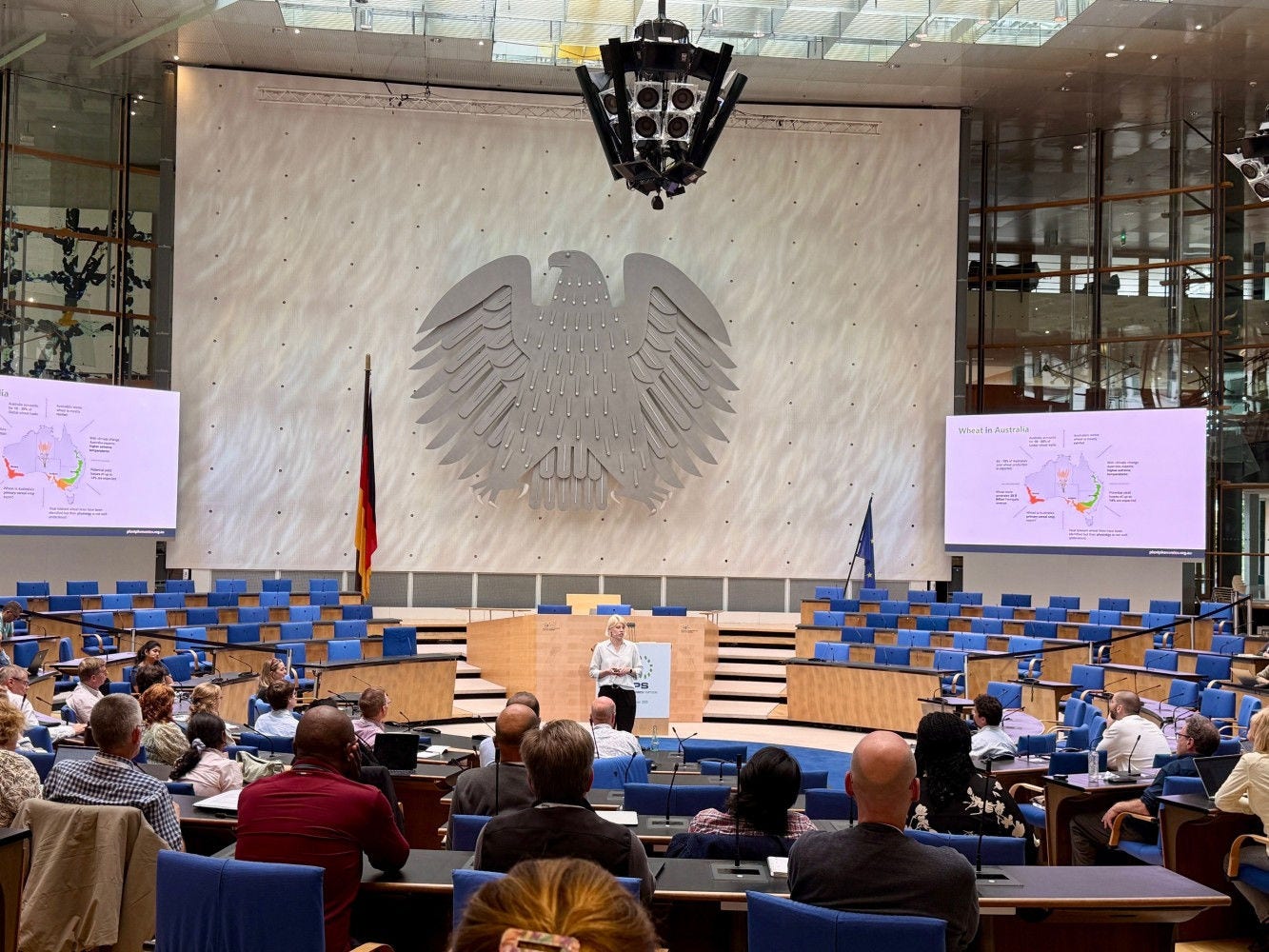 ANU researcher Dr Frederike Stock presenting 'Phenotyping wheat varieties for heat tolerance – a case study from down under' at EPPS2025.
For collaborators at ANU and AAGI-AU, the project demonstrates how advanced analytics and machine learning can turn complex physiological measurements into practical tools for breeders. For AIML, it highlights the Institute’s role in translating cutting-edge machine learning into real-world impact, helping address one of agriculture’s most pressing challenges in a warming world.
Written by Dr Juan Miguel Balbin, PhD, AIML Digital Content Officer
How machine learning expertise helps small banks keep customers safe
Originally published in AIML's Machine Learning Capability Report, December 2021
As part of the South Australian government’s 2019 program of investment in SMEs, AIML worked with Lot Fourteen-based business automation company Neo-Analytics to create smarter software for regulatory compliance monitoring in banks and financial institutions.
Adherence to strict regulations and standards is vital for banks to keep financial risks low and ensure safety of clients’ money. However small financial institutions with few staff and limited technical capability can feel overwhelmed by this burden of compliance.
Machine learning offers a solution.
“One of the requirements of operating a financial services institution is to follow local and national government laws and regulations – this is called regulatory compliance,” said Rick Rofe, founder at Neo-Analytics.
“This is a huge job involving lots of data, and so we worked with AIML to develop automated processing capability for regulatory compliance.”
Neo-Analytics now applies algorithms that deliver reliable and accurate results, providing smarter more intelligent software for their client base.
“We are now working with three banks, one of which has our products in production,” Rofe said. “We hope these improvements will soon allow us to employ our contractors permanently as adoption of our machine learning products increases.”
High burden for small institutions
Financial services institutions include banks, building societies and credit unions – these are regulated entities that can carry on banking business, including taking deposits from customers.
Such institutions are compelled by law to have robust and accurate measures in place regarding risk, including detection, measurement, reporting and management. The implied dollar amount for regulatory compliance totalled A$5.4 billion in 2016, representing 24% of community bank net income.
Data management tools like Excel don’t cut it for financial management anymore – institutions need new approaches that offer analytic flexibility, scale and automation. For smaller institutions, cost effectiveness is also vital.
AIML applied machine learning models to improve Neo-Analytics’s regulatory compliance monitoring.
“AIML was instrumental in modelling our compliance needs, and they assisted our developers to implement machine learning algorithms from scratch,” said Rofe.
“AIML used the data we made available to them, and built a predictive model for regulatory compliance that proved to be accurate and met our requirements.”
Neo-Analytics is a finance RegTech innovator focussed on artificial intelligence and machine learning, credit monitoring and data management. Based at Adelaide’s Lot Fourteen innovation precinct, Neo-Analytics helps financial institutions survive and thrive in a market of accelerating and complex change – a market that has become exponentially more challenging due to recent global crises. Their primary focus is around AI-driven features that solve real problems for customers and creating better outcomes.
The sky’s the limit: AIML joins forces with local company to clear earth's orbit
Originally posted on 26 March 2025 by Dana Rawls.
 Space debris in earth’s orbit (Image created using AI).
Space debris is a huge issue that presents a growing risk to the sustainability of earth’s orbital environment. Defunct satellites spent rocket components, and other types of debris now number in the tens of thousands, and traveling at speeds exceeding 28,000 km/h, even millimetre-sized objects can cause significant damage to operational satellites or pose a threat to crewed missions.
Adelaide-based Paladin Space is working with AIML to address this issue by developing technology to safely remove space debris. The company has built an object characterisation system that combines sensor data with machine learning (ML) techniques to determine if an object is safe to intercept.
“The outcome will involve a specialised imaging tool that will be able to classify space debris for identification, calculate the size of the debris to ensure it will fit inside our payload, and determine whether it is safe for capture by analysing the approximate spin-rate of the object,” says Paladin Space CEO Harrison Box. “[The AIML team] are clearly skilled in generating ML pipelines and training for AI.”
“I was impressed by their work…in problem solving a solution.”
AIML began collaborating with Paladin Space to develop the system in November 2024. Using event cameras and ML models, AIML team members developed a custom dataset and trained models to recognise four categories of debris: printed circuit boards (PCBs); solar panels; metal shards; and CubeSat, a class of small satellites often launched as secondary payloads alongside larger spacecraft.
Thomas Wolinski, Mechatronics Engineer with Paladin Space, supported the team with Jonathon Read, AIML’s Engineering Manager, serving as Project Manager. The proof of concept (POC) was built by AIML Machine Learning Engineers Aaron Poruthoor and Alec Arthur.
“In my work [on estimating the speed and size of space debris], we utilised a classical computer vision technique called ORB (oriented FAST and rotated BRIEF) for feature extraction,” said Arthur. “This is used to estimate the spin rate and reconstruct the object's shape by generating point clouds, which in turn allows us to estimate the object's volume.”
“The work is very novel and uses simple computer vision techniques.”
 The object characterisation system accurately detects a CubeSat during a demonstration.
“My work involved developing the ML to detect and classify space junk using event cameras,” said Poruthoor. “This work is primarily aimed at advancing the use of event cameras in space applications and beyond.”
Instead of capturing a full image at a fixed rate, event cameras report brightness changes as they occur. Each ‘event’ encodes information about the time, location, and direction (increase or decrease) of the brightness change at a specific pixel.
“Event cameras are an emerging technology with immense potential across various industries due to their low latency, high dynamic range (HDR), excellent low-light performance, and energy efficiency,” said Poruthoor. “However, because the technology is still relatively new, there is limited research and few practical implementations available today.”
“Our goal is to help bridge that gap, both by demonstrating real-world use cases (like space debris characterisation) and by encouraging further research and development in this space,” Poruthoor continued. “We believe this work could pave the way for more widespread adoption of event cameras across industries such as aerospace, robotics, autonomous vehicles, and surveillance.”
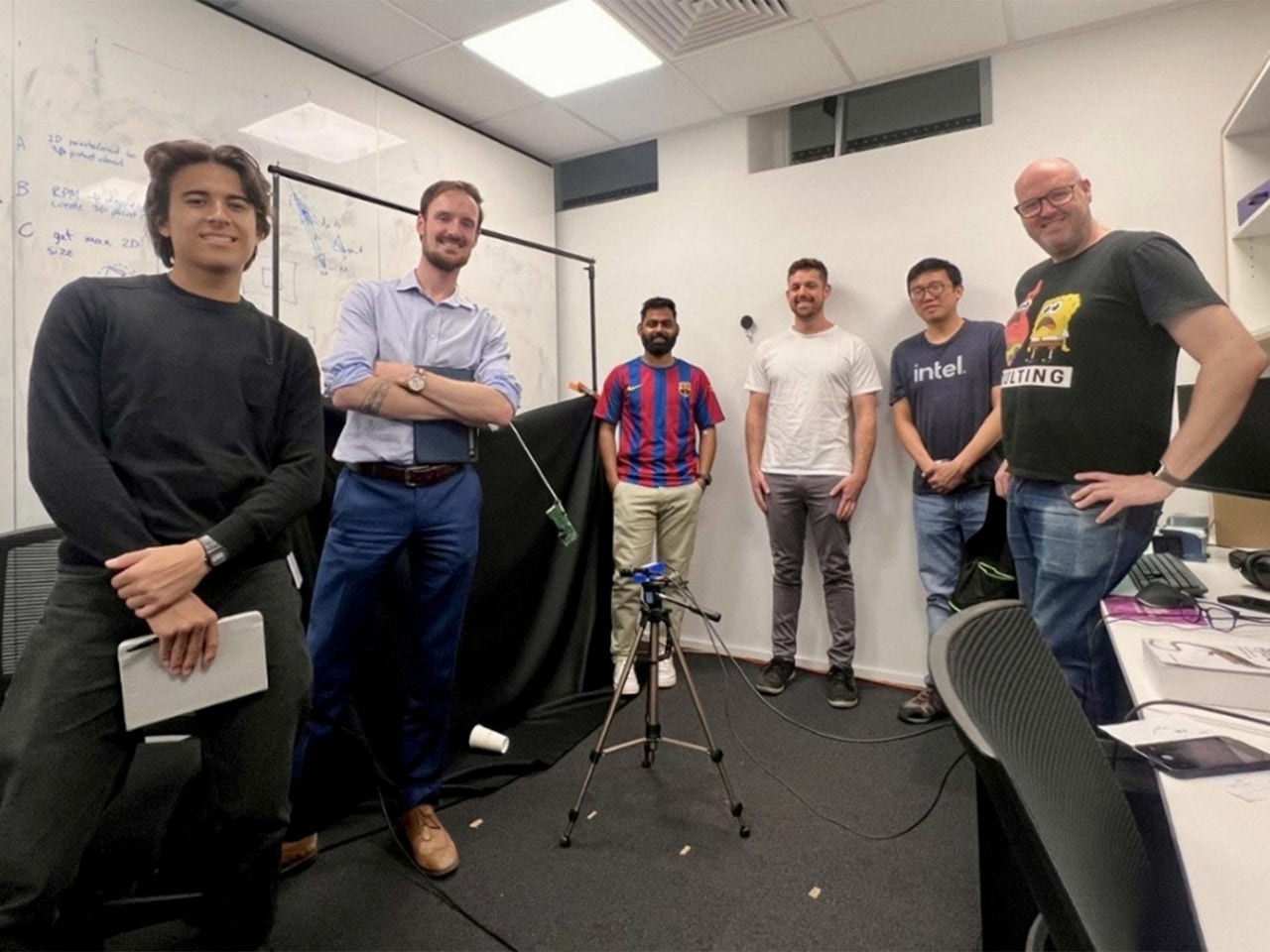 Members of the AIML/Paladin Space team (l-r) Thomas Wolinski; Harrison Box, Paladin Space CEO; and AIML members Aaron Poruthoor, Alec Author, Tat-jun Chin, and Jonathon Read.
Other AIML members involved include Research Engineer Lachlan Mares, PhD student Ethan Elms, and Professor Tat-jun Chin. Mares even used a home-based 3D printer to help construct key components of the technology.
The group’s combined efforts are incredibly innovative and precise, employing lightweight vision algorithms and smart engineering that achieve object spin rate accuracy down to the second and size estimates accurate to the centimetre, all while maintaining low computational overhead. And they give much of the credit for this extraordinary outcome on the event cameras used to help create the object characterisation system.
“If there's one key outcome we’d like to see, it’s the broader recognition and adoption of event cameras as a viable and valuable sensing tool, both in research and in industrial applications,” said Read. “We hope this project can inspire further innovation and contribute to unlocking the full potential of this underutilised technology.
Yes, I'll endorse that: how AI helps Adelaide start-up Pickstar match celebrities with promotional opportunities
Originally published in AIML's Machine Learning Capability Report, December 2021
As part of the South Australian government’s 2019 program of investment in SMEs, AIML worked with start-up Pickstar to apply machine learning and data analytics in a technology platform that matches customers with celebrities for promotional opportunities.
Pickstar is an SA business that allows customers to use an online form to pick from a range of celebrities to be guest speakers and brand ambassadors.
CEO and founder of Pickstar James Begley said AIML has been helpful in providing a service that will be able to effectively pair up customers with the right stars within the client’s budget.
“The question that we answer as a business is, who can I get for my budget?” Begley said.
“The work that the AIML does allows us as a Pickstar platform to serve up and recommend the best available talent for someone’s brief and budget and that can only happen with heavy investment into machine learning and data analytics to underpin the recommendation engine.”
Begley said machine learning will help Pickstar to achieve faster and better results for their customers.
“AIML have provided us a road map but also a prototype, an actual tangible early-stage product that we are going to use and commercialize – this is taking university smarts and bringing it into the real world for commercial application,” he said.
“For us the investment into machine learning and data analytics is only going to increase, so if we can maintain that relationship with the institute we will be very pleased to follow on.”
Data is king
Dr Grant Osborne, the Lead Machine Learning Engineer at AIML, said Pickstar could see how important data is and how it can be applied to improve the experience for everyone involved.
“The guys at Pickstar are really on it when it comes to seeing that data is important, and knowing if we have this kind of opportunity available for a talent these are the most appropriate jobs,” Osborne explained.
Osborne said they try to make the process simple and understandable for companies like Pickstar.
“We build demonstrators that we can put straight in front of the clients, they’ve got a demo app where they can see all the data and see what the predictions and recommendations type engines will be able to do for them,” Osborne said.
“We’ve been working with Pickstar to essentially help them build a more data-driven business. We’ve been looking at data sets, helping to identify the most important element of the data, building dashboards as well as doing machine learning around prediction and the kinds of talent they will be recommending for certain jobs. Data is king.”
Based in South Australia, Pickstar was started in 2013 by former AFL players James Begley and Matthew Pavlich. The platform hosts a database of sports players and celebrities that is searchable by potential customers seeking to book a star to speak at an event or endorse a product or brand. Pickstar recently opened offices in the USA and the UK to capitalise on new global opportunities with major sporting institutions.
Blockbuster AI behind the perfect Hollywood face
Originally published in AIML's Annual Report for 2021 by Kurtis Eichler and Eddie Major
In 2020, millions of people across the globe experienced the very latest in South Australian AI technology in an industry worth more than $100 billion. And if it all went according to plan, they probably didn’t even notice it at all.
AIML researchers teamed up with Adelaide-based visual effects company Rising Sun Pictures (RSP) to use AI to create effects for some of Hollywood’s biggest blockbusters, including Marvel Studios’ Shang-Chi and the Legend of the Ten Rings.
This involved creating an AI method of replacing the faces of stunt performers in combat scenes with those of the lead actors. Computer vision researchers Dr Ben Ward and Dr John Bastian worked on the film with RSP, before joining the VFX studio as full time employees in October.
“Rather than the traditional 2D and 3D face replacements typically used in highintensity action scenes, the team used an AI deepfake method,” Dr Ward says.
Deepfakes are synthetic media where a person in an existing image is convincingly replaced (or faked) with the likeness of someone else, using deep learning — a type of AI that learns from data and uses multiple software layers inspired by our brain’s own network of neurons.
For Shang-Chi, this involved around 30,000 facial images across five characters, training five machine models in more than four million training iterations. The models were used for around 50 face replacements in six key action scenes.
“AI can help artists accomplish incredible artistic effects without the tedium of executing every frame in a long sequence,” Dr Bastian says.
Dr Ward and Dr Bastian are currently using their facial replacement method on three new film projects.
Tony Clark, RSP’s managing director, says AI can speed up delivery of visual effects and relieve artists of tedious, time consuming work.
“AI holds great promise for visual effects applications, especially in terms of accelerating labour-intensive tasks and augmenting human creativity,” Clark says.
Our early work with AI has produced spectacular results and we are eager to push development further.” While AI might help bring the creative magic of Hollywood to life, the reality is show business is exactly that, business.
For RSP, Clark says the collaboration with AIML helped the company generate $1 million in increased revenue with an additional $3 million forecast in 2022.
“Collaborating with AIML has enabled us to continue to deliver amazing images, and reinforces to global studio executives that RSP is among the best in the world at embracing and implementing advancements in technology such as AI,” Clark says.
AIML uses machine learning to develop cutting-edge asbestos sensor
Originally posted on 3 August 2026 by Dana Rawls.
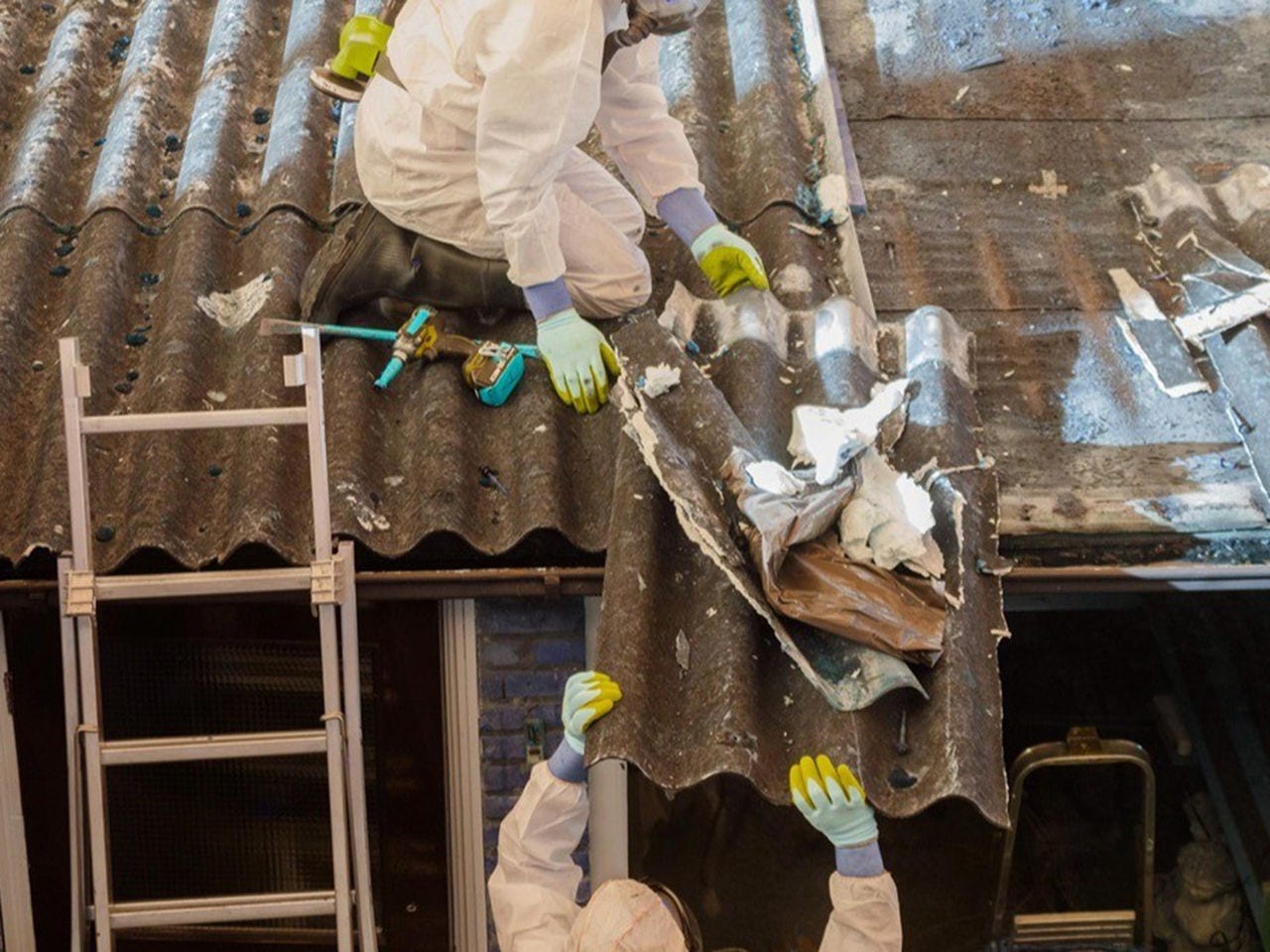 Professionals remove asbestos roofing from a home.
Asbestos is a naturally occurring, fibrous mineral that can be woven into fabrics, cloth, and insulation textiles. Because it naturally resists heat, fire, and electricity, it has been heavily used in building materials, such as insulation, roofing, and flooring, and was found in household items as diverse as cement pipes, floor tiles, roofing insulation, and textured paints.[1]
In 1955, it was discovered that inhaling or ingesting asbestos causes fibres to become trapped in the body leading to lung and other cancers, such as mesothelioma, and non-malignant lung diseases such as asbestosis, pleural plaques and pleural thickening. [2]
According to reports, about 4000 people die each year in Australia from asbestos-related diseases, including mesothelioma, asbestosis, and asbestos-related lung cancer. [3]
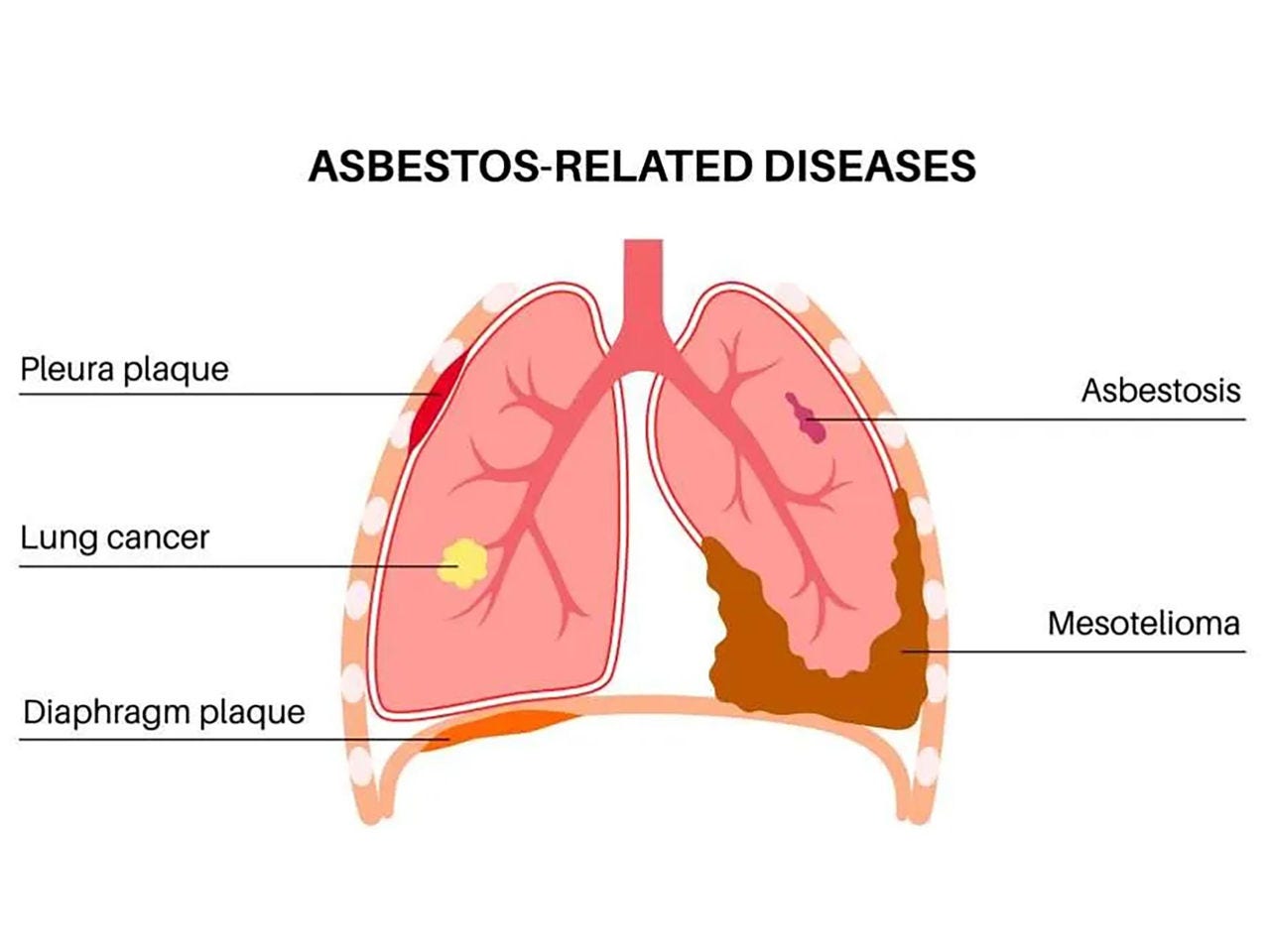 Image from Acorn Analytical Services.
And although asbestos was banned in Australia in 2003, statistically 1 in 3 homes across the country still contain it.
This realisation has led to the development of a wide array of asbestos detectors that utilise technology as diverse as infra-red spectroscopy, X-ray diffraction, and novel fluorescence imaging to detect the mineral. But no asbestos detectors combine machine learning (ML) with other imaging tools to uncover the presence of the potentially deadly mineral in homes and businesses until an innovation developed by AIML engineers and Adelaide University researchers.
Enter AIML
The project to create a cutting-edge asbestos detector began in mid-2023 when a grant from the Department of Industry, Science and Resources was awarded to fibre optics company Flawless Photonics, as part of the Australian government’s Business Research and Innovation Initiative. (Flawless Photonics has since been renamed Teraglo and is based in Adelaide.) The work was subcontracted to Adelaide University to perform the research.
Dr Erik Schartner, a Senior Research Fellow with Adelaide University's School of Physics, Chemistry and Earth Sciences, was brought on board in late 2023 to lead the detector’s optics development and technical aspects.
“There was a previous proof of concept that gave some initial data on a very small sample set, and I identified very early on that this would have to be expanded to include imaging,” said Shartner. “You need to look and [identify] fibres to determine if it's asbestos.”
Shartner noted that previous asbestos detectors produced mixed results, at best.
“The only previous commercial devices were based on near infrared reflection spectroscopy,” said Shartner. “Verbal feedback from asbestos professionals and later published work has shown [that] these are unreliable, produce unacceptable false negatives, and are not backed up by either published data or trials shared by the manufacturer.”
In June 2023, then-Flawless Photonics approached AIML to build a tool to address these issues.
“There are nine different types of asbestos, each with its own colour,” said Baensh. “We’d created a sensor with different lights that could detect asbestos by shape, size, or colour. We needed a world leader in machine learning” to help automate the process and scan the images, leading the company to AIML. According to Baensh, Teraglo is the only company in the world using lights to detect asbestos and other items.
The concept that AIML Engineer Aaron Peter Poruthoor and former AIML Engineers Alec Arthur and Dr Greg Ruthenbeck developed was simple: develop a rigorous, systematic way of identifying asbestos using spectra and images.
“Alec …was responsible for taking images and using ML techniques and models and classifying them,” said Poruthoor. “I was responsible for the spectra side of things… and later we worked together to create models that made use of both spectra and images.” Poruthoor has been refining the use of spectra in machine learning and has used it in previous projects, including identifying heat-resistant wheat.
Machine learning’s role
The AIML-developed asbestos detector utilised ML to address the shortcomings of previous detectors. By utilising ML and including spectra in its analysis, AIML’s innovative detector goes well beyond its predecessors.
“In asbestos fluorescence microscopy, a spectrum is the distribution of light intensity across different wavelengths emitted by the sample after excitation by a light source (usually UV or laser light),” Poruthoor said. “Each material fluoresces differently, so the collected spectra act like an optical “fingerprint.”
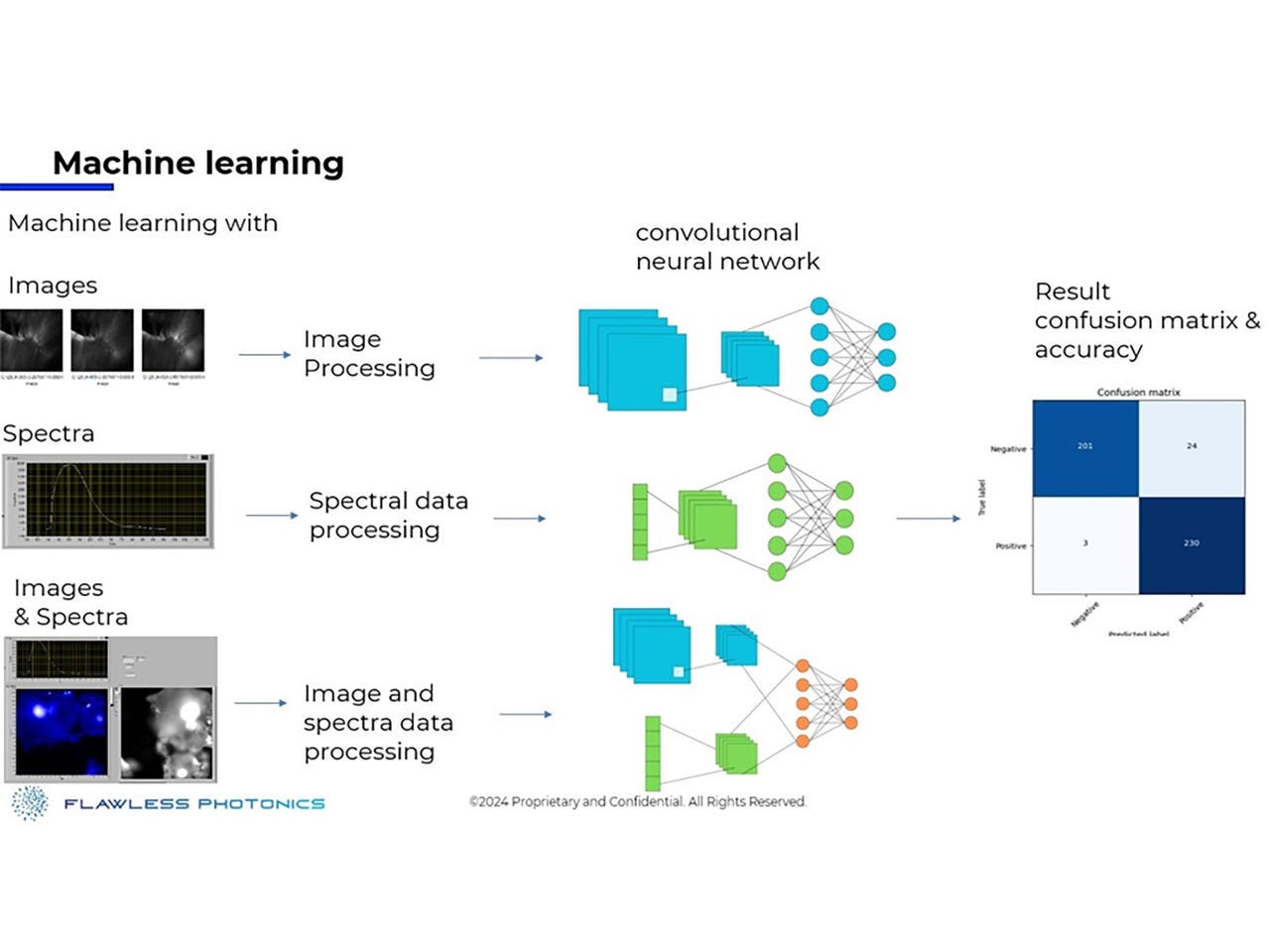 AIML engineers worked with Flawless Photonics (now Teraglo) to use ML to distinguish asbestos fibres from other particles.
Using machine learning, AIML also created an updated image analysis workflow using a current image library of more than 10,000 samples. The workflow incorporated multiple channels and has been designed to allow for new data to be fed in as it’s acquired.
“Previous asbestos detection setups use different imaging modalities, requiring expensive lab-based setups, invasive or destructive sampling, and human expertise to count asbestos fibres,” said AIML Machine Learning Engineer Philip Roberts who has been working on phase 2 of the project since April 2026. “While there have been attempts to develop ML detection systems, it remains an unsolved problem for real-time field use by non-experts.”
Project performance
Current asbestos detectors on the market utilise a wide range of existing sensing applications, including mineralogy, biosensing, and other methods. However, many users find it difficult to uniquely identify targets.
 During the testing phase, the first protype produced an accuracy rate of almost 87% using spectra and images, and 88% using images only.
The second detector prototype delivered even better results using spectra and imaging, with an almost 92% accuracy level. Using images only, its accuracy rate reduced to almost 80%.
 Accuracy levels for the second detector prototype delivered even better results, with an almost 92% accuracy level using spectra and images. Using images only, its accuracy rate was almost 80%.
“We were the first team to [use] machine learning to detect asbestos using images and spectra from fluorescence microscopy,” said Poruthoor.
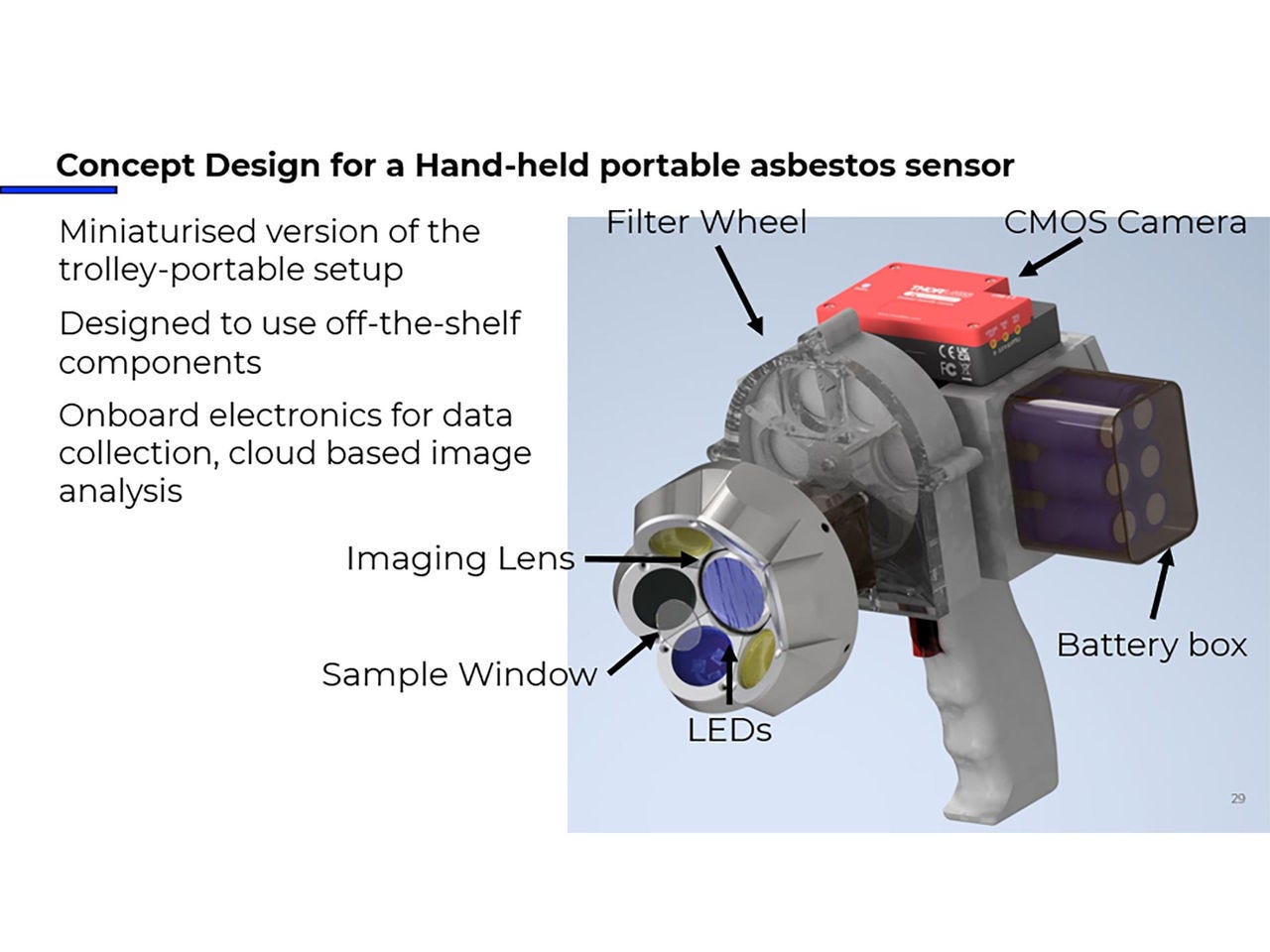 Mock-up of the design of the portable asbestos detector.
Future developments and uses
The project‘s next phase has begun with Roberts supporting the team with data analysis and development of the machine learning component. The team hopes that the creation of this cutting-edge tool will help the millions of homes and businesses still affected by asbestos.
“Seeing this come together into a practical system that we can take out of our optics labs has been a real highlight,” said Shartner. “There's still a chunk of work to get it from here to a product, but that's the challenge and the fun part of doing science!”
Baensh sees almost limitless applications for the technology used to create the detector.
“The sensors and technology behind the asbestos detector can be used across multiple industries and fields,” he said. “We envisioned it for one industry but can see its use across many others, including space, defence, mining, and drug detection.”
“The asbestos detector has been a Pandora’s Box with the potential to cross-pollinate into other industries. We’d love to see [its technology] used on the moon or maybe even Mars.”
Pivotal needs in Industrial AI
According to a 2021 article in the MIT Technology Review, there are three pivotal needs driving capital-intensive industries to digitise and implement purpose-built AI systems: 1
Generational shifts in the workforce are creating a loss of operational expertise. Veteran workers with years of institutional knowledge are retiring, replaced by younger workers taught on technologies and concepts that don’t match the reality of many organisations’ workflows and systems. This dilemma is fuelling the need for automated knowledge sharing and intelligence-rich applications that can close the skills gap.
Industrial organisations are accumulating massive volumes of data but deriving business value from only a small slice of it. Organisations are switching their focus from mass data accumulation to strategic industrial data management, homing in on data integration, mobility, and accessibility—with the goal of using AI-enabled technologies to unlock value hidden in these unoptimised and underutilised sets of industrial data.
Adopting new technologies unlocks new business models that are integral to sustainability, market competitiveness, and new corporate strategies. The more that competitors digitally transform to reap these advantages, the more organisations that don’t transform will be left behind.
Some of the use cases for industrial AI include:
- Self-aware, smart equipment that can independently measure performance to generate alerts when degradation reaches a critical point or performance is reduced for any reason.
- Creating ‘smarter’ software for regulatory compliance monitoring in banks and financial institutions.
- Robotics and automation on the production floor that can replace human involvement, thereby increasing efficiency and boosting production while improving human safety.
- Complex supply chain management that increases visibility into every step of the process, including tracking raw materials, inventory, warehouse management, logistics, and last-mile distribution.
Footnotes
Contact us
To express your interest in AIML’s Industrial AI Program, please contact: aimlindustrialai@adelaide.edu.au.