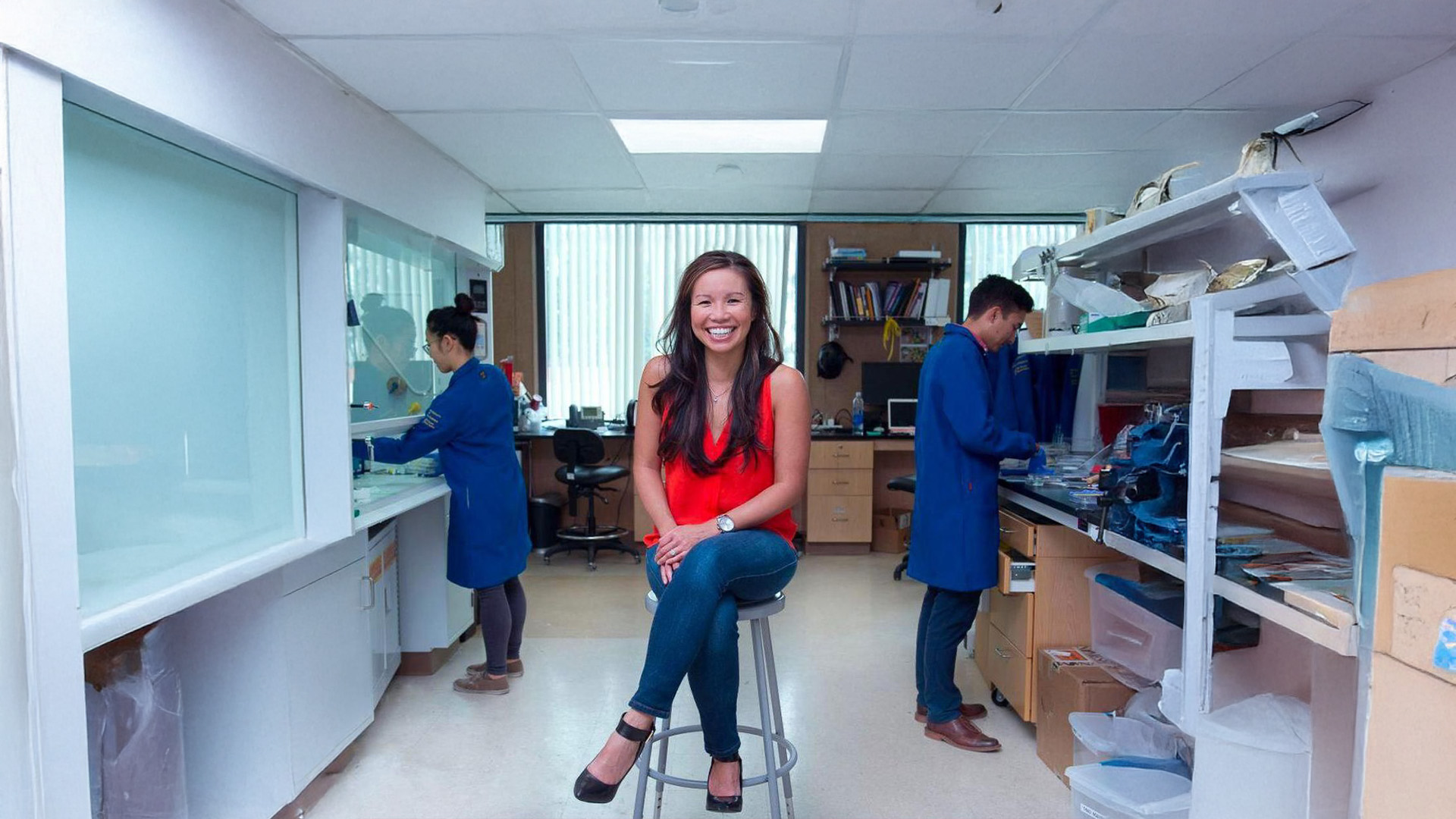
Khine Lab

People in lab

Next generation materials and medical technologies enabling continuous health monitoring

The Khine Lab develops low-cost, scalable technologies that bring high-quality health monitoring out of the clinic and into everyday life. Led by biomedical engineer, inventor and entrepreneur Professor Michelle Khine, the lab combines soft, skin-compatible electronics, advanced materials, microfluidics and molecular sensing with artificial intelligence to create new ways to measure, understand and respond to human physiology.

Its research spans continuous wearable monitors, stretchable and wireless sensor systems, on-demand biosensors and devices manufactured using rapid, scalable methods. These technologies are designed to generate rich longitudinal health data and support earlier detection, more personalised care and closed-loop therapies.

Working across engineering, health and industry, the lab aims to translate advances in materials and sensing into practical medical technologies for applications including cardiovascular and respiratory health, sleep, chronic pain, wound healing, drug delivery, incontinence and cerebrospinal fluid monitoring.

Smart watch fitbit icon

Wearable medical devices

Processor microchip icon

Quantum BioSensing

Line chart plots icon

Predictive analytics

Cog system icon

Micro-Electro-Mechanical Systems

MEMS Technologies

Tools icon

Advanced manufacturing

Medical document icon

Medical diagnostics

Explore The Khine Lab

The Khine Lab brings together three enabling technology platforms to address major health challenges.

AI-enabled wearable monitoring

Continuous, skin-mounted and wireless devices collect physiological data beyond traditional clinical settings. Applications include cardiovascular and respiratory monitoring, sleep, chronic pain and stroke.

Advanced materials and manufacturing

The lab develops skin-safe, conductive and stretchable materials for comfortable, robust devices that can be manufactured rapidly and at scale. Technologies include spray-coated inks, waterproof near-field communication systems and stretchable printed circuit boards.

On-demand molecular sensing

New aptamers derived from clinical samples and customisable, electrode-integrated microfluidic devices support sensitive, low-cost biological measurement and point-of-care detection.

Together, these platforms support three connected research pillars:

Predictive analytics: Using longitudinal physiological data and machine learning to produce clinically useful insights, including applications in cardiac output, stroke, congestive heart failure, chronic pain and sleep.

Integrated therapeutics: Connecting continuous monitoring with intervention to develop closed-loop technologies for applications including apnoea of prematurity, wound healing, incontinence and drug delivery.

Next-generation sensors: Developing integrated photonic sensors, electronic-skin body-area networks and technologies for cerebrospinal fluid detection and monitoring.

Research lead: Professor Michelle Khine

Inaugural Ian and Pamela Wall Chair Professor in Electrical and Electronic Engineering

Professor Khine is a biomedical engineer, inventor and entrepreneur whose research spans microfluidics, rapid micro and nanofabrication, soft electronics, physiological monitoring and digital health. Her translational research record includes more than 20 patents, six spin-out companies and FDA-cleared wearable technologies.

She is a Fellow of the American Institute for Medical and Biological Engineering and a Fellow of the National Academy of Inventors.

Team members

The Khine Lab launched 1 July 2026. Additional team members will be added as appointments are confirmed.

The Khine Lab welcomes collaboration with researchers, clinicians, health services, industry partners, manufacturers and entrepreneurs working across wearable health technologies, biomedical engineering, photonics, advanced materials, artificial intelligence, diagnostics and medical-device translation.

The Adelaide research program is designed to connect with the Australian Institute for Machine Learning, Health Translation SA, Central Adelaide Local Health Network, IPAS-QT, ANFF SA, OptoFab and local manufacturers. These connections will help advance projects from sensing and data analysis through fabrication, clinical translation and commercialisation.

Research opportunities

The Khine Lab is building its Adelaide team and welcomes expressions of interest from prospective PhD students in electrical and biomedical engineering who want to develop new medical technologies and translate research into medtech ventures.

Five fully funded PhD positions are currently available for electrical and biomedical engineers interested in helping transform medicine through wearable technologies, advanced materials and sensing.

Support

Professor Khine is the inaugural Ian and Pamela Wall Chair Professor in Electrical and Electronic Engineering. The Chair was established in 2023 through a $5 million gift from South Australian philanthropist Pamela Wall AO in honour of her late husband, Ian Wall.

Contact Khine Lab

Location

Location
Khine Lab
Adelaide University 
Level 1, The Braggs Building, City Campus East, Adelaide SA 5000

Email

Email: michelle.khine@adelaide.edu.au

Contact us

Institute for Photonics, Advanced Sensing and Quantum Technologies

Location

Location
Institute for Photonics, Advanced Sensing and Quantum Technologies
Adelaide University
Level 1, The Braggs Building, City Campus East, Adelaide SA 5000

Telephone

Phone: +61 8 8313 9211

Email

Email: ipasadelaide@adelaide.edu.au