Laboratory for Ultrafast Laser Spectroscopy

Laboratory for Ultrafast Laser Spectroscopy

Revealing ultrafast molecular processes for cleaner energy and environments

The Laboratory for Ultrafast Laser Spectroscopy uses ultrafast and steady-state optical techniques to reveal what happens when light interacts with molecules and nanoscale materials. Led by Associate Professor Tak Kee, the group tracks excited states, energy transfer, charge separation and reactive electrons over extremely short timescales, and uses that molecular insight to improve materials for clean-energy and environmental applications.

Current research centres on organic semiconductor nanoparticles and other photoactive materials, and on how their composition, structure and environment affect photocatalytic hydrogen generation, solar-energy conversion and the breakdown of persistent pollutants. The group also studies singlet fission, a process that creates two triplet excited states from one absorbed photon, and emerging nonlinear optical methods for monitoring molecular transport across biological membranes.

Combining physical chemistry, materials chemistry and advanced spectroscopy, the laboratory works across chemistry, photonics, environmental science and biology to translate an understanding of light-driven processes into more efficient photocatalysts, energy technologies and sensing approaches.

stopwatch icon

Femtosecond spectroscopy

atom icon

Organic semiconductor nanoparticles

solar energy icon

Photocatalytic hydrogen generation

globe in hand icon

Persistent-pollutant degradation

split node icon

Singlet fission

graph on screen icon

Nonlinear optical sensing

Explore the Laboratory for Ultrafast Laser Spectroscopy

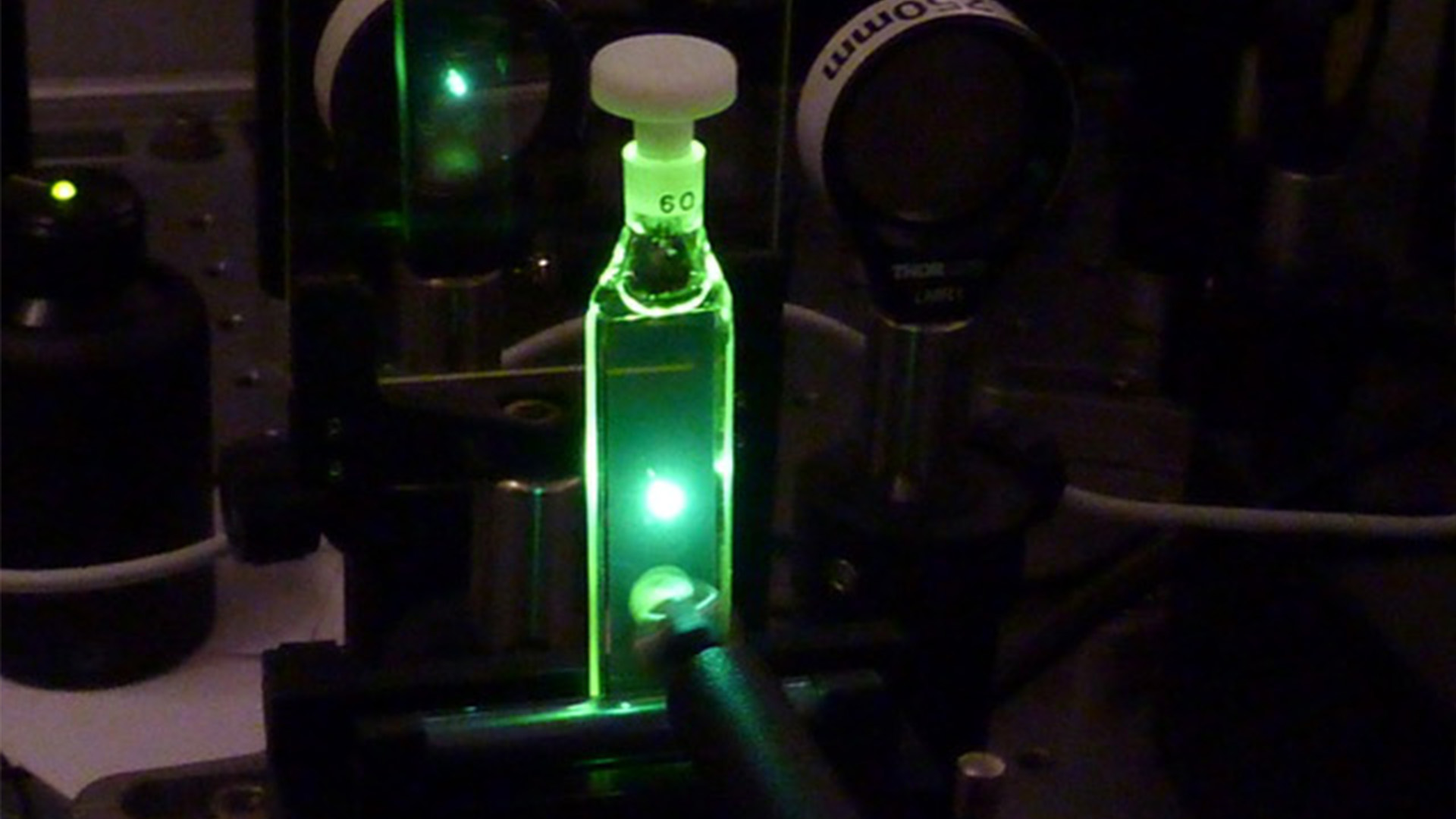
The Laboratory for Ultrafast Laser Spectroscopy combines ultrafast measurement with materials chemistry to understand how light is absorbed, transported and converted into chemical or electrical energy.

Title: Ultrafast spectroscopy and excited-state dynamics

Femtosecond transient absorption, pump-probe and pump-push-probe methods, time-resolved fluorescence and multidimensional optical spectroscopy follow short-lived excited states, excitons, charges and reactive electrons, explaining how structure and composition affect light-driven performance.

Organic photocatalysts for hydrogen generation

Nanoparticles made from conjugated polymers and small organic semiconductor molecules are prepared and studied to establish how donor-to-acceptor composition, metal cocatalysts, solar concentration, charge separation and photostability affect photocatalytic hydrogen evolution.

Light-driven degradation of persistent pollutants

Organic photocatalysts and metal nanoparticles generate highly reducing electrons under illumination that can break difficult carbon–carbon and carbon–fluorine bonds, supporting advanced catalytic reduction processes for environmental remediation.

Singlet fission and light harvesting

Ultrafast spectroscopy reveals how molecular packing, intermolecular distance, orientation and energy gradients control the conversion of one singlet excited state into two triplets, and how those triplets separate into charges for solar-energy conversion and photocatalysis.

Nonlinear optical sensing of membrane transport

An emerging direction uses organic probes that produce second harmonic generation at a biological interface, so changes in the optical signal can reveal molecular transport steps in real time, with application to bacterial transport and antibiotic resistance.

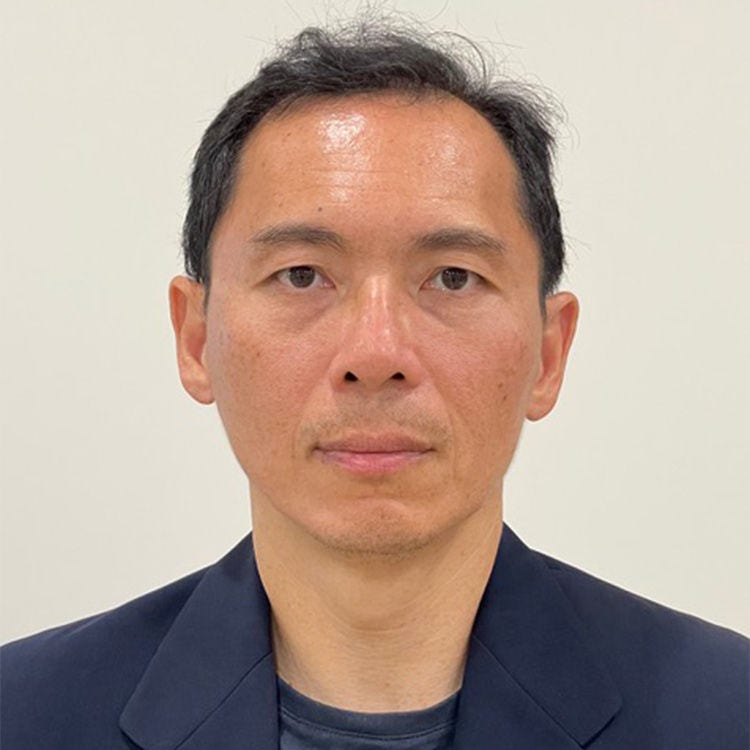
Associate Professor Tak Kee

Research lead: Associate Professor Tak Kee

Associate Professor and Academic Lead, Chemistry School of Physics, Chemistry and Earth Sciences

Associate Professor Tak Kee is a physical and materials chemist whose research uses steady-state, ultrafast and nonlinear optical spectroscopy to understand light-driven molecular processes. His work spans organic semiconductor nanoparticles, charge separation, singlet fission, photocatalytic hydrogen evolution, persistent-pollutant degradation and the spectroscopy of functional molecular systems. He has worked in Adelaide since 2006 and was previously a postdoctoral fellow at the US National Institute of Standards and Technology. He holds a PhD from the University of Texas at Austin.

Team members

PhD candidates 

  • Andrew Dolan
  • Zi Goh
  • Zixin Hu
  • Harrison McAfee

Master of Philosophy candidates

  • Madeleine Jame Loeliger
  • Nina Prerad

Master of Research candidate

  • Jake Noble

The Laboratory for Ultrafast Laser Spectroscopy welcomes collaboration with researchers and partners in physical chemistry, photonics, materials science, chemical engineering, environmental science and biology. Opportunities include developing and characterising organic photocatalysts, probing ultrafast charge and energy-transfer processes, advancing light-driven remediation, and applying nonlinear spectroscopy to biological transport.

Research opportunities

Associate Professor Tak Kee is eligible to supervise Masters and PhD candidates. Prospective students are invited to email him to discuss project availability. Current 2026 Honours and PhD themes include producing hydrogen and degrading pollutants using photocatalysts, and using organic materials for renewable energy and the optical monitoring of membrane transport.

Facilities and methods 

The research program uses femtosecond transient absorption spectroscopy, pump-probe and pump-push-probe methods, time-resolved fluorescence spectroscopy, second harmonic generation, broadband pump-probe spectroscopy, two-dimensional electronic spectroscopy and related materials-characterisation methods.

Support and collaboration

Current support includes the Australian Research Council and Defence Trailblazer. Recent projects cover advanced reduction of fluorinated pollutants, femtosecond spectroscopy infrastructure and tactical solar-energy materials.

Contact Laboratory for Ultrafast Laser Spectroscopy

Location

Location
Laboratory for Ultrafast Laser Spectroscopy
Johnson Building
Adelaide University, North Terrace Campus
Adelaide, SA 5005

Telephone

Phone: +61 8 8313 3514

Email

Email: tak.kee@adelaide.edu.au

Contact us

Institute for Photonics, Advanced Sensing and Quantum Technologies

Location

Location
Institute for Photonics, Advanced Sensing and Quantum Technologies
Adelaide University
Level 1, The Braggs Building, City Campus East, Adelaide SA 5000

Telephone

Phone: +61 8 8313 9211

Email

Email: ipasadelaide@adelaide.edu.au