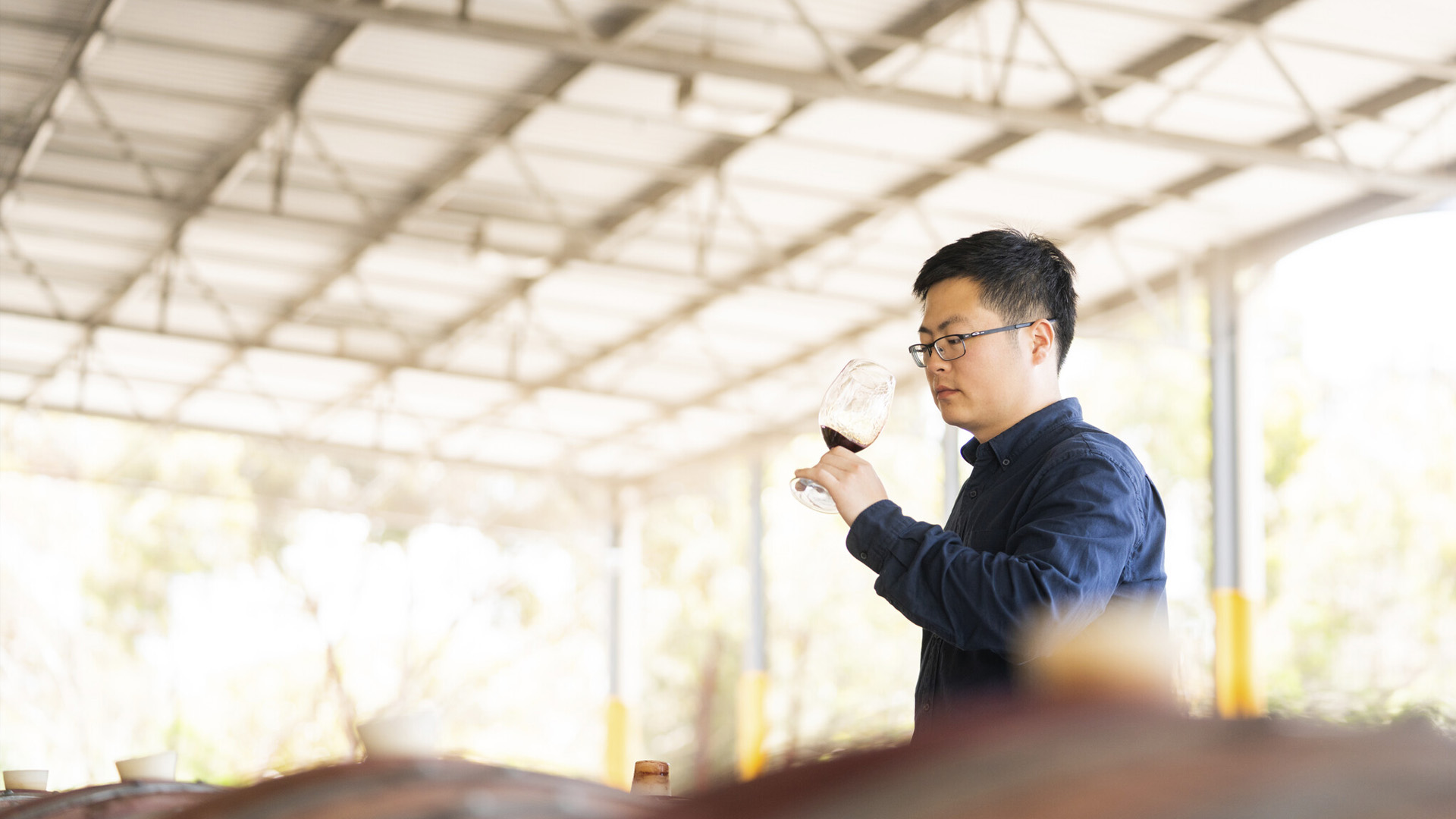
In collaboration with the AWRI, Adelaide University’s researchers are working to solve this problem through bioengineering. By investigating the volatile compounds that give wine its distinctive character, they’re identifying which compounds are lost during dealcoholisation and finding ways to restore or enhance them in the final product.
They’re also taking on the challenge of keeping NOLO wine fresh. Alcohol naturally helps stop bacteria and yeast from growing, so when it’s removed, wine becomes much more vulnerable to spoilage. For this reason, the team is also researching the microbes in NOLO wines and testing ways to control them.
“We’ve learnt that some microbes can survive the treatments winemakers currently rely on – and have identified new antimicrobials that could potentially control the growth of these,” says Dr Varela.
Dealcoholisation impacts aroma release and taste sensations but also modulates wine’s pleasurable ‘mouthfeel’ – the tactile sensation of wine. Because of its critical role in the experience, mouthfeel is another key focus at the University.
The team are looking at different grapes, different winemaking methods, and safe ingredients that might improve texture, as well as coming up with better ways to measure and describe mouthfeel. Their approach uses taste tests, wine chemical measurements and computer analysis. Because our senses all work together to create a positive sensory experience, they’re even studying how smell affects texture.
“Together, this research will provide novel, nuanced knowledge of the deficiencies in no and low-alcohol wines, as well as best practices for mouthfeel measurement and its enhancement,” says Associate Professor Sue Bastian.
In one research project for industry, the team made targeted adjustments to improve body, texture and palate sensations in NOLO wine. Consumer testing found they had successfully increased the intensity of desirable sensory characteristics and decreased the intensity of undesirable ones. The findings were subsequently translated into a commercial product that the winemaker could confidently take to market.
“I hope our research efforts change the conversation from industry making NOLO wines as a purely market-led response to one where the wine sector is intentionally crafting beautiful NOLO wines that consumers want to drink,” says Associate Professor Bastian.
But to get people to fall in love with NOLO wine that tastes good, they first have to try it. People’s buying decisions are influenced by things like price, health benefits, branding, packaging and advertising. That’s why marketing is the fourth pillar of the University’s NOLO research.
Through focus groups, interviews, surveys and taste experiments, Associate Professor Rebecca Dolan, co-lead Associate Professor Armando Maria Corsi and their marketing team are exploring what encourages people to try, buy, and continue drinking NOLO wines. Their findings have so far offered valuable insights into situational and values-driven purchases, as well as alcohol content perceptions and the role of brand trust.
By bringing together expertise from across disciplines – and combining scientific research with market insights – Adelaide University is building a more complete understanding of what will help the NOLO wine category grow in the future. Their collaborative approach was awarded a Cooperative Research Centres Projects’ grant for the “Advancement of Australian lifestyle wines”, led by Australian Vintage Limited and other industry partners.
“The long-term growth of NOLO wines depends on solving complex challenges that no single discipline can solve in isolation,” says Associate Professor Dolan. “The cross-disciplinary nature of Adelaide University’s NOLO program is a model for how current and future research challenges should be approached.”
On the horizon
Building on their findings, the team will continue investigating new ways to improve flavour, texture and overall drinking experience, while helping producers make better use of surplus wine by transforming it into high-quality NOLO products.
Future research will explore new approaches to preserving desirable wine characteristics during dealcoholisation, including alternative alcohol-removal technologies and bioengineering solutions that protect product quality. Adelaide University researchers will also continue refining methods for measuring and evaluating mouthfeel, flavour and aroma, helping establish stronger frameworks for NOLO wine development across the industry.
At the same time, marketing studies will build a broader understanding of consumer preferences and behaviours, ensuring future products better meet the needs of different groups of wine drinkers.
As alcohol-free options become increasingly visible, Adelaide University will continue to help winemakers create more sophisticated products, understand changing consumer behaviour and lead NOLO innovations to a more full-bodied future.