Shedding new light on reproductive success and IVF
The Reproductive Success Group, led by ARC Future Fellow Associate Professor Kylie Dunning, focuses on improving fertility outcomes through interdisciplinary research at the interface of biology, engineering and the physical sciences.
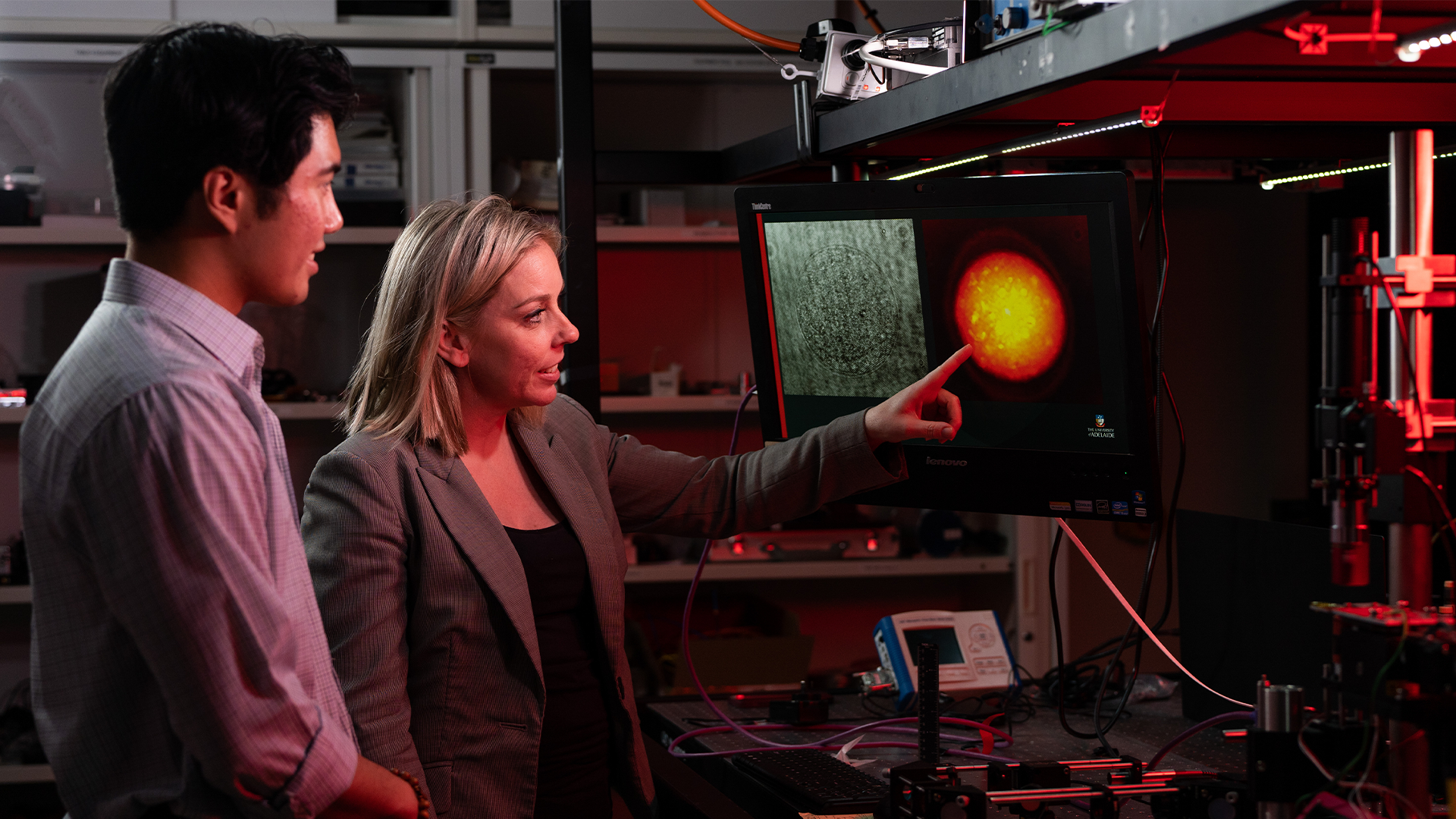
Our work centres on understanding and enhancing oocyte (egg) quality and early embryo development-key determinants of reproductive success in both clinical and agricultural settings. We use advanced, non-invasive imaging and diagnostic technologies, including light-based approaches, to generate objective measures of developmental potential.
A major focus of the group is translating these discoveries into practical tools for assisted reproduction. We work closely with clinicians, embryologists and industry partners to develop technologies that improve how eggs and embryos are assessed and selected in IVF.
Translation is further supported through IVF VET Solutions, an internal university initiative led by the group, which delivers specialised reproductive services including the Mouse Embryo Assay (MEA) - a quality control bioassay used by IVF laboratories to detect toxicity in culture media, oils and consumables.
Beyond human health, we apply our expertise to agriculture through industry partnerships.
We are based within Robinson Research Institute and the Institute for Photonics and Advanced Sensing, and collaborate closely with the Centre of Light for Life, leveraging world-class imaging platforms to drive innovation in reproductive science. Our team fosters a collaborative and supportive research environment, with a strong commitment to training and mentoring the next generation of scientists.


