Our services

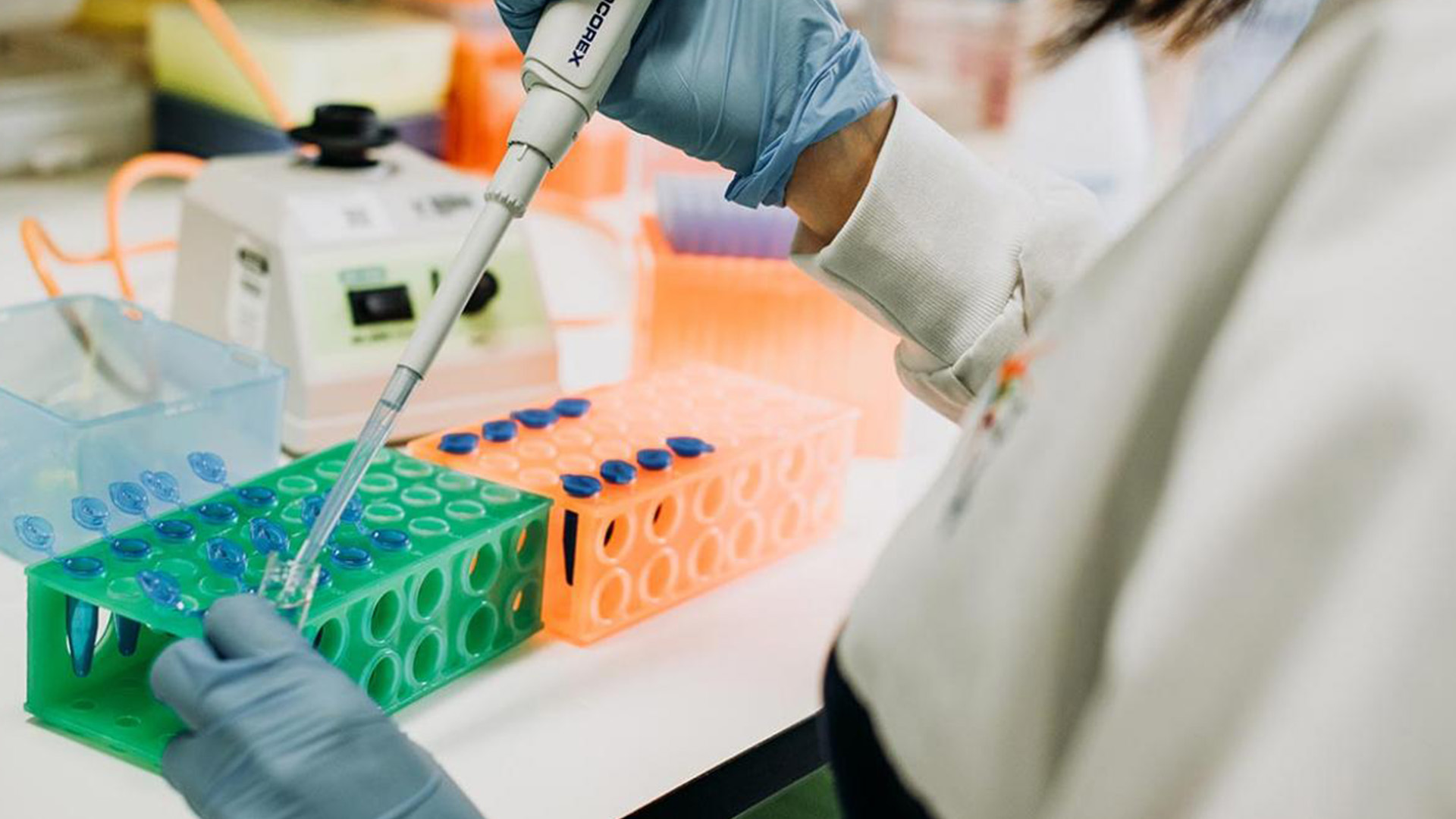
Researcher in a lab

SAGE Delivers a range of custom edited mouse models.

During the initial consult, SAGE will work with you to customise a targeting strategy that will suit your gene of interest. Below are some examples of the types of mutations SAGE offers. Please contact the facility to see how they can support you in generating a genetic model to advance your research.


Explore the SA Genome Editing Facility


Gene knock outs (KOs) are a fantastic way to study the function of a gene and the pathways that are perturbed by the absence of the gene product.

KO's are most often achieved by deleting the entire coding region of the gene of interest or by causing a frame-shifting mutation in an early coding exon. SAGE can work with you to assess which option will be most effective for your particular gene.

If a homozygous KO of your gene of interest results in lethality or sterility, SAGE can implement a number of strategies to assist in generating a heterozygous founder animal or may recommend a different strategy - such as floxing the gene of interest.

Examples of KO mouse models generated by SAGE:

CRISPR technology has allowed the precise substitution of a single nucleotide to become a relatively simple task.

Point mutations are powerful genetic models that can uncover the function of a single codon within a gene and can be particularly useful in modelling patient mutations. As reported by López-Bigas et al (FEBS Letters 2005 )  "Point mutations are the most common cause of hereditary disease and most of them (84% in the human gene mutation database) are currently reported as missense or nonsense mutations".

SAGE has a number of strategies that can be applied to recapitulate your point mutation of interest in the mouse.

Examples of Point mutations generated by SAGE:

A known, short epitope can be fused to either the N- or C- terminal of a gene to allow visualisation or purification of the gene product when there is no direct antibody to detect the gene of interest available.

A combination of epitope tags (i.e FLAG-MYC) may be added to a single gene to enhance the range of downstream applications of the tagged mouse model. In conditions where the expression of a gene is low, tandem repeats of the tag sequence can be inserted, to enhance the signal detected from the gene product.

SAGE has experience with HA, V5, FLAG,MYC and Biotin tag edits.

Examples of epitope tag models generated by SAGE:

Reporter alleles can be used to easily track the spatio-temporal expression of a gene. A fluorescent or bioluminescent marker such as Green Fluorescent Protein (GFP), or luciferase can be fused to a gene of interest, often with a flexible linker in between to allow correct folding of the two components.

SAGE has experience creating GFP, mCherry, tdTomato, nLuciferase, eCFP and Venus reporter alleles.

Examples of reporter alleles generated by SAGE :

Conditional alleles are created by flanking a crucial region of the genome with palindromic repeat sequences, called LoxP sites. When a Cre-recombinase is expressed in a cell, the LoxP sites undergo recombination, which depending on the orientation of the LoxP sites will cause a deletion or inversion of the intervening sequence. The Cre-recombinase can be driven by a tissue specific promoter to control the site of the genomic recombination event and can even be temporally controlled when paired with an additional element such as a TetO system.

A conditional allele is particularly useful when a null allele will impair the development, survival or fertility of the mutant mouse. 

SAGE has experience with creating both Floxed and Cre expressing mice.

Examples of conditional alleles generated by SAGE:

The most difficult genotypes to create are often the most interesting to study! If the genotype you are interested in has a complex phenotype, don't hesitate to reach out to the SAGE team.

New and exciting discoveries in the field of genome editing are constantly being explored as a means to tackle these difficult projects and the SAGE team can work with you to develop a mouse model to support generation of high quality in vivo data for high impact publications.

Examples of complex phenotypes generated by SAGE:

Some of our past clients say

The SAGE node are fantastic at what they do - cutting edge technology efficiently delivered.

Professional, helpful staff at SAGE, appreciated.

Anonymously collected
Phenomics Australia user satisfaction survey, 2022

Contact us

SA Genome Editing Facility

Location

Location
Adelaide University 
SAHMRI
North Terrace, Adelaide
South Australia 5000

Email

Phone: +61 8 8128 4823

Email

Email: sage@adelaide.edu.au