Centre for Sustainable Infrastructure and Resource Management

Building and a tree

Resolving real world problems and challenges of industry

The Centre for Sustainable Infrastructure and Resource Management (SIRM) at Adelaide University undertakes research in physical infrastructure management and the sustainable management of assets. SIRM applies sufficiency and circularity philosophies and carbon reduction solutions to ensure sustainable communities throughout the world.

SIRM recognises that the challenge of moving to a more sustainable future requires an understanding of the complexity and interactions of human, natural, and built systems. We bring together diverse research expertise to address significant societal challenges at the interface of the natural and built environments at all scales. We offer clients the potential to address real problems using multidisciplinary teams. Our goal is to efficiently use resources to manage the natural and built environments sustainably.

We're involved in research construction projects in water, buildings and transport supporting liveable regions and regional economic growth. We also undertake research in the maintenance aspect of assets (physical infrastructure management), sustainable management of assets in tactical asset management (interface between strategic and operational management), and applying carbon reduction considerations. We work in ecology, environmental restoration, planning for liveable and equitable cities and regions, and building carbon-resilient regenerative communities.

SIRM also has a close association with the university’s regional campuses in Whyalla and Mt Gambier, and the Forestry Centre of Excellence.
Explore our research

Our researchers are committed to creating a sustainable future that is centred on the circular economy philosophy and the need to reduce carbon emissions.

Engage with us

We welcome research and partnering opportunities with industry, local councils, governments, communities and other research organisations to address the critical knowledge gaps and problems of our natural and built environments.

Explore the Centre for Sustainable Infrastructure and Resource Management

Our researchers’ knowledge of current and emerging technologies offers valuable insights for our industry collaborators. The expertise of our internationally renowned, multidisciplinary team of researchers is widely sought. Our knowledge and advice have underpinned environmental, water, transport and construction management for our local, state and international communities. We are renowned for our ability to translate our research into policy and practice, creating value and impact for our industry collaborators.

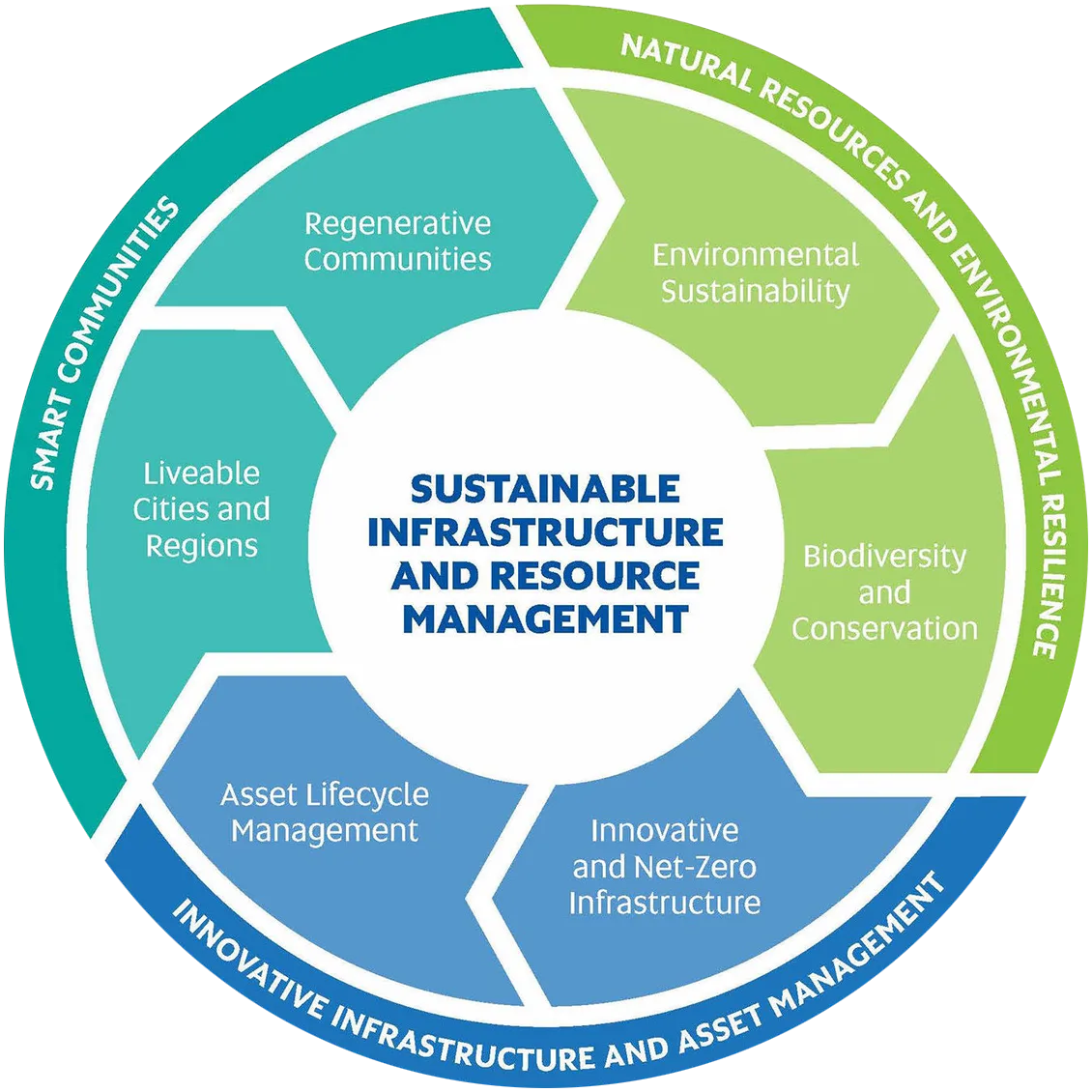
Circular economy philosophy diagram - click to view

Research Streams

Our research is focused on physical infrastructure management and the sustainable management of assets. Our research is organised into three streams, with six main topics of research.


Tree icon

Severe environmental degradation, land clearance, and unsustainable consumption are pushing us toward a point of no return: escalating biodiversity loss and climate change, and diminishing resources.

Focused on ecosystem and natural resource protection, this research stream specialises in biodiversity conservation using transdisciplinary research capacity and a collegial approach to ethical research. Our research spans the monitoring and management of natural and built environments, from waste reduction and recycling to resource remediation and optimisation. Our work aligns to the United Nations Sustainable Development Goals, particularly to ensure sustainable consumption and production patterns by addressing sufficiency and circularity practices such as reuse, recycling, recovery, waste prevention, and safe disposal approaches.

Our research expertise covers a wide range of topics and includes:

  • Water resources management: Rural and urban hydrology, stormwater management, flood forecasting and management, irrigation, forest water accounting, alternative water supplies, water-sensitive urban design, wastewater management, water quality monitoring.
  • Ecology and biodiversity conservation: Wildlife ecology, restoration ecology, ecosystem services, sustainable agriculture, plant community ecology, invasive species, climate change refugia, island biology, marine ecology, conservation biology and management.
  • Geospatial sciences: Geodata acquisition, processing, management and analysis of geographic data, cartographic representation and publishing of geodata, cadastral surveying.
  • Environmental engineering and geosciences: Ecological engineering, resource-use modelling, integrated and sustainable food production, industrial waste recycling and reuse, geotechnical engineering, geology, geochemistry, sustainable development and use of mineral resources.

City icon

Focused on innovative and climate-positive infrastructure solutions, we aim to meet the service demands of cities and regions from conception to whole-of-life stewardship by combining state-of-the-art design methodologies, smart technologies and asset lifecycle management.  

We apply sufficiency and circularity principles that improve resource efficiency, operational performance and long-term sustainability, which in turn contributes to achieving net zero targets and supporting the industry, innovation and infrastructure objectives of the United Nations Sustainable Development Goals. 

Our research expertise spans a range of topics, including:

  • Structural engineering and construction materials: Reinforced crumbed rubber concrete, recycling materials, resilient infrastructures, non-destructive condition assessment, structural retrofitting.
  • Sustainable and net zero built environment: Energy-efficient industries and communities, asset management, online sensing, sustainable buildings, urban precinct modelling, energy emissions of buildings and embodied energy, construction operations and safety management, human factors in construction management, green infrastructure.
  • Project and risk management: Project control methods, standards development, sustainable construction, project procurement, integrity of tendering system, sustainable development, program and portfolio management, strategic benefits realisation.
  • Waste management: Waste utilisation, sustainable construction materials, zero energy buildings, reverse logistics, supply chain, waste minimisation (reduce, reuse and recycle).
  • Digital technologies: GIS applications, public transport planning, ageing and transport, smart and sustainable construction, big data analytics in the built environment
  • Smart management and communication technology: Using technology as an enabler for smart infrastructure (digitalisation), Building Information Modelling (BIM), resource efficiency, asset management, integrated infrastructure systems, structural health monitoring, sensors in pipes, the Internet of Things (IoT).
  • Synergies between Industry 4.0 and the circular economy for smart infrastructure.

Green home icon

Smart communities are networked communities that provide social support to one another, have shared responsibility for protecting natural resources, reducing risks, and creating an environment that facilitates health and wellbeing.  Our research investigates how we can create communities that are not only sustainable but are also regenerative, meaning people are actively working to restore ecosystems and support the health and wellbeing of the communities in which they live. 

Our work in this area has included educating communities about fire safety, assessing the economic benefits of shared power grids and creating community educational resources about living sustainably.   

Smart communities are integrally linked with our work in other streams, as smart communities rely on sustainable natural resource management and environmental resilience as well as innovation in infrastructure and strong asset management. Biodiversity protection, reduced air pollution and more effective waste management are examples of issues that are dependent on human attitudes and behaviours. These problems require building capacity within society (e.g. via education and citizen science) but also a strong understanding of the underlying psychology and the social marketing techniques likely to change behaviours. 

We focus on developing smart communities and liveable cities and regions by promoting choices and behaviours that improve biodiversity and reduce negative environmental impact. In many environmental problems, the most effective solution is multi-faceted, requiring input from various disciplines, so researchers in this strand are often engaged to assist in projects in the other strands. 

 Our research contributes to the United Nations Sustainable Development Goal to make cities inclusive, safe, resilient and sustainable. We focus on investigating how we can create communities that are not only sustainable but are regenerative – actively working to improve the wellbeing of residents, for example, through urban agriculture and nature connection, while simultaneously decreasing their impact on the Earth. Smart infrastructure can be used as a platform to serve communities, improving their sustainability, resilience and ability to adapt. 

Our expertise in this space is broad and covers a range of topics and activities:

  • Community attitudes and behaviours: Our researchers explore how values, beliefs, attitudes and emotions influence consumer responsibility and sustainable behaviours.  This work spans a range of areas, including conservation, pollution, transport, housing choice, recycling and human dimensions of environmental management.
  • Community partnerships and stewardship: We conduct research focused on building adaptive and resilient communities and forging sustainable partnerships to create more environmentally sustainable futures. Work in this area includes urban agriculture, marketing conservation initiatives and educating people about sustainable options.  
  • Policy, governance and planning: Our research team conducts work focused on policy development and appropriate governance to achieve strategic and sustainable goals.  We also focus on improved planning for a variety of applications such as bushfires, urban design, and land use planning. 
  • Human-environment interactions and benefits: We conduct research into public health, population studies, the benefits of green and blue space and how we can facilitate increased connection with nature and appreciation of the environment.

Our future depends on the increased application of sustainable infrastructure and responsible use of our natural resources. Adelaide University's Sustainable Infrastructure and Resource Management (SIRM) facilitates this goal by conducting research in three main streams:

  • Natural Resources and Environmental Resilience
  • Innovative Infrastructure and Asset Management
  • Smart Communities

The construction industry is an essential part of our lives, but it is one of the highest contributors to climate emissions, resource consumption and waste. SIRM is committed to meaningful research that can help re-shape this industry into a leader in sustainable practices. SIRM also works directly with the resource sector, particularly water and forestry, to inspire innovative management.

SIRM brings together diverse research expertise to address significant challenges for industries and the society at the interface of the natural and the built environments at both the macro and micro level to:

  • Sustainably manage natural and built environments by applying innovative, sufficient and efficient resource use.
  • Build resilient ecological and human systems through active engagement of diverse stakeholders.
  • Implement sufficiency and circularity principles (rethink, avoid, reduce, re-use, adapt and recycle) and innovative technologies for construction and other built environment sectors.
  • Promote smart resource recovery and the design, construction and adaptive reuse of net-zero buildings.
  • Support liveable and equitable cities and regional communities, tourism and agri-food production.

SIRM is also at the forefront of innovative approaches to managing resources in the built environment, transport, and other sectors. After co-hosting the first International Sufficiency Summit in May 2023, SIRM was involved in the formation and launch of the World Sufficiency Lab, Paris, with which it maintains a close relationship.

SIRM also maintains a close relationship with the World Resources Forum, Geneva, and an interest in the Global Alliance for Laudato Si’ (Caring for our Common Home and the Poor) and its research on water, energy, food security, and more sustainable and just economic systems.

SIRM brings together some of the brightest minds in sustainable futures, with diverse research backgrounds and complementary expertise in civil engineering, construction management, environmental science, geospatial science, engineering management and water & wastewater engineering to improve environmental and socio-economic sustainability.

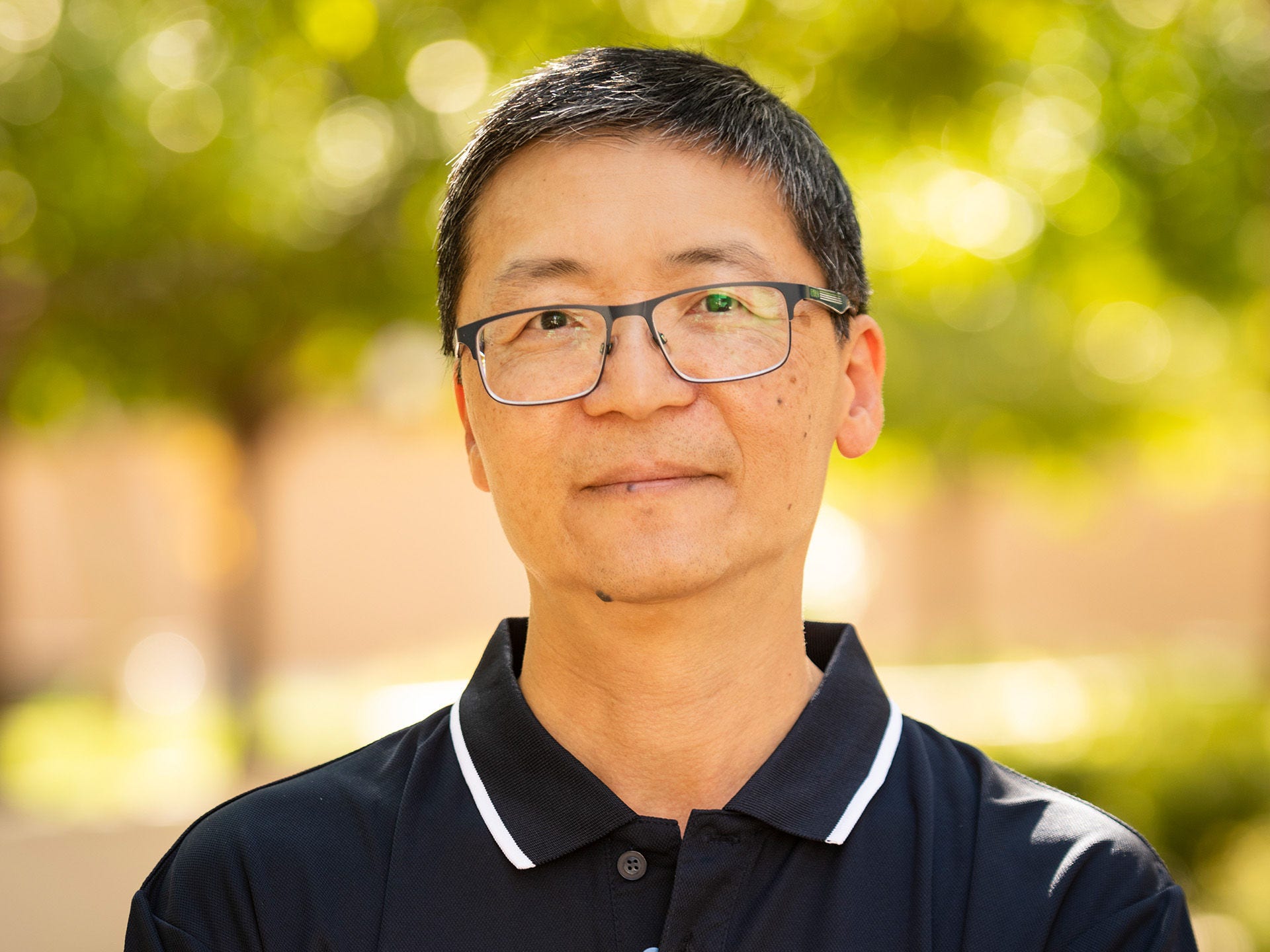
Professor Chris Chow

Director, Centre for Sustainable Infrastructure and Resource Management
Email: chris.chow@adelaide.edu.au

Professor Chris Chow

Leadership team

  • Deputy Director, SIRM: Associate Professor Nicholas Chileshe
  • Stream Leader, Smart Communities: Professor Delene Weber
  • Stream Leader, Natural Resources and Environmental Resilience: Professor Mizanur Rahman
  • Stream Leader, Innovative Infrastructure and Asset Management: Professor Ke Xing
  • Technology Development Leader, Application of intelligent sensors and multimedia systems: Professor Ivan Lee
  • Technical Team Leader: Commercial Testing: Dr Natalya Schmerl

NATA accredited testing facilities

The Australian Flow Management Group (AFMG) services specialised testing needs of the water industry. It advances irrigation and engineering hydraulics technology through fundamental and applied research.

The facility consists of a range of unique infrastructure suited to the testing and research of water-related equipment and technology. As an internationally accredited facility we are in a unique position to engage with the water industry and to support and produce high quality research outputs. We house a number of state-of-the-art research and testing facilities including:

  • Full-scale hydraulic testing (up to 510 L/s)
  • Water meter testing and calibration
  • Valve type testing

AFMG can be contacted via email AFMGenquiries@adelaide.edu.au.

Precinct Carbon Assessment Tool

The Precinct Carbon Assessment (PCA) tool, developed by an Adelaide University research team, aims to provide design and planning decision support to initiatives for (re)development of low carbon precincts. Subsequent enhancements have expanded its scope, enabling a comprehensive evaluation of precinct lifecycle energy and cost performance. This tool facilitates the examination of various aspects including embodied, operational, and travel-related energy consumption, carbon emissions, and costs. Furthermore, it incorporates an analysis of the carbon offset and cost savings provided by rooftop renewable energy generation units like solar PV and solar hot water systems.

A key advantage of this tool is its incorporation of precinct morphology, which integrates inter-building effects (IBE) into analyses involving daylighting, HVAC, solar access, and traffic impacts. These considerations directly inform optimal planning decisions for precincts. Additionally, the tool offers a detailed assessment at the building elements level and allows for customisation of appliance scheduling, thereby promoting applications of green building products and materials as well as efficient use of high-energy appliances.

Water Treatment Control - Coagulation Dose Prediction APP (WTC-Coag)

The coagulation optimisation model WTC-Coag has proved to be a useful tool for coagulation optimisation at conventional drinking water treatment plants. It has been used to help guide water treatment plant managers to select the primary coagulant dose at Adelaide metropolitan drinking water treatment plants for several years. The APP requires raw water turbidity, colour, and UV absorbance at 254 nm as input data, values are then used to produce coagulation predictions. The generic nature of the software (no site-specific calibration required) can be highly beneficial for the optimisation of coagulation at other water treatment plants.

  • Waste & Environmental Technologies
  • S Can
  • Clarity Aquatic
  • Hydro2050
  • IPACS
  • Northern and Yorker LGA
  • Osmoflo
  • Mt Remarkable Council
  • Onkaparinga Council
  • Alexandrina Council
  • SA Water
  • SABRN Tech Pty Ltd
  • Intelligent Sensing Technologies

Contact us

Centre for Sustainable Infrastructure and Resource Management

Location

Location
Centre for Sustainable Infrastructure and Resource Management
Adelaide University
Mawson Lakes Campus, Mawson Lakes SA 5095

Telephone

Phone: +61 8 8302 300

Email

Email: SIRM@adelaide.edu.au