

Why Bachelor of Veterinary Technology?
Are you an inquisitive, passionate and empathetic animal lover? Keen to work closely with animals, their owners and the community to make a difference to their care?
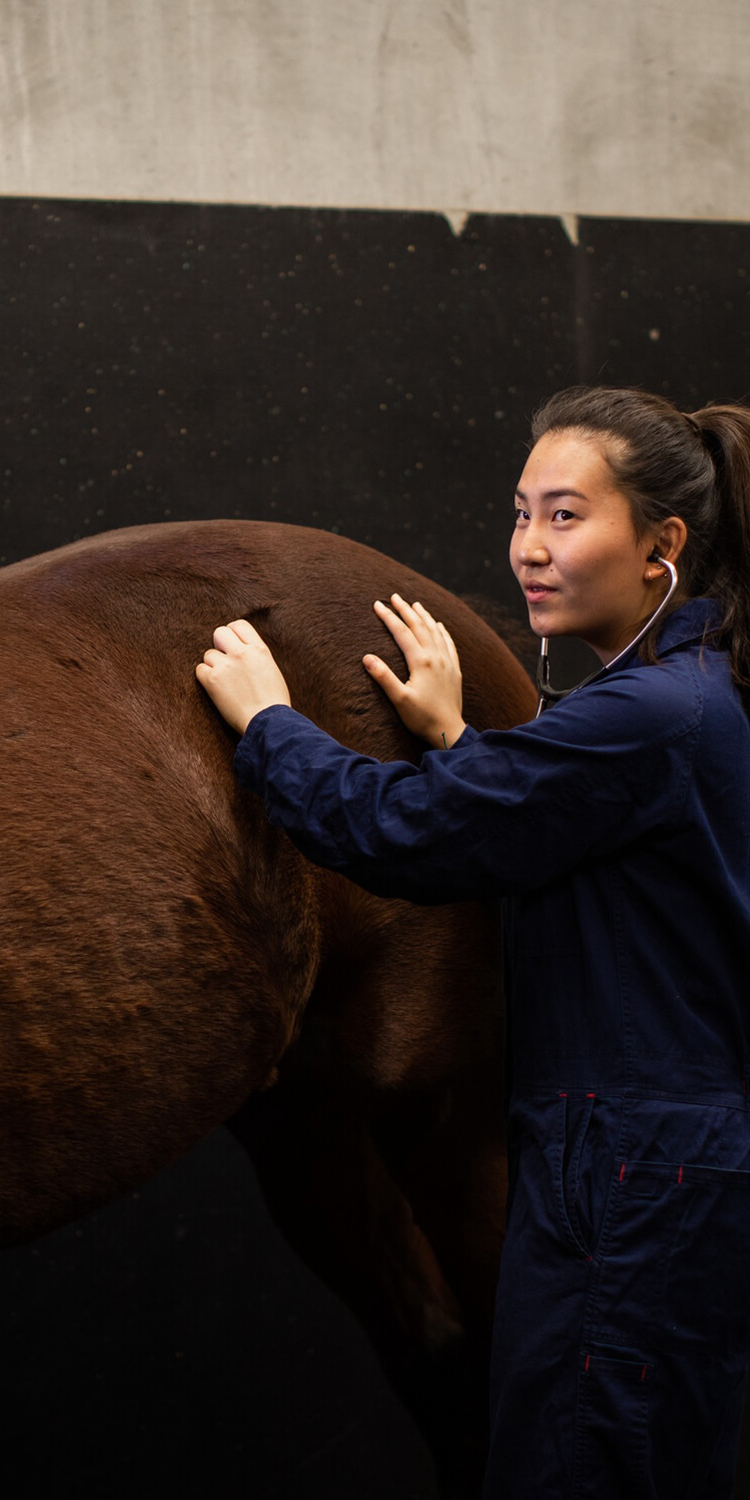
Veterinary technologists and veterinary nurses play a vital role in delivering modern animal healthcare. They are the heart of our veterinary hospitals and clinics. As part of the veterinary care team, they educate owners and provide high-level nursing care to veterinary patients in areas such as surgery and medicine, anaesthesia, emergency and critical care, dentistry, exotics, wildlife and more.
Safeguard the health of animals. Save lives. Enter a field with strong job prospects and security. Work in a dynamic team environment and join a like-minded community of animal loving problem-solvers.
Overview
Our Bachelor of Veterinary Technology is a clinically focused degree and provides access to our world-class, $37 million veterinary health centre. You'll build high-level expertise in the nursing care of animals of all kinds – from cats, dogs and horses to farm animals, wildlife and exotic pets.
Gain hands-on animal and clinical experience through work placements providing you with opportunities to learn and experience the diversity of veterinary nursing and technology practice. Build an invaluable community of peers as you collaborate with animal and veterinary scientists, animal behaviourists and veterinarians.
Study the complete spectrum of animal health, including pathology, pain management, animal nutrition, dentistry and pharmacology. Gain knowledge and training in the use of veterinary anaesthetic, radiography and dental equipment. Explore animal diseases, including those threatening humans, and the concept of One Health.
You’ll graduate with extensive real-world experience, ready for fulfilling careers in general veterinary practice and specialist hospitals, animal breeding farms, zoos and animal shelters.
Key features
 Learn to operate medical and diagnostic equipment and perform advanced clinical tasks.
- Gain extensive hands-on experience through industry and clinical placements.
- Work directly with animals, including cats, dogs, horses, farm animals, wildlife and exotic pets.
- Access our world-class veterinary health centre and build skills in simulated environments like our veterinary clinical skills centre.
- Learn from world-leading veterinary nursing and technology educators, clinical veterinary nursing staff and researchers.
- Collaborate with other on-campus animal and veterinary scientists, animal behaviourists and veterinarians.
What you'll learn
Our Bachelor of Veterinary Technology is expert-led, hands-on and contemporary. During the three-year program you’ll learn how to enhance outcomes for veterinary patients from progressive educators. You’ll provide nursing care to different animals with varied health statuses and perform clinical tasks such as diagnostic imaging, laboratory testing and analyses, medication administration and fluid therapy delivery.
You’ll study industry informed courses, including:
- Animal handling and husbandry
- Animal behaviour welfare ethics
- Principles of veterinary nursing
- Anatomy, physiology and pathology
- Animal microbiology and virology
- Pharmacology, pharmacy and therapeutics
- Biosecurity, epidemiology and food safety
- Managing animals in emergencies.
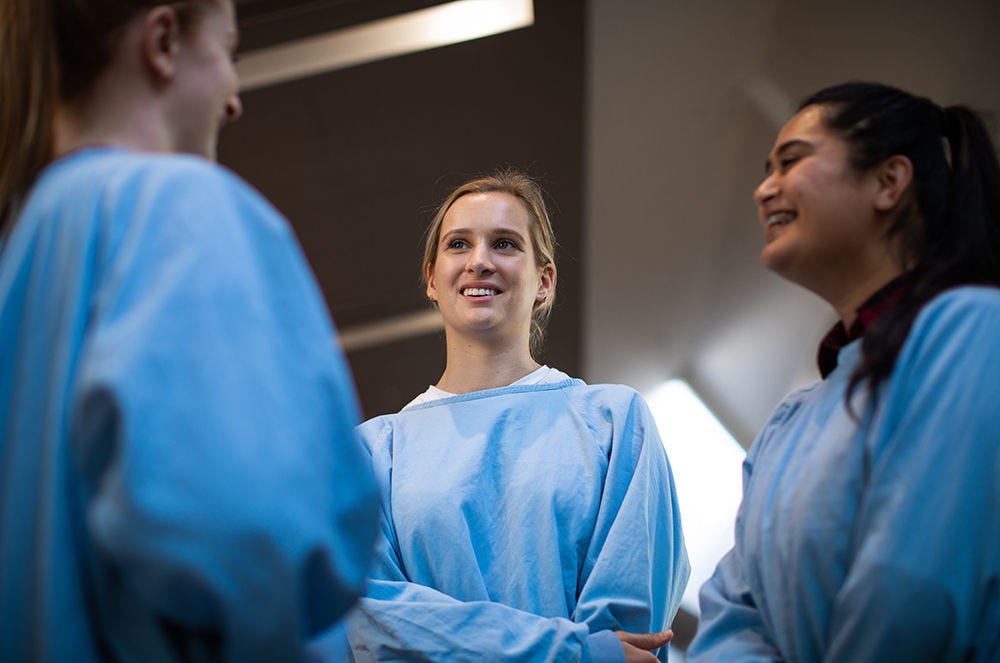
Learn from experienced veterinary nursing and technology academics and clinical veterinary nursing staff in our state-of-the-art teaching hospital where you can apply your learning and deploy your clinical skills whilst building confidence in your practice.
At the end of your first year, you’ll also complete an industry placement where you’ll see first-hand how the knowledge and skills of a veterinary technologist are used in clinical practice. This is followed by substantial clinical placements in the second and third year of the degree. In total, you will complete over 600 hours of industry placements.

Degree Structure: Bachelor of Veterinary Technology
Program code: BVETT
Complete 144 units comprising:
- 108 units for all Core courses, and
- 24 units for all Work integrated learning, and
- 12 units for Electives
Study plan
A study plan sets out the courses you will need to complete and the recommended timing for each one. This will help to guide your enrolment in each study period, alongside any additional information provided below. If you have received a personalised plan or alternative advice from your Program Director, please refer to that guidance in the first instance, or seek help from your Program Director or Student Assist if you are unsure.
Enrolment information
Find details about the rules and notes that apply to your program, along with other essential information required for successful enrolment. Supplementary supporting resources may also be provided where applicable.
Courses
Listed here are all the courses that contribute to your program, including elective options that can be chosen. These courses come together to form your study plan. Courses fall into different categories, each of which have specific unit values that need to be met under the program rules.
What courses you'll study
Complete 144 units comprising:
- 108 units for all Core courses, and
- 24 units for all Work integrated learning, and
- 12 units for Electives
Complete 108 units for ALL of the following:
| Course name | Course code | Units | |
|---|---|---|---|

|
Course name
Animal Handling and Husbandry
|
Course code
ANIM1000
|
Units
6
|
|
|
Course name
Principles of Animal Behaviour, Welfare and Ethics
|
Course code
ANIM1001
|
Units
6
|
|
|
Course name
Foundations of Science for Veterinary Technologists
|
Course code
VETS1000
|
Units
6
|
|
|
Course name
Introduction to Mechanisms of Health
|
Course code
VETS1001
|
Units
6
|
|
|
Course name
Anatomy for Veterinary Technologists
|
Course code
VETS1002
|
Units
6
|
|
|
Course name
Physiology for Veterinary Technologists
|
Course code
VETS1003
|
Units
6
|
|
|
Course name
Evidence-based Veterinary Technology
|
Course code
VETS1004
|
Units
6
|
|
|
Course name
Principles of Veterinary Nursing
|
Course code
VETS1005
|
Units
6
|
|
|
Course name
Animal Microbiology, Virology and Immunology 2
|
Course code
ANIM2004
|
Units
6
|
|
|
Course name
Clinical Studies A
|
Course code
VETS2006
|
Units
6
|
|
|
Course name
Clinical Studies B
|
Course code
VETS2007
|
Units
6
|
|
|
Course name
Pharmacology, Pharmacy and Therapeutics 2
|
Course code
VETS2008
|
Units
6
|
|
|
Course name
Introduction to Workplace Skills 2
|
Course code
VETS2009
|
Units
6
|
|
|
Course name
Pathology for Veterinary Technologists 2
|
Course code
VETS2010
|
Units
6
|
|
|
Course name
Advanced Animal Husbandry for Veterinary Technologists
|
Course code
VETS2011
|
Units
6
|
|
|
Course name
Biosecurity, Epidemiology and Food Safety for Veterinary Technologists
|
Course code
VETS2015
|
Units
6
|
|
|
Course name
Managing Animals in Emergencies
|
Course code
VETS3007
|
Units
6
|
|
|
Course name
Transition to the Veterinary Technology Profession 3 Part A
|
Course code
VETS3008
|
Units
3
|
|
|
Course name
Transition to the Veterinary Technology Profession 3 Part B
|
Course code
VETS3009
|
Units
3
|
Work Integrated Learning description
WIL courses give you real‑world experience as part of your degree.
Complete 24 units for ALL of the following:
| Course name | Course code | Units | |
|---|---|---|---|
|
|
Course name
Clinical Skills in Veterinary Technology 3
|
Course code
VETS3006
|
Units
12
|
|
|
Course name
Clinical Practice in Veterinary Technology 3
|
Course code
VETS3010
|
Units
12
|
Electives description
A flexible course choice within your degree.
Complete 12 units comprising:
- 12 units from Program electives
| Course name | Course code | Units | |
|---|---|---|---|
|
|
Course name
Business Management for Applied Sciences 3
|
Course code
AGRI3001
|
Units
6
|
|
|
Course name
Genes and Inheritance 2
|
Course code
ANIM2005
|
Units
6
|
|
|
Course name
Livestock Production 2
|
Course code
ANIM2006
|
Units
6
|
|
|
Course name
Animal Nutrition and Metabolism 3
|
Course code
ANIM3003
|
Units
6
|
|
|
Course name
Laboratory Animal Science 3
|
Course code
ANIM3010
|
Units
6
|
|
|
Course name
Animals and the Law
|
Course code
ANIM3011
|
Units
6
|
|
|
Course name
Parasitology III
|
Course code
ANIM3012
|
Units
6
|
|
|
Course name
eChallenge
|
Course code
BUSI1005
|
Units
6
|
|
|
Course name
Wildlife Management 2
|
Course code
ENVI2006
|
Units
6
|
|
|
Course name
Ecology and Management of Vertebrate Pests III
|
Course code
HBIO3014
|
Units
6
|
|
|
Course name
Animal Nutrition & Metabolism II (Vet Bio)
|
Course code
VETS2012
|
Units
6
|

Career outcomes
You’ll graduate from Adelaide University with industry skills ready for a dynamic career in high-level animal care roles. You could oversee anaesthesia services for specialist veterinary hospitals. You might work at a zoo and provide nursing care to exotic animals and wildlife. Perhaps you’ll work on an equine breeding farm and direct the nursing care of equine neonates.
Your career options as a veterinary technologist will be extensive and you could provide nursing care to veterinary patients in a variety of settings, including:
- Specialist veterinary care areas such as oncology, medicine, surgery, emergency and critical care and anaesthesia
- Small animal general practice clinics
- Large and production animal veterinary hospitals
- Exotic and wildlife specialist clinics
- Community care and shelter medicine
- Veterinary clinical pathology laboratories
- Animal welfare organisations
- Zoos, aquariums and wildlife sanctuaries
- Animal breeding farms
- Telemedicine and the veterinary insurance industry
- Animal research facilities
- Policy and management
- Tertiary education.
Industry trends
With pet ownership on the rise and a heightened awareness of animal welfare in society, the demand for veterinary services has never been higher. Employment growth is projected to be strong for professionals working with animals (Jobs and Skills Australia, 2023). This means that once you graduate, you'll find plenty of job openings waiting for you.
There is also a steady stream of advanced new tools reimagining what’s possible in the clinical environment – data-driven apps, wearable devices, telemedicine. As a veterinary technologist, you can take advantage of these new technologies, ensuring they deliver maximum benefit to animals’ health and wellbeing.
Ready to apply?


Your study experience and support
Adelaide University sets you up for success in your studies – and your social life. You’ll have access to work placement and internship opportunities, overseas study tours and exchanges, networking events with guest speakers and more. Our campuses are equipped with purpose-built facilities including lecture theatres, libraries, workshops, laboratories, and spaces that simulate real work environments. These are all supported by the latest technologies and a 24/7 online learning platform with personalised study information and resources.
You’ll have everything you need to live well and thrive during your studies, with health services on campus, gymnasiums, technology zones and modern student lounges. Get involved in campus sport or join our student clubs that will connect you to your passions – and the people who share them.
Adelaide also has a variety of accommodation options to suit your individual requirements and budget, with options ranging from dedicated student accommodation to private rentals. One of the world’s most liveable cities, Adelaide has lots of leafy parks, gardens and social hubs – and some of the highest living standards globally. No matter where you are in Adelaide, you’re only a short distance from beaches, vineyards, museums, art galleries, restaurants, bars and parklands. Visit the accommodation web page to find out more.
Student services
We’re here to support you on your student journey. Adelaide University offers a range of support services and facilities, including:
- Career advice and mentoring services
- Personal counselling
- LGBTQIA+ support
- Academic support
- Fees and finance help
- Security services
- Accommodation services
- Common rooms
- Prayer rooms.
You’ll also have unlimited access to our dedicated student support hub. Visit in-person or online, or contact our friendly team by phone. We can assist you with anything study-related including enrolment, identification cards, timetables, fees and more.

Your program team
Dr Courtnay Baskerville
Program Director
College of Science
School of Animal and Veterinary Sciences

Your campus
You'll be studying at one of our renowned campuses, accessing cutting-edge facilities and contemporary study spaces.
Study hours
Your courses will require a combination of different learning formats, including lectures, tutorials, workshops, seminars and practicals. Aside from your classes, you’ll also need to allocate additional time for independent study. This may include assignments, readings, projects and contributing to online discussion forums. As a rough guide, full-time studies may require 12-26 hours of class time and 14-18 hours of independent study per week.
Assessment
During your studies at Adelaide University, you’ll complete a mixture of practical, professional and research-based learning. Your assessment types will vary depending on the degree you’re studying, but may include:
- Case studies
- Essays and assignments
- Examinations
- Group projects
- Internships and placements
- Practicals
- Presentations
- Reports and project documentations
- Research projects
- Workplace and classroom contributions.