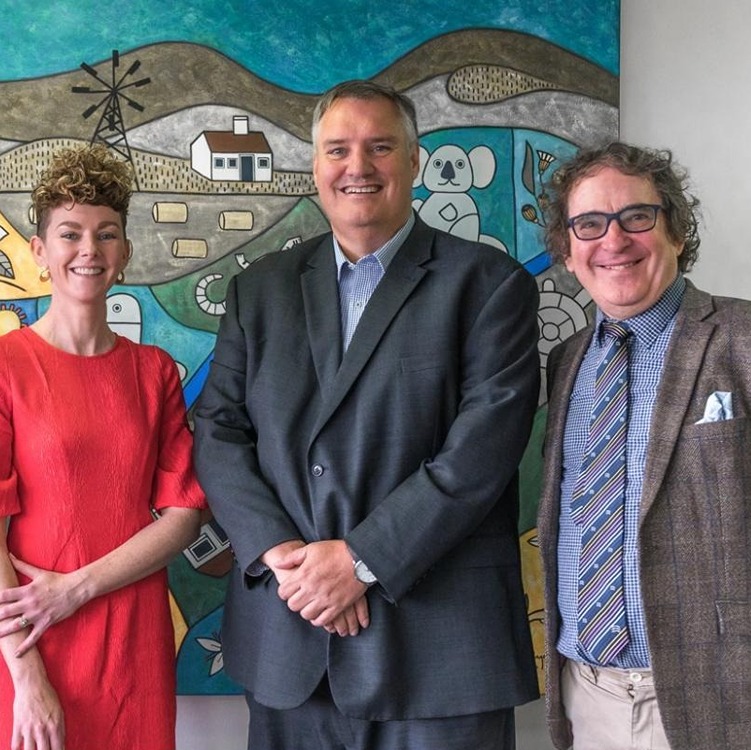
For its review of the Bail Act 1985 (SA), the South Australian Law Reform Institute (SALRI) is now commencing its community engagement, including visits to towns in regional South Australia, to seek input from interested parties and individuals.
As an independent law reform body based at the Adelaide Law School at Adelaide University, SALRI’s wide-ranging review is assessing the Act's practical operation and role in the criminal justice system.
It is also examining if the Act is balancing the rights of an accused with the safety of the community. SALRI is not looking at the age of criminal responsibility as part of this review.
SALRI Deputy Director, Associate Professor David Plater, highlighted the importance of SALRI's active and inclusive engagement with formal consultation running until 27 November.
“We have already carried out a great deal of research and scoping. We are now starting our formal engagement,” Associate Professor Plater said.
“We want to hear from a wide range of views and perspectives, including from regional and Aboriginal communities. There are various ways parties can share their views. We are keen to hear from members of the community.”
SALRI will be carrying out the following regional trips:
- Mount Gambier from 14 to 16 October
- Berri from 22 to 23 October
- Clare and Jamestown from 12 to 13 November
- Port Pirie and Port Augusta from 18 to 20 November
Experts, peak bodies, community organisations, practitioners and any interested parties are encouraged to provide their input as a part of the engagement process. SALRI will be holding roundtables and meetings with peak bodies and interested parties in metropolitan Adelaide from September to October.
Currently in South Australia, bail can be granted by police or by the court. Police bail is usually granted after arrest, while court bail can be applied for if police bail is refused or if other circumstances exist.
There is a general rule in favour of the grant of bail, but bail may be refused and an accused person remanded in custody until their case is resolved in various situations. When an alleged offender is granted bail, they are released from police custody and are able to stay in the community while their case is pending, however, they must follow specific conditions, otherwise the bail can be revoked.
“Determining whether an individual is to remain in custody or whether they are to be released on bail, and under what conditions, involves a complex balancing exercise of factors in any given case,” said SALRI researcher Millie Campbell.
“Current laws in South Australia set out what factors are relevant to the granting of bail and, in some cases, impose a presumption for or against bail.”
The review is commissioned by the Attorney-General with the report to be published in 2027.
SALRI Director, Professor John Williams, said this important project raises various issues and perspectives.
“Bail is especially topical. The Attorney-General's terms of reference raise several key issues and competing interests that will all need to be considered,” Professor Williams said.
“SALRI is carefully and impartially looking at the various issues and implications associated with bail.”
Professor Williams, Associate Professor Plater and Campbell are joined in the SALRI team by The Hon Geoff Muecke, Lisa Cooper and researchers Sam Rees, Sarah De Gennaro, Anita Brunacci, Taylor Portelli, Jemma Holt and Brooke Washusen.
Further information about SALRI, the review and the ways parties can contribute can be found here.
Photo: (L-R) Members of the SALRI team, The Hon Geoff Muecke, Jemma Holt, Professor John Williams and Associate Professor David Plater
Media contacts:
Associate Professor David Plater, Deputy Director, SA Law Reform Institute, Adelaide University. Email: david.plater@adelaide.edu.au
Millie Campbell, Research Assistant, SA Law Reform Institute, Adelaide University. Email: amelia.campbell@adelaide.edu.au
Brooke Washusen, Research Assistant, SA Law Reform Institute, Adelaide University. Email: brooke.washusen@adelaide.edu.au
Lara Pacillo, Media Officer, Adelaide University. Mobile: +61 403 659 154. Email: lara.pacillo@adelaide.edu.au