

Why Bachelor of Food and Nutrition Science (Honours)?
Food and health are two of the biggest challenges of our time.
How do we feed people in a changing world? Reduce waste? Improve sustainability? Make healthier options more accessible?
This degree explores the science behind what we eat: how nutrients work, how food is processed and how diet impacts health, performance and wellbeing. You’ll investigate the links between food, disease, sustainability and public health, and build the skills to make a real difference.
The Honours year will set you apart to future employers as someone with deep knowledge, focus and experience.
Overview
Our Bachelor of Food and Nutrition Science (Honours) prepares you to educate and innovate in food.
You’ll study digestion, metabolism, gut health and chronic disease. Learn how to assess diets, analyse food products and make evidence-based decisions in the field. Investigate how food is made, tested and regulated. Explore different approaches to food packaging and marketing.
You’ll also analyse the social and cultural sides of nutrition – understanding why people eat the way they do, and how to communicate health advice that makes sense.
Along the way, you’ll develop your research, communication and critical thinking skills. You’ll learn how to use data, work in food science facilities and conduct experiments.
In your Honours year, you’ll deepen your knowledge with a major research project. This will show future employees you can work independently and apply scientific methods to real problems.
Key features
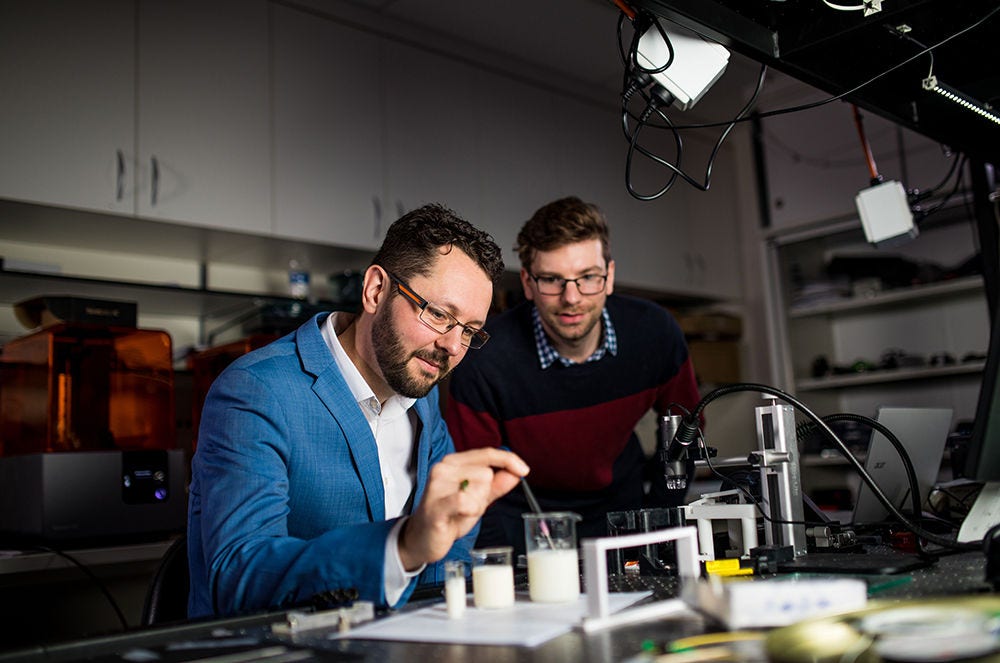
 Get hands-on experience in food science labs and kitchen facilities.
 - Explore food systems and production from ‘farm-gate to fork’.
- Complete 120 hours of placement in a food, nutrition or health organisation.
- Learn alongside leading researchers.
- Experiment with flavours and chemical composition in the lab.
- Signal your expertise and ambition by completing a research-focused Honours year.
What you'll learn
In the first three years of the Bachelor of Food and Nutrition Science (Honours), you’ll build a strong foundation in food and health.
You’ll investigate global issues like food security and population health, exploring different ways to feed the world into the future. You’ll learn all about food systems and production, understanding the entire food journey from ‘farm-gate to fork’.
You’ll complete 120 hours of hands-on placement in a food, nutrition or health organisation. Study how to design, formulate, produce, package and market foods. Develop the skills to use and alter food to combat diet-related health issues.
In the lab, you’ll experiment with chemical composition and flavour combinations and explore ways to develop food supplies that are sustainable, nutritious, safe and healthy.
In your Honours year, you’ll take on a major research project to deepen your knowledge and skills, preparing you for higher-level study or specialised work in the field.

Degree Structure: Bachelor of Food and Nutrition Science (Honours)
Program code: HFNSC
Complete 192 units comprising:
- 108 units for all Core courses, and
- 30 units for Electives, and
- 6 units from Work integrated learning course, and
- 48 units from Honours courses
Enrolment information
Find details about the rules and notes that apply to your program, along with other essential information required for successful enrolment. Supplementary supporting resources may also be provided where applicable.
Courses
Listed here are all the courses that contribute to your program, including elective options that can be chosen. These courses come together to form your study plan. Courses fall into different categories, each of which have specific unit values that need to be met under the program rules.
What courses you'll study
Complete 192 units comprising:
- 108 units for all Core courses, and
- 30 units for Electives, and
- 6 units from Work integrated learning course, and
- 48 units from Honours courses
Complete 108 units for ALL of the following:
| Course name | Course code | Units | |
|---|---|---|---|

|
Course name
Biology 1A: Molecules, Genes and Cells
|
Course code
BIOL1003
|
Units
6
|
|
|
Course name
Biology 1C: Molecular Biology and Biomedical Science
|
Course code
BIOL1031
|
Units
6
|
|
|
Course name
Biochemistry 2: Metabolism
|
Course code
BIOL2015
|
Units
6
|
|
|
Course name
Foundations in Chemistry
|
Course code
CHEM1000
|
Units
6
|
|
|
Course name
Food Chemistry
|
Course code
CHEMX200
|
Units
6
|
|
|
Course name
Food Processing and Safety
|
Course code
ENGPX415
|
Units
6
|
|
|
Course name
Introduction to Food and Science Technology
|
Course code
FOOD1000
|
Units
6
|
|
|
Course name
Food Processing and Manufacturing
|
Course code
FOOD3003
|
Units
6
|
|
|
Course name
Food Product Development 3
|
Course code
FOOD3004
|
Units
6
|
|
|
Course name
Future Foods
|
Course code
FOOD3005
|
Units
6
|
|
|
Course name
Advanced Food Microbiology
|
Course code
FOOD3015
|
Units
6
|
|
|
Course name
Sensory Evaluations of Food
|
Course code
FOODX200
|
Units
6
|
|
|
Course name
Introduction to Nutrition
|
Course code
NUTR1000
|
Units
6
|
|
|
Course name
Lifespan Nutrition Physiology
|
Course code
NUTR2001
|
Units
6
|
|
|
Course name
Science of People, Society and the Future Planet
|
Course code
SCIE1001
|
Units
6
|
|
|
Course name
Data Skills for Scientists
|
Course code
STAT1000
|
Units
6
|
|
|
Course name
Food Microbiology
|
Course code
FOODX401
|
Units
6
|
|
|
Course name
Food Quality and Regulation
|
Course code
FOODX402
|
Units
6
|
Electives description
A flexible course choice within your degree.
Complete 30 units comprising:
- 30 units from University-wide electives
A full list of university-wide elective options can be accessed below.
University-wide elective optionsComplete exactly 6 units from the following:
| Course name | Course code | Units | |
|---|---|---|---|
|
|
Course name
Food Science Placement
|
Course code
FOOD3900
|
Units
6
|
Complete exactly 48 units from the following:
| Course name | Course code | Units | |
|---|---|---|---|
|
|
Course name
Advanced Plant, Food and Soil Sciences
|
Course code
AGRI4002
|
Units
12
|
|
|
Course name
Honours Plant, Food and Soil Sciences Project
|
Course code
AGRI4003
|
Units
36
|

Career outcomes
You’ll graduate equipped to solve real challenges in the field – from nutrition-related disease to food sustainability.
You could create a game-changing high-protein snack out of crickets or mealworms. You might join a public health team tackling malnutrition in remote communities. Perhaps you’ll run lab trials to trace allergens or contaminants before food hits the shelves.
You could also be a:
- Health promotion officer
- Food product developer
- Quality assurance officer
- Community educator
- Regulatory officer
- Policy advisor
- Food scientist.
Or, use your Honours year to step into postgraduate research or a master’s degree in dietetics.
Industry trends
The sustainable production of quality food and nutrition is a thriving, multi-billion-dollar global industry.
With population growth and climate change putting pressure on food systems, innovation is key to the future of food production. Emerging industries like alternative proteins, protected cropping and vertical farming are primed to strengthen food security, grow the economy and create jobs (Australian Food Story: Feeding the Nation and Beyond, 2023).
Studying a Bachelor of Food and Nutrition Science (Honours) at Adelaide University puts you at the centre of this growing field, opening doors to exciting, future-focused careers.
Ready to apply?


Please note that a non-refundable application fee of AUD$150 applies for every application submitted to Adelaide University.

Your study experience and support
Adelaide University sets you up for success in your studies – and your social life. You’ll have access to work placement and internship opportunities, overseas study tours and exchanges, networking events with guest speakers and more. Our campuses are equipped with purpose-built facilities including lecture theatres, libraries, workshops, laboratories, and spaces that simulate real work environments. These are all supported by the latest technologies and a 24/7 online learning platform with personalised study information and resources.
You’ll have everything you need to live well and thrive during your studies, with health services on campus, gymnasiums, technology zones and modern student lounges. Get involved in campus sport or join our student clubs that will connect you to your passions – and the people who share them.
Adelaide also has a variety of accommodation options to suit your individual requirements and budget, with options ranging from dedicated student accommodation to private rentals. One of the world’s most liveable cities, Adelaide has lots of leafy parks, gardens and social hubs – and some of the highest living standards globally. No matter where you are in Adelaide, you’re only a short distance from beaches, vineyards, museums, art galleries, restaurants, bars and parklands. Visit the accommodation web page to find out more.
Student services
We’re here to support you on your student journey. Adelaide University offers a range of support services and facilities, including:
- Career advice and mentoring services
- Personal counselling
- LGBTQIA+ support
- Academic support
- Fees and finance help
- Security services
- Accommodation services
- Common rooms
- Prayer rooms.
You’ll also have unlimited access to our dedicated student support hub. Visit in-person or online, or contact our friendly team by phone. We can assist you with anything study-related including enrolment, identification cards, timetables, fees and more.

Your campus
You'll be studying at one of our renowned campuses, accessing cutting-edge facilities and contemporary study spaces.
Study hours
Your courses will require a combination of different learning formats, including lectures, tutorials, workshops, seminars and practicals. Aside from your classes, you’ll also need to allocate additional time for independent study. This may include assignments, readings, projects and contributing to online discussion forums. As a rough guide, full-time studies may require 12-26 hours of class time and 14-18 hours of independent study per week.
Assessment
During your studies at Adelaide University, you’ll complete a mixture of practical, professional and research-based learning. Your assessment types will vary depending on the degree you’re studying, but may include:
- Case studies
- Essays and assignments
- Examinations
- Group projects
- Internships and placements
- Practicals
- Presentations
- Reports and project documentations
- Research projects
- Workplace and classroom contributions.