

Why Associate Degree in Building Studies?
Start constructing your future, overseeing building projects from inception to completion.
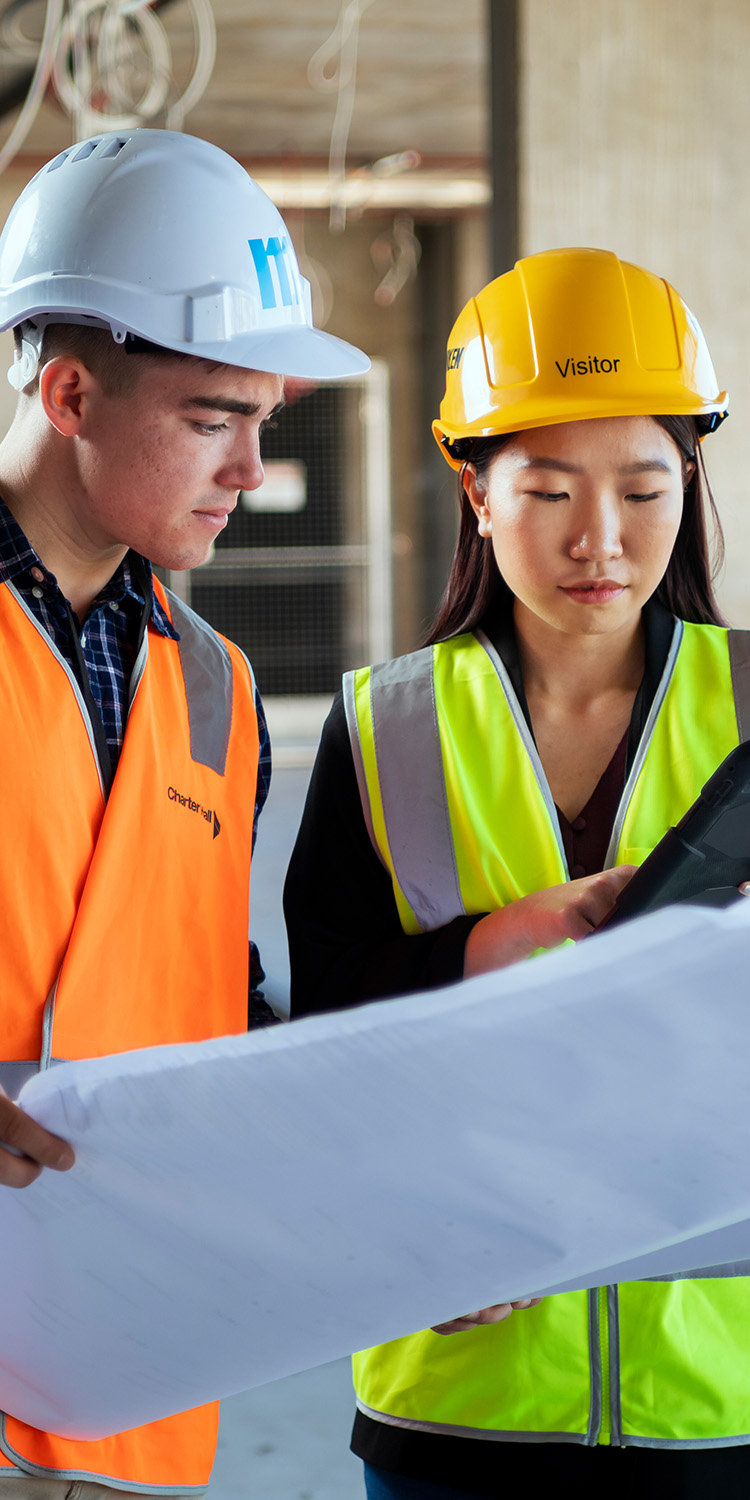
If you are innovative, organised and have an interest in creating sustainable, smart buildings and infrastructure, the Associate Degree in Building Studies is for you. Fast-track your learning by studying the same first two years as our Bachelor of Construction Management (Honours) degree and graduate ready to oversee the construction of homes, hospitals, schools, railway stations, roads, wastewater treatment plants or power plants. You’ll be able to balance contractors, materials and legalities – all while ensuring projects are delivered safely, on-time and within budget.

Overview
Adelaide University’s Associate Degree in Building Studies comprises the first two years of our Bachelor of Construction Management (Honours) degree. It’s a fast-tracked option to gain a university qualification. If you’ve studied before, this associate degree can build on your qualifications, giving you the knowledge to move into a different role within your industry. If you’re looking to change careers, it can help you pivot into the construction industry, bridging any skills gaps you may have.
Across the two years, you’ll learn the economic principles and legal rules that guide the building industry. You’ll discover how to manage and organise construction projects, and explore the design and construction of buildings and structures. Find out about construction techniques and technologies, and how buildings function. You’ll also have opportunities to learn from leading experts in construction management and access the latest teaching technologies, including virtual reality.
As a graduate, you could find work helping manage all kinds of projects – including commercial, infrastructure and residential builds. Or, complete an additional year of study to attain a bachelor’s qualification in construction management.
Key features
 Fast-track your studies with a two-year Associate Degree.
- Pivot into a new field or into another role within the construction industry.
- Use your credit to complete a bachelor's degree with just one additional year of study.
- Access state-of-the-art technologies including virtual reality.
- Be taught by industry professionals in the construction industry.
- Learn how to plan, schedule and coordinate building projects safely, on-time and within budget.
What you'll learn
This program will develop your understanding of the entire project lifecycle. You’ll explore modern project management techniques, build expertise in evaluating building for compliance, and develop the required financial knowledge to accurately forecast project costs.
In first year, you’ll study a variety of fundamental topics, including an introduction to construction management and communication. You’ll study low-rise construction, land surveying, construction economics and procurement, construction science and materials, and digital construction. You’ll also build an understanding of construction technology and site organisation. Upskill your management abilities and learn how to apply micro-economic and macro-economic theory to construction projects.
In your second year, you’ll extend your learning with courses in high-rise construction, construction planning and safety, development regulations and building codes. You’ll also explore construction contract administration and infrastructure construction. Build your understanding of site planning, scheduling, procurement and construction safety. Investigate key Australian legal principles in construction, and further your refine your quantity surveying and cost estimating skills.
Tailor your learning by selecting elective courses, which may include topics in:
- Digital design communications
- Environmental planning, climate change and sustainability
- Urban design for health and sustainability
- Interiors construction
- Environmental design and the sensory body
- Engineering project management
- Project management methodologies and concepts.

Degree Structure: Associate Degree in Building Studies
Program code: ADBLD
Complete 96 units comprising:
- 84 units for Core courses, and
- 12 units for Electives
Study plan
A study plan sets out the courses you will need to complete and the recommended timing for each one. This will help to guide your enrolment in each study period, alongside any additional information provided below. If you have received a personalised plan or alternative advice from your Program Director, please refer to that guidance in the first instance, or seek help from your Program Director or Student Assist if you are unsure.
Courses
Listed here are all the courses that contribute to your program, including elective options that can be chosen. These courses come together to form your study plan. Courses fall into different categories, each of which have specific unit values that need to be met under the program rules.
What courses you'll study
Complete 96 units comprising:
- 84 units for Core courses, and
- 12 units for Electives
Complete 84 units comprising:
- 12 units from Common core, and
- 72 units for all Program core
Common core description
Common core courses are interdisciplinary courses that build key graduate capabilities.
| Course name | Course code | Units | |
|---|---|---|---|

|
Course name
An Ethically Rich Life
|
Course code
COREX001
|
Units
6
|
|
|
Course name
Fact or Fiction: Data for Everyone
|
Course code
COREX002
|
Units
6
|
|
|
Course name
Igniting Change: Ideas to Action
|
Course code
COREX003
|
Units
6
|
|
|
Course name
Transforming Learning through First Nations Knowledges
|
Course code
COREX004
|
Units
6
|
|
|
Course name
Responsible AI: Bridging Ethics, Education and Industry
|
Course code
COREX005
|
Units
6
|
|
|
Course name
Building Belonging: Navigating Cultural Complexities
|
Course code
COREX006
|
Units
6
|
| Course name | Course code | Units | |
|---|---|---|---|
|
|
Course name
Low-rise Construction and Land Surveying
|
Course code
BLDG1002
|
Units
6
|
|
|
Course name
Construction Economics and Procurement
|
Course code
BLDG1001
|
Units
6
|
|
|
Course name
Introduction to Construction Management
|
Course code
BLDG1000
|
Units
6
|
|
|
Course name
Construction Communication and Digital Construction Fundamentals
|
Course code
BLDG1004
|
Units
6
|
|
|
Course name
Quantity Surveying Fundamentals and Cost Estimating
|
Course code
BLDG2003
|
Units
6
|
|
|
Course name
Infrastructure Construction
|
Course code
BLDG2004
|
Units
6
|
|
|
Course name
Construction Planning and Safety
|
Course code
BLDG2001
|
Units
6
|
|
|
Course name
Structures
|
Course code
ARCH1010
|
Units
6
|
|
|
Course name
Construction Science and Materials
|
Course code
ARCH1009
|
Units
6
|
|
|
Course name
High-rise Construction
|
Course code
ARCH2010
|
Units
6
|
|
|
Course name
Development Regulations and Building Codes
|
Course code
BLDG2002
|
Units
6
|
|
|
Course name
Construction Contract Administration
|
Course code
BLDG4007
|
Units
6
|
Electives description
A flexible course choice within your degree.
Complete 12 units comprising:
- 12 units from Program electives
| Course name | Course code | Units | |
|---|---|---|---|
|
|
Course name
Environmental Design and the Sensory Body
|
Course code
ARCH1006
|
Units
6
|
|
|
Course name
Digital Design Communications
|
Course code
ARCH2007
|
Units
6
|
|
|
Course name
Urban Design for Health and Sustainability
|
Course code
ARCHX304
|
Units
6
|
|
|
Course name
Environmental Planning, Climate Change and Sustainability
|
Course code
ENVIX300
|
Units
6
|
|
|
Course name
Interiors Construction
|
Course code
INTE1002
|
Units
6
|
|
|
Course name
Project Management Methodologies and Concepts
|
Course code
PROJ2002
|
Units
6
|

Career outcomes
The technical and practical skills gained throughout this degree will prepare you for a range of roles in construction. You could manage all kinds of projects across the commercial, infrastructure and residential sectors. You might help plan, schedule and coordinate the building of a new hospital as a project coordinator. Perhaps you’ll keep all workers safe onsite, ensuring necessary training and compliance with health and safety regulations as a safety coordinator.
Depending on your experience and qualifications, potential careers include:
- Construction manager
- Construction planner
- Estimator
- Quantity surveyor
- Building surveyor
- Contract administrator
- Site manager.
Industry trends
The construction industry in Australia is experiencing significant demand, particularly for project managers, estimators, and quantity surveyors (Jobs and Skills Australia, 2024). Additionally, sustainability targets are expected to generate $1.8 trillion in market opportunities within the global building industry (World Economic Forum and Boston Consulting Group, 2024). Play a vital role in modern construction practice, helping cut down carbon emissions and advocating for more sustainable processes. Experience diverse job prospects when you join the building sector as an Adelaide University graduate.
Ready to apply?


Your study experience and support
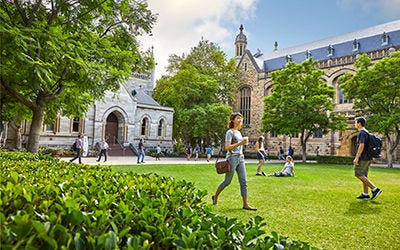
Adelaide University sets you up for success in your studies – and your social life. You’ll have access to work placement and internship opportunities, overseas study tours and exchanges, networking events with guest speakers and more. Our campuses are equipped with purpose-built facilities including lecture theatres, libraries, workshops, laboratories, and spaces that simulate real work environments. These are all supported by the latest technologies and a 24/7 online learning platform with personalised study information and resources.
You’ll have everything you need to live well and thrive during your studies, with health services on campus, gymnasiums, technology zones and modern student lounges. Get involved in campus sport or join our student clubs that will connect you to your passions – and the people who share them.
Adelaide also has a variety of accommodation options to suit your individual requirements and budget, with options ranging from dedicated student accommodation to private rentals. One of the world’s most liveable cities, Adelaide has lots of leafy parks, gardens and social hubs – and some of the highest living standards globally. No matter where you are in Adelaide, you’re only a short distance from beaches, vineyards, museums, art galleries, restaurants, bars and parklands. Visit the accommodation web page to find out more.
Student services
We’re here to support you on your student journey. Adelaide University offers a range of support services and facilities, including:
- Career advice and mentoring services
- Personal counselling
- LGBTQIA+ support
- Academic support
- Fees and finance help
- Security services
- Accommodation services
- Common rooms
- Prayer rooms.
You’ll also have unlimited access to our dedicated student support hub. Visit in-person or online, or contact our friendly team by phone. We can assist you with anything study-related including enrolment, identification cards, timetables, fees and more.

Your campus
You'll be studying at one of our renowned campuses, accessing cutting-edge facilities and contemporary study spaces.
Study hours
Your courses will require a combination of different learning formats, including lectures, tutorials, workshops, seminars and practicals. Aside from your classes, you’ll also need to allocate additional time for independent study. This may include assignments, readings, projects and contributing to online discussion forums. As a rough guide, full-time studies may require 12-26 hours of class time and 14-18 hours of independent study per week.
Assessment
During your studies at Adelaide University, you’ll complete a mixture of practical, professional and research-based learning. Your assessment types will vary depending on the degree you’re studying, but may include:
- Case studies
- Essays and assignments
- Examinations
- Group projects
- Internships and placements
- Practicals
- Presentations
- Reports and project documentations
- Research projects
- Workplace and classroom contributions.