

Why Bachelor of Science?
Do you want to immerse yourself in the world of good food – and get paid for it? This is where science, technology, creativity and societal impact come together.
Food scientists experiment with exciting technologies, from processing tools to nanotechnology. They invent new foods and flavours, collaborating with chefs, engineers and marketers to bring bold ideas to life.
As you innovate and adapt food products for the future, you’ll be at the forefront of creating sustainable solutions. You could help make delicious, nutritious food accessible to all, or prevent foodborne illnesses and improve public health.
Food matters, and as a food scientist, you can make a real difference in people’s lives. You’ll build a versatile and globally relevant career – because people will always need to eat.
Overview
Our Bachelor of Science majoring in Food Science and Technology teaches you to innovate and push the boundaries with food. It covers foundational chemistry and biology, with specialised courses in nutrition, microbiology, food science and technology.
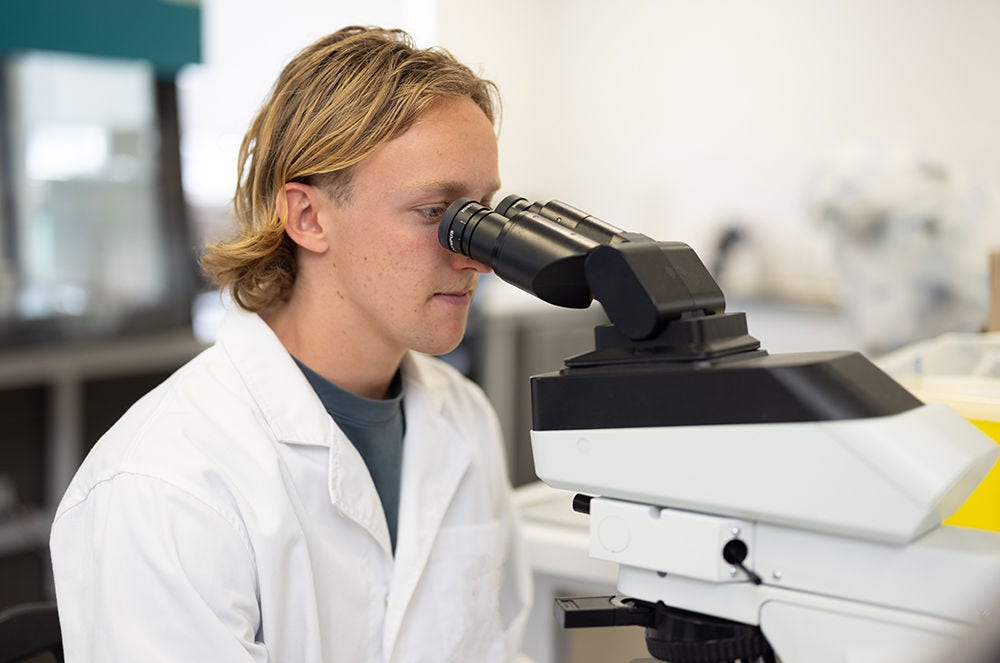
Hone your practical skills in purpose-built food laboratories, sensory booths, commercial kitchens and biomedical facilities.
Experience the full production journey as you design, create and package food in line with industry standards. Get familiar with key technologies like pasteurisation, sterilisation and fermentation. Use sensory analysis to assess products, experimenting with different smells, textures and flavours.
We deep-dive into future industry trends, ethical considerations and regulatory requirements – preparing you for the global shift towards more sustainable food production. You’ll gain real-world experience in the wider food industry, building professional connections and applying food science on the job.
You'll build highly transferable scientific and technical skills and graduate ready for dynamic careers around the globe, with excellent job security in a growing field.
Key features
Fast-track your future in science and research
Choose the 4-year Bachelor of Science (Honours) to build advanced research skills, or fast-track into a Master of Research with just 1–1.25 years of extra study.
 Explore the chemistry and business of food in depth.
 - Design, create and package real products under industry-standard conditions.
- Use your senses to analyse and evaluate food properties.
- Get familiar with quality assurance, food safety and regulatory requirements.
- Innovate and experiment in food labs, sensory booths, commercial kitchens and biomedical facilities.
- Learn about Aboriginal food systems to inform sustainable production.
What you'll learn
Our Bachelor of Science majoring in Food Science and Technology covers foundational chemistry and biology, as well as more specific courses in nutrition, microbiology, food science and food technology.
Work to real industry standards as you design, formulate, produce, package, and market a variety of food products. Experience the full spectrum of preservation, processing and handling for fresh fruits, vegetables, grains, pulses, fish, red meat and milk.
Learn all about the processing technologies used to control microbial growth and extend shelf life, including:
- pasteurisation
- sterilisation
- blanching
- fermentation
- dehydration
- canning
- vacuum packaging.
Use sensory analysis techniques to evaluate the appearance, aroma, flavour, texture and even sound of food and beverages, ensuring products are consistent and meet consumer expectations.
Explore future trends and challenges in the food industry, such as:
- sustainable food production
- food waste reduction
- alternative protein sources
- nutrient replacements
- aquaculture
- space foods
- Aboriginal food systems
- the impact of microplastics
- ultra- processed foods
- edible packaging
- transgenic crops.
Understand ethical considerations and regulatory requirements for food quality and safety and build your communication expertise. Develop fundamental laboratory skills through laboratory practicals. In your final year, gain real-world experience with an 80-hour industry placement or project.
Courses include:
- Nutrition science
- Food science
- Food microbiology
- Food chemistry
- Sensory evaluations of food
- Food safety regulation
- Food preservation, processing and packaging
- Food product development
- Future foods.
You can also expand your career potential with electives from across Adelaide University in areas like Health, Business and Biotechnology.
Majors
The Bachelor of Science is also available with majors in the following:

Degree Structure: Bachelor of Science majoring in Food Science and Technology
Program code: BSCIE
Complete 144 units comprising:
- 42 to 54 units for Core Courses, and
- Either:
- 78 to 102 units for one Major from Majors, or
- 54 units for Discipline courses, and
- 0 to 48 units for Electives
Study plan
A study plan sets out the courses you will need to complete and the recommended timing for each one. This will help to guide your enrolment in each study period, alongside any additional information provided below. If you have received a personalised plan or alternative advice from your Program Director, please refer to that guidance in the first instance, or seek help from your Program Director or Student Assist if you are unsure.
Enrolment information
Find details about the rules and notes that apply to your program, along with other essential information required for successful enrolment. Supplementary supporting resources may also be provided where applicable.
Courses
Listed here are all the courses that contribute to your program, including elective options that can be chosen. These courses come together to form your study plan. Courses fall into different categories, each of which have specific unit values that need to be met under the program rules.
What courses you'll study
Complete 144 units comprising:
- 42 to 54 units for Core Courses, and
- Either:
- 78 to 102 units for one Major from Majors, or
- 54 units for Discipline courses, and
- 0 to 48 units for Electives
Complete 42 to 54 units comprising:
- 6 to 12 units for all Program Core, and
- 12 to 18 units from Common Core, and
- 6 to 30 units from Core Selective
| Course name | Course code | Units | |
|---|---|---|---|

|
Course name
Science of People, Society and the Future Planet
|
Course code
SCIE1001
|
Units
6
|
|
|
Course name
Data Skills for Scientists
|
Course code
STAT1000
|
Units
6
|
Common core description
Common core courses are interdisciplinary courses that build key graduate capabilities.
| Course name | Course code | Units | |
|---|---|---|---|
|
|
Course name
An Ethically Rich Life
|
Course code
COREX001
|
Units
6
|
|
|
Course name
Fact or Fiction: Data for Everyone
|
Course code
COREX002
|
Units
6
|
|
|
Course name
Igniting Change: Ideas to Action
|
Course code
COREX003
|
Units
6
|
|
|
Course name
Transforming Learning through First Nations Knowledges
|
Course code
COREX004
|
Units
6
|
|
|
Course name
Responsible AI: Bridging Ethics, Education and Industry
|
Course code
COREX005
|
Units
6
|
|
|
Course name
Building Belonging: Navigating Cultural Complexities
|
Course code
COREX006
|
Units
6
|
| Course name | Course code | Units | |
|---|---|---|---|
|
|
Course name
Biology 1A: Molecules, Genes and Cells
|
Course code
BIOL1003
|
Units
6
|
|
|
Course name
Biology 1B: Evolution and Diversity of Organisms
|
Course code
BIOL1004
|
Units
6
|
|
|
Course name
Foundations in Chemistry
|
Course code
CHEM1000
|
Units
6
|
|
|
Course name
Chemistry 1A
|
Course code
CHEM1002
|
Units
6
|
|
|
Course name
Chemistry 1B
|
Course code
CHEM1003
|
Units
6
|
|
|
Course name
Planet Earth
|
Course code
EART1000
|
Units
6
|
|
|
Course name
Earth, Climate and Life Systems
|
Course code
EART1012
|
Units
6
|
|
|
Course name
Foundations in Mathematics
|
Course code
MATH1000
|
Units
6
|
|
|
Course name
Calculus 1
|
Course code
MATH1004
|
Units
6
|
|
|
Course name
Calculus 2
|
Course code
MATH1005
|
Units
6
|
|
|
Course name
Essential Mathematics
|
Course code
MATH1015
|
Units
6
|
|
|
Course name
Linear Algebra
|
Course code
MATHX104
|
Units
6
|
|
|
Course name
Differential Equations
|
Course code
MATHX202
|
Units
6
|
|
|
Course name
Foundations in Physics
|
Course code
PHYS1000
|
Units
6
|
|
|
Course name
Physics 1A
|
Course code
PHYS1001
|
Units
6
|
|
|
Course name
Physics 1B
|
Course code
PHYS1002
|
Units
6
|
Notes
-
Program Core - Students in the following Majors will not enrol in STAT1000 Data Skills for Scientists:
Computational Physics, Experimental Physics, Nuclear and Radiation Physics, Physics and Geophysics, Space Science and Astrophysics, Theoretical Physics
Complete 72 units for ALL of the following:
| Course name | Course code | Units | |
|---|---|---|---|
|
|
Course name
Introduction to Food and Science Technology
|
Course code
FOOD1000
|
Units
6
|
|
|
Course name
Sensory Evaluations of Food
|
Course code
FOODX200
|
Units
6
|
|
|
Course name
Food Processing and Safety
|
Course code
ENGPX415
|
Units
6
|
|
|
Course name
Food Chemistry
|
Course code
CHEMX200
|
Units
6
|
|
|
Course name
Food Processing and Manufacturing
|
Course code
FOOD3003
|
Units
6
|
|
|
Course name
Food Product Development 3
|
Course code
FOOD3004
|
Units
6
|
|
|
Course name
Advanced Food Microbiology
|
Course code
FOOD3015
|
Units
6
|
|
|
Course name
Foundations in Mathematics
|
Course code
MATH1000
|
Units
6
|
|
|
Course name
Introduction to Nutrition
|
Course code
NUTR1000
|
Units
6
|
|
|
Course name
Advances in Food and Nutrition
|
Course code
FOODX400
|
Units
6
|
|
|
Course name
Food Microbiology
|
Course code
FOODX401
|
Units
6
|
|
|
Course name
Food Quality and Regulation
|
Course code
FOODX402
|
Units
6
|
Electives description
A flexible course choice within your degree.
Complete 0 to 48 units for either of the following:
- 0 to 48 units from Free Electives, or
- 0 to 48 units from Electives - unspecified plan
| Course name | Course code | Units | |
|---|---|---|---|
|
|
Course name
Agricultural Production
|
Course code
AGRI1000
|
Units
6
|
|
|
Course name
Soils and Landscapes
|
Course code
AGRI1003
|
Units
6
|
|
|
Course name
Environmental Sustainability and Soil Carbon 2
|
Course code
AGRI2000
|
Units
6
|
|
|
Course name
Soil and Water Resources
|
Course code
AGRI2004
|
Units
6
|
|
|
Course name
Crop and Pasture Production
|
Course code
AGRI2005
|
Units
6
|
|
|
Course name
Agricultural Biochemistry
|
Course code
AGRI2006
|
Units
6
|
|
|
Course name
Microbiology and Invertebrate Biology
|
Course code
AGRI2013
|
Units
6
|
|
|
Course name
Soil and Water Management and Conservation 3
|
Course code
AGRI3011
|
Units
6
|
|
|
Course name
Contaminants in the Agro-ecosystem
|
Course code
AGRI3012
|
Units
6
|
|
|
Course name
Soil and Plant Nutrition
|
Course code
AGRI3013
|
Units
6
|
|
|
Course name
Soil Ecology and Nutrient Cycling 3
|
Course code
AGRI3014
|
Units
6
|
|
|
Course name
Biology 1C: Molecular Biology and Biomedical Science
|
Course code
BIOL1031
|
Units
6
|
|
|
Course name
Ecological Issues 1
|
Course code
BIOL1032
|
Units
6
|
|
|
Course name
Zoology 2
|
Course code
BIOL2004
|
Units
6
|
|
|
Course name
Principles of Biotechnology 2
|
Course code
BIOL2019
|
Units
6
|
|
|
Course name
Botany 2
|
Course code
BIOL2023
|
Units
6
|
|
|
Course name
Foundations in Plant Science
|
Course code
BIOL2024
|
Units
6
|
|
|
Course name
Plant Identification 2
|
Course code
BIOL2049
|
Units
6
|
|
|
Course name
Animal Identification in Wildlife Conservation 2
|
Course code
BIOL2050
|
Units
6
|
|
|
Course name
Principles of Ecology 2
|
Course code
BIOL2051
|
Units
6
|
|
|
Course name
Molecular and Biomedical Science Practical 2
|
Course code
BIOL2900
|
Units
6
|
|
|
Course name
Microbial Ecology
|
Course code
BIOLX200
|
Units
6
|
|
|
Course name
Bioinformatics: Sequencing Technologies
|
Course code
BIOLX401
|
Units
6
|
|
|
Course name
Bioinformatics: Overview
|
Course code
BIOLX402
|
Units
6
|
|
|
Course name
Introduction to Environmental Chemistry
|
Course code
CHEM1004
|
Units
6
|
|
|
Course name
Environmental Chemistry 2
|
Course code
CHEM2010
|
Units
6
|
|
|
Course name
Food Chemistry
|
Course code
CHEMX200
|
Units
6
|
|
|
Course name
Problem Solving and Programming
|
Course code
COMP1002
|
Units
6
|
|
|
Course name
Object-Oriented Programming
|
Course code
COMP1005
|
Units
6
|
|
|
Course name
Extra-terrestrial Geoscience
|
Course code
EART1002
|
Units
6
|
|
|
Course name
Geophysics 2
|
Course code
EART2003
|
Units
6
|
|
|
Course name
Sedimentary Geology 2
|
Course code
EART2008
|
Units
6
|
|
|
Course name
Structural Geology 2
|
Course code
EART2009
|
Units
6
|
|
|
Course name
Igneous and Metamorphic Geology 2
|
Course code
EART2010
|
Units
6
|
|
|
Course name
Geochemistry 2
|
Course code
EART2011
|
Units
6
|
|
|
Course name
Mineral Resources 2
|
Course code
EART2012
|
Units
6
|
|
|
Course name
Palaeontology and Palaeoenvironments 3
|
Course code
EART3001
|
Units
6
|
|
|
Course name
Mineral Resources 3
|
Course code
EART3014
|
Units
6
|
|
|
Course name
Space Missions
|
Course code
EART4005
|
Units
6
|
|
|
Course name
Fire and Culture
|
Course code
EARTX300
|
Units
6
|
|
|
Course name
Earth Observation for the Environmental Sciences
|
Course code
ECOL3001
|
Units
6
|
|
|
Course name
Introduction to Surveying and Spatial Sciences
|
Course code
ENGI1006
|
Units
6
|
|
|
Course name
Introduction to Remote Sensing
|
Course code
ENGI2002
|
Units
6
|
|
|
Course name
Spatial Data Acquisition and Analysis
|
Course code
ENGI2004
|
Units
6
|
|
|
Course name
Food Processing and Safety
|
Course code
ENGPX415
|
Units
6
|
|
|
Course name
Fundamentals of Climate Change
|
Course code
ENVI1001
|
Units
6
|
|
|
Course name
Physical Geography and Human Environmental Impacts
|
Course code
ENVI1010
|
Units
6
|
|
|
Course name
Environmental Interpretation and Community Engagement
|
Course code
ENVI2007
|
Units
6
|
|
|
Course name
Park and Ecotourism Management
|
Course code
ENVI2008
|
Units
6
|
|
|
Course name
Climate and Sustainability
|
Course code
ENVI2010
|
Units
6
|
|
|
Course name
Environmental Impact Assessment 3
|
Course code
ENVI3002
|
Units
6
|
|
|
Course name
GIS for Agriculture and Natural Resources
|
Course code
ENVI3008
|
Units
6
|
|
|
Course name
Environmental Pollution and Monitoring
|
Course code
ENVI3010
|
Units
6
|
|
|
Course name
GIS for Environmental Management
|
Course code
ENVI3011
|
Units
6
|
|
|
Course name
Environmental Technologies 3
|
Course code
ENVI3012
|
Units
6
|
|
|
Course name
Introduction to Food and Science Technology
|
Course code
FOOD1000
|
Units
6
|
|
|
Course name
Future Foods
|
Course code
FOOD3005
|
Units
6
|
|
|
Course name
Advanced Food Microbiology
|
Course code
FOOD3015
|
Units
6
|
|
|
Course name
Sensory Evaluations of Food
|
Course code
FOODX200
|
Units
6
|
|
|
Course name
Food Production in a Future Climate
|
Course code
FOODX300
|
Units
6
|
|
|
Course name
Food Microbiology
|
Course code
FOODX500
|
Units
6
|
|
|
Course name
Food Quality and Regulation
|
Course code
FOODX501
|
Units
6
|
|
|
Course name
Discrete Mathematics
|
Course code
MATH1006
|
Units
6
|
|
|
Course name
Geometry
|
Course code
MATH1007
|
Units
6
|
|
|
Course name
Mathematics in Action
|
Course code
MATH1012
|
Units
6
|
|
|
Course name
Complex Analysis
|
Course code
MATHX100
|
Units
6
|
|
|
Course name
Mathematical Modelling
|
Course code
MATHX103
|
Units
6
|
|
|
Course name
Data Taming and Prediction
|
Course code
MATHX105
|
Units
6
|
|
|
Course name
Critical Evaluation in Data Science
|
Course code
MATHX106
|
Units
6
|
|
|
Course name
Algebra
|
Course code
MATHX201
|
Units
6
|
|
|
Course name
Real Analysis
|
Course code
MATHX206
|
Units
6
|
|
|
Course name
Introduction to Nutrition
|
Course code
NUTR1000
|
Units
6
|
|
|
Course name
Astronomy 1
|
Course code
PHYS1003
|
Units
6
|
|
|
Course name
Nuclear and Radiation Physics 2
|
Course code
PHYS2006
|
Units
6
|
|
|
Course name
Scientific Data: Analysis and Visualisation
|
Course code
SCIE2000
|
Units
6
|
|
|
Course name
Human Behaviour and Conservation 3
|
Course code
SCIE3001
|
Units
6
|
|
|
Course name
Web Cartography
|
Course code
SCIE3003
|
Units
6
|
|
|
Course name
Science International Study Tour
|
Course code
SCIE3009
|
Units
6
|
|
|
Course name
Communicating Science
|
Course code
SCIEX300
|
Units
6
|
|
|
Course name
Probability and Statistics
|
Course code
STATX100
|
Units
6
|
Notes
-
Electives - unspecified plan - The electives listed above are for students in the unspecified plan of the Bachelor of Science. Students in a defined plan should refer to the electives listed within their major.
Complete 6 units for ALL of the following:
| Course name | Course code | Units | |
|---|---|---|---|
|
|
Course name
Food Science Placement
|
Course code
FOOD3900
|
Units
6
|
Complete 24 units for ALL of the following:
| Course name | Course code | Units | |
|---|---|---|---|
|
|
Course name
Agricultural Biochemistry
|
Course code
AGRI2006
|
Units
6
|
|
|
Course name
Nutrition Health and Metabolism
|
Course code
AGRI3020
|
Units
6
|
|
|
Course name
Food Engineering
|
Course code
ENGP2006
|
Units
6
|
|
|
Course name
Future Foods
|
Course code
FOOD3005
|
Units
6
|
|
|
Course name
Brewing Technology and Beer Production 3
|
Course code
FOOD3013
|
Units
6
|
|
|
Course name
Food Production in a Future Climate
|
Course code
FOODX300
|
Units
6
|
|
|
Course name
Nutrition Metabolism
|
Course code
FOODX403
|
Units
6
|
|
|
Course name
Lifespan Nutrition Physiology
|
Course code
NUTR2001
|
Units
6
|
|
|
Course name
Culinary Nutrition
|
Course code
NUTR2002
|
Units
6
|
|
|
Course name
Human Nutrition
|
Course code
NUTR2004
|
Units
6
|
|
|
Course name
Public Health and Community Nutrition
|
Course code
NUTR3003
|
Units
6
|
Notes
Not all recommended electives may be offered every year.

Career outcomes
This degree prepares you for success in food research and development, quality assurance, and various culinary roles at major consumer goods companies and ingredient suppliers. You could be the real-life Willy Wonka, concocting irresistible chocolates or 3D printing lollies. You might advance alternative proteins at a company like Beyond Meat or Impossible Foods. Perhaps you’ll manufacture the perfect chip (hot or not, the challenge is yours).
You could also be a:
- Product development manager
- Microbiology specialist
- Food policy advisor
- Food safety advisor
- Quality assurance officer
- Food technician
- Flavour technologist.
Industry trends
The Australian food and beverage industry exports $40 billion a year – and is growing rapidly. The public and private sectors are on the hunt for talented graduates in food technology and food chemistry, especially those with expertise in food science, quality assurance, product development and food safety. It is very likely that demand for food science and technology graduates will increase in the future due to the growing pressure on food systems created by population growth and climate change. Additionally, providing a secure and sustainable food supply was the focus of a Federal government inquiry in 2023 (Australian Food Story: Feeding the Nation and Beyond). The resulting initiatives could create a new wave of exciting prospects for food scientists, making now the perfect time to enter this delectable field.
Accreditation
Adelaide University is working closely with the Australian Institute of Food Science and Technology (AIFST) to work through relevant approvals for program accreditation.
Ready to apply?


Your study experience and support
Adelaide University sets you up for success in your studies – and your social life. You’ll have access to work placement and internship opportunities, overseas study tours and exchanges, networking events with guest speakers and more. Our campuses are equipped with purpose-built facilities including lecture theatres, libraries, workshops, laboratories, and spaces that simulate real work environments. These are all supported by the latest technologies and a 24/7 online learning platform with personalised study information and resources.
You’ll have everything you need to live well and thrive during your studies, with health services on campus, gymnasiums, technology zones and modern student lounges. Get involved in campus sport or join our student clubs that will connect you to your passions – and the people who share them.
Adelaide also has a variety of accommodation options to suit your individual requirements and budget, with options ranging from dedicated student accommodation to private rentals. One of the world’s most liveable cities, Adelaide has lots of leafy parks, gardens and social hubs – and some of the highest living standards globally. No matter where you are in Adelaide, you’re only a short distance from beaches, vineyards, museums, art galleries, restaurants, bars and parklands. Visit the accommodation web page to find out more.
Student services
We’re here to support you on your student journey. Adelaide University offers a range of support services and facilities, including:
- Career advice and mentoring services
- Personal counselling
- LGBTQIA+ support
- Academic support
- Fees and finance help
- Security services
- Accommodation services
- Common rooms
- Prayer rooms.
You’ll also have unlimited access to our dedicated student support hub. Visit in-person or online, or contact our friendly team by phone. We can assist you with anything study-related including enrolment, identification cards, timetables, fees and more.

Your campus
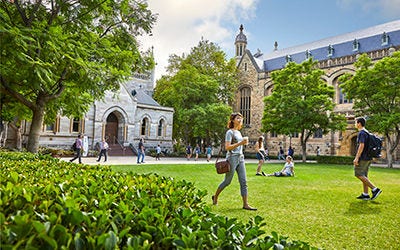
You'll be studying at one of our renowned campuses, accessing cutting-edge facilities and contemporary study spaces.
Study hours
Your courses will require a combination of different learning formats, including lectures, tutorials, workshops, seminars and practicals. Aside from your classes, you’ll also need to allocate additional time for independent study. This may include assignments, readings, projects and contributing to online discussion forums. As a rough guide, full-time studies may require 12-26 hours of class time and 14-18 hours of independent study per week.
Assessment
During your studies at Adelaide University, you’ll complete a mixture of practical, professional and research-based learning. Your assessment types will vary depending on the degree you’re studying, but may include:
- Case studies
- Essays and assignments
- Examinations
- Group projects
- Internships and placements
- Practicals
- Presentations
- Reports and project documentations
- Research projects
- Workplace and classroom contributions.