

Why Bachelor of Science (Honours)?
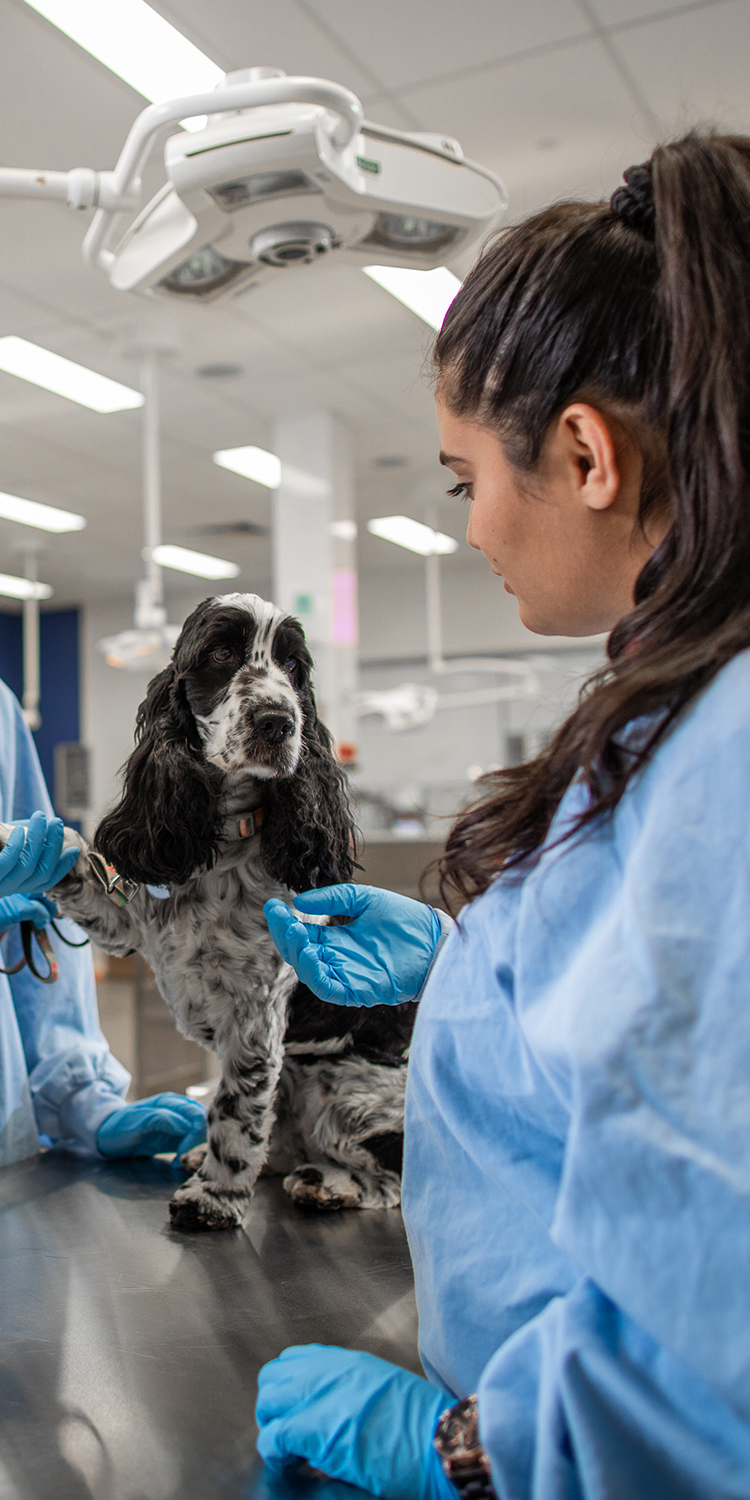
Follow your passion for animals while advancing your scientific knowledge at Adelaide University.
Learn to care for and manage diverse species, from livestock and pets to zoo animals and wildlife. Gain research skills to drive innovation and improve the health, welfare and productivity of creatures great and small. Join a field that empowers you to make a real difference in solving global challenges for animals and humans alike, through hands-on work and cutting-edge research.
Overview
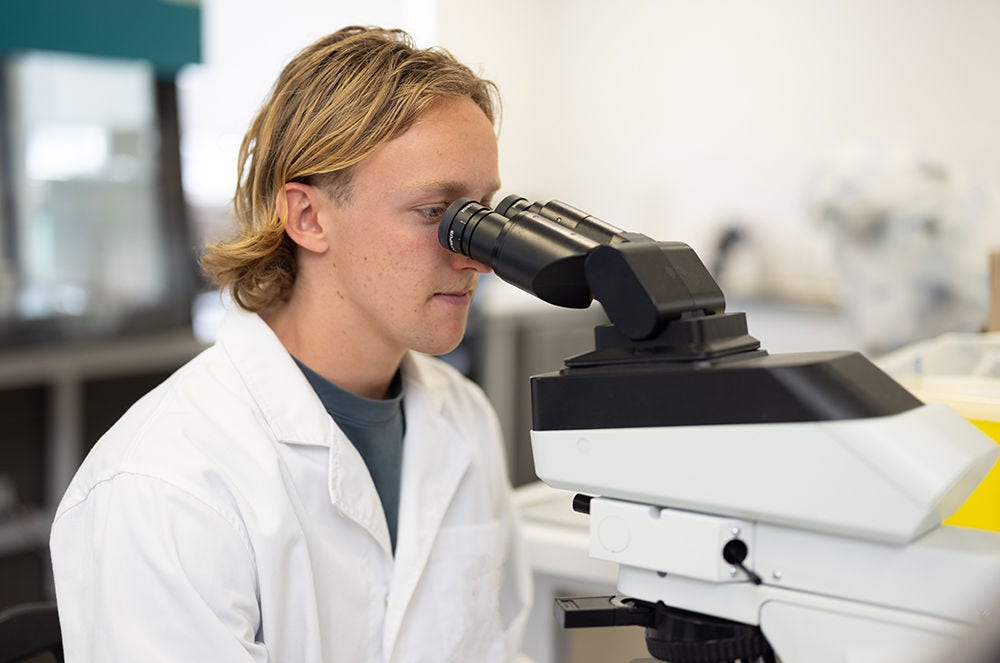
The Bachelor of Science (Honours) majoring in Animal Science will give you a comprehensive understanding of livestock, wildlife, exotic and companion species – with a strong emphasis on gaining practical skills, critical thinking and analytical approaches to problem-solving. Adelaide University provides a science-based approach to understanding the fundamentals of how we interact with and manage animals.
Our Honours program will allow you to explore animal science in greater depth and will encourage you to research new technologies, new approaches to management of animal nutrition, breeding, production, health and welfare of livestock, wildlife and companion animals. Explore new ways to adopt sustainable solutions and decrease the environmental impact across animal systems.
The Bachelor of Science (Honours) provides a pathway for entry into a research degree at either a Masters or Doctoral (PhD) level. You’ll achieve this through the supported development of an Honours thesis in your final year.
Key features
 Work with a range of species including livestock, wildlife, exotic, companion and lab animals.
 - Learn in real-world settings such as farms, fields, parks and production facilities.
- Expand your knowledge through professional work experience.
- Benefit from our state-of-the-art learning facilities and leading researchers.
- Engage with experts in the field and gain a competitive edge.
- Build practical skills that prepare you for success in the lab and field.
What you'll learn
In your first year you’ll explore topics such as animal handling and husbandry, animal behaviour, welfare and ethics. You’ll also cover foundational courses in biology and chemistry, as well as focus on global challenges and exciting scientific advancements. Through these topics you’ll build transferable skills in scientific data handling and visualisation.
From second year, you’ll acquire key skills for managing the productivity, health and welfare of a range of animal species. Study courses in animal physiology, genetics, health, management, nutrition and production – integrating coursework with practical and hands-on experiences.
Throughout your three years, you’ll complete work experience placement and gain practical experience in animal science. This could mean working in animal production facilities, farms, livestock consulting businesses, laboratories, wildlife organisations, zoos, nutrition companies, research facilities and companion animal care settings.
Your fourth and final honours year will extend your skills in research practices, where you’ll complete a research project. You’ll also study three courses specific to your chosen major, enabling you to become an expert in the field.
This degree also includes Undergraduate Science Core and Universal Common Core courses that allow you to expand your science education across different disciplines while maximising your professional skills.
Majors
The Bachelor of Science (Honours) is also available with majors in the following:
- Animal Behaviour
- Ecology
- Environmental Science
- Evolutionary Biology
- Evolutionary Biology & Palaeontology
- Genetics
- Geology
- Marine & Wildlife Conservation.

Degree Structure: Bachelor of Science (Honours) majoring in Animal Science
Program code: HSCIE
Complete 192 units comprising:
- 42 to 54 units for Core courses, and
- 78 to 144 units for Majors, and
- 6 to 18 units for Work integrated learning, and
- 0 to 48 units for Electives
Enrolment information
Find details about the rules and notes that apply to your program, along with other essential information required for successful enrolment. Supplementary supporting resources may also be provided where applicable.
Courses
Listed here are all the courses that contribute to your program, including elective options that can be chosen. These courses come together to form your study plan. Courses fall into different categories, each of which have specific unit values that need to be met under the program rules.
What courses you'll study
Complete 192 units comprising:
- 42 to 54 units for Core courses, and
- 78 to 144 units for Majors, and
- 6 to 18 units for Work integrated learning, and
- 0 to 48 units for Electives
Complete 42 to 54 units comprising:
- 6 to 12 units for all Program core, and
- 12 to 18 units from Common Core, and
- 6 to 30 units from Core Selective
| Course name | Course code | Units | |
|---|---|---|---|

|
Course name
Science of People, Society and the Future Planet
|
Course code
SCIE1001
|
Units
6
|
|
|
Course name
Data Skills for Scientists
|
Course code
STAT1000
|
Units
6
|
Common core description
Common core courses are interdisciplinary courses that build key graduate capabilities.
| Course name | Course code | Units | |
|---|---|---|---|
|
|
Course name
An Ethically Rich Life
|
Course code
COREX001
|
Units
6
|
|
|
Course name
Fact or Fiction: Data for Everyone
|
Course code
COREX002
|
Units
6
|
|
|
Course name
Igniting Change: Ideas to Action
|
Course code
COREX003
|
Units
6
|
|
|
Course name
Transforming Learning through First Nations Knowledges
|
Course code
COREX004
|
Units
6
|
|
|
Course name
Responsible AI: Bridging Ethics, Education and Industry
|
Course code
COREX005
|
Units
6
|
|
|
Course name
Building Belonging: Navigating Cultural Complexities
|
Course code
COREX006
|
Units
6
|
| Course name | Course code | Units | |
|---|---|---|---|
|
|
Course name
Biology 1A: Molecules, Genes and Cells
|
Course code
BIOL1003
|
Units
6
|
|
|
Course name
Biology 1B: Evolution and Diversity of Organisms
|
Course code
BIOL1004
|
Units
6
|
|
|
Course name
Foundations in Chemistry
|
Course code
CHEM1000
|
Units
6
|
|
|
Course name
Chemistry 1A
|
Course code
CHEM1002
|
Units
6
|
|
|
Course name
Chemistry 1B
|
Course code
CHEM1003
|
Units
6
|
|
|
Course name
Planet Earth
|
Course code
EART1000
|
Units
6
|
|
|
Course name
Extra-terrestrial Geoscience
|
Course code
EART1002
|
Units
6
|
|
|
Course name
Earth, Climate and Life Systems
|
Course code
EART1012
|
Units
6
|
|
|
Course name
Foundations in Mathematics
|
Course code
MATH1000
|
Units
6
|
|
|
Course name
Calculus 1
|
Course code
MATH1004
|
Units
6
|
|
|
Course name
Calculus 2
|
Course code
MATH1005
|
Units
6
|
|
|
Course name
Essential Mathematics
|
Course code
MATH1015
|
Units
6
|
|
|
Course name
Differential Equations
|
Course code
MATHX202
|
Units
6
|
|
|
Course name
Linear Algebra
|
Course code
MATHX104
|
Units
6
|
|
|
Course name
Foundations in Physics
|
Course code
PHYS1000
|
Units
6
|
|
|
Course name
Physics 1A
|
Course code
PHYS1001
|
Units
6
|
|
|
Course name
Physics 1B
|
Course code
PHYS1002
|
Units
6
|
Notes
-
Program core - Students in the following Majors will not enrol in STAT1000 Data Skills for Scientists:
Computational Physics, Experimental Physics, Nuclear and Radiation Physics, Physics and Geophysics, Space Science and Astrophysics, Theoretical Physics
Complete 66 units for ALL of the following:
| Course name | Course code | Units | |
|---|---|---|---|
|
|
Course name
Animal Handling and Husbandry
|
Course code
ANIM1000
|
Units
6
|
|
|
Course name
Principles of Animal Behaviour, Welfare and Ethics
|
Course code
ANIM1001
|
Units
6
|
|
|
Course name
Comparative Animal Anatomy and Physiology 2
|
Course code
ANIM2002
|
Units
6
|
|
|
Course name
Animal Microbiology, Virology and Immunology 2
|
Course code
ANIM2004
|
Units
6
|
|
|
Course name
Genes and Inheritance 2
|
Course code
ANIM2005
|
Units
6
|
|
|
Course name
Livestock Production 2
|
Course code
ANIM2006
|
Units
6
|
|
|
Course name
Animal Biochemistry 2
|
Course code
ANIM2012
|
Units
6
|
|
|
Course name
Animal Health 3
|
Course code
ANIM3000
|
Units
6
|
|
|
Course name
Animal Nutrition and Metabolism 3
|
Course code
ANIM3003
|
Units
6
|
|
|
Course name
Research Methodology for Animal Science 3
|
Course code
ANIM3004
|
Units
6
|
|
|
Course name
Wildlife Management 2
|
Course code
ENVI2006
|
Units
6
|
Work Integrated Learning description
WIL courses give you real‑world experience as part of your degree.
Complete 6 to 18 units comprising:
- One of the following:
- 12 units from Analytical Chemistry, Chemistry, Nuclear Chemistry and Pure and Applied Chemistry work integrated learning, or
- 12 units for all Animal Behaviour work integrated learning, or
- 6 units for all Animal Science work integrated learning, or
- 18 units for all Biochemistry and Biotechnology work integrated learning, or
- 6 units for all Computational Physics work integrated learning, or
- 6 units for all Ecology and Marine and Wildlife Conservation work integrated learning, or
- 12 units for all Environmental and Geospatial Science and Environmental Science work integrated learning, or
- 6 units for all Evolutionary Biology work integrated learning, or
- 12 units for all Evolutionary Biology and Palaeontology work integrated learning, or
- 6 units for all Experimental Physics work integrated learning, or
- 6 units for all Food Science and Technology work integrated learning, or
- 18 units from Genetics work integrated learning, or
- 6 units for all Geology and Geology and Earth Resources work integrated learning, or
- 6 units for all Geology and Palaeontology work integrated learning, or
- 6 units for all Geophysics work integrated learning, or
- 6 units for all Medicinal and Biological Chemistry work integrated learning, or
- 18 units for all Microbiology and Immunology work integrated learning, or
- 6 units from Nuclear and Radiation Physics and Theoretical Physics work integrated learning, or
- 12 units for all Physics and Geophysics work integrated learning, or
- 6 units for all Plant Biology work integrated learning, or
- 6 units for all Soil Science work integrated learning, or
- 6 units for all Space Science and Astrophysics work integrated learning, and
- 0 to 6 units from Additional work integrated learning - Optional
| Course name | Course code | Units | |
|---|---|---|---|
|
|
Course name
Organic Chemistry 3
|
Course code
CHEM3001
|
Units
6
|
|
|
Course name
Inorganic Chemistry 3
|
Course code
CHEM3002
|
Units
6
|
|
|
Course name
Physical Chemistry 3
|
Course code
CHEM3003
|
Units
6
|
| Course name | Course code | Units | |
|---|---|---|---|
|
|
Course name
Advanced Applications in Animal Behaviour
|
Course code
ANIM3900
|
Units
12
|
| Course name | Course code | Units | |
|---|---|---|---|
|
|
Course name
Professional Skills in Animal Science 2
|
Course code
ANIM2901
|
Units
6
|
|
|
Course name
Professional Skills in Animal Science 3
|
Course code
ANIM3005
|
Units
6
|
| Course name | Course code | Units | |
|---|---|---|---|
|
|
Course name
Molecular and Biomedical Sciences Practical 3
|
Course code
BIOL3007
|
Units
6
|
|
|
Course name
Biochemistry 3: Practical
|
Course code
BIOL3011
|
Units
6
|
|
|
Course name
Molecular and Biomedical Science Practical 2
|
Course code
BIOL2900
|
Units
6
|
| Course name | Course code | Units | |
|---|---|---|---|
|
|
Course name
Computational Physics
|
Course code
PHYSX300
|
Units
6
|
| Course name | Course code | Units | |
|---|---|---|---|
|
|
Course name
Research Methods: Ecology, Marine and Wildlife 3
|
Course code
BIOL3013
|
Units
6
|
| Course name | Course code | Units | |
|---|---|---|---|
|
|
Course name
Environmental and Geospatial Field Project
|
Course code
ENVI3014
|
Units
12
|
| Course name | Course code | Units | |
|---|---|---|---|
|
|
Course name
Evolutionary Biology 3 Practical
|
Course code
BIOL3036
|
Units
6
|
| Course name | Course code | Units | |
|---|---|---|---|
|
|
Course name
Field Palaeontology 3
|
Course code
EART3002
|
Units
6
|
|
|
Course name
Evolutionary Biology 3 Practical
|
Course code
BIOL3036
|
Units
6
|
| Course name | Course code | Units | |
|---|---|---|---|
|
|
Course name
Experimental Physics
|
Course code
PHYSX301
|
Units
6
|
| Course name | Course code | Units | |
|---|---|---|---|
|
|
Course name
Food Science Placement
|
Course code
FOOD3900
|
Units
6
|
| Course name | Course code | Units | |
|---|---|---|---|
|
|
Course name
Molecular and Biomedical Science Practical 2
|
Course code
BIOL2900
|
Units
6
|
|
|
Course name
Molecular and Biomedical Sciences Practical 3
|
Course code
BIOL3007
|
Units
6
|
|
|
Course name
Genetics Practical 3
|
Course code
BIOL3092
|
Units
6
|
| Course name | Course code | Units | |
|---|---|---|---|
|
|
Course name
Field Geoscience Program 3
|
Course code
EART3003
|
Units
6
|
| Course name | Course code | Units | |
|---|---|---|---|
|
|
Course name
Field Palaeontology 3
|
Course code
EART3002
|
Units
6
|
| Course name | Course code | Units | |
|---|---|---|---|
|
|
Course name
Geophysics 3C: Seismic Processing and Interpretation
|
Course code
EART3004
|
Units
6
|
| Course name | Course code | Units | |
|---|---|---|---|
|
|
Course name
Organic Chemistry 3
|
Course code
CHEM3001
|
Units
6
|
| Course name | Course code | Units | |
|---|---|---|---|
|
|
Course name
Molecular and Biomedical Science Practical 2
|
Course code
BIOL2900
|
Units
6
|
|
|
Course name
Molecular and Biomedical Sciences Practical 3
|
Course code
BIOL3007
|
Units
6
|
|
|
Course name
Microbiology and Immunology Practical 3
|
Course code
BIOL3012
|
Units
6
|
| Course name | Course code | Units | |
|---|---|---|---|
|
|
Course name
Computational Physics
|
Course code
PHYSX300
|
Units
6
|
|
|
Course name
Experimental Physics
|
Course code
PHYSX301
|
Units
6
|
| Course name | Course code | Units | |
|---|---|---|---|
|
|
Course name
Geophysics 3C: Seismic Processing and Interpretation
|
Course code
EART3004
|
Units
6
|
|
|
Course name
Experimental Physics
|
Course code
PHYSX301
|
Units
6
|
| Course name | Course code | Units | |
|---|---|---|---|
|
|
Course name
Science Professional Placement
|
Course code
SCIE3900
|
Units
6
|
| Course name | Course code | Units | |
|---|---|---|---|
|
|
Course name
Landscape Evolution 3
|
Course code
EART3006
|
Units
6
|
|
|
Course name
Science Professional Placement
|
Course code
SCIE3900
|
Units
6
|
| Course name | Course code | Units | |
|---|---|---|---|
|
|
Course name
Experimental Physics
|
Course code
PHYSX301
|
Units
6
|
| Course name | Course code | Units | |
|---|---|---|---|
|
|
Course name
Science Professional Placement
|
Course code
SCIE3900
|
Units
6
|
Electives description
A flexible course choice within your degree.
Complete 0 to 48 units for either of the following:
- 0 to 48 units from University-wide electives, or
- 0 to 48 units from Electives - unspecified plan
A full list of university-wide elective options can be accessed below.
University-wide elective options| Course name | Course code | Units | |
|---|---|---|---|
|
|
Course name
Soils and Landscapes
|
Course code
AGRI1003
|
Units
6
|
|
|
Course name
Environmental Sustainability and Soil Carbon 2
|
Course code
AGRI2000
|
Units
6
|
|
|
Course name
Soil and Water Resources
|
Course code
AGRI2004
|
Units
6
|
|
|
Course name
Crop and Pasture Production
|
Course code
AGRI2005
|
Units
6
|
|
|
Course name
Agricultural Biochemistry
|
Course code
AGRI2006
|
Units
6
|
|
|
Course name
Microbiology and Invertebrate Biology
|
Course code
AGRI2013
|
Units
6
|
|
|
Course name
Soil and Water Management and Conservation 3
|
Course code
AGRI3011
|
Units
6
|
|
|
Course name
Contaminants in the Agro-ecosystem
|
Course code
AGRI3012
|
Units
6
|
|
|
Course name
Soil and Plant Nutrition
|
Course code
AGRI3013
|
Units
6
|
|
|
Course name
Soil Ecology and Nutrient Cycling 3
|
Course code
AGRI3014
|
Units
6
|
|
|
Course name
Biology 1C: Molecular Biology and Biomedical Science
|
Course code
BIOL1031
|
Units
6
|
|
|
Course name
Ecological Issues 1
|
Course code
BIOL1032
|
Units
6
|
|
|
Course name
Zoology 2
|
Course code
BIOL2004
|
Units
6
|
|
|
Course name
Principles of Biotechnology 2
|
Course code
BIOL2019
|
Units
6
|
|
|
Course name
Botany 2
|
Course code
BIOL2023
|
Units
6
|
|
|
Course name
Foundations in Plant Science
|
Course code
BIOL2024
|
Units
6
|
|
|
Course name
Plant Identification 2
|
Course code
BIOL2049
|
Units
6
|
|
|
Course name
Animal Identification in Wildlife Conservation 2
|
Course code
BIOL2050
|
Units
6
|
|
|
Course name
Principles of Ecology 2
|
Course code
BIOL2051
|
Units
6
|
|
|
Course name
Molecular and Biomedical Science Practical 2
|
Course code
BIOL2900
|
Units
6
|
|
|
Course name
Microbial Ecology
|
Course code
BIOLX200
|
Units
6
|
|
|
Course name
Bioinformatics: Sequencing Technologies
|
Course code
BIOLX401
|
Units
6
|
|
|
Course name
Bioinformatics: Overview
|
Course code
BIOLX402
|
Units
6
|
|
|
Course name
Introduction to Environmental Chemistry
|
Course code
CHEM1004
|
Units
6
|
|
|
Course name
Environmental Chemistry 2
|
Course code
CHEM2010
|
Units
6
|
|
|
Course name
Food Chemistry
|
Course code
CHEMX200
|
Units
6
|
|
|
Course name
Problem Solving and Programming
|
Course code
COMP1002
|
Units
6
|
|
|
Course name
Object-Oriented Programming
|
Course code
COMP1005
|
Units
6
|
|
|
Course name
Extra-terrestrial Geoscience
|
Course code
EART1002
|
Units
6
|
|
|
Course name
Geophysics 2
|
Course code
EART2003
|
Units
6
|
|
|
Course name
Sedimentary Geology 2
|
Course code
EART2008
|
Units
6
|
|
|
Course name
Structural Geology 2
|
Course code
EART2009
|
Units
6
|
|
|
Course name
Igneous and Metamorphic Geology 2
|
Course code
EART2010
|
Units
6
|
|
|
Course name
Geochemistry 2
|
Course code
EART2011
|
Units
6
|
|
|
Course name
Mineral Resources 2
|
Course code
EART2012
|
Units
6
|
|
|
Course name
Palaeontology and Palaeoenvironments 3
|
Course code
EART3001
|
Units
6
|
|
|
Course name
Mineral Resources 3
|
Course code
EART3014
|
Units
6
|
|
|
Course name
Space Missions
|
Course code
EART4005
|
Units
6
|
|
|
Course name
Fire and Culture
|
Course code
EARTX300
|
Units
6
|
|
|
Course name
Earth Observation for the Environmental Sciences
|
Course code
ECOL3001
|
Units
6
|
|
|
Course name
Introduction to Surveying and Spatial Sciences
|
Course code
ENGI1006
|
Units
6
|
|
|
Course name
Introduction to Remote Sensing
|
Course code
ENGI2002
|
Units
6
|
|
|
Course name
Spatial Data Acquisition and Analysis
|
Course code
ENGI2004
|
Units
6
|
|
|
Course name
Food Processing and Safety
|
Course code
ENGPX415
|
Units
6
|
|
|
Course name
Fundamentals of Climate Change
|
Course code
ENVI1001
|
Units
6
|
|
|
Course name
Physical Geography and Human Environmental Impacts
|
Course code
ENVI1010
|
Units
6
|
|
|
Course name
Environmental Interpretation and Community Engagement
|
Course code
ENVI2007
|
Units
6
|
|
|
Course name
Park and Ecotourism Management
|
Course code
ENVI2008
|
Units
6
|
|
|
Course name
Climate and Sustainability
|
Course code
ENVI2010
|
Units
6
|
|
|
Course name
Environmental Impact Assessment 3
|
Course code
ENVI3002
|
Units
6
|
|
|
Course name
GIS for Agriculture and Natural Resources
|
Course code
ENVI3008
|
Units
6
|
|
|
Course name
Environmental Pollution and Monitoring
|
Course code
ENVI3010
|
Units
6
|
|
|
Course name
GIS for Environmental Management
|
Course code
ENVI3011
|
Units
6
|
|
|
Course name
Environmental Technologies 3
|
Course code
ENVI3012
|
Units
6
|
|
|
Course name
Introduction to Food and Science Technology
|
Course code
FOOD1000
|
Units
6
|
|
|
Course name
Future Foods
|
Course code
FOOD3005
|
Units
6
|
|
|
Course name
Advanced Food Microbiology
|
Course code
FOOD3015
|
Units
6
|
|
|
Course name
Sensory Evaluations of Food
|
Course code
FOODX200
|
Units
6
|
|
|
Course name
Food Production in a Future Climate
|
Course code
FOODX300
|
Units
6
|
|
|
Course name
Food Microbiology
|
Course code
FOODX500
|
Units
6
|
|
|
Course name
Food Quality and Regulation
|
Course code
FOODX501
|
Units
6
|
|
|
Course name
Discrete Mathematics
|
Course code
MATH1006
|
Units
6
|
|
|
Course name
Geometry
|
Course code
MATH1007
|
Units
6
|
|
|
Course name
Mathematics in Action
|
Course code
MATH1012
|
Units
6
|
|
|
Course name
Complex Analysis
|
Course code
MATHX100
|
Units
6
|
|
|
Course name
Mathematical Modelling
|
Course code
MATHX103
|
Units
6
|
|
|
Course name
Data Taming and Prediction
|
Course code
MATHX105
|
Units
6
|
|
|
Course name
Critical Evaluation in Data Science
|
Course code
MATHX106
|
Units
6
|
|
|
Course name
Algebra
|
Course code
MATHX201
|
Units
6
|
|
|
Course name
Real Analysis
|
Course code
MATHX206
|
Units
6
|
|
|
Course name
Introduction to Nutrition
|
Course code
NUTR1000
|
Units
6
|
|
|
Course name
Astronomy 1
|
Course code
PHYS1003
|
Units
6
|
|
|
Course name
Nuclear and Radiation Physics 2
|
Course code
PHYS2006
|
Units
6
|
|
|
Course name
Scientific Data: Analysis and Visualisation
|
Course code
SCIE2000
|
Units
6
|
|
|
Course name
Human Behaviour and Conservation 3
|
Course code
SCIE3001
|
Units
6
|
|
|
Course name
Web Cartography
|
Course code
SCIE3003
|
Units
6
|
|
|
Course name
Science International Study Tour
|
Course code
SCIE3009
|
Units
6
|
|
|
Course name
Communicating Science
|
Course code
SCIEX300
|
Units
6
|
|
|
Course name
Probability and Statistics
|
Course code
STATX100
|
Units
6
|
Notes
-
Electives - unspecified plan - The electives listed above are for students in the unspecified plan of the Bachelor of Science (Honours). Students in a defined plan should refer to the electives listed within their major.
Complete exactly 12 units from the following:
| Course name | Course code | Units | |
|---|---|---|---|
|
|
Course name
Professional Skills in Animal Science 2
|
Course code
ANIM2901
|
Units
6
|
|
|
Course name
Professional Skills in Animal Science 3
|
Course code
ANIM3005
|
Units
6
|
Complete 48 units for ALL of the following:
| Course name | Course code | Units | |
|---|---|---|---|
|
|
Course name
Advanced Animal Studies
|
Course code
ANIM4002
|
Units
6
|
|
|
Course name
Honours Animal Studies Project
|
Course code
ANIM4001
|
Units
36
|
|
|
Course name
Communicating Science
|
Course code
SCIEX300
|
Units
6
|
Complete 18 units for one of the following:
- 18 units from Companion animals electives, or
- 18 units from Livestock electives, or
- 18 units from Wildlife animals electives
| Course name | Course code | Units | |
|---|---|---|---|
|
|
Course name
Animal Management 3
|
Course code
ANIM3001
|
Units
6
|
|
|
Course name
The Science of Enrichment and Animal Learning 3
|
Course code
ANIM3002
|
Units
6
|
|
|
Course name
Animal Breeding and Genetics
|
Course code
ANIM3008
|
Units
6
|
|
|
Course name
Laboratory Animal Science 3
|
Course code
ANIM3010
|
Units
6
|
|
|
Course name
Animals and the Law
|
Course code
ANIM3011
|
Units
6
|
|
|
Course name
Parasitology III
|
Course code
ANIM3012
|
Units
6
|
|
|
Course name
Communicating Science 3
|
Course code
SCIE3008
|
Units
6
|
| Course name | Course code | Units | |
|---|---|---|---|
|
|
Course name
Soils and Landscapes
|
Course code
AGRI1003
|
Units
6
|
|
|
Course name
Soil and Water Resources
|
Course code
AGRI2004
|
Units
6
|
|
|
Course name
Crop and Pasture Production
|
Course code
AGRI2005
|
Units
6
|
|
|
Course name
Business Management for Applied Sciences 3
|
Course code
AGRI3001
|
Units
6
|
|
|
Course name
Animal Management 3
|
Course code
ANIM3001
|
Units
6
|
|
|
Course name
Animal Breeding and Genetics
|
Course code
ANIM3008
|
Units
6
|
|
|
Course name
Intensive Animal Production Science 3
|
Course code
ANIM3009
|
Units
6
|
|
|
Course name
Laboratory Animal Science 3
|
Course code
ANIM3010
|
Units
6
|
|
|
Course name
Animals and the Law
|
Course code
ANIM3011
|
Units
6
|
|
|
Course name
Parasitology III
|
Course code
ANIM3012
|
Units
6
|
|
|
Course name
Animal Biotechnology
|
Course code
ANIMX100
|
Units
6
|
|
|
Course name
Food Processing and Safety
|
Course code
ENGPX415
|
Units
6
|
|
|
Course name
GIS for Agriculture and Natural Resources
|
Course code
ENVI3008
|
Units
6
|
|
|
Course name
GIS for Environmental Management
|
Course code
ENVI3011
|
Units
6
|
|
|
Course name
Food Production in a Future Climate
|
Course code
FOODX300
|
Units
6
|
|
|
Course name
Communicating Science 3
|
Course code
SCIE3008
|
Units
6
|
|
|
Course name
Science Experience 3
|
Course code
SCIE3011
|
Units
6
|
| Course name | Course code | Units | |
|---|---|---|---|
|
|
Course name
Animal Identification in Wildlife Conservation 2
|
Course code
BIOL2050
|
Units
6
|
|
|
Course name
Conservation Biology 3
|
Course code
BIOL3037
|
Units
6
|
|
|
Course name
GIS for Agriculture and Natural Resources
|
Course code
ENVI3008
|
Units
6
|
|
|
Course name
GIS for Environmental Management
|
Course code
ENVI3011
|
Units
6
|
|
|
Course name
Communicating Science 3
|
Course code
SCIE3008
|
Units
6
|
|
|
Course name
Animal Management 3
|
Course code
ANIM3001
|
Units
6
|
|
|
Course name
The Science of Enrichment and Animal Learning 3
|
Course code
ANIM3002
|
Units
6
|
|
|
Course name
Animal Breeding and Genetics
|
Course code
ANIM3008
|
Units
6
|
|
|
Course name
Laboratory Animal Science 3
|
Course code
ANIM3010
|
Units
6
|
|
|
Course name
Animals and the Law
|
Course code
ANIM3011
|
Units
6
|
|
|
Course name
Parasitology III
|
Course code
ANIM3012
|
Units
6
|
|
|
Course name
Ecology and Management of Vertebrate Pests 3
|
Course code
ANIM3019
|
Units
6
|
|
|
Course name
Animal Biotechnology
|
Course code
ANIMX100
|
Units
6
|

Career outcomes
There are unlimited career options in animal science. As a graduate, you’ll be able to pursue a profession aligned to your passion, exploring emerging interdisciplinary areas where scientific expertise is increasingly in demand.
You might study and manage wildlife populations, contributing to conservation efforts alongside government agencies. You might find employment on a livestock facility, overseeing health, welfare, management and feeding strategies. Perhaps you’ll conduct scientific studies related to animal health, physiology, biosecurity, breeding, nutrition, behaviour or biotechnology.
You could also be a:
- Animal scientist
- Animal nutritionist
- Animal health officer
- Biosecurity officer
- Livestock consultant
- Animal geneticist
- Livestock manager
- Wildlife keeper
- Quarantine officer
- Conservation scientist
- Policy adviser
- Science communicator.
Industry trends
Animals play a vital role in human wellbeing and livelihoods, making it even more essential to continue studying and protecting them.
There will be strong demand and employment growth for graduates and professionals working in animal science-related fields (Australia’s STEM Workforce, 2020). You’ll find diverse opportunities in agriculture, conservation and research sectors, with employers continually seeking skilled professionals.
Ready to apply?


Your study experience and support
Adelaide University sets you up for success in your studies – and your social life. You’ll have access to work placement and internship opportunities, overseas study tours and exchanges, networking events with guest speakers and more. Our campuses are equipped with purpose-built facilities including lecture theatres, libraries, workshops, laboratories, and spaces that simulate real work environments. These are all supported by the latest technologies and a 24/7 online learning platform with personalised study information and resources.
You’ll have everything you need to live well and thrive during your studies, with health services on campus, gymnasiums, technology zones and modern student lounges. Get involved in campus sport or join our student clubs that will connect you to your passions – and the people who share them.
Adelaide also has a variety of accommodation options to suit your individual requirements and budget, with options ranging from dedicated student accommodation to private rentals. One of the world’s most liveable cities, Adelaide has lots of leafy parks, gardens and social hubs – and some of the highest living standards globally. No matter where you are in Adelaide, you’re only a short distance from beaches, vineyards, museums, art galleries, restaurants, bars and parklands. Visit the accommodation web page to find out more.
Student services
We’re here to support you on your student journey. Adelaide University offers a range of support services and facilities, including:
- Career advice and mentoring services
- Personal counselling
- LGBTQIA+ support
- Academic support
- Fees and finance help
- Security services
- Accommodation services
- Common rooms
- Prayer rooms.
You’ll also have unlimited access to our dedicated student support hub. Visit in-person or online, or contact our friendly team by phone. We can assist you with anything study-related including enrolment, identification cards, timetables, fees and more.

Your campus
You'll be studying at one of our renowned campuses, accessing cutting-edge facilities and contemporary study spaces.
Study hours
Your courses will require a combination of different learning formats, including lectures, tutorials, workshops, seminars and practicals. Aside from your classes, you’ll also need to allocate additional time for independent study. This may include assignments, readings, projects and contributing to online discussion forums. As a rough guide, full-time studies may require 12-26 hours of class time and 14-18 hours of independent study per week.
Assessment
During your studies at Adelaide University, you’ll complete a mixture of practical, professional and research-based learning. Your assessment types will vary depending on the degree you’re studying, but may include:
- Case studies
- Essays and assignments
- Examinations
- Group projects
- Internships and placements
- Practicals
- Presentations
- Reports and project documentations
- Research projects
- Workplace and classroom contributions.